2025年12月23日
3D ACADEMY offers affordable English study programs in Cebu, Philippines – perfect for beginners, professionals, and exam takers.

3D UNIVERSAL ENGLISH INSTITUTE INC
info.3d-universal.com
8:00-17:00(Mon-Fri)
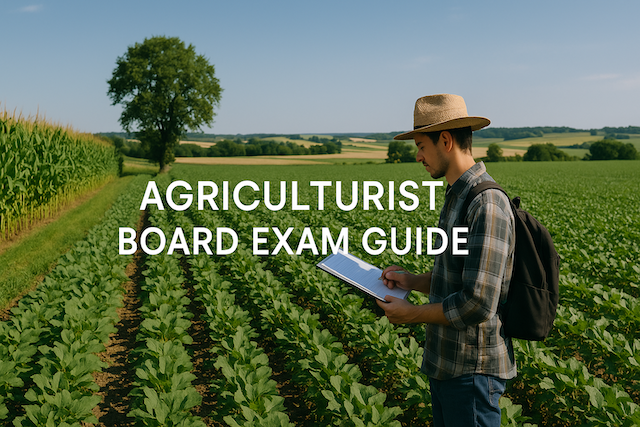
Agriculturist Board Exam Guide
Contents
- Agriculturist Board Exam Guide
- Overview of the Agriculturist Licensure Examination
- Who Can Take the Agriculturist Board Exam?
- Exam Schedule and Application Period
- Subjects Covered in the Agriculturist Board Exam
- Application Requirements
- Registration Process (Step-by-Step)
- How to Prepare for the Agriculturist Licensure Exam
- Tips for Exam Day
- Releasing of Results
- Career Opportunities for Licensed Agriculturists
- Importance of Being a Licensed Agriculturist
- Final Thoughts
- FAQs (Frequently Asked Questions)
- What is the Criminology Licensure Examination in the Philippines?
- Who is eligible to take the Criminology Board Exam?
- How do I apply for the Criminology Board Exam?
- What subjects are covered in the Criminology Board Exam?
- How often is the Criminology Board Exam conducted?
- How should I prepare effectively for the Criminology Licensure Examination?
- What are common mistakes that cause examinees to fail the exam?
- What happens after I pass the Criminology Board Exam?
- What career opportunities are available for Licensed Criminologists?
- Can I retake the Criminology Board Exam if I fail?
Agriculturist Board Exam Guide
The Agriculturist Licensure Examination (ALE) is one of the major board exams in the Philippines, administered by the Professional Regulation Commission (PRC). It is designed to assess the competence, knowledge, and readiness of aspiring agriculturists to practice professionally in various agricultural fields. Whether your goal is to work in government, private industry, agricultural research, or agribusiness, passing the ALE is an important milestone.
This comprehensive guide explains the exam coverage, eligibility, schedule, preparation strategies, required documents, and everything you need to know to succeed.
Overview of the Agriculturist Licensure Examination
The Agriculturist Board Exam evaluates your understanding across major agricultural sciences. It is a multi-day exam, typically spread over two to three days, depending on the PRC schedule for that year. To qualify, examinees must have completed a degree in agriculture or a related program recognized by the Commission on Higher Education (CHED).
The exam aims to ensure that all licensed agriculturists in the Philippines meet the accepted standards of knowledge and professionalism to contribute to national agricultural development.
Who Can Take the Agriculturist Board Exam?
Before applying, you must meet the PRC eligibility requirements. Applicants must:
-
Hold a Bachelor’s Degree in Agriculture or any CHED-approved related degree (such as Agricultural Engineering major with adequate agriculture subjects, Agronomy, Agribusiness, Agricultural Economics, etc.).
-
Be of good moral character.
-
Have no pending cases involving moral turpitude.
-
Submit complete required documents (TOR, birth certificate, etc.).
Foreign applicants may also apply, provided reciprocity exists between their country and the Philippines.
Exam Schedule and Application Period
PRC typically conducts the Agriculturist Board Exam once a year, though the exact dates vary. Important dates include:
-
Opening of online application
-
Deadline of filing
-
Exam dates
-
Release of results
These are published months in advance through the PRC official website and social media announcements. Examinees are advised to apply early to avoid system delays.
Subjects Covered in the Agriculturist Board Exam
The ALE covers six major subject areas, each representing key fields of agricultural science. These include:
Crop Protection
This focuses on the management of pests, weeds, and diseases. Key topics:
-
Integrated Pest Management (IPM)
-
Entomology
-
Plant pathology
-
Weed science
Crop Production and Management
This portion tests your knowledge of crop science and production systems:
-
Agronomy
-
Horticulture
-
Soil management
-
Crop ecology
Animal Science
This subject includes:
-
Animal production
-
Animal nutrition
-
Animal health
-
Genetics and breeding
Agricultural Economics and Marketing
This covers:
-
Farm management
-
Agribusiness operations
-
Agricultural marketing
-
Production economics
Agricultural Extension and Communication
This evaluates your ability to:
-
Conduct extension programs
-
Communicate with farmers
-
Facilitate agricultural development programs
Soil Science
Topics include:
-
Soil fertility and management
-
Soil chemistry and classification
-
Land use planning
Each subject area usually includes multiple examinations spread across two or three days.
Application Requirements
Before applying through the PRC Licensure Examination and Registration Information System (LERIS), prepare the following:
-
Original and photocopy of PSA Birth Certificate
-
Transcript of Records (TOR) with scan of photo and the remark “For Board Examination Purposes”
-
Valid ID (government-issued)
-
Recent passport-sized photographs with white background
-
Payment of exam fee
Additional documents may be required for special cases, such as foreign applicants or graduates with deficiencies in agricultural subjects.
Registration Process (Step-by-Step)
-
Create or log in to your PRC LERIS account.
-
Input personal information, education history, and valid ID details.
-
Upload a digital photo following PRC guidelines.
-
Select “Apply for Examination” and choose Agriculturist.
-
Choose an exam location and schedule.
-
Pay the exam fee via PRC cashier or online payment partners.
-
Print the application form.
-
Submit required documents during your scheduled document evaluation.
After evaluation, PRC will issue your Notice of Admission (NOA).
How to Prepare for the Agriculturist Licensure Exam
Passing the ALE requires a well-organized study plan. Here are strategies:
Study the PRC Syllabus
PRC releases an official list of topics for each subject. Focus your study sessions around this syllabus to ensure coverage.
Use Review Center Materials Wisely
While a review center can help:
-
Do not rely solely on handouts.
-
Cross-check all materials with official agricultural textbooks.
Create a Study Schedule
Divide the six major subjects and focus more on your weak areas. Allocate daily study time.
Use Past Board Exam Questions
Old questions help you understand:
-
Common topics
-
Question format
-
Difficulty level
Strengthen Practical and Theoretical Knowledge
Many questions revolve around real-world agricultural scenarios.
Prioritize Difficult Subjects Early
Common difficult topics:
-
Soil chemistry
-
Animal nutrition calculations
-
Crop disease identification
Tackle these first before moving to easier subjects.
Tips for Exam Day
-
Arrive early at the testing center.
-
Bring your NOA, valid ID, pencils, sharpener, and snacks.
-
Wear the recommended clothing (usually white collared shirt).
-
Read questions carefully and manage your time.
-
Avoid changing answers unless necessary.
Releasing of Results
Results are typically released 2 to 3 weeks after the exam. PRC posts:
-
List of passers
-
Top 10 examinees
-
Top-performing schools
After passing, you may proceed to initial registration to receive your PRC ID and certificate.
Career Opportunities for Licensed Agriculturists
After passing, graduates can pursue careers in:
Government Agencies
-
Department of Agriculture (DA)
-
Bureau of Plant Industry (BPI)
-
Bureau of Animal Industry (BAI)
-
Local government agriculture offices
Agribusiness Companies
-
Feed mills
-
Agri-input companies (fertilizers, pesticides)
-
Seed companies
Research and Development
-
Agricultural research centers
-
Universities
-
Non-government organizations
Agripreneurship
Licensed agriculturists may also start:
-
Farms
-
Organic agriculture businesses
-
Consulting services
Importance of Being a Licensed Agriculturist
A PRC license ensures:
-
Professional credibility
-
Eligibility for government positions
-
Better job opportunities
-
Compliance with national regulations
It also signifies that the professional possesses the competence and ethical standards needed to work in the agricultural sector.
Final Thoughts
The Agriculturist Board Exam is an important milestone for anyone pursuing a career in Philippine agriculture. With proper preparation, understanding of the exam structure, and consistent study habits, you can pass the board exam and begin a meaningful career helping grow the country’s agricultural industry.
FAQs (Frequently Asked Questions)
What is the Criminology Licensure Examination in the Philippines?
The Criminology Licensure Examination (CLE) is a professional board exam administered by the Professional Regulation Commission (PRC) for graduates of Bachelor of Science in Criminology. It measures the knowledge, skills, and competencies required to practice as a criminologist in the Philippines. Once an examinee passes the CLE, they are granted a professional license and can use the title Licensed Criminologist. This license is often required for positions in law enforcement, corrections, security, and other crime-related fields.
Who is eligible to take the Criminology Board Exam?
To be eligible for the CLE, you must hold a Bachelor of Science in Criminology degree from a PRC-recognized institution. Your Transcript of Records should indicate completion of the required curriculum. You must also be of good moral character, with no conviction of any offense involving moral turpitude. Typically, you will need a Certificate of Good Moral Character, valid identification documents, and other supporting papers as specified by PRC. Some schools may allow graduating students to apply if they can provide official certification of completion.
How do I apply for the Criminology Board Exam?
Application is done through the PRC’s online portal known as LERIS. First, create or update your online account with your correct personal details. Then, select Criminologist as the exam type, choose your preferred testing center and exam schedule, and set an appointment. You will need to upload your photo and required documents, such as your Transcript of Records, birth certificate, marriage certificate (if applicable), and valid ID. After that, pay the examination fee using the available payment options. Finally, appear at the selected PRC office or service center on your appointment date for document verification and issuance of your Notice of Admission.
What subjects are covered in the Criminology Board Exam?
The CLE covers several major areas in criminology and criminal justice. These usually include:
- Criminal Jurisprudence and Procedure (Revised Penal Code, criminal procedure, evidence, testimony)
- Law Enforcement Administration (police organization, operations, intelligence, planning, and management)
- Crime Detection and Investigation (fundamentals and specialized investigations, traffic management, accident investigation)
- Criminalistics (forensic ballistics, fingerprints, questioned documents, polygraphy, forensic photography, basic forensic chemistry)
- Sociology of Crimes and Ethics (criminological theories, human behavior, juvenile delinquency, professional ethics)
- Correctional Administration (prison management, rehabilitation, probation, and parole)
The exact breakdown and weight of each subject may be adjusted by the PRC, so it is important to review the latest official syllabus or announcements.
How often is the Criminology Board Exam conducted?
The Criminology Board Exam is typically conducted twice a year, commonly around the first half and the latter part of the year. However, the exact month, number of days, and specific dates may change depending on PRC resolutions, national events, or unforeseen circumstances. PRC also designates multiple testing centers nationwide, such as Metro Manila, Cebu, Davao, and other regional hubs. Always refer to the latest PRC examination calendar and official announcements to confirm schedules, deadlines, and venues.
How should I prepare effectively for the Criminology Licensure Examination?
Effective preparation starts with a realistic study plan. Many successful examinees begin their review at least six months before the exam. You can enroll in a reputable review center to gain access to updated materials, mock exams, and coaching, but self-review is also possible if you are disciplined. Focus on understanding key concepts in Criminal Law, Criminalistics, and Law Enforcement Administration, as these areas are often challenging. Answer practice questions and simulated tests to build speed and accuracy. Allocate extra time to weak subjects while consistently reviewing strong areas so you do not forget them. Lastly, maintain good physical and mental health by getting enough sleep, eating properly, and taking short breaks to avoid burnout.
What are common mistakes that cause examinees to fail the exam?
Common reasons for failing include poor time management during the test, inadequate preparation, and overreliance on memorization without understanding. Some examinees underestimate the depth and breadth of topics, especially in areas like Criminal Law and Criminalistics. Others study only a few weeks before the exam, which is usually not enough for such a comprehensive test. Misreading questions, leaving items unanswered, and ignoring PRC instructions or room exam rules can also negatively affect performance. Avoid these mistakes by starting early, practicing with mock exams, and carefully reading every question during the test.
What happens after I pass the Criminology Board Exam?
After passing, you must proceed with the initial registration process at PRC, which includes paying registration fees, submitting required documents, and attending the mass oath-taking ceremony. Once completed, you will receive your Certificate of Registration and Professional Identification Card as a Licensed Criminologist. With your license, you can apply for positions in the Philippine National Police, Bureau of Jail Management and Penology, Bureau of Fire Protection, crime laboratories, private security agencies, and other government or private organizations involved in law enforcement, investigations, corrections, or security. You may also pursue careers in teaching criminology, research, or consultancy after gaining experience.
What career opportunities are available for Licensed Criminologists?
Licensed Criminologists can work in a wide array of fields. In the public sector, they may serve as police officers, jail officers, fire officers, intelligence analysts, forensic or crime laboratory personnel, or probation and parole officers. In the private sector, they can work as security managers, loss prevention specialists, corporate investigators, risk assessors, and security consultants. Some criminologists continue their studies, specialize in forensic science, or enter the academe as instructors or researchers. The license not only validates professional competence but also opens doors to career growth and leadership roles in the criminal justice system.
Can I retake the Criminology Board Exam if I fail?
Yes, you can retake the CLE if you do not pass on your first attempt. PRC allows multiple retakes as long as you meet the current eligibility requirements. However, if you have taken the exam several times without success, PRC may impose additional conditions, such as refresher courses, depending on the prevailing rules. When you plan a retake, carefully analyze your previous performance to identify weak areas, adjust your study strategies, and consider seeking help from review centers, mentors, or peer study groups to improve your chances of passing.
Philippines Board Exam Guide: Complete Overview for Students and Professionals

How to Register for eTravel Philippines (2025 Guide)
Step-by-step guide to completing your eTravel registration before arriving in the Philippines, with images and tips.

Night Market in Cebu – Things You Don’t Know About Cebu Life
Discover the hidden charm of Cebu’s night markets, from street food stalls to local life tips you won’t find in tourist guides.

How to Use ChatGPT for IELTS Preparation: A Complete Guide
Learn how to prepare for IELTS using ChatGPT — including strategies for Writing, Reading, Listening, Speaking, and grammar support.

How to Build a Website Without Coding Using ChatGPT
Discover how to build your own website using AI—no coding skills needed. From structure planning to SEO and design, let ChatGPT guide you.