
Introduction
Getting around Metro Manila can feel overwhelming at first. The city is one of the most densely populated urban areas in Southeast Asia, with heavy traffic, multiple transportation systems, and routes that are not always easy to understand for first-time visitors. However, once you know how the system works, Manila offers a wide range of transportation options that can suit different budgets, travel styles, and schedules.
This Manila Transportation Guide is designed to help you navigate the city efficiently and with confidence. From trains and buses to jeepneys, taxis, and ride-hailing apps, each mode of transportation plays a specific role in daily life across Metro Manila. Some options are fast but crowded, others are cheap but require local knowledge, while a few prioritize comfort and convenience.
Whether you are visiting Manila for the first time, studying in the Philippines, relocating for work, or staying long term as an expat, understanding local transportation will save you time, money, and unnecessary stress. This guide serves as a central hub, linking to detailed articles that explain how each transport option works, how much it costs, and when it makes the most sense to use it.
By starting here, you will gain a clear overview of Manila’s transportation system and learn how to choose the best way to move around the city based on your destination, budget, and travel situation.
Overview of Transportation in Metro Manila
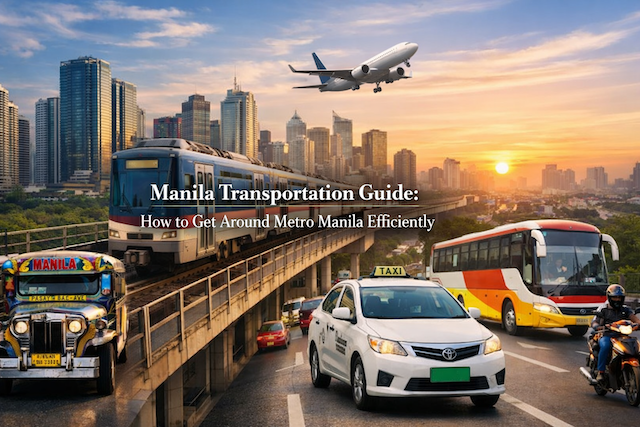
Metro Manila is composed of multiple cities and districts, each with its own traffic patterns and transportation characteristics. Instead of relying on a single unified system, the city uses a combination of trains, buses, jeepneys, taxis, and ride-hailing services to move millions of people every day. Understanding this mixed system is the key to getting around efficiently.
Public transportation in Manila is generally affordable, but it often prioritizes coverage over comfort. Trains are the fastest option for avoiding traffic but can be crowded during peak hours. Buses and jeepneys cover almost every major road and neighborhood, making them essential for daily commuting. Taxis and ride-hailing apps offer convenience and safety, especially for visitors or late-night travel, while tricycles and pedicabs handle short distances in residential areas.
Traffic congestion is a major factor that affects all transportation choices. Rush hours typically occur in the morning and late afternoon, particularly along major roads such as EDSA. Because of this, travel time can vary significantly depending on the time of day, even for short distances.
Despite these challenges, Metro Manila’s transportation network is flexible. By choosing the right combination of transport modes—such as trains for long stretches and ride-hailing for short connections—you can move around the city more smoothly. The sections that follow break down each transportation option in detail, helping you decide which one fits your route and situation best.
Train Systems in Manila
Manila’s train system is one of the most practical ways to move around the city, especially for avoiding heavy traffic along major roads. While the rail network is limited compared to other large cities in Asia, it connects key commercial areas, residential zones, and transportation hubs within Metro Manila.
There are three main urban rail lines in operation: LRT Line 1, LRT Line 2, and MRT-3. Each line serves a different corridor and travel purpose. LRT Line 1 primarily runs north to south, making it useful for traveling along Taft Avenue and nearby areas. LRT Line 2 operates east to west and is generally less crowded, serving districts such as Recto and parts of Rizal. MRT-3 runs along EDSA, the busiest road in Metro Manila, and connects major business districts like Makati, Ortigas, and Quezon City.
Trains are affordable and relatively fast, but they can become extremely crowded during peak commuting hours. Early mornings and late afternoons typically see the highest passenger volume. Because of this, trains are ideal for budget-conscious travelers who value speed over comfort, especially during off-peak times.
For first-time users, navigating stations, ticket lines, and transfers may take some adjustment. However, once familiar with the system, trains become a reliable option for daily commuting and long cross-city trips. The detailed guides linked from this section explain how to ride each line, understand fares, and make smooth transfers between stations.
Jeepneys: The Backbone of Local Transportation
Jeepneys are the most recognizable and widely used form of public transportation in Manila. Originally adapted from military jeeps, they have evolved into a uniquely Filipino transport system that serves both major roads and inner neighborhoods across Metro Manila. For many locals, jeepneys are an essential part of daily life.
Jeepneys operate on fixed routes but do not follow strict schedules or designated stops. Passengers can usually board and get off anywhere along the route, making them very flexible for short to medium distances. Fares are among the cheapest in the city, which is why jeepneys remain popular despite the lack of air conditioning and limited space.
For first-time visitors, jeepneys can feel confusing. Route signs are often abbreviated, and destinations may be written in local terms rather than street names. Payment is done inside the vehicle, typically by passing the fare to the driver through other passengers. Knowing basic etiquette, such as announcing your stop and preparing exact change, makes the experience much smoother.
While jeepneys are affordable and convenient, they are not always the best choice for travelers with luggage or those unfamiliar with the city. This guide includes dedicated articles that explain how jeepney routes work, how fares are calculated, and when it is best to use jeepneys versus other transportation options.
Buses in Manila
Buses play an important role in moving people across Metro Manila, especially along major highways and long-distance urban routes. Compared to jeepneys, buses typically cover longer distances and operate on wider roads, making them a common choice for commuters traveling between cities and business districts.
Manila has several types of bus services. Traditional city buses run on major roads and offer the widest coverage, but travel time can be unpredictable due to traffic. The EDSA Busway, a dedicated bus lane system, provides a faster and more organized option along EDSA by separating buses from regular traffic. Point-to-point (P2P) buses offer a more comfortable experience, with fixed schedules, limited stops, and designated terminals, making them popular among office workers and airport travelers.
Bus fares remain affordable, though prices vary depending on the route and type of service. Payment methods differ, with some buses accepting cash while others use cards or electronic systems, particularly on the EDSA Busway. During peak hours, buses can become crowded, but they still offer a practical alternative when train stations are congested.
For travelers and newcomers, understanding which bus type to use is key. The detailed articles linked from this section explain bus routes, fare systems, and how to choose between regular buses, the EDSA Busway, and P2P services based on your destination and travel time.
Taxis and Ride-Hailing Apps
Taxis and ride-hailing services are among the most convenient transportation options in Manila, especially for visitors and those unfamiliar with public transport routes. They offer door-to-door service, greater comfort, and flexibility compared to trains, buses, and jeepneys.
Regular taxis are widely available throughout Metro Manila, particularly in commercial areas, malls, and hotels. They operate on a metered system, but issues such as refusal to use the meter or overcharging can occur. For this reason, taxis are generally more suitable for short trips or when hailed from reputable locations.
Ride-hailing apps, most notably Grab, have become the preferred choice for many residents and travelers. These apps provide upfront pricing, GPS tracking, and cashless payment options, which help reduce misunderstandings and safety concerns. Ride-hailing is especially useful during late hours, in unfamiliar neighborhoods, or when traveling with luggage.
While taxis and ride-hailing services are more expensive than public transportation, they save time and reduce stress in many situations. The guides linked from this section explain how to use taxis safely, compare taxis with ride-hailing apps, and decide which option makes the most sense based on your route, budget, and time of travel.
Airport Transportation in Manila
Transportation to and from Manila’s main airport can be confusing for first-time visitors due to traffic conditions, terminal layouts, and varying transport options. Ninoy Aquino International Airport (NAIA) has multiple terminals, and choosing the right transportation method depends on your arrival time, destination, and budget.
Several options are available for airport transfers. Official airport taxis and coupon taxis offer regulated services, while ride-hailing apps provide clear pricing and convenient booking. Shuttle services and hotel transfers are also available for travelers who prefer a more structured and comfortable experience. Public transportation is possible in some cases, but it is generally less practical for travelers with luggage or those arriving late at night.
Traffic congestion significantly affects airport travel time, particularly during morning and evening rush hours. Even short distances can take much longer than expected, so planning ahead is essential. For early-morning flights or late-night arrivals, ride-hailing apps and pre-arranged transfers are usually the most reliable choices.
The articles linked from this section provide step-by-step guidance on traveling from NAIA to major areas such as Makati, Bonifacio Global City, and Manila City. They also compare different airport transport options to help you choose the safest and most efficient way to start or end your trip.
Traveling Between Cities and Provinces
Manila serves as the main transportation hub for travel across Luzon, making it the starting point for many intercity and provincial trips. From Metro Manila, travelers can easily reach popular destinations such as nearby provinces, mountain resorts, beach areas, and major regional cities using long-distance transportation services.
Provincial buses are the most common option for intercity travel. They operate from major terminals located in areas like Cubao, Pasay, and Alabang, with routes covering both short and long distances. These buses vary in comfort level, ranging from basic air-conditioned coaches to premium services with reserved seating. Travel time depends heavily on traffic conditions and departure schedules.
In addition to buses, ferries and sea transport are available for specific routes, particularly for destinations accessible by water. While less common than bus travel, ferries can be a practical alternative for certain coastal areas and nearby islands.
Planning intercity travel from Manila requires attention to terminal locations, schedules, and peak travel periods, especially during holidays and long weekends. The detailed guides linked from this section explain where to find provincial terminals, how to choose the right bus service, and what to expect when traveling beyond Metro Manila.
Transportation Costs in Manila
Transportation in Manila is generally affordable compared to many major cities, but costs can vary widely depending on the mode of transport you choose. Understanding typical fare ranges helps you plan your budget and avoid unnecessary expenses during daily travel or short-term stays.
Public transportation options such as jeepneys, buses, and trains offer the lowest fares and are widely used by locals. These modes are ideal for budget-conscious travelers, though they may require more time and familiarity with routes. Fares are usually distance-based or fixed within certain zones, making them predictable once you understand the system.
Taxis and ride-hailing services are more expensive but provide greater convenience, comfort, and flexibility. Prices can increase during peak hours, bad weather, or high-demand periods, especially for app-based services. Airport transfers and point-to-point buses also fall into a higher price range but often justify the cost with reliability and reduced stress.
By combining different transportation options—such as using trains for long distances and ride-hailing for short connections—you can manage costs while maintaining convenience. The related articles linked from this section break down fare systems in detail and help you compare transportation expenses based on your travel needs.
Safety Tips for Using Transportation in Manila
Safety is an important consideration when using transportation in Manila, particularly for first-time visitors and those unfamiliar with the city. While most transportation options are generally safe, being aware of common risks and taking simple precautions can greatly improve your travel experience.
Crowded environments such as trains, buses, and jeepneys require extra attention to personal belongings. Keeping bags secure and avoiding the use of valuables in plain sight helps reduce the risk of petty theft. During rush hours, stations and vehicles can become very congested, so allowing extra time and staying alert is recommended.
For taxis and informal transport, it is best to confirm fares in advance and avoid vehicles that refuse to use meters. Ride-hailing apps provide an added layer of safety through driver tracking and upfront pricing, making them a preferred option for late-night travel or unfamiliar routes. Choosing well-lit pickup and drop-off points also improves safety.
Traffic conditions and road safety are additional factors to consider. Sudden stops, aggressive driving, and heavy congestion are common, so patience is essential. The guides linked from this section offer more detailed advice on safe travel practices and help you decide which transportation option is most appropriate based on the time of day and your destination.
Who This Guide Is For
This Manila Transportation Guide is created for anyone who needs clear, practical information on how to move around Metro Manila without confusion. Because transportation in the city can vary greatly depending on location, time, and purpose, this guide is designed to support different types of travelers and residents.
For first-time visitors, the guide provides an overview of all major transportation options and explains which ones are easiest and safest to use. For international students and expats, it offers insights into daily commuting, cost-saving strategies, and how to combine multiple transport modes efficiently. Business travelers can quickly identify the most reliable ways to travel between key districts while avoiding heavy traffic.
Long-term residents will also benefit from understanding how transportation systems connect across the city and how to adjust travel habits based on peak hours and changing conditions. Each section links to more detailed articles so readers can focus only on the transportation methods that match their specific needs and lifestyle.
Related Guides and Internal Links
This Manila Transportation Guide serves as a central hub connecting a wide range of detailed transportation articles. Each linked guide focuses on a specific mode of transport, route, or travel situation, allowing you to dive deeper into the topics most relevant to your plans.
From this page, you can access step-by-step guides on using trains, buses, jeepneys, taxis, and ride-hailing apps, as well as practical advice on airport transfers and intercity travel. These articles are designed to answer common questions, explain real-world scenarios, and help you make informed transportation choices in Metro Manila.
This guide also connects with broader Philippines travel resources, making it easier to understand how Manila fits into the country’s overall transportation network. By using this page as your starting point, you can navigate seamlessly between general overviews and detailed how-to articles, building a complete understanding of transportation in and around Manila.



