2025年12月31日
3D ACADEMY offers affordable English study programs in Cebu, Philippines – perfect for beginners, professionals, and exam takers.

3D UNIVERSAL ENGLISH INSTITUTE INC
info.3d-universal.com
8:00-17:00(Mon-Fri)
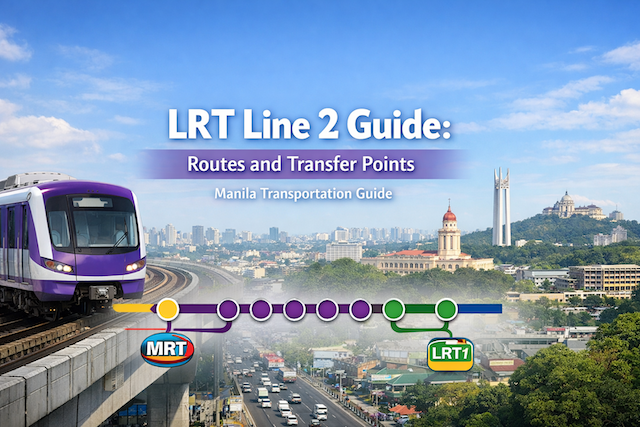
LRT Line 2 Guide: Routes and Transfer Points:Manila Transportation Guide
Contents
- LRT Line 2 Guide: Routes and Transfer Points:Manila Transportation Guide
- Introduction to LRT Line 2
- Overview of LRT Line 2
- LRT Line 2 Route Explained
- Complete List of LRT Line 2 Stations
- Recto Station
- Legarda Station
- Pureza Station
- V. Mapa Station
- J. Ruiz Station
- Gilmore Station
- Betty Go-Belmonte Station
- Araneta Center–Cubao Station
- Anonas Station
- Katipunan Station
- Santolan Station
- Marikina–Pasig Station
- Antipolo Station
- Transfer Points Along LRT Line 2
- Transfer to LRT Line 1 at Recto Station
- Transfer to MRT-3 at Araneta Center–Cubao Station
- Operating Hours of LRT Line 2
- LRT Line 2 Fares and Ticketing
- What Makes LRT Line 2 Different from Other Lines
- Peak Hours and Crowd Levels
- Safety and Comfort Tips for LRT Line 2
- LRT Line 2 for Students and Tourists
- Final Thoughts on LRT Line 2
LRT Line 2 Guide: Routes and Transfer Points:Manila Transportation Guide
Introduction to LRT Line 2
LRT Line 2, commonly known as LRT-2, is one of Metro Manila’s most important east–west rail lines. It connects the residential and commercial areas of Quezon City, San Juan, Mandaluyong, and Manila, making it a vital transportation option for commuters, students, office workers, and travelers.
Unlike LRT Line 1 and MRT-3, which run north–south, LRT Line 2 runs east to west, linking Recto in Manila to Antipolo in Rizal Province. It is known for its wider trains, higher platform levels, and generally more spacious passenger experience.
This guide explains everything you need to know about LRT Line 2, including its routes, stations, transfer points, and practical tips for navigating Metro Manila efficiently.
Overview of LRT Line 2
LRT Line 2 is operated by the Light Rail Transit Authority (LRTA) and began full operations in 2004, with later extensions completed in 2021.
Key characteristics of LRT Line 2 include:
-
Fully elevated railway
-
Air-conditioned trains
-
Wider carriages compared to LRT Line 1
-
Fewer stations but longer distances between stops
It is particularly popular among students due to its proximity to major universities such as Ateneo de Manila University, University of the Philippines Diliman (via bus connections), Polytechnic University of the Philippines, and University of Santo Tomas (via jeepney).
LRT Line 2 Route Explained
LRT Line 2 operates along a single main route with terminals on both ends.
-
Western Terminus: Recto Station (Manila)
-
Eastern Terminus: Antipolo Station (Rizal)
The total line length is approximately 17.6 kilometers, covering urban Manila and extending into suburban Rizal.
Trains run in both directions:
-
Recto to Antipolo
-
Antipolo to Recto
Complete List of LRT Line 2 Stations
LRT Line 2 currently has 13 operational stations, listed below from west to east.
Recto Station
Recto Station is the western terminal of LRT Line 2. It is located in Quiapo, Manila, near major commercial areas and educational institutions.
This station is a key transfer point to LRT Line 1 and provides access to:
-
Quiapo Church
-
Divisoria (via jeepney)
-
University Belt (via short rides)
Legarda Station
Legarda Station serves areas near San Miguel and Sampaloc. It is commonly used by students heading to nearby universities and review centers.
Nearby landmarks include:
-
San Miguel District
-
College review hubs
-
Residential areas
Pureza Station
Pureza Station is located near the Sta. Mesa area and serves communities close to the Pasig River.
It is widely used by:
-
Students of Polytechnic University of the Philippines
-
Office workers in nearby districts
V. Mapa Station
V. Mapa Station is close to shopping centers and residential areas in Santa Mesa.
Nearby destinations include:
-
SM City Sta. Mesa
-
Residential condominiums
-
Local business districts
J. Ruiz Station
J. Ruiz Station serves parts of San Juan City, a largely residential area with easy access to local markets and neighborhoods.
This station is typically less crowded compared to others closer to Manila.
Gilmore Station
Gilmore Station is well-known for its proximity to computer and electronics shops along Gilmore Avenue.
It is popular among:
-
IT buyers and technicians
-
Office workers
-
Students commuting to Quezon City schools
Betty Go-Belmonte Station
Betty Go-Belmonte Station serves residential communities and provides access to mixed-use developments in Quezon City.
It is located near major roads connecting to nearby barangays.
Araneta Center–Cubao Station
Araneta Center–Cubao Station is one of the most important stations on LRT Line 2.
This station provides access to:
-
Araneta City
-
Gateway Mall
-
Smart Araneta Coliseum
-
Major bus terminals
It is also a major transfer hub, connecting LRT Line 2 to MRT-3.
Anonas Station
Anonas Station serves parts of Project 3 and nearby residential neighborhoods.
It is often used by:
-
Local residents
-
Workers commuting within Quezon City
Katipunan Station
Katipunan Station is a major station for students and educators.
Nearby institutions include:
-
Ateneo de Manila University
-
Miriam College
-
University-affiliated residences
Jeepneys and tricycles from this station connect to university campuses.
Santolan Station
Santolan Station is located near Camp Aguinaldo and government offices.
It also serves nearby residential areas and provides access to military and administrative facilities.
Marikina–Pasig Station
Marikina–Pasig Station serves commuters from Marikina City and parts of Pasig.
It is a key station for suburban commuters traveling into Metro Manila.
Antipolo Station
Antipolo Station is the eastern terminal of LRT Line 2 and one of the newest stations.
It serves:
-
Antipolo City residents
-
Commuters from Rizal Province
-
Travelers heading to eastern Metro Manila
This station significantly reduces travel time between Antipolo and Manila.
Transfer Points Along LRT Line 2
One of the strengths of LRT Line 2 is its strategic transfer connections to other major rail lines.
Transfer to LRT Line 1 at Recto Station
At Recto Station, passengers can transfer to LRT Line 1 via Doroteo Jose Station.
This transfer allows access to:
-
Northern Manila (Monumento)
-
Southern Manila (Baclaran, EDSA)
-
NAIA access via connecting routes
The transfer involves walking through covered walkways and footbridges.
Transfer to MRT-3 at Araneta Center–Cubao Station
At Araneta Center–Cubao Station, passengers can transfer to MRT-3 Cubao Station.
This is one of the busiest interchange points in Metro Manila and connects LRT Line 2 to:
-
EDSA corridor
-
Ortigas business district
-
Makati Central Business District
-
North Avenue in Quezon City
Expect longer walking distances and crowds during peak hours.
Operating Hours of LRT Line 2
LRT Line 2 generally operates:
-
Early morning to late evening
-
First trips typically start around 5:00 AM
-
Last trips usually depart before 10:00 PM
Exact schedules may vary depending on station and direction, especially on holidays or during maintenance periods.
LRT Line 2 Fares and Ticketing
LRT Line 2 uses a distance-based fare system.
Key points:
-
Minimum fare applies for short trips
-
Fare increases with the number of stations traveled
-
Tickets are affordable compared to road transport during heavy traffic
Ticketing options include:
-
Single-journey tickets
-
Stored-value cards (Beep card)
Using a Beep card is recommended for faster entry and exit.
What Makes LRT Line 2 Different from Other Lines
LRT Line 2 stands out in several ways:
-
Wider train cars and platforms
-
Less congestion compared to MRT-3 during non-peak hours
-
Serves major student populations
-
Connects Manila directly to Rizal Province
Because it runs east–west, it complements LRT Line 1 and MRT-3 rather than competing with them.
Peak Hours and Crowd Levels
Peak hours on LRT Line 2 generally occur:
-
Morning: 6:30 AM to 9:00 AM
-
Evening: 5:00 PM to 8:00 PM
Crowds are especially heavy at:
-
Recto Station
-
Araneta Center–Cubao Station
-
Katipunan Station
Midday and late evening trips are usually more comfortable.
Safety and Comfort Tips for LRT Line 2
LRT Line 2 is considered relatively safe, but basic precautions still apply:
-
Keep valuables secure
-
Stand behind platform safety lines
-
Follow station staff instructions
-
Be patient during peak hours
Trains are air-conditioned, but platforms can be warm during summer months.
LRT Line 2 for Students and Tourists
LRT Line 2 is ideal for:
-
Students commuting daily to universities
-
Tourists visiting cultural and shopping areas
-
Budget travelers avoiding traffic congestion
Its connections make it easy to combine rail travel with jeepneys, buses, and walking routes.
Final Thoughts on LRT Line 2
LRT Line 2 is a crucial part of Metro Manila’s transportation network. By linking Manila, Quezon City, and Rizal Province, it provides a reliable, affordable, and efficient alternative to road travel.
Understanding the route, stations, and transfer points will help you move across the metro faster and with less stress. Whether you are a daily commuter or a first-time visitor, LRT Line 2 is one of the most practical ways to navigate Manila.

How to Register for eTravel Philippines (2025 Guide)
Step-by-step guide to completing your eTravel registration before arriving in the Philippines, with images and tips.

Night Market in Cebu – Things You Don’t Know About Cebu Life
Discover the hidden charm of Cebu’s night markets, from street food stalls to local life tips you won’t find in tourist guides.

How to Use ChatGPT for IELTS Preparation: A Complete Guide
Learn how to prepare for IELTS using ChatGPT — including strategies for Writing, Reading, Listening, Speaking, and grammar support.

How to Build a Website Without Coding Using ChatGPT
Discover how to build your own website using AI—no coding skills needed. From structure planning to SEO and design, let ChatGPT guide you.