2025年12月31日
3D ACADEMY offers affordable English study programs in Cebu, Philippines – perfect for beginners, professionals, and exam takers.

3D UNIVERSAL ENGLISH INSTITUTE INC
info.3d-universal.com
8:00-17:00(Mon-Fri)
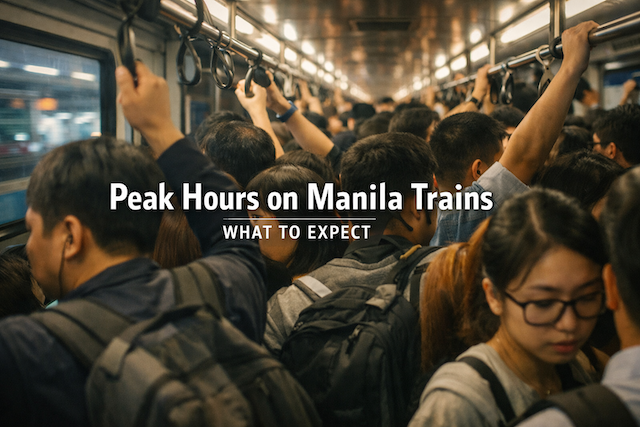
Peak Hours on Manila Trains: What to Expect
Contents
- Peak Hours on Manila Trains: What to Expect
- What Are Peak Hours on Manila Trains?
- Morning Peak Hours in Manila
- Evening Peak Hours in Manila
- Peak Hours by Train Line
- MRT-3 Peak Hours (North Avenue – Taft Avenue)
- LRT Line 1 Peak Hours (Baclaran – Roosevelt)
- LRT Line 2 Peak Hours (Recto – Antipolo)
- Why Manila Train Peak Hours Are So Intense
- Limited Train Capacity
- High Dependence on Trains
- Concentrated Business Districts
- School and Office Schedule Overlap
- How Long Do Peak Hour Delays Add?
- Tips for Surviving Manila Train Peak Hours
- Travel Earlier or Later If Possible
- Use Stored-Value Cards
- Position Yourself Strategically on Platforms
- Travel Light During Peak Hours
- Expect Standing-Only Travel
- Peak Hours vs Off-Peak: Key Differences
- Are Peak Hours Safe?
- Is Peak Hour Travel Avoidable for Tourists?
- Future Improvements and Peak Hour Outlook
- Final Thoughts
- Frequently Asked Questions (FAQs)
- What time are peak hours on Manila trains?
- Which Manila train line is most crowded during peak hours?
- How early should I arrive at the station during peak hours?
- Do trains run less frequently during peak hours?
- What should I do if the platform is extremely crowded?
- Is it better to use a stored-value card during peak hours?
- How can I increase my chances of boarding quickly?
- Can tourists ride Manila trains during peak hours, or should they avoid it?
- Are peak hours different on weekends and holidays?
- What are the best safety tips for riding during peak hours?
Peak Hours on Manila Trains: What to Expect
Manila Transportation Guide
Metro Manila’s rail system is one of the fastest ways to move across the city, but it can also be one of the most challenging—especially during peak hours. If you are a commuter, traveler, student, or first-time visitor, understanding when peak hours happen, why they get crowded, and how to deal with them can make a major difference in your daily experience.
This guide explains peak hours on Manila’s major train lines, what conditions to expect, and practical strategies to travel more efficiently.
What Are Peak Hours on Manila Trains?
Peak hours refer to periods when passenger demand is highest, resulting in crowded platforms, long queues, and packed train cars. In Manila, peak hours are closely tied to office schedules, school hours, and business district traffic.
Unlike some cities with evenly spread rush hours, Manila’s peak times are intense and concentrated due to limited rail capacity and high population density.
Morning Peak Hours in Manila
Morning rush hours are driven by office workers, students, and service employees heading to business districts such as Makati, Ortigas, Bonifacio Global City (via transfers), and Quezon City.
Typical Morning Peak Time
-
6:00 AM – 9:00 AM
-
Busiest window: 7:00 AM – 8:30 AM
What to Expect
-
Long entry lines at station security checks
-
Platforms filled to capacity
-
Trains arriving already full
-
Standing room only, even at starting stations
-
Delays caused by boarding congestion
During this time, missing one train can mean waiting for several more before you can board.
Evening Peak Hours in Manila
Evening peak hours are often more intense than mornings because commuters are less time-flexible and trains are already delayed from daytime operations.
Typical Evening Peak Time
-
5:00 PM – 8:30 PM
-
Busiest window: 6:00 PM – 7:30 PM
What to Expect
-
Overflowing platforms at central stations
-
Extremely crowded train cars
-
Slower dwell times at stations
-
Exit bottlenecks at major hubs
-
Increased fatigue and discomfort
Evening congestion is especially severe on lines passing through central business areas.
Peak Hours by Train Line
Each Manila train line has its own crowd patterns depending on the areas it serves.
MRT-3 Peak Hours (North Avenue – Taft Avenue)
MRT-3 is the most crowded rail line in Metro Manila because it runs along EDSA, the city’s main business corridor.
Peak Hour Direction Patterns
-
Morning: North to South (North Avenue → Ayala/Taft)
-
Evening: South to North (Taft/Ayala → North Avenue)
Stations with Heavy Congestion
-
North Avenue
-
Cubao
-
Shaw Boulevard
-
Ayala
-
Taft Avenue
Peak Hour Conditions
-
Full trains even at terminal stations
-
Frequent platform crowd control
-
Longer boarding times
-
Limited space for bags or backpacks
During peak hours, MRT-3 trains often operate at maximum capacity.
LRT Line 1 Peak Hours (Baclaran – Roosevelt)
LRT Line 1 serves a mix of residential, commercial, and school-heavy areas.
Peak Hour Direction Patterns
-
Morning: South to North (Baclaran → Monumento/Roosevelt)
-
Evening: North to South
Stations with Heavy Congestion
-
Baclaran
-
Doroteo Jose
-
Carriedo
-
Monumento
Peak Hour Conditions
-
High passenger turnover
-
Shorter train intervals but heavier boarding
-
Crowded walkways and staircases
-
Standing-only travel common
LRT-1 can feel chaotic during peak hours due to high passenger volume and older station layouts.
LRT Line 2 Peak Hours (Recto – Antipolo)
LRT Line 2 is generally less crowded than MRT-3 and LRT-1, but peak hours still matter.
Peak Hour Direction Patterns
-
Morning: East to West (Antipolo → Recto)
-
Evening: West to East
Stations with Heavy Congestion
-
Recto
-
Cubao
-
Katipunan
-
Antipolo
Peak Hour Conditions
-
Moderate to heavy crowding
-
More space compared to other lines
-
Faster boarding due to wider train cars
-
More manageable for first-time riders
Among the three lines, LRT-2 offers the most comfortable peak-hour experience.
Why Manila Train Peak Hours Are So Intense
Several factors contribute to extreme congestion during rush hours.
Limited Train Capacity
Manila’s rail network has:
-
Shorter train sets compared to demand
-
Limited fleet availability
-
Aging infrastructure on older lines
Even with frequent trips, capacity cannot fully match passenger volume.
High Dependence on Trains
Trains are often:
-
Faster than buses during traffic
-
More predictable than road transport
-
Cheaper than ride-hailing options
As traffic worsens, more commuters rely on trains, intensifying peak hours.
Concentrated Business Districts
Major employment hubs are clustered along:
-
EDSA
-
Taft Avenue
-
Recto Avenue
This concentration creates directional crowd surges during fixed time windows.
School and Office Schedule Overlap
Unlike cities with staggered schedules, many offices and schools in Manila:
-
Start between 8:00–9:00 AM
-
End between 5:00–6:00 PM
This overlap magnifies peak congestion.
How Long Do Peak Hour Delays Add?
Peak hour travel times can increase significantly.
Estimated Delay Impact
-
Station entry: +10 to 20 minutes
-
Waiting for train: +5 to 15 minutes
-
Boarding congestion: +5 minutes
-
Exit congestion: +10 minutes
A trip that normally takes 30 minutes can easily stretch to 60 minutes or more during peak hours.
Tips for Surviving Manila Train Peak Hours
Peak hours are unavoidable for many commuters, but smart strategies can reduce stress.
Travel Earlier or Later If Possible
Shifting your schedule even slightly can help.
Better Time Windows
-
Before 6:00 AM
-
After 9:30 AM
-
After 8:30 PM
Trains are noticeably less crowded during these periods.
Use Stored-Value Cards
Always use a stored-value card instead of buying single-journey tickets.
Benefits
-
Skip ticket purchase lines
-
Faster gate entry
-
Less stress during crowd surges
This is one of the simplest and most effective time-savers.
Position Yourself Strategically on Platforms
Where you stand matters.
Practical Tips
-
Stand near the ends of platforms where crowd density is lower
-
Observe where passengers usually exit
-
Avoid doors aligned with stairs or escalators
Better positioning increases your chances of boarding.
Travel Light During Peak Hours
Large bags make peak-hour travel uncomfortable for everyone.
Recommendations
-
Use compact backpacks
-
Avoid bulky luggage
-
Keep bags in front during crowded rides
This improves safety and mobility.
Expect Standing-Only Travel
Seats are rarely available during peak hours.
Prepare By
-
Wearing comfortable shoes
-
Staying hydrated
-
Securing your balance near poles or handles
Mental preparation makes crowded rides more tolerable.
Peak Hours vs Off-Peak: Key Differences
| Aspect | Peak Hours | Off-Peak Hours |
|---|---|---|
| Crowding | Extremely high | Moderate to low |
| Boarding time | Slow | Fast |
| Seating | Rare | Often available |
| Travel stress | High | Low |
| Schedule flexibility | Limited | Flexible |
If comfort is a priority, off-peak travel is always preferable.
Are Peak Hours Safe?
Despite the crowding, Manila trains are generally safe during peak hours.
Safety Notes
-
Security personnel are present at stations
-
Platform crowd control is enforced
-
Pickpocketing risk exists but is manageable with awareness
Keep valuables secured and remain alert, especially during boarding and alighting.
Is Peak Hour Travel Avoidable for Tourists?
For visitors, peak hours are usually avoidable.
Tourist Recommendations
-
Travel mid-morning or early afternoon
-
Avoid weekday rush hours entirely
-
Use trains mainly between 10:00 AM – 4:00 PM
This ensures a smoother and more comfortable experience.
Future Improvements and Peak Hour Outlook
Authorities continue working on:
-
Fleet upgrades
-
Signal improvements
-
Line extensions
However, until capacity significantly increases, peak hour congestion will remain a reality.
Understanding the system—and planning around it—is the most effective solution today.
Final Thoughts
Peak hours on Manila trains are intense but predictable. By knowing when peak hours occur, which lines are most crowded, and how to prepare, you can significantly reduce frustration and travel more efficiently.
Whether you commute daily or ride occasionally, timing and preparation are your strongest tools in navigating Manila’s rail system successfully.
Frequently Asked Questions (FAQs)
What time are peak hours on Manila trains?
Peak hours on Manila trains typically happen on weekdays during the morning commute (around 6:00 AM to 9:00 AM) and the evening commute (around 5:00 PM to 8:30 PM). The busiest window in the morning is often 7:00 AM to 8:30 AM, while the most crowded period in the evening is usually 6:00 PM to 7:30 PM. These times can shift slightly depending on the station, school schedules, and special events. If you can travel even 30 to 60 minutes earlier or later than the core rush window, you may notice a big improvement in comfort and boarding speed.
Which Manila train line is most crowded during peak hours?
MRT-3 is widely considered the most crowded line during peak hours because it runs along EDSA, one of Metro Manila’s busiest corridors and a major link between residential areas and business districts. Trains can become full quickly, sometimes even at terminal stations. LRT Line 1 also gets heavily crowded, especially at central stations and transfer points. LRT Line 2 is often more manageable compared to MRT-3 and LRT-1, but it can still become packed near key stations like Recto, Cubao, and Katipunan during rush hours.
How early should I arrive at the station during peak hours?
During peak hours, arriving at least 15 to 30 minutes earlier than your ideal boarding time is a practical guideline, especially at major stations. The extra time helps you handle security screening, ticketing or gate lines, and platform congestion. At the busiest stations, queues can grow quickly and may affect your total travel time more than the train ride itself. If you are catching a flight, attending an appointment, or meeting someone on a strict schedule, adding an even larger buffer is wise.
Do trains run less frequently during peak hours?
In many systems, trains run more frequently during rush hour, and Manila’s operators also aim to increase capacity when demand is high. However, crowds can slow down station stops because boarding and alighting take longer. This can create the impression that trains are less frequent, even if scheduled intervals are tight. Operational issues, maintenance limits, and unexpected delays can also affect service. The key point is that peak-hour demand can still exceed supply, so trains may remain full despite frequent departures.
What should I do if the platform is extremely crowded?
If the platform is very crowded, prioritize safety and follow station staff instructions. Stand behind safety lines and avoid pushing toward the edge. If you feel uncomfortable, consider waiting for a less crowded train, moving to a different platform section, or traveling off-peak if possible. Keep your bag in front of you to avoid bumping others and to protect valuables. If you are traveling with children, stay together and choose a safer position away from the densest crowd near stairs and escalators.
Is it better to use a stored-value card during peak hours?
Yes. Using a stored-value card can save time because you can skip long ticket-buying lines and enter gates faster. During rush hour, the biggest delays often happen before you even reach the platform, especially at stations with limited ticket counters or heavy passenger flow. A stored-value card also reduces stress because you do not need to calculate fares or worry about ticket availability when queues are long. Keeping a small balance buffer on your card is a smart habit so you do not get stuck topping up at the worst time.
How can I increase my chances of boarding quickly?
Positioning and timing matter. If you arrive early, you can choose a better spot on the platform before it becomes crowded. Many regular commuters stand where train doors align, so observing the crowd can help you find a less congested door area, often toward the ends of the platform. Let passengers exit first, then board efficiently without blocking the doorway. If you are not in a rush, allowing one train to pass can sometimes lead to a better boarding opportunity on the next arrival, especially if you are at a station where crowds thin out slightly after a few stops.
Can tourists ride Manila trains during peak hours, or should they avoid it?
Tourists can ride Manila trains during peak hours, but it is usually more comfortable to avoid rush times. If you are carrying shopping bags, luggage, or traveling as a group, peak hours can feel stressful and cramped. For sightseeing, the best train window is often mid-morning to mid-afternoon, when crowds are lighter and stations are easier to navigate. If you must ride during peak hours, keep your belongings secure, plan your route in advance, and expect delays at entrances and platforms.
Are peak hours different on weekends and holidays?
Yes. Peak hours are most intense on weekdays due to commuting patterns. On weekends and holidays, train crowding may still happen, but it tends to be less predictable and often driven by shopping, events, or church traffic rather than office schedules. Some stations near malls, major intersections, or event venues can become crowded in the late morning and afternoon. If you are traveling on a holiday, check for advisories and consider allowing extra time because staffing or operational schedules may differ.
What are the best safety tips for riding during peak hours?
During peak hours, keep valuables secured and avoid placing phones or wallets in easy-to-reach pockets. Use a crossbody bag or keep your backpack in front of you. Stay alert when boarding and exiting, as crowds can create opportunities for pickpocketing. Follow platform safety rules and do not rush the doors. If you feel unwell in a packed carriage, move closer to doors (without blocking them) and consider getting off at the next station to recover. Most importantly, remain calm and patient—peak-hour travel is stressful, but safe behavior and awareness greatly reduce risks.

How to Register for eTravel Philippines (2025 Guide)
Step-by-step guide to completing your eTravel registration before arriving in the Philippines, with images and tips.

Night Market in Cebu – Things You Don’t Know About Cebu Life
Discover the hidden charm of Cebu’s night markets, from street food stalls to local life tips you won’t find in tourist guides.

How to Use ChatGPT for IELTS Preparation: A Complete Guide
Learn how to prepare for IELTS using ChatGPT — including strategies for Writing, Reading, Listening, Speaking, and grammar support.

How to Build a Website Without Coding Using ChatGPT
Discover how to build your own website using AI—no coding skills needed. From structure planning to SEO and design, let ChatGPT guide you.