2025年12月31日
3D ACADEMY offers affordable English study programs in Cebu, Philippines – perfect for beginners, professionals, and exam takers.

3D UNIVERSAL ENGLISH INSTITUTE INC
info.3d-universal.com
8:00-17:00(Mon-Fri)
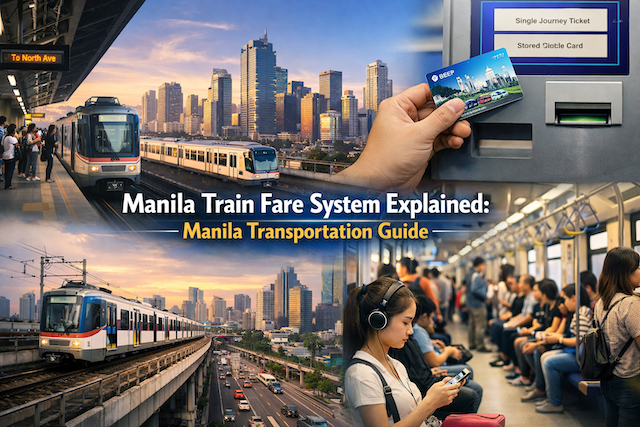
Manila Train Fare System Explained: Manila Transportation Guide
Contents
- Manila Train Fare System Explained: Manila Transportation Guide
- Overview of Manila’s Train Network and Operators
- Basic Concept of Train Fares in Manila
- Types of Train Tickets in Manila
- Manila Train Fare Ranges (General Guide)
- How Fare Is Calculated Per Line
- Using Beep Card: How the Fare Deduction Works
- Where to Buy and Reload Tickets
- Fare Discounts and Special Rates
- Transfer Rules Between Lines
- Penalties, Time Limits, and Common Mistakes
- Peak vs Off-Peak: Does Fare Change?
- Comparing Train Fares with Other Transport Options
- Practical Tips to Save Time and Money
- Is the Manila Train Fare System Tourist-Friendly?
- Final Thoughts
- FAQs (Frequently Asked Questions)
- Is there one unified ticket for all Manila train lines?
- How are train fares calculated in Manila?
- What is the difference between a Single Journey Ticket and a stored-value card?
- Do Beep cards work on MRT-3, LRT-1, and LRT-2?
- How does fare deduction work when using a stored-value card?
- Do Manila train fares change during rush hours or weekends?
- Are there discounts for students, seniors, or persons with disabilities?
- What happens if I do not have enough balance on my stored-value card?
- Can I transfer between lines without paying twice?
- Do I need to keep my ticket after entering the station?
- What should I do if a gate does not accept my ticket or card?
- Is it better for tourists to buy single tickets or a stored-value card?
- How can I avoid common mistakes with the Manila train fare system?
Manila Train Fare System Explained: Manila Transportation Guide
Understanding the train fare system in Metro Manila can feel confusing at first, especially for first-time visitors, expats, or even locals who do not commute daily. Unlike some cities with a single unified ticketing system, Manila’s rail network consists of multiple operators, fare structures, and payment methods.
This guide explains how Manila train fares work, how much you should expect to pay, the difference between ticket types, and practical tips to avoid common mistakes. By the end, you should be able to use MRT and LRT lines with confidence and efficiency.
Overview of Manila’s Train Network and Operators
Metro Manila currently has three major urban rail systems that most commuters use:
-
LRT Line 1 (LRT-1)
Runs north–south from Fernando Poe Jr. Station (Quezon City) to Dr. Santos Station (Parañaque). -
LRT Line 2 (LRT-2)
Runs east–west from Recto Station (Manila) to Antipolo Station (Rizal). -
MRT Line 3 (MRT-3)
Runs along EDSA, connecting North Avenue to Taft Avenue.
Each line has its own fare table, even though the payment logic is similar across systems.
Basic Concept of Train Fares in Manila
The Manila train fare system is distance-based. This means:
-
You pay based on how far you travel, not a flat rate.
-
The farther your destination station, the higher the fare.
-
Fares are calculated station to station, not by time.
There are no daily passes or unlimited ride tickets like in some other countries. Every entry requires a valid ticket or stored-value card.
Types of Train Tickets in Manila
Single Journey Ticket (SJT)
A Single Journey Ticket is the most basic option.
-
Valid for one trip only
-
Purchased at ticket vending machines or counters
-
You must enter and exit the station within a limited time
-
Usually issued as a thin plastic token or paper-based QR ticket (depending on the line)
This is ideal for:
-
Tourists
-
Occasional riders
-
One-time trips
However, lines at ticket machines can be long during rush hours.
Stored Value Ticket (Beep Card)
The Beep Card is a reloadable smart card used across:
-
LRT-1
-
LRT-2
-
MRT-3
-
Some buses and ferries
Key features:
-
Works like a prepaid card
-
Tap in and tap out at fare gates
-
Offers slightly discounted fares compared to single tickets
-
Reduces waiting time significantly
For anyone staying in Manila more than a day or two, a Beep Card is highly recommended.
Manila Train Fare Ranges (General Guide)
While exact fares change occasionally, here is a general range you can expect:
MRT-3 Fare Range
-
Short distance: around PHP 13
-
End-to-end (North Avenue to Taft Avenue): around PHP 28
LRT-1 Fare Range
-
Short distance: around PHP 15
-
End-to-end: around PHP 35
LRT-2 Fare Range
-
Short distance: around PHP 15
-
End-to-end (Recto to Antipolo): around PHP 35
These prices are extremely affordable compared to taxis or ride-hailing services, especially during peak traffic hours.
How Fare Is Calculated Per Line
MRT-3 Fare Calculation
MRT-3 uses a zonal distance system:
-
Stations are grouped into zones
-
Each additional zone increases the fare
-
Fare tables are posted near ticket machines and station walls
You do not need to calculate this manually. Simply select your destination station when buying a ticket.
LRT-1 Fare Calculation
LRT-1 also follows a distance-based model, but with slightly higher fares than MRT-3 due to longer route length.
-
Entry and exit stations determine the fare
-
Ticket machines list destinations with corresponding prices
-
Beep Card users automatically get the correct fare deducted
LRT-2 Fare Calculation
LRT-2 tends to be the most straightforward:
-
Fewer stations
-
Clear digital vending machines
-
Less crowding compared to MRT-3
Fares increase gradually as you move toward Antipolo.
Using Beep Card: How the Fare Deduction Works
When using a Beep Card:
-
Tap in at the entry gate
-
The system records your entry station
-
Tap out at your exit station
-
The correct fare is automatically deducted
Important notes:
-
You must maintain a minimum balance (usually around PHP 15–20)
-
If your balance is insufficient, gates will not open
-
Always tap out, or the system may charge a maximum fare
Where to Buy and Reload Tickets
Buying Single Journey Tickets
-
Ticket vending machines inside stations
-
Ticket counters for assistance
-
Cash is usually accepted; machines may not accept large bills
Buying and Reloading Beep Cards
Beep Cards are available at:
-
Major train stations
-
Convenience stores inside stations
-
Some malls and transport hubs
Reload options:
-
Station reload machines
-
Ticket counters
-
Selected convenience stores
Reloading is fast, but queues can form during rush hours.
Fare Discounts and Special Rates
Discounted Fares Are Available For:
-
Senior citizens
-
Persons with disabilities (PWD)
-
Students (on some lines)
Requirements:
-
Valid Philippine-issued ID
-
Discounts usually apply only to Single Journey Tickets
-
Beep Card discounts may not always apply automatically
Foreign tourists generally pay regular fares.
Transfer Rules Between Lines
One important thing to understand is that Manila trains do not have a fully integrated fare system.
-
Transferring between MRT and LRT lines often requires:
-
Exiting the station
-
Walking to another station
-
Buying a new ticket
-
Examples:
-
MRT-3 Taft Avenue ↔ LRT-1 EDSA (connected by walkway)
-
LRT-2 Recto ↔ LRT-1 Doroteo Jose (connected by bridge)
Even though stations are connected, fares are not combined. You pay separately for each line.
Penalties, Time Limits, and Common Mistakes
Time Limits
-
Single Journey Tickets must be used within a set period
-
Staying too long inside the system may invalidate your ticket
Lost Tickets or Cards
-
Losing a ticket inside the station usually means paying a penalty fare
-
Penalty fares are significantly higher than normal fares
Not Tapping Out
-
Beep Card users who forget to tap out may be charged a maximum fare
-
Always check that the gate confirms your exit
Peak vs Off-Peak: Does Fare Change?
Unlike some cities, Manila train fares do not change by time of day.
-
No peak pricing
-
No off-peak discounts
However:
-
Crowding is significantly worse during rush hours
-
Ticket lines are longer
-
Trains may be packed, especially on MRT-3
If convenience matters, using a Beep Card during peak hours is almost essential.
Comparing Train Fares with Other Transport Options
Train vs Jeepney
-
Trains are slightly more expensive
-
Much faster for long distances
-
More predictable travel time
Train vs Bus
-
Buses may be cheaper on short routes
-
Trains avoid traffic congestion
-
Buses often require exact fare
Train vs Taxi / Grab
-
Trains are far cheaper
-
Taxis may cost 10–20 times more during traffic
-
Trains are ideal for budget-conscious travelers
Practical Tips to Save Time and Money
-
Buy a Beep Card as soon as possible
-
Avoid buying Single Journey Tickets during rush hours
-
Keep small bills or coins for ticket machines
-
Take photos of fare tables if you commute often
-
Check your Beep Card balance before entering the gate
Is the Manila Train Fare System Tourist-Friendly?
Overall, Manila’s train fare system is:
-
Affordable
-
Logical
-
Slightly fragmented due to multiple operators
While not as seamless as systems in Tokyo or Singapore, it is easy to learn after one or two rides. For visitors and new residents, the biggest challenge is understanding that each line charges separately, even when stations are physically connected.
Final Thoughts
The Manila train fare system may look complicated at first, but it follows a simple principle: pay based on distance, per line, per ride. Once you understand ticket types and fare ranges, using the MRT and LRT becomes one of the most cost-effective ways to move around Metro Manila.
For anyone navigating the city regularly, investing in a Beep Card and learning transfer points will save both time and frustration.
FAQs (Frequently Asked Questions)
Is there one unified ticket for all Manila train lines?
No. Metro Manila’s rail lines are not fully unified in the way some large cities operate under a single “one-ticket” system. MRT-3, LRT-1, and LRT-2 generally share similar ticket logic (distance-based fares, entry/exit gates), but transfers between lines usually require you to exit and buy another ticket or tap again for a separate fare. Even when two stations are connected by a footbridge (for example, MRT-3 Taft Avenue to LRT-1 EDSA, or LRT-2 Recto to LRT-1 Doroteo Jose), the fare is still treated as a separate trip on a different line.
How are train fares calculated in Manila?
Manila train fares are primarily distance-based. In simple terms, the farther you travel from your entry station to your exit station, the higher the fare. Each line has a fare table that lists the price per destination. You do not need to calculate it manually because vending machines, counters, and stored-value systems automatically compute the correct fare when you select a destination or tap in and out with a card.
What is the difference between a Single Journey Ticket and a stored-value card?
A Single Journey Ticket (SJT) is valid for one ride only, from your chosen entry station to your selected exit station. It is convenient for occasional trips, but you typically need to line up at a machine or counter each time. A stored-value card (commonly a Beep card) works like prepaid credit: you load money onto the card and tap in and tap out at gates. Stored-value cards reduce the need to buy a new ticket each ride, and they often make station entry faster, especially during peak commuter hours.
Do Beep cards work on MRT-3, LRT-1, and LRT-2?
Yes, Beep cards are widely accepted across MRT-3, LRT-1, and LRT-2. This makes them the most practical payment method if you expect to use multiple train lines during your stay. The biggest advantage is convenience: instead of purchasing separate single tickets repeatedly, you can use the same card across lines and reload when needed. That said, acceptance can depend on station equipment being operational, so it is smart to keep small cash as backup.
How does fare deduction work when using a stored-value card?
When you use a stored-value card, you tap at the entry gate to record your starting station. When you exit, you tap again so the system can calculate the exact distance traveled and deduct the correct fare. If you forget to tap out, or if there is an issue at the exit gate, you may be charged an incorrect amount or a maximum fare depending on the system rules. If that happens, approach station staff for assistance before leaving the station area.
Do Manila train fares change during rush hours or weekends?
In most cases, fares do not change based on time of day. Unlike dynamic pricing systems, Manila’s rail fares are generally fixed by distance and line. Rush hours mainly affect the experience (longer lines, crowded platforms, packed trains), not the ticket price. If you want to minimize waiting, using a stored-value card helps because it reduces time spent buying tickets at machines and counters.
Are there discounts for students, seniors, or persons with disabilities?
Discounts can be available for eligible groups such as senior citizens, persons with disabilities (PWD), and sometimes students, depending on the line’s policies and current implementation. Typically, you will need a valid locally recognized ID to claim discounted fares. In practice, discounts are often easiest to request at ticket counters rather than vending machines. If you qualify, ask station staff about the latest rules, required documents, and whether the discount applies to stored-value cards or only to single tickets.
What happens if I do not have enough balance on my stored-value card?
If your card balance is too low, the entry gate may reject your tap, or you may be unable to exit at your destination. To avoid delays, check your balance before entering and reload when you see it getting low. Many stations have reload machines or counters, but queues can form. Keeping a buffer balance is helpful, especially if you anticipate transferring lines or riding during busy periods.
Can I transfer between lines without paying twice?
Usually, no. Transfers in Manila often require paying a separate fare because the lines operate as distinct systems. Even at connected transfer points, you may need to exit one paid area and enter another. For travelers, the key is planning: choose routes that minimize transfers when possible, and keep enough balance or cash ready for the second entry. While the walkways make transfers physically easier, the payment system is not always integrated.
Do I need to keep my ticket after entering the station?
Yes. If you are using a Single Journey Ticket, you often need it again at the exit gate. Losing it may lead to delays and potential penalty fees. If you are using a stored-value card, you simply keep the card with you and tap out to exit. In both cases, treat your ticket or card like a key: you need it to complete the trip properly.
What should I do if a gate does not accept my ticket or card?
First, do not panic. Step aside so you do not block other passengers, and try tapping again carefully. If it still fails, proceed to the station staff or the customer assistance booth. Common causes include insufficient balance, a damaged ticket, an unreadable card, or temporary gate malfunction. Station staff can verify your entry record and help you exit or correct the fare issue, especially if you experienced a technical error rather than misuse.
Is it better for tourists to buy single tickets or a stored-value card?
For most tourists staying more than a day, a stored-value card is usually better. It saves time, reduces friction during busy hours, and makes multi-ride days much easier. Single tickets can work for one-off rides, but you may spend more time queuing and dealing with machines. If your trip includes multiple train rides, transfers, or back-and-forth commuting, a stored-value card offers the smoothest experience.
How can I avoid common mistakes with the Manila train fare system?
Three habits prevent most problems: keep a small cash backup, monitor your stored-value balance, and always complete the trip by tapping out. Also, plan transfers in advance because connected stations do not necessarily mean unified fares. Finally, allow extra time during peak hours, since crowds can slow down ticket purchase, platform access, and boarding even when fares remain cheap and straightforward.

How to Register for eTravel Philippines (2025 Guide)
Step-by-step guide to completing your eTravel registration before arriving in the Philippines, with images and tips.

Night Market in Cebu – Things You Don’t Know About Cebu Life
Discover the hidden charm of Cebu’s night markets, from street food stalls to local life tips you won’t find in tourist guides.

How to Use ChatGPT for IELTS Preparation: A Complete Guide
Learn how to prepare for IELTS using ChatGPT — including strategies for Writing, Reading, Listening, Speaking, and grammar support.

How to Build a Website Without Coding Using ChatGPT
Discover how to build your own website using AI—no coding skills needed. From structure planning to SEO and design, let ChatGPT guide you.