2025年12月31日
3D ACADEMY offers affordable English study programs in Cebu, Philippines – perfect for beginners, professionals, and exam takers.

3D UNIVERSAL ENGLISH INSTITUTE INC
info.3d-universal.com
8:00-17:00(Mon-Fri)
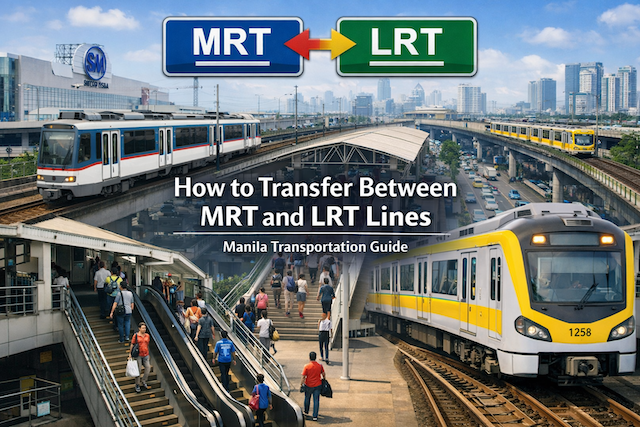
How to Transfer Between MRT and LRT Lines: Manila Transportation Guide
Contents
- How to Transfer Between MRT and LRT Lines: Manila Transportation Guide
- Understanding Manila’s Rail System at a Glance
- MRT-3 to LRT Line 1 Transfer (Taft Avenue ↔ EDSA)
- MRT-3 to LRT Line 2 Transfer (Cubao)
- LRT Line 1 to LRT Line 2 Transfer (Doroteo Jose ↔ Recto)
- Are There Direct Paid Transfers Between MRT and LRT?
- Using the Beep Card for Transfers
- Common Transfer Mistakes to Avoid
- Peak Hour Transfer Challenges
- Accessibility Considerations
- Safety Tips When Transferring
- Best Transfers for Different Travel Routes
- Should You Transfer or Use Alternative Transport?
- Final Thoughts: Mastering MRT–LRT Transfers in Manila
- Frequently Asked Questions (FAQs)
- Can you transfer directly between MRT and LRT without exiting the station?
- Which transfer is the easiest for first-time riders?
- How long does it usually take to transfer between MRT and LRT lines?
- Do I need to buy a new ticket every time I transfer?
- Is the Beep card accepted on MRT-3, LRT-1, and LRT-2?
- What is the best MRT–LRT transfer point for going to NAIA or Pasay?
- Is the Cubao transfer between MRT-3 and LRT-2 fully covered?
- What should I expect during peak hours when transferring?
- Are MRT and LRT stations accessible for seniors or travelers with luggage?
- Is it safe to transfer between MRT and LRT lines?
- What is the best “rule of thumb” to avoid getting lost during transfers?
How to Transfer Between MRT and LRT Lines: Manila Transportation Guide
Metro Manila’s rail network can feel confusing at first, especially when you need to transfer between MRT and LRT lines. Stations are not always directly connected, signage can be inconsistent, and walking routes sometimes go outside stations or through malls.
That said, once you understand the major transfer points and what to expect, moving between MRT-3, LRT Line 1, and LRT Line 2 becomes much easier. This guide explains all practical transfer routes, step-by-step walking connections, fare considerations, and real-world tips to help you navigate Manila’s train system efficiently.
Understanding Manila’s Rail System at a Glance
Before diving into transfer routes, it helps to understand how the system is structured.
MRT-3
-
Runs along EDSA
-
Covers North Avenue to Taft Avenue
-
Serves major business districts like Ortigas, Makati, and Quezon City
LRT Line 1
-
Runs north–south
-
From Fernando Poe Jr. (Roosevelt) to Baclaran
-
Covers Manila City, Pasay, and parts of Caloocan
LRT Line 2
-
Runs east–west
-
From Recto to Antipolo
-
Serves university areas like Recto, Legarda, Katipunan
Transfers are not unified under a single paid area, meaning you usually need to exit one system and enter another, paying separate fares.
MRT-3 to LRT Line 1 Transfer (Taft Avenue ↔ EDSA)
This is the most common transfer in Metro Manila.
Transfer Stations
-
MRT-3 Taft Avenue Station
-
LRT Line 1 EDSA Station
Walking Route Explained
-
Exit MRT-3 Taft Avenue Station
-
Follow signs toward LRT EDSA
-
Walk across the covered pedestrian walkway
-
Enter LRT Line 1 EDSA Station and buy a new ticket or tap your card
Walking time: 5–7 minutes
What to Expect
-
Heavy foot traffic, especially during rush hours
-
Vendors and crowds near exits
-
Security checks at both stations
Practical Tips
-
If carrying luggage, expect stairs and narrow walkways
-
Be mindful of pickpockets during peak hours
-
Avoid 7:00–9:00 AM and 5:00–7:00 PM if possible
MRT-3 to LRT Line 2 Transfer (Cubao)
Cubao is one of the largest and most confusing transfer areas, but also one of the most useful.
Transfer Stations
-
MRT-3 Araneta Center–Cubao Station
-
LRT Line 2 Araneta Center–Cubao Station
Walking Route Explained
-
Exit MRT-3 Cubao toward Gateway Mall
-
Walk through Gateway Mall (air-conditioned)
-
Follow signs for LRT Line 2
-
Enter LRT-2 Cubao Station and purchase ticket or tap card
Walking time: 10–15 minutes
Why This Transfer Is Easier Than It Looks
-
Fully covered and mostly indoors
-
Clear signage inside the mall
-
Food, restrooms, and convenience stores along the way
Practical Tips
-
Use the mall route to avoid heat and rain
-
Weekends can be crowded due to shopping traffic
-
Follow mall security directions if unsure
LRT Line 1 to LRT Line 2 Transfer (Doroteo Jose ↔ Recto)
This transfer connects north–south and east–west Manila routes.
Transfer Stations
-
LRT Line 1 Doroteo Jose Station
-
LRT Line 2 Recto Station
Walking Route Explained
-
Exit LRT-1 Doroteo Jose Station
-
Use the elevated covered walkway
-
Walk directly into LRT Line 2 Recto Station
-
Enter security area and purchase ticket or tap card
Walking time: 3–5 minutes
What Makes This Transfer Efficient
-
Direct elevated walkway
-
No need to go down to street level
-
Shortest transfer distance in Manila rail system
Practical Tips
-
Watch your step during rainy weather (walkway can be slippery)
-
Expect crowds during school hours
-
Keep ticket or card ready for quick entry
Are There Direct Paid Transfers Between MRT and LRT?
Currently, no direct paid-area transfers exist between MRT and LRT lines.
What This Means
-
You must exit one station
-
Go through security again
-
Pay a new fare for the next line
Single Journey Tickets vs Stored-Value Cards
-
Single journey tickets cannot be reused across lines
-
Stored-value cards (Beep) make transfers faster but still deduct separate fares
Using the Beep Card for Transfers
The Beep Card is the most convenient option when transferring.
Benefits During Transfers
-
No need to line up for tickets again
-
Faster entry through gates
-
Works across MRT-3, LRT-1, and LRT-2
Important Reminder
Even with Beep Card:
-
Transfers are not free
-
Each line charges a separate fare
Where to Buy or Reload
-
Ticket booths at all stations
-
Some convenience stores and kiosks
-
Reload machines inside stations
Common Transfer Mistakes to Avoid
Many first-time riders make similar errors. Avoid these to save time and stress.
Assuming Stations Are Physically Connected
Some stations share names but are not directly connected without walking outside or through malls.
Not Allowing Enough Time
Transfers can take:
-
5 minutes (best case)
-
15–20 minutes during peak hours
Always buffer extra time.
Choosing the Wrong Exit
Exits are often directional. If unsure:
-
Ask station guards
-
Follow signs carefully
-
Look for “Transfer to MRT/LRT” indicators
Peak Hour Transfer Challenges
Transfers become significantly harder during rush hours.
Morning Rush
-
6:30 AM – 9:30 AM
-
Heavy queues at security and ticket booths
Evening Rush
-
5:00 PM – 8:00 PM
-
Long platform waits and crowded walkways
How to Make Transfers Easier
-
Travel outside peak hours if possible
-
Use Beep Card
-
Stand near exits inside the train to save walking time
Accessibility Considerations
Transfers can be challenging for:
-
Seniors
-
Travelers with luggage
-
People with mobility issues
Elevators and Escalators
-
Not all stations have working elevators
-
Escalators may be one-directional or out of service
Practical Advice
-
Allow extra time
-
Ask station staff for accessible routes
-
Consider alternatives like Grab if mobility is limited
Safety Tips When Transferring
While generally safe, busy transfer points require awareness.
Personal Safety
-
Keep bags zipped and close
-
Avoid using phones in crowded walkways
-
Stay alert near station exits
Weather Concerns
-
Covered walkways may still get wet
-
Bring non-slip shoes during rainy season
Best Transfers for Different Travel Routes
Understanding which transfer suits your route saves time.
From Makati to University Belt
-
MRT-3 to LRT-2 via Cubao
-
Or MRT-3 to LRT-1 at Taft, then LRT-2 via Doroteo Jose
From Quezon City to Manila Port Area
-
MRT-3 to LRT-1 via Taft Avenue
From East Manila to Pasay
-
LRT-2 to LRT-1 via Recto–Doroteo Jose
Should You Transfer or Use Alternative Transport?
Sometimes transferring trains is not the best option.
When Transfers Make Sense
-
Long-distance travel across Metro Manila
-
Avoiding heavy road traffic
-
Budget-conscious commuting
When Alternatives Are Better
-
Late-night travel (trains close early)
-
Traveling with heavy luggage
-
Short distances with multiple transfers
Options include:
-
Jeepney
-
Bus
-
Grab or taxi
Final Thoughts: Mastering MRT–LRT Transfers in Manila
Transferring between MRT and LRT lines in Manila is manageable with preparation. While the system lacks seamless paid-area transfers, knowing where to walk, how long it takes, and what to expect makes a huge difference.
Key takeaways:
-
Use Beep Card whenever possible
-
Expect to exit and re-enter stations
-
Allow extra time during peak hours
-
Learn the three major transfer points: Taft–EDSA, Cubao, Recto–Doroteo Jose
With this knowledge, navigating Manila’s rail system becomes less intimidating and far more efficient, even for first-time visitors.
Frequently Asked Questions (FAQs)
Can you transfer directly between MRT and LRT without exiting the station?
No. In Metro Manila, MRT-3 and the LRT lines are not connected through a single paid area. In most transfer situations, you must exit one station, pass through security again, and enter the next station as a separate trip. Even at popular transfer points like Taft Avenue (MRT-3) to EDSA (LRT-1), the connection is a pedestrian walkway rather than an inside-the-gates transfer. Plan for extra time because you may encounter lines at security checks and ticket counters before you can board the next train.
Which transfer is the easiest for first-time riders?
The simplest transfer for many first-time riders is LRT Line 1 Doroteo Jose to LRT Line 2 Recto (and the reverse). The stations are connected by an elevated walkway, and the walking distance is relatively short compared with other transfers. The MRT-3 Taft Avenue to LRT-1 EDSA transfer is also common and straightforward, but it can feel more hectic due to crowds and the surrounding street activity. If you want the most “direct” walking route, Doroteo Jose–Recto usually feels the least confusing.
How long does it usually take to transfer between MRT and LRT lines?
Transfer time depends on the station pair, the time of day, and how familiar you are with the route. As a rough guide: Taft Avenue (MRT-3) to EDSA (LRT-1) often takes around 5–10 minutes of walking plus the time to re-enter and buy a ticket. Doroteo Jose (LRT-1) to Recto (LRT-2) can take about 5–10 minutes including queues. Cubao (MRT-3) to Cubao (LRT-2) is typically longer, often 10–20 minutes, because you may pass through mall corridors and deal with heavier foot traffic.
Do I need to buy a new ticket every time I transfer?
Yes, in most cases you will pay a separate fare for the next line because the transfer is treated as a new entry. If you use a single journey ticket, you will buy another one for the next line. If you use a stored-value card, you will tap in again at the next station and the fare will be deducted accordingly. The key advantage of a stored-value card is speed and convenience, not free transfers.
Is the Beep card accepted on MRT-3, LRT-1, and LRT-2?
Yes. The Beep card is designed to work across MRT-3, LRT Line 1, and LRT Line 2, making it the most practical choice if you expect to transfer. With Beep, you can skip many ticketing lines and simply tap in and out. However, remember that the system still charges fares per line entry. For travelers staying several days in Metro Manila, a Beep card often reduces friction and makes transfers less stressful.
What is the best MRT–LRT transfer point for going to NAIA or Pasay?
Many riders use the MRT-3 Taft Avenue station and transfer to LRT-1 EDSA station if they are heading toward Pasay or areas connected to the LRT-1 corridor. For airport access, trains are not a direct “airport line,” so you may still need a taxi, Grab, or a bus connection depending on which terminal you are going to. If your final destination is near Baclaran, Pasay Rotonda, or central Pasay areas, the Taft–EDSA transfer is one of the most commonly used combinations.
Is the Cubao transfer between MRT-3 and LRT-2 fully covered?
Most of the Cubao transfer route is covered, and many people walk through connected mall corridors. This can be a big advantage during hot afternoons or rainy weather. That said, “covered” does not always mean seamless. You may pass through busy indoor walkways with crowds, and it can take longer than expected if there are events, weekend shoppers, or directional confusion. If you are transferring at Cubao for the first time, follow signs carefully and do not hesitate to ask guards for the fastest route to LRT-2.
What should I expect during peak hours when transferring?
Peak hours can add significant time and discomfort. You may encounter longer security lines, crowded walkways, and packed platforms. The most difficult part is often not the walking distance but the waiting time to re-enter the next station and board a train. If you can, travel outside the common rush windows (early morning and late afternoon). If you must transfer during peak periods, position yourself near the train doors before your transfer stop so you can exit quickly and head straight to the connection route.
Are MRT and LRT stations accessible for seniors or travelers with luggage?
Accessibility varies by station. Some stations have elevators or escalators, but availability and reliability can be inconsistent. Transfers often involve stairs, footbridges, and long corridors, which can be tiring for seniors or difficult with large luggage. If you are traveling with heavy bags, allow extra time and consider using a taxi or ride-hailing service for at least part of the trip. If you are assisting someone with limited mobility, ask station staff about the best accessible exits and the most manageable walking route.
Is it safe to transfer between MRT and LRT lines?
Transfers are generally safe, but crowded areas require awareness. Keep your belongings close, avoid displaying valuables, and stay alert in congested walkways and station exits. In busy transfer zones, it is easy to get distracted by lines, noise, and signage. Simple habits—like wearing your backpack in front, keeping your phone secure, and moving with the crowd—help reduce risk. If you feel uncertain, stay near station staff and follow the main pedestrian flow rather than taking isolated side paths.
What is the best “rule of thumb” to avoid getting lost during transfers?
Use three habits: confirm the station name before exiting, follow transfer-specific signage rather than general exits, and ask a guard early if you are unsure. Many transfer routes are easier than they appear, but a single wrong exit can send you to the wrong side of a major road. Also, keep your route simple: know which line you are entering next, and identify the direction you need (northbound/southbound or the final station direction). A small bit of preparation prevents most transfer confusion.

How to Register for eTravel Philippines (2025 Guide)
Step-by-step guide to completing your eTravel registration before arriving in the Philippines, with images and tips.

Night Market in Cebu – Things You Don’t Know About Cebu Life
Discover the hidden charm of Cebu’s night markets, from street food stalls to local life tips you won’t find in tourist guides.

How to Use ChatGPT for IELTS Preparation: A Complete Guide
Learn how to prepare for IELTS using ChatGPT — including strategies for Writing, Reading, Listening, Speaking, and grammar support.

How to Build a Website Without Coding Using ChatGPT
Discover how to build your own website using AI—no coding skills needed. From structure planning to SEO and design, let ChatGPT guide you.