2025年12月31日
3D ACADEMY offers affordable English study programs in Cebu, Philippines – perfect for beginners, professionals, and exam takers.

3D UNIVERSAL ENGLISH INSTITUTE INC
info.3d-universal.com
8:00-17:00(Mon-Fri)
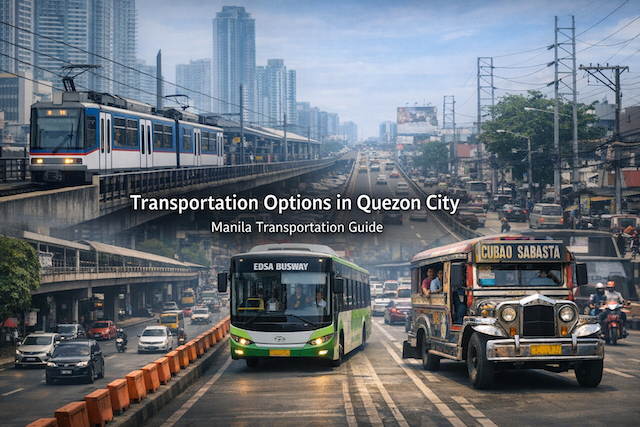
Transportation Options in Quezon City: Manila Transportation Guide
Contents
- Transportation Options in Quezon City: Manila Transportation Guide
- Overview of Transportation in Quezon City
- MRT-3 (Metro Rail Transit Line 3)
- LRT-2 (Light Rail Transit Line 2)
- EDSA Busway (Carousel Bus)
- City Buses and Provincial Buses
- Jeepneys
- Modern Jeepneys (E-Jeepneys)
- Tricycles
- Taxis
- Ride-Hailing Apps (Grab)
- Motorcycle Taxis
- Walking and Pedestrian Travel
- Choosing the Best Transportation Option in Quezon City
- Practical Tips for Getting Around Quezon City
- Final Thoughts
- FAQs (Frequently Asked Questions)
- Is Quezon City easy to get around without a car?
- Which train line should I use in Quezon City: MRT-3 or LRT-2?
- Can I connect between MRT-3 and LRT-2 in Quezon City?
- What is the EDSA Busway (EDSA Carousel), and is it useful in Quezon City?
- Are jeepneys safe for tourists or first-time visitors?
- What is the difference between traditional jeepneys and modern jeepneys?
- When should I use a tricycle in Quezon City?
- Is Grab available everywhere in Quezon City?
- Are motorcycle taxis a good option in Quezon City?
- What is the cheapest way to travel around Quezon City?
- What is the fastest way to travel during rush hour?
- How can I avoid getting lost when using public transportation in Quezon City?
Transportation Options in Quezon City: Manila Transportation Guide
Quezon City (often called QC) is the largest city in Metro Manila by land area and population. It is a mix of business districts, universities, government offices, residential neighborhoods, and major commercial hubs such as Cubao, Eastwood, Katipunan, and Commonwealth. Because of its size, getting around Quezon City can feel confusing at first, especially for visitors and newcomers. However, the city offers a wide range of transportation options, from modern rail systems to traditional local rides.
This guide explains all major transportation options in Quezon City, how they work, who they are best for, and practical tips to help you move around efficiently.
Overview of Transportation in Quezon City
Quezon City does not rely on a single transportation system. Instead, it uses a multi-layered network that includes trains, buses, jeepneys, tricycles, taxis, and app-based ride-hailing services. Travel time can vary greatly depending on traffic, time of day, and route choice.
Key things to know before moving around Quezon City:
-
Traffic congestion is common, especially during rush hours.
-
Travel times are often unpredictable.
-
Some areas are well-served by trains, while others depend on road-based transport.
-
Combining multiple transport types is often the most efficient approach.
Understanding each option will help you choose the best one for your situation.
MRT-3 (Metro Rail Transit Line 3)
MRT-3 is one of the most important transportation options in Quezon City, especially for north–south travel.
Key MRT-3 Stations in Quezon City
-
North Avenue Station – Near SM North EDSA and Trinoma
-
Quezon Avenue Station
-
GMA–Kamuning Station
-
Cubao Station – Connected to Araneta City
Why Use MRT-3
-
Avoids road traffic on EDSA
-
Fast for long-distance travel
-
Affordable compared to taxis and ride-hailing
Limitations
-
Can be extremely crowded during peak hours
-
Limited operating hours
-
Station access may require walking or jeepney rides
MRT-3 is ideal for commuters traveling between Quezon City, Mandaluyong, Makati, and Pasay.
LRT-2 (Light Rail Transit Line 2)
LRT-2 runs east–west across Metro Manila and serves several important areas in Quezon City.
Key LRT-2 Stations in Quezon City
-
Katipunan Station – Near Ateneo de Manila University
-
Anonas Station
-
Araneta Center–Cubao Station
-
Betty Go-Belmonte Station
-
Gilmore Station
Why Use LRT-2
-
Less crowded than MRT-3
-
Comfortable and air-conditioned
-
Reliable travel times
Limitations
-
Limited coverage
-
Requires transfers for north–south travel
LRT-2 is especially useful for students, office workers, and travelers moving between Cubao, Katipunan, and Manila City.
EDSA Busway (Carousel Bus)
The EDSA Busway, also known as the EDSA Carousel, runs along EDSA and serves key points in Quezon City.
Major Stops in Quezon City
-
North Avenue
-
Quezon Avenue
-
Main Avenue (Cubao)
-
Kamuning
Why Use the EDSA Busway
-
Dedicated bus lanes reduce travel time
-
Cheaper than taxis
-
Connects directly to MRT stations
Limitations
-
Boarding areas are fixed and elevated
-
Can be crowded during peak hours
The EDSA Busway is a strong alternative when MRT-3 is unavailable or overcrowded.
City Buses and Provincial Buses
In addition to the EDSA Busway, traditional city buses operate along major roads such as Commonwealth Avenue, Quezon Avenue, and Aurora Boulevard.
Common Bus Routes
-
Commonwealth Avenue to Manila
-
Quezon Avenue to Manila
-
Cubao to Rizal Province
-
QC to Bulacan and other nearby provinces
Why Use Buses
-
Wide coverage
-
Affordable fares
-
Useful for long-distance travel
Limitations
-
Slower due to traffic
-
Routes can be confusing for first-time users
Buses are practical for budget-conscious travelers and long-distance commuters.
Jeepneys
Jeepneys are one of the most iconic and widely used forms of transportation in Quezon City.
Where Jeepneys Operate
-
Katipunan Avenue
-
Commonwealth Avenue
-
Cubao
-
Fairview
-
Project areas (Project 2, 3, 4, 6, 8)
Why Use Jeepneys
-
Very affordable
-
Frequent and flexible
-
Good for short to medium distances
Limitations
-
No fixed schedules
-
Can be crowded
-
Less comfortable for long rides
Jeepneys are best for short local trips and for reaching areas not served by trains.
Modern Jeepneys (E-Jeepneys)
Modern jeepneys are air-conditioned and more regulated versions of traditional jeepneys.
Advantages
-
Fixed routes and stops
-
More comfortable seating
-
Electronic payment options
Limitations
-
Slightly higher fares
-
Limited routes compared to traditional jeepneys
Modern jeepneys are a good compromise between affordability and comfort.
Tricycles
Tricycles are common in residential neighborhoods and areas not served by major roads.
Where Tricycles Are Used
-
Inside barangays
-
Near subdivision entrances
-
Short-distance local travel
Why Use Tricycles
-
Door-to-door service
-
Useful for short trips
-
Available in areas with narrow roads
Limitations
-
Not allowed on main highways
-
Fares are often negotiated
-
Not ideal for long distances
Tricycles are best for the “last mile” of your journey.
Taxis
Metered taxis are available throughout Quezon City, especially near malls, business districts, and hotels.
Why Use Taxis
-
Convenient and direct
-
Available without an app
-
Useful during late hours
Limitations
-
Traffic-dependent
-
Some drivers may refuse short trips
-
Risk of overcharging if the meter is not used
Taxis are suitable when convenience is more important than cost.
Ride-Hailing Apps (Grab)
Grab is the most popular ride-hailing app in Quezon City.
Why Use Grab
-
Transparent pricing
-
App-based navigation
-
Cashless payment options
Limitations
-
Surge pricing during peak hours
-
Longer wait times in heavy traffic
-
More expensive than public transport
Grab is ideal for first-time visitors, late-night travel, and airport transfers.
Motorcycle Taxis
Motorcycle taxis are increasingly popular for beating traffic in Quezon City.
Why Use Motorcycle Taxis
-
Fast in congested areas
-
Cheaper than cars for short trips
-
Easy to book via apps
Limitations
-
Less comfortable
-
Weather-dependent
-
Not ideal for luggage
Motorcycle taxis are best for solo travelers on short, time-sensitive trips.
Walking and Pedestrian Travel
In some areas of Quezon City, walking is practical, especially around:
-
University belts
-
Mall complexes
-
Business districts like Eastwood and Cubao
Limitations of Walking
-
Sidewalk quality varies
-
Heat and rain can be challenging
-
Not suitable for long distances
Walking works best when combined with public transportation.
Choosing the Best Transportation Option in Quezon City
The best transportation option depends on your priorities:
-
Fastest: MRT-3, LRT-2, motorcycle taxis
-
Cheapest: Jeepneys, buses, trains
-
Most comfortable: Grab, taxis, modern jeepneys
-
Best for short distances: Tricycles, jeepneys, walking
Many residents use a combination of two or more options in a single trip.
Practical Tips for Getting Around Quezon City
-
Avoid rush hours when possible (7–9 AM, 5–8 PM)
-
Use navigation apps to monitor traffic
-
Carry small bills for jeepneys and tricycles
-
Be patient and allow extra travel time
-
Learn key landmarks rather than exact addresses
Final Thoughts
Quezon City may seem overwhelming at first, but its wide range of transportation options makes it manageable once you understand the system. Whether you prefer trains, buses, jeepneys, or ride-hailing apps, there is a transportation option that fits your budget, comfort level, and travel needs.
By choosing the right combination of transport and planning ahead, you can navigate Quezon City efficiently and confidently as part of your Manila transportation experience.
FAQs (Frequently Asked Questions)
Is Quezon City easy to get around without a car?
Yes, Quezon City can be navigated without a car, but it takes a bit of planning because the city is large and traffic can be intense. Many key areas are connected by MRT-3 and LRT-2, and you can fill the gaps using buses, jeepneys, tricycles, and ride-hailing apps. For newcomers, the easiest approach is to combine rail for long distances with short “last-mile” rides (tricycle, jeepney, or Grab) to reach your final destination. Travel time is usually the biggest challenge, so leaving early and avoiding peak rush hours helps a lot.
Which train line should I use in Quezon City: MRT-3 or LRT-2?
It depends on your route. MRT-3 is best for traveling along EDSA and connecting to business districts in other cities. In Quezon City, MRT-3 stations like North Avenue, Quezon Avenue, GMA-Kamuning, and Cubao are useful for north–south movement. LRT-2 is better for east–west travel, especially around Katipunan, Anonas, and Cubao. If you are going from Katipunan to Cubao, LRT-2 is usually faster. If you are going from North Avenue to Cubao or heading toward Makati, MRT-3 is the more direct option.
Can I connect between MRT-3 and LRT-2 in Quezon City?
Yes. The main connection point is in Cubao. MRT-3 has the Araneta Center–Cubao station, and LRT-2 has the Araneta Center–Cubao station as well. The stations are linked through walkways and nearby paths within the Cubao/Araneta area. Expect some walking, especially if you are unfamiliar with the area, and keep your belongings secure in crowded corridors. If you have luggage, a taxi or Grab might be easier than transferring on foot.
What is the EDSA Busway (EDSA Carousel), and is it useful in Quezon City?
The EDSA Busway is a bus system that runs along EDSA with designated stops and dedicated or semi-dedicated lanes. In Quezon City, it is useful around North Avenue, Quezon Avenue, and Cubao. It can be a good alternative when MRT-3 is crowded or temporarily unavailable. However, the boarding areas are fixed and sometimes elevated, so you may need to walk to access the station. If your starting point is far from EDSA, you will likely need a jeepney, tricycle, or ride-hailing service first.
Are jeepneys safe for tourists or first-time visitors?
Jeepneys are generally safe in the sense that they are widely used by locals every day, but tourists should take standard precautions. Keep your phone and wallet secure, avoid displaying valuables, and stay aware of your surroundings, especially in very crowded rides. It also helps to confirm the route with a local or the driver before boarding, since jeepney signage can be confusing. If you feel uncomfortable or are traveling late at night, using Grab or a taxi may be a better option.
What is the difference between traditional jeepneys and modern jeepneys?
Traditional jeepneys are older, more open-air vehicles with flexible boarding and frequent stops. Modern jeepneys (sometimes called e-jeepneys or modern PUVs) are typically air-conditioned, have more structured routes, and may use electronic payment systems. Modern jeepneys tend to be more comfortable and organized, but they can have slightly higher fares and may be less available in smaller neighborhoods. If you want comfort and predictability, modern jeepneys are a good choice. If you need maximum route coverage, traditional jeepneys often reach more places.
When should I use a tricycle in Quezon City?
Tricycles are best for short trips inside barangays, residential streets, or areas not easily reached by buses and jeepneys. They are commonly used for “last-mile” travel, such as getting from a main road to a subdivision entrance or from a station to a nearby home or small hotel. Because tricycle fares can be negotiated, it is smart to ask the price before you ride. For visitors, tricycles are convenient for short distances, but for longer trips, the cost can add up compared to other public transport.
Is Grab available everywhere in Quezon City?
Grab is widely available in Quezon City, especially near major commercial areas like Cubao, Katipunan, Eastwood, and around big malls. In more residential zones, it may still be available, but wait times can be longer. During rush hours or heavy rain, demand increases and prices can surge. If you are on a budget, consider using trains or buses for the main part of your trip and booking Grab only for the last segment. If you have luggage or are traveling late, Grab can be the most convenient option.
Are motorcycle taxis a good option in Quezon City?
Motorcycle taxis can be a fast option when roads are heavily congested, especially for solo travelers without much luggage. They are useful for short to medium trips where a car would be slowed by traffic. However, they are less comfortable than cars and are not ideal during heavy rain. Always wear the provided helmet, follow safety instructions, and avoid carrying large bags that could affect balance. If you prefer maximum comfort or are traveling with a companion, a car-based option may be better.
What is the cheapest way to travel around Quezon City?
The cheapest options are usually trains (MRT-3 and LRT-2), followed by jeepneys and buses. For many routes, the most budget-friendly plan is to take a train for the longest portion, then transfer to a jeepney or tricycle for the last mile. If you are staying in an area without nearby train access, jeepneys and buses will likely be your main daily choices. Keep small cash bills ready, because many drivers cannot break large notes quickly, especially during busy hours.
What is the fastest way to travel during rush hour?
During rush hour, rail options are often the fastest because they avoid road congestion. MRT-3 is useful along EDSA, and LRT-2 is strong for east–west travel. For short distances, motorcycle taxis can be faster than cars because they can move through traffic more easily. The key is choosing the right mode based on distance: trains for long segments, motorcycles for shorter urgent trips, and Grab/taxis when convenience matters more than speed.
How can I avoid getting lost when using public transportation in Quezon City?
Use landmarks and major hubs as your reference points. Quezon City is easier to navigate if you think in terms of areas like Cubao, North Avenue, Quezon Avenue, Katipunan, and Commonwealth rather than small streets. Before leaving, check your route and identify the nearest station or main road. Ask locals or station staff if you are unsure, and confirm the jeepney or bus signboard before boarding. If you are traveling late or feel unsure, choosing a ride-hailing option can reduce stress.

How to Register for eTravel Philippines (2025 Guide)
Step-by-step guide to completing your eTravel registration before arriving in the Philippines, with images and tips.

Night Market in Cebu – Things You Don’t Know About Cebu Life
Discover the hidden charm of Cebu’s night markets, from street food stalls to local life tips you won’t find in tourist guides.

How to Use ChatGPT for IELTS Preparation: A Complete Guide
Learn how to prepare for IELTS using ChatGPT — including strategies for Writing, Reading, Listening, Speaking, and grammar support.

How to Build a Website Without Coding Using ChatGPT
Discover how to build your own website using AI—no coding skills needed. From structure planning to SEO and design, let ChatGPT guide you.