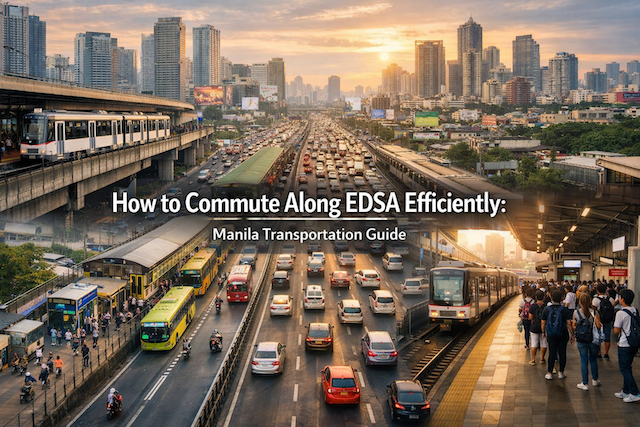
How to Commute Along EDSA Efficiently: Manila Transportation Guide
Epifanio de los Santos Avenue, better known as EDSA, is the most important and most congested road in Metro Manila. Stretching about 24 kilometers from Caloocan in the north to Pasay in the south, EDSA cuts across major business districts, transport hubs, shopping centers, and residential areas. For commuters, learning how to navigate EDSA efficiently is not optional—it is essential.
This guide explains all practical ways to commute along EDSA, how to choose the fastest option depending on time and destination, and what mistakes to avoid. Whether you are a daily worker, student, tourist, or long-term resident, this article will help you move smarter along Metro Manila’s busiest corridor.
Understanding EDSA and Why It Is Challenging
EDSA connects multiple cities: Caloocan, Quezon City, San Juan, Mandaluyong, Pasig, Makati, Taguig, and Pasay. It also links key areas such as:
Traffic congestion on EDSA is caused by high private car volume, frequent bottlenecks, intersections, and constant passenger loading and unloading. Travel times can vary drastically depending on the hour, day, and weather. Choosing the right transport mode matters more on EDSA than anywhere else in Manila.
MRT-3: The Fastest Way Along EDSA
For most commuters, MRT-3 is the fastest and most reliable way to travel along EDSA.
MRT-3 Overview
-
Route: North Avenue (Quezon City) to Taft Avenue (Pasay)
-
Total stations: 13
-
Travel time (end to end): around 30–40 minutes
-
Operating hours: typically early morning to late evening
MRT-3 runs directly above EDSA, stopping at all major districts. During rush hours, trains are crowded, but travel time remains predictable compared to road transport.
When MRT Is the Best Option
-
Traveling long distances along EDSA
-
Commuting during rush hours (7–10 AM, 4–8 PM)
-
Avoiding unpredictable road traffic
-
Going between major hubs like North Avenue, Cubao, Ortigas, Guadalupe, and Ayala
Limitations of MRT
-
Very crowded during peak hours
-
Long queues at ticket counters and security checks
-
Not ideal if you are carrying luggage
-
Stations may require walking bridges or stairs
Despite the downsides, MRT remains the most time-efficient EDSA transport option.
EDSA Busway: The Best Alternative to MRT
The EDSA Busway is a dedicated bus lane running along the center of EDSA. It is one of the most important transport improvements in recent years.
How the EDSA Busway Works
-
Buses run on exclusive lanes separated from regular traffic
-
Stations are located in the middle of EDSA
-
Passengers access stations via footbridges
-
Cashless payment is often required (cards or QR systems)
Advantages of the EDSA Busway
-
Faster than regular buses and jeepneys
-
Less crowded than MRT during some hours
-
Direct surface-level access to certain areas
-
Good option if MRT lines are too long
When to Use the Busway
-
MRT stations are overcrowded
-
Your origin or destination is closer to a busway station
-
You want fewer stairs than MRT platforms
The EDSA Busway is especially useful for commuters traveling mid-distance or during off-peak hours.
Jeepneys Along EDSA: Limited but Useful
Traditional jeepneys are no longer allowed to travel the full length of EDSA. However, they still operate on short segments and feeder routes.
Where Jeepneys Are Useful
-
Connecting nearby neighborhoods to MRT or busway stations
-
Short trips between adjacent areas
-
Last-mile transport after getting off MRT or bus
Jeepneys are cheap and frequent but are slow and affected by traffic. They are not suitable for long-distance EDSA travel.
Point-to-Point (P2P) Buses on EDSA
P2P buses are premium buses that connect major points with limited stops.
Key Features of P2P Buses
-
Fixed routes and schedules
-
Comfortable seating and air-conditioning
-
Higher fares than regular buses
-
Fewer stops, faster travel
Some P2P routes use parts of EDSA, especially between business districts and malls.
When P2P Buses Make Sense
-
You want comfort over cost
-
You are traveling during off-peak hours
-
Your route matches a direct P2P line
P2P buses are not ideal for flexible trips but are excellent for routine commuting.
Taxis and Ride-Hailing Apps on EDSA
Taxis
Regular taxis are available along EDSA but are highly unreliable during rush hours.
Pros:
-
Door-to-door convenience
-
No walking or transfers
Cons:
-
Extremely slow in traffic
-
Higher risk of overcharging
-
Hard to flag down during peak times
Grab and Ride-Hailing Apps
Grab is the most common ride-hailing app in Metro Manila.
Pros:
Cons:
-
Surge pricing during peak hours
-
Still affected by EDSA traffic
-
Long wait times during rain or rush hour
Taxis and Grab are best used late at night or early morning, not during peak hours.
Motorcycles and Motorcycle Taxis
Motorcycle taxis operate through app-based services and informal arrangements.
Why Motorcycles Are Popular on EDSA
Risks and Limitations
Motorcycle taxis are commonly used by experienced commuters who prioritize speed.
Walking and Pedestrian Transfers Along EDSA
In some cases, walking is faster than riding, especially for short distances.
When Walking Makes Sense
-
Moving between adjacent MRT stations
-
Crossing from malls to nearby offices
-
Avoiding short but congested rides
EDSA has many footbridges, but pedestrian infrastructure can be inconsistent. Always allow extra time for crossings.
Best Commuting Strategy by Time of Day
Morning Rush (7–10 AM)
Best options:
Avoid:
-
Taxis and Grab
-
Jeepneys on EDSA
Midday (10 AM–4 PM)
Best options:
More flexibility during this time.
Evening Rush (4–8 PM)
Best options:
-
MRT (expect crowds)
-
Busway
Worst time for private cars and taxis.
Late Night (After 9 PM)
Best options:
MRT and busway services may be reduced or unavailable late at night.
Common Mistakes When Commuting Along EDSA
-
Choosing taxis during peak hours
-
Ignoring MRT and busway queues
-
Not checking station access points
-
Underestimating walking time
-
Failing to plan alternative routes
Smart EDSA commuting requires flexibility and backup options.
Practical Tips for Efficient EDSA Commuting
-
Always budget extra time during rush hours
-
Use MRT or busway for long distances
-
Combine walking with public transport
-
Avoid private vehicles unless necessary
-
Learn nearby station exits and footbridges
-
Travel earlier or later if your schedule allows
Final Thoughts: Choosing the Best Way to Commute Along EDSA
There is no single perfect way to commute along EDSA. The most efficient option depends on distance, time, and purpose. For most people, MRT-3 and the EDSA Busway offer the best balance of speed and reliability. Jeepneys, taxis, Grab, and motorcycles serve as secondary or situational options.
By understanding how each transport mode works and when to use it, you can significantly reduce travel time and stress. Mastering EDSA commuting is one of the most valuable skills for living or working in Metro Manila.
FAQs (Frequently Asked Questions)
Is MRT-3 really the fastest way to travel along EDSA?
In most cases, yes. MRT-3 runs above EDSA and avoids road congestion, so its travel time is usually more predictable than buses, taxis, or private cars. Even when stations are crowded, the actual riding time between key areas like North Avenue, Cubao, Ortigas, Guadalupe, and Ayala is often faster than traveling on the road. However, your total trip time also depends on station queues, security checks, walking time inside stations, and the distance from your starting point to the nearest MRT station. If you are far from an MRT stop, combining a short ride (jeepney, tricycle, or ride-hailing) with MRT can still be the most efficient strategy.
When should I choose the EDSA Busway instead of MRT-3?
The EDSA Busway is a strong alternative when MRT stations have long lines or when your origin and destination are closer to busway stations than MRT entrances. The busway uses dedicated lanes, so it is generally faster than regular buses stuck in traffic. It can also feel less stressful than MRT during extreme peak-hour crowding. The best approach is to compare walking distance, queue length, and station access. If the MRT line looks overwhelming or you prefer a ground-level option, the busway may save time, especially for mid-distance trips.
Do regular buses still operate along EDSA, or is it mostly the Busway now?
Many bus operations along EDSA have been reorganized to use the EDSA Busway system, which is designed to reduce road congestion and make travel more efficient. While you may still see buses on or near EDSA depending on current traffic rules and route changes, commuters who want the most reliable road-based option should focus on busway routes and stations. If you are unsure, ask station staff or check posted route signs at terminals and stops, since route enforcement and permitted stops can change depending on policy updates and traffic management.
What is the best way to commute from North Avenue to Ayala using public transport?
The most common efficient option is MRT-3 from North Avenue station to Ayala station. This route avoids most road traffic and connects two major hubs directly. If MRT is too crowded, another option is the EDSA Busway, depending on station availability and access from where you are starting. In practice, many commuters choose MRT because it is straightforward: one line, minimal decision-making, and consistent travel time. The best choice depends on queue length and how quickly you can enter either system.
How do I reduce waiting time during rush hours on EDSA?
To reduce waiting time, travel earlier than the main peak if possible and avoid arriving at stations right at the height of commuter volume. If your schedule is flexible, shifting your commute by even 30 to 60 minutes can noticeably change the experience. Prepare your payment method in advance, keep small items organized for quicker bag checks, and choose station entrances that are less congested when available. For busway users, knowing which station is closest and which direction platform you need prevents wasted time crossing footbridges or walking back and forth.
Are jeepneys a good option for commuting along EDSA?
Jeepneys are generally not ideal for traveling long distances along EDSA because they are slower, affected by traffic, and may not be permitted to operate on the entire EDSA corridor. However, jeepneys can be very useful as feeder transport. Many commuters use them for short rides from neighborhoods to MRT stations, busway access points, or nearby terminals. If you use jeepneys, treat them as a “first-mile or last-mile” tool rather than a main EDSA travel method.
Is Grab a smart choice for EDSA commuting?
Grab can be convenient for comfort and door-to-door travel, but it is often inefficient during peak hours because it is still affected by EDSA congestion. Pricing may also increase due to high demand, bad weather, or limited driver availability. Grab becomes more practical late at night, early morning, or for trips where transfers would be difficult. If you are carrying luggage, traveling with a group, or heading to an area with limited public transport access, Grab may still be worth it. For time-sensitive travel during rush hours, MRT or the busway is usually a safer bet.
What is the safest and most reliable commute option for first-time visitors?
For first-time visitors, MRT-3 is often the easiest to understand because it is a single line with clear station names that match major districts. The EDSA Busway can also be reliable, but navigating stations via footbridges and understanding the correct platform may require more attention. If you are unfamiliar with EDSA, avoid unmarked loading zones and be cautious with informal offers of transport. Use official station entrances and well-lit pedestrian routes. If you need door-to-door convenience, choose reputable ride-hailing services rather than negotiating with random drivers.
Can walking actually be faster than riding for short distances on EDSA?
Yes, in some situations. If you are traveling between adjacent areas with heavy traffic, walking can save time, especially when combined with MRT or the busway. For example, the time you spend waiting for a vehicle, moving a short distance in traffic, and getting off can exceed the walking time. The key is safety: use footbridges, avoid crossing high-speed lanes, and plan your route through pedestrian-friendly areas like major malls or well-used sidewalks when possible.
What should I do if MRT-3 is too crowded to enter?
If MRT lines are too long, switch to the EDSA Busway if a nearby station is accessible. Another option is to take a short feeder ride to a less crowded station and enter the MRT there, though this depends on traffic conditions. You can also adjust your timing by waiting for crowd levels to drop slightly, especially after the sharp peak periods. For commuters with flexible schedules, traveling earlier or later is often the simplest long-term solution. Keeping multiple options in mind is one of the best strategies for surviving EDSA rush hours.