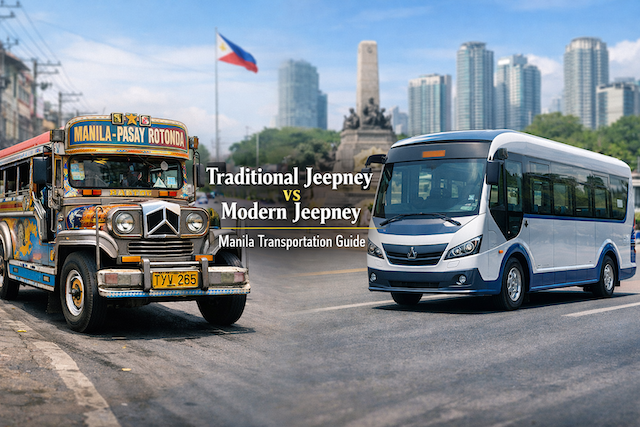
Traditional Jeepney vs Modern Jeepney: Manila Transportation Guide
Introduction
Jeepneys are one of the most iconic symbols of transportation in the Philippines, especially in Metro Manila. For decades, they have been the backbone of daily commuting for millions of Filipinos. However, in recent years, a new version of this classic vehicle has appeared on the streets: the Modern Jeepney.
For visitors, expats, and even locals, the coexistence of Traditional Jeepneys and Modern Jeepneys can be confusing. They look different, operate slightly differently, and represent a major shift in Philippine transportation policy. This guide explains the key differences between traditional and modern jeepneys, how each one works, and which you are more likely to encounter when traveling around Manila.
What Is a Traditional Jeepney?
Traditional jeepneys trace their origins back to World War II. After the war, surplus U.S. military jeeps were modified by Filipinos to serve as shared public transportation. Over time, these vehicles evolved into longer, more colorful jeepneys that became uniquely Filipino.
Key Characteristics of Traditional Jeepneys
Traditional jeepneys are usually easy to identify because of their distinctive appearance and informal operation.
-
Open or semi-open rear entrance
-
Bench seating along both sides
-
Bright, hand-painted designs with chrome decorations
-
Loud engines, often diesel-powered
-
No air-conditioning
-
Cash-only fare system
Each jeepney is typically owned by an individual operator, and drivers rent the vehicle daily. This boundary system strongly influences how traditional jeepneys are driven and operated.
What Is a Modern Jeepney?
Modern jeepneys are part of the Philippine government’s Public Utility Vehicle Modernization Program (PUVMP). This program aims to improve safety, reduce pollution, and professionalize public transportation.
Modern jeepneys are newly manufactured vehicles that still resemble jeepneys in shape but function more like minibuses.
Key Characteristics of Modern Jeepneys
Modern jeepneys are designed with passenger comfort and safety in mind.
-
Enclosed body with automatic or sliding doors
-
Forward-facing seats
-
Air-conditioning
-
Cleaner engines (Euro 4 or electric in some cases)
-
CCTV cameras and GPS tracking
-
Cashless payment systems (transport cards)
Most modern jeepneys are operated by cooperatives or corporations rather than individual drivers.
Visual and Design Differences
Exterior Appearance
Traditional jeepneys are famous for their artistic designs. Each one is unique, often featuring religious imagery, pop culture references, or personal slogans chosen by the owner.
Modern jeepneys, on the other hand, follow standardized designs. They look cleaner and more uniform, with minimal decoration. Their appearance prioritizes safety and efficiency over individuality.
Interior Layout
Inside a traditional jeepney, passengers sit on narrow benches facing each other. Space can be tight, and tall passengers may find the low ceiling uncomfortable.
Modern jeepneys offer forward-facing seats similar to buses. Aisles are wider, and standing passengers are usually limited or prohibited. This makes modern jeepneys more accessible for elderly passengers and people with disabilities.
Comfort and Passenger Experience
Seating and Space
Traditional jeepneys can feel cramped, especially during rush hours. Passengers often squeeze together, and personal space is minimal.
Modern jeepneys provide more structured seating and clearer capacity limits. While seats may still be compact, the overall experience is more orderly and comfortable.
Air-Conditioning and Ventilation
Traditional jeepneys rely on open windows and airflow. In Manila’s heat and humidity, this can be uncomfortable, especially during traffic jams.
Modern jeepneys are air-conditioned, which is a major improvement for daily commuters and tourists unfamiliar with tropical weather.
Fare System and Payment Methods
Traditional Jeepney Fare System
Traditional jeepneys use a cash-only system.
-
You pay the driver directly
-
Exact change is preferred
-
Money is passed hand-to-hand between passengers
-
Fares are generally cheaper
The minimum fare is low, making traditional jeepneys one of the most affordable transportation options in Manila.
Modern Jeepney Fare System
Modern jeepneys primarily use cashless payment systems.
-
Transport cards or stored-value cards
-
Some allow limited cash payment, depending on route
-
Fares are slightly higher
While the system is more efficient, it can be inconvenient for tourists who do not have the required card.
Routes and Coverage in Manila
Traditional Jeepney Routes
Traditional jeepneys operate on thousands of routes across Metro Manila.
-
Highly flexible and widespread
-
Serve small streets and neighborhood roads
-
Route signs displayed on the windshield
They are especially useful for short-distance travel and areas not well-served by trains or buses.
Modern Jeepney Routes
Modern jeepneys operate on selected, government-approved routes.
-
Limited coverage compared to traditional jeepneys
-
Often serve major roads and corridors
-
Routes are more strictly regulated
You are more likely to encounter modern jeepneys in central business districts or along major transport routes.
Safety and Regulation
Safety Concerns with Traditional Jeepneys
Traditional jeepneys have long faced criticism for safety issues.
Accidents are not uncommon, especially during peak hours.
Safety Features of Modern Jeepneys
Modern jeepneys are designed to meet stricter safety standards.
These improvements significantly reduce risks for passengers.
Environmental Impact
Traditional Jeepneys and Pollution
Many traditional jeepneys use old diesel engines that contribute heavily to air pollution. They are often cited as major sources of smoke belching in Manila.
Modern Jeepneys and Sustainability
Modern jeepneys use cleaner fuel or electric power.
This makes modern jeepneys more sustainable in the long term.
Driver Employment and Livelihood Issues
Traditional Jeepney Drivers
Traditional jeepney drivers usually earn income based on how many passengers they pick up. This can lead to aggressive driving and long working hours.
Many drivers oppose modernization due to:
-
High cost of new vehicles
-
Fear of losing livelihood
-
Transition to cooperative systems
Modern Jeepney Operators
Modern jeepney drivers are typically employed by cooperatives.
While this improves working conditions, not all drivers can afford or qualify for the transition.
Government Modernization Program Explained
The Public Utility Vehicle Modernization Program aims to:
-
Replace old, unsafe vehicles
-
Improve commuter experience
-
Reduce pollution
-
Formalize public transport operations
However, implementation has been controversial. Protests and transport strikes are common, reflecting the tension between modernization goals and social impact.
Cost Comparison: Traditional vs Modern Jeepney
Fare Differences
Traditional jeepneys remain the cheapest option for short trips. Modern jeepneys cost slightly more due to higher operational expenses.
For budget travelers, this difference can matter, especially when commuting daily.
Value for Money
While modern jeepneys are more expensive, they offer:
-
Air-conditioning
-
Better safety
-
Predictable operations
The choice often depends on comfort versus cost.
Which One Should Tourists Use?
When to Choose a Traditional Jeepney
Tourists should be prepared for crowds, heat, and limited signage.
When to Choose a Modern Jeepney
-
Longer trips along major routes
-
Preference for air-conditioning
-
Safety and comfort concerns
Modern jeepneys are easier for first-time visitors to use, provided they understand the payment system.
Common Misconceptions
“Traditional Jeepneys Are Being Completely Phased Out”
This is not entirely true. While modernization is ongoing, traditional jeepneys still operate widely across Manila.
“Modern Jeepneys Are Just Buses”
Modern jeepneys function like minibuses, but they are designed to replace jeepneys, not buses. They operate on jeepney-style routes with higher standards.
The Future of Jeepneys in Manila
The future of jeepneys in Manila will likely involve a mix of both systems for many years.
-
Gradual reduction of traditional jeepneys
-
Expansion of modern jeepney routes
-
Continued public debate and policy adjustments
For now, both forms coexist and serve different commuter needs.
Conclusion
Traditional and modern jeepneys represent two sides of Manila’s transportation reality. Traditional jeepneys symbolize history, culture, and affordability, while modern jeepneys represent safety, comfort, and environmental responsibility.
Understanding the differences helps travelers navigate Manila more confidently and appreciate the complexity behind one of the city’s most iconic modes of transport. Whether you ride a brightly painted traditional jeepney or a clean, air-conditioned modern one, both offer a unique window into daily life in Metro Manila.
FAQs (Frequently Asked Questions)
Are traditional jeepneys still common in Metro Manila?
Yes. Traditional jeepneys remain very common across Metro Manila, especially in areas where routes are deeply established and demand is high. You will still see them on many main roads and in residential neighborhoods, and they often serve “last-mile” connections where trains or buses do not reach. However, availability can vary by district and corridor. Some routes have gradually shifted to modern jeepneys, while others continue operating traditional units. For travelers, this means you may encounter both types in the same general area, sometimes even along similar routes. If you are exploring local neighborhoods or traveling short distances, you are likely to see traditional jeepneys frequently.
What is the biggest difference between traditional and modern jeepneys for passengers?
The most noticeable difference is comfort and structure. Modern jeepneys are enclosed, air-conditioned, and typically have forward-facing seats, clearer capacity limits, and more standardized operations. Traditional jeepneys are often open or semi-open at the rear, with bench seating along the sides, no air-conditioning, and a more informal boarding and payment process. For first-time visitors, modern jeepneys can feel more predictable and less physically demanding, while traditional jeepneys offer a more “classic” Manila commuting experience but may feel crowded, hot, or confusing if you are unfamiliar with the system.
Do modern jeepneys always require cashless payment?
Not always, but many modern jeepneys are designed to use cashless systems such as stored-value transport cards. Some routes or operators allow cash payments, especially during transition periods or when card systems are not fully enforced. In practice, rules can differ by cooperative and route. If you plan to rely on modern jeepneys, it helps to carry small cash as a backup and be ready for either method. If you are unsure, you can quickly ask the conductor (if present) or the driver before boarding. For tourists, cashless payment can be the main inconvenience compared with traditional jeepneys, which are typically cash-based.
Are modern jeepneys safer than traditional jeepneys?
In general, modern jeepneys are designed with more safety features and stricter compliance requirements. Many have CCTV, GPS tracking, regulated doors, better lighting, and improved braking systems. They also tend to follow clearer capacity limits. Traditional jeepneys vary widely in maintenance and safety conditions because many are older and maintained by individual operators. That said, your real-world safety also depends on factors like traffic conditions, time of day, and route location. No matter which type you ride, keep your belongings secure, avoid standing near doors, and stay alert in crowded areas.
Which one is cheaper: traditional or modern jeepneys?
Traditional jeepneys are usually cheaper for short trips because they have lower operating costs and simpler fare collection. Modern jeepneys often have slightly higher fares because of higher vehicle costs, cooperative operations, and added amenities like air-conditioning. The difference is not always huge, but it can add up for daily commuting. For travelers taking only a few rides, the price gap may be minor compared to the benefit of comfort. If you are traveling on a tight budget or making many short trips, traditional jeepneys typically remain the lowest-cost option.
How do I know where a traditional jeepney is going?
Traditional jeepneys usually display route information on signboards placed on the windshield or along the side. These signs list key destinations, major roads, or landmarks. The challenge is that signboards can be crowded with place names, abbreviations, and local references. If you are not sure, ask the driver or nearby passengers before boarding. A useful technique is to confirm two points: your intended drop-off area and the general direction of travel. Because traditional jeepneys can be flexible with stops, knowing the main corridor (for example, a major avenue) helps you avoid boarding the wrong vehicle.
Do modern jeepneys stop anywhere like traditional jeepneys?
Modern jeepneys tend to follow more regulated stopping practices, though the degree of enforcement depends on the route. Traditional jeepneys often stop almost anywhere to pick up or drop off passengers, especially if it is safe enough to do so. Modern jeepneys may be encouraged or required to use designated stops, terminals, or loading bays, particularly on major roads. In reality, you may still see some flexible stopping, but it is usually less informal than with traditional units. For passengers, this can make modern jeepneys feel more predictable but sometimes less convenient for very short, point-to-point travel.
Are modern jeepneys better for tourists?
Many tourists find modern jeepneys easier because they are enclosed, air-conditioned, and structured more like minibuses. They can feel less intimidating, especially during hot weather or heavy traffic. However, payment systems can be a hurdle if the route requires a card. Traditional jeepneys are often simpler for payment (cash) but may be harder for tourists to interpret due to route signage and local commuting habits. If you are visiting Manila for the first time, modern jeepneys can be a good stepping stone. If you want a more authentic cultural experience and are comfortable asking questions, traditional jeepneys are also doable.
Will traditional jeepneys disappear soon in Manila?
Traditional jeepneys are expected to decline over time as modernization expands, but they are unlikely to vanish overnight. The transition involves policy enforcement, financing, cooperative formation, and route restructuring, which takes time. Some corridors will modernize faster than others, while certain areas may keep traditional jeepneys longer due to operational realities and commuter demand. Travelers should expect a mixed system for the foreseeable future. In many parts of Metro Manila, you can still see both types operating side by side, reflecting the gradual nature of the transport shift.
What should I watch out for when riding either type of jeepney?
The main concerns are crowding, pickpocketing risks in busy areas, and confusion about where to get off. Keep valuables close, avoid displaying expensive items, and stay aware when boarding or alighting. If you are unsure of your stop, use a maps app and watch your location progress, then signal the driver early. In traditional jeepneys, prepare small bills and understand that your fare may be passed forward by other passengers. In modern jeepneys, be ready for card payment rules. In both cases, avoid traveling late at night on unfamiliar routes, especially if you are alone.