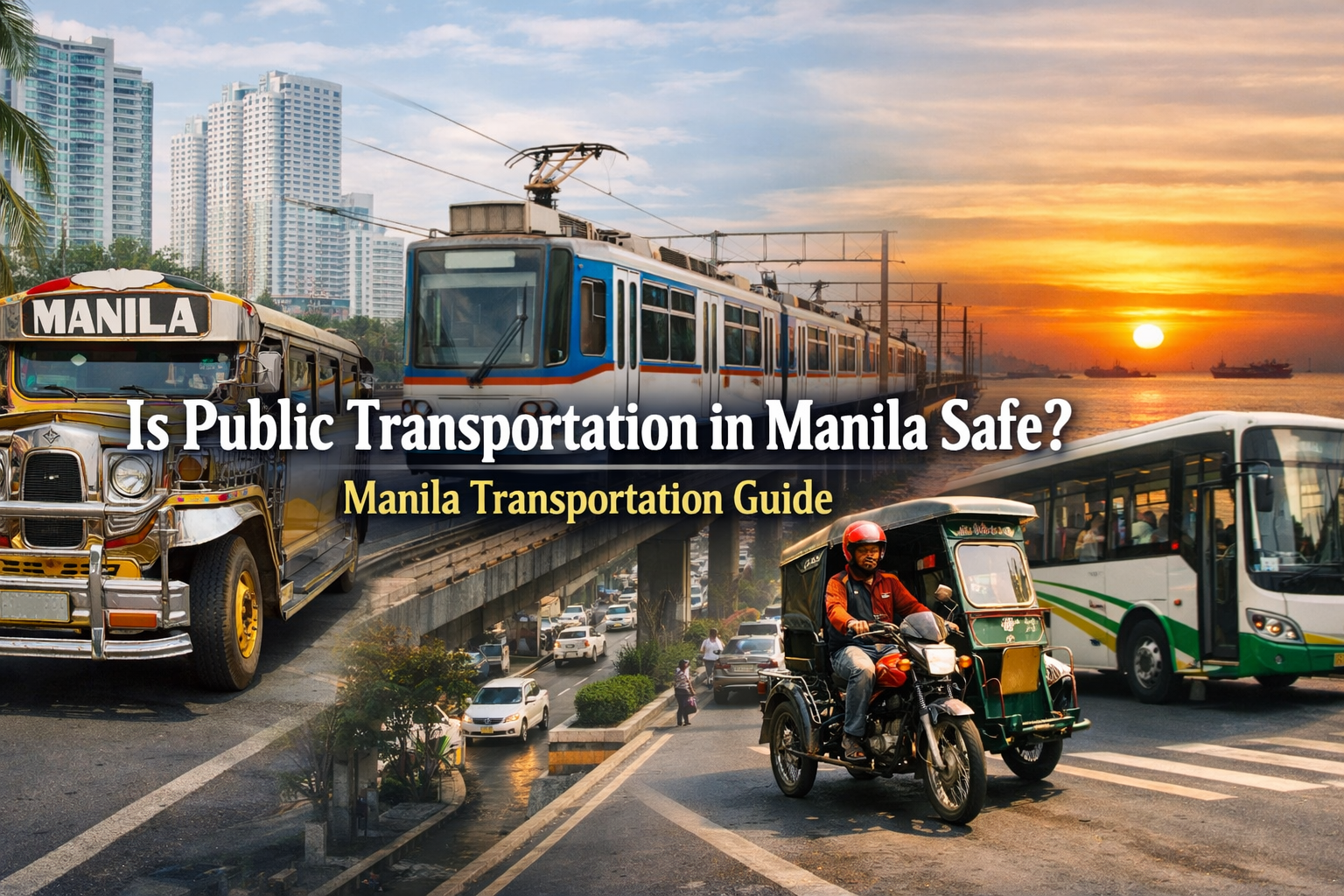
Is Public Transportation in Manila Safe?
Manila Transportation Guide
Public transportation in Manila is an essential part of daily life for millions of people. From jeepneys and buses to MRT/LRT trains, taxis, and ride-hailing apps, the city offers a wide range of transport options. However, for first-time visitors, expats, and even locals, one common question comes up again and again: Is public transportation in Manila safe?
The short answer is yes, it can be safe, but it strongly depends on where, when, and how you use it. This guide provides a realistic, experience-based overview of safety on Manila’s public transportation system, including common risks, safer options, and practical tips to help you travel confidently.
Overview of Public Transportation in Manila
Manila’s transportation system is diverse but often crowded and chaotic. The main public transport options include:
-
Jeepneys (traditional and modern)
-
City buses and provincial buses
-
MRT-3 and LRT-1 / LRT-2 trains
-
UV Express vans
-
Tricycles and pedicabs (limited areas)
-
Taxis and ride-hailing apps like Grab
Safety levels vary widely across these options, and understanding their differences is key to avoiding problems.
General Safety Reality in Manila
Manila is not an unusually dangerous city by global standards, but it does face challenges related to congestion, petty crime, and infrastructure strain. Public transportation safety concerns usually fall into three categories:
Violent crime against commuters is relatively rare, especially during daytime hours and in busy areas.
Is It Safe to Use Jeepneys?
Jeepneys are the most iconic form of transportation in the Philippines and also one of the most misunderstood.
Safety Pros of Jeepneys
-
Very affordable
-
Routes are well-known to locals
-
Constant passenger turnover discourages serious crime
-
Widely used during daylight hours
Safety Concerns
-
Open design makes bags vulnerable
-
Pickpocketing can occur in crowded jeepneys
-
Some older units are poorly maintained
-
Limited lighting at night
Safety Verdict
Jeepneys are generally safe during the day, especially on busy routes. For first-time visitors, avoid using them late at night or in unfamiliar areas.
Are Buses in Manila Safe?
Manila has both city buses and long-distance provincial buses.
City Buses
-
Often overcrowded during rush hours
-
Sudden braking and aggressive driving can be uncomfortable
-
Pickpocketing risk exists during peak times
Provincial Buses
-
Generally safer and more organized
-
Terminals have security guards
-
Assigned seating reduces crowd-related risks
Safety Verdict
City buses are safe but can be stressful. Provincial buses are among the safest public transport options, especially for longer trips.
MRT and LRT Train Safety
Manila’s train systems are heavily used and usually the fastest way to travel along major corridors.
Safety Advantages
Common Issues
-
Extreme overcrowding during rush hours
-
Occasional service disruptions
-
Pickpocketing in packed train cars
Safety Verdict
Trains are one of the safest public transport options in Manila, especially outside peak hours.
Is Pickpocketing a Serious Problem?
Pickpocketing does happen, but it is mostly opportunistic, not violent.
High-Risk Situations
How to Reduce Risk
-
Use anti-theft backpacks or crossbody bags
-
Keep phones in front pockets or zipped compartments
-
Avoid displaying expensive items
-
Stay alert when boarding and exiting
With basic awareness, most travelers experience no issues.
Nighttime Safety on Public Transportation
Nighttime travel requires more caution.
Safer at Night
-
MRT/LRT (before closing hours)
-
Grab and ride-hailing apps
-
Metered taxis from reputable locations
Riskier at Night
-
Jeepneys on quiet routes
-
Unlit bus stops
-
Isolated terminals
Safety Verdict
Public transport is less predictable at night, and ride-hailing services are recommended whenever possible.
Taxi Safety in Manila
Taxis are common but require caution.
Common Taxi Issues
Safety Tips
-
Always insist on using the meter
-
Take taxis from malls, hotels, or airports
-
Avoid flagging taxis late at night on empty streets
Grab is generally safer and more transparent than street taxis.
Ride-Hailing Apps: The Safest Option?
Ride-hailing apps like Grab are widely considered the safest transportation option in Manila.
Why Grab Is Safer
-
Driver identity is recorded
-
Fixed fares shown in advance
-
GPS tracking
-
In-app support and emergency features
Downsides
-
Higher cost than public transport
-
Surge pricing during peak hours
-
Availability may be limited late at night in some areas
Despite the cost, many expats and tourists rely on Grab daily for peace of mind.
Safety for Foreigners and Tourists
Foreigners are not automatically targets, but visibility matters.
Common Mistakes Tourists Make
-
Using phones openly near doors
-
Carrying backpacks on their backs in crowds
-
Boarding the wrong jeepney route
-
Traveling late at night without planning
Smart Habits
-
Ask hotel staff for transport advice
-
Use Google Maps and Grab together
-
Learn basic route names and landmarks
Prepared travelers rarely encounter serious problems.
Safety for Women and Solo Travelers
Women use public transportation in Manila daily, but awareness is important.
Common Issues
Helpful Tips
-
Use women-only train cars when available
-
Sit near other women or families
-
Avoid empty vehicles at night
-
Trust your instincts
Manila is generally safe for solo travelers who plan ahead.
Traffic, Accidents, and Road Safety
Traffic congestion is a bigger concern than crime.
Risks
-
Sudden stops on buses and jeepneys
-
Motorcycles weaving through traffic
-
Poorly maintained roads in some areas
Safety Tips
Most accidents are minor but caution is necessary.
Areas with Higher Transportation Risk
Some areas require extra awareness, especially at night:
Busy commercial areas like Makati, BGC, Ortigas, and Quezon City are generally safer.
How Locals Stay Safe on Public Transport
Local commuters rely on habits rather than fear.
Following local behavior patterns is one of the best safety strategies.
Emergency Situations and What to Do
If something goes wrong:
-
Stay calm and avoid confrontation
-
Move toward security guards or crowded areas
-
Use Grab’s in-app emergency features if applicable
-
Contact local authorities if necessary
Emergency numbers are posted in MRT/LRT stations.
Final Verdict: Is Public Transportation in Manila Safe?
Public transportation in Manila is generally safe, especially during daytime and in busy areas. The biggest risks are inconvenience, overcrowding, and petty theft rather than serious crime.
For maximum safety:
-
Use trains and Grab when possible
-
Avoid late-night jeepneys
-
Stay alert in crowded situations
-
Plan routes in advance
With realistic expectations and basic precautions, most travelers find Manila’s transportation system manageable and safe enough for daily use.
FAQs (Frequently Asked Questions)
Is public transportation in Manila safe for first-time visitors?
Yes, public transportation in Manila can be safe for first-time visitors, but it depends on how and when you use it. The most common risks are petty theft, crowd-related stress, and occasional overcharging or scams. If you are new to Manila, prioritize MRT/LRT trains during daytime, use ride-hailing apps like Grab at night, and avoid unfamiliar jeepney routes after dark. Keep your bag in front of you in crowded places, and do not display expensive phones, jewelry, or large amounts of cash. When you plan your route in advance and follow basic precautions, Manila’s transport system is generally manageable and safe for most travelers.
Which public transport option is considered the safest in Manila?
For many commuters, MRT/LRT trains and app-based ride-hailing (such as Grab) are considered the safest options. Train stations usually have security screening, guards, and CCTV coverage, which helps reduce crime. Grab provides driver information, GPS tracking, and upfront pricing, which reduces the chance of overcharging or route manipulation. If your priority is safety and predictability, these two options are often the best choices, especially if you are traveling alone, carrying luggage, or commuting at night.
Is it safe to ride jeepneys in Manila?
Jeepneys are widely used and are generally safe during the day on busy routes. However, they require more awareness than trains or ride-hailing. Because jeepneys are open and can get crowded, there is a higher risk of pickpocketing or bag snatching, especially near doors or during rush hour. If you choose to ride a jeepney, keep valuables in zipped compartments, hold your bag in front of you, and avoid using your phone openly. For tourists, modern jeepneys or routes recommended by locals are usually easier and more comfortable than older units.
What are the most common safety issues on Manila public transportation?
The most common issues are pickpocketing, crowded conditions, and minor scams. Pickpocketing tends to happen in packed trains, buses, and jeepneys, especially during peak hours. Crowding can also create discomfort, confusion, and occasional pushing at stations or terminals. Scams usually involve taxis refusing to use the meter or charging inflated prices. Serious violent incidents are relatively uncommon for typical commuters, especially in busy commercial areas. Most problems can be avoided through awareness, route planning, and choosing the right transport option for the time of day.
Is it safe to use MRT and LRT trains during rush hour?
Rush hour trains are usually safe in terms of security, but they can be stressful due to overcrowding. The biggest risk during rush hour is petty theft because people are packed closely together, and it is easier for thieves to operate unnoticed. If you must travel during peak hours, keep your phone and wallet in front pockets or inside a crossbody bag, and avoid standing near doors. If possible, travel slightly earlier or later than the peak window to reduce crowd pressure and make your commute more comfortable.
Is public transportation safe at night in Manila?
Night travel is possible, but it requires more caution. Some areas become quieter late at night, and options like jeepneys may be less predictable in terms of route reliability and passenger volume. Trains can be safe while operating, but you should also consider the safety of walking to and from stations. For late-night trips, Grab or a taxi from a reputable location (hotel, mall, airport) is often the safest choice. If you must use public transport at night, stick to well-lit, busy routes and avoid isolated stops.
How can I avoid pickpockets on buses, trains, and jeepneys?
Use simple anti-theft habits. Keep your bag closed and positioned in front of your body, especially when the vehicle is crowded. Avoid placing phones in open pockets or using them near doors. If you carry a backpack, consider wearing it on your front in dense crowds. Do not keep your wallet in back pockets, and separate cash so you do not have to expose everything when paying. Stay alert during boarding and exiting because those moments are when many thefts occur. These habits dramatically reduce your risk.
Are taxis safe in Manila, or should I avoid them?
Taxis are generally safe in terms of physical security, but fare-related issues are common. Some drivers may refuse to use the meter, quote a fixed inflated price, or take longer routes. To reduce problems, take taxis from official taxi queues at malls, airports, or hotels, and always request meter use before the trip starts. If a driver refuses, choose another taxi. Many travelers prefer Grab because the price is shown in advance and the route is tracked, which reduces uncertainty and negotiation stress.
Is Manila public transportation safe for women and solo travelers?
Many women and solo travelers use Manila public transportation daily. The main concerns are crowding, unwanted attention, and occasional discomfort rather than frequent serious incidents. Using train systems during daytime is typically a good option, and some trains provide women-only sections during busy periods. For late-night travel or unfamiliar routes, ride-hailing apps are recommended. As a general safety approach, keep your belongings secure, stay in well-populated areas, and trust your instincts if a situation feels wrong.
What should I do if I feel unsafe or something goes wrong while commuting?
If you feel unsafe, move toward a more crowded area or near families, and avoid confrontation. In train stations, approach security personnel or staff if you need help. If you are using ride-hailing, you can share your trip details with a trusted contact and use in-app safety tools if needed. If a taxi driver behaves suspiciously, ask to be dropped off at a busy, well-lit area such as a mall entrance or hotel. In most situations, staying calm, staying visible, and seeking assistance quickly is the most effective response.