2025年12月31日
3D ACADEMY offers affordable English study programs in Cebu, Philippines – perfect for beginners, professionals, and exam takers.

3D UNIVERSAL ENGLISH INSTITUTE INC
info.3d-universal.com
8:00-17:00(Mon-Fri)
Rush Hour Traffic in Manila: Best Times to Travel
Contents
- Rush Hour Traffic in Manila: Best Times to Travel
- Understanding Rush Hour Traffic in Manila
- Morning Rush Hour: What Time Traffic Starts
- Evening Rush Hour: When Traffic Is at Its Worst
- Midday Traffic: Is There a Safe Window?
- Late Night and Early Morning Travel
- Rush Hour by Area: Traffic Hotspots to Avoid
- How Weather Affects Rush Hour Traffic
- Best Times to Travel in Manila
- Tips for Avoiding Rush Hour Delays
- Public Transport vs Driving During Rush Hour
- Rush Hour on Weekends and Holidays
- Final Thoughts: Planning Around Manila Rush Hour
- FAQs (Frequently Asked Questions)
- What are the typical rush hour times in Manila?
- Is Manila traffic worse on certain weekdays?
- What is the best time window to travel across the city if I want the fastest trip?
- How much extra time should I add if I must travel during rush hour?
- Is it better to use MRT/LRT instead of taxis or ride-hailing during rush hour?
- Does rain always make Manila traffic worse?
- Are weekends better for traveling, or do they have their own rush hours?
- Which areas in Manila are most affected by rush hour congestion?
- How can I reduce ride-hailing costs during rush hour?
- What should I do if I have an early flight from NAIA?
- How do I plan trips between Makati, BGC, and Ortigas without getting stuck?
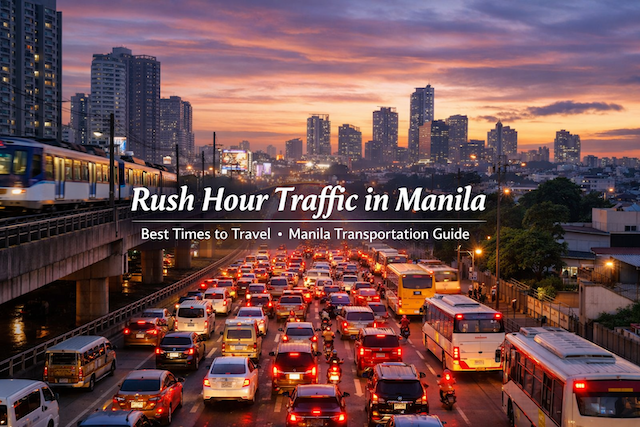
Rush Hour Traffic in Manila: Best Times to Travel
Manila Transportation Guide
Manila is one of the most densely populated metropolitan areas in Southeast Asia, and traffic congestion is part of daily life. Whether you are a tourist planning sightseeing, an expat commuting to work, or a business traveler rushing between meetings, understanding Manila’s rush hour traffic can save you hours of frustration.
This guide explains when rush hour happens, which areas are most affected, how traffic differs by day and season, and most importantly, the best times to travel around Metro Manila. With the right timing and planning, you can significantly reduce travel stress and make the most of your time in the city.
Understanding Rush Hour Traffic in Manila
Rush hour in Manila is driven primarily by work schedules, school hours, and the city’s heavy reliance on road-based transportation. Unlike cities with extensive subway systems, Manila depends on a mix of private cars, buses, jeepneys, motorcycles, and ride-hailing vehicles all competing for limited road space.
Traffic congestion is not limited to short peak periods. In many areas, rush hour can last several hours, and minor incidents such as light rain or a stalled vehicle can quickly turn slow traffic into gridlock.
Key characteristics of Manila traffic include:
-
High volume of private vehicles
-
Narrow roads in older districts
-
Frequent roadworks and infrastructure projects
-
Limited alternative routes in business districts
-
Weather-related slowdowns during rainy season
Understanding these patterns helps travelers plan smarter routes and departure times.
Morning Rush Hour: What Time Traffic Starts
Morning rush hour in Manila typically begins earlier than many first-time visitors expect.
Typical Morning Rush Hour Schedule
-
Starts: 6:00 AM
-
Peak congestion: 7:00 AM – 9:00 AM
-
Eases: Around 10:00 AM
Between 6:00 AM and 7:00 AM, traffic begins building as office workers, students, and service staff head toward central business districts. By 7:30 AM, major roads such as EDSA, C-5, Roxas Boulevard, and Commonwealth Avenue are often heavily congested.
Areas Most Affected in the Morning
-
Makati Central Business District
-
Bonifacio Global City (BGC)
-
Ortigas Center
-
Quezon City (especially Commonwealth and North EDSA)
-
Major bridges connecting Manila City to Makati and Quezon City
If you need to travel during the morning, leaving before 6:00 AM or after 10:00 AM can make a dramatic difference in travel time.
Evening Rush Hour: When Traffic Is at Its Worst
Evening rush hour is generally worse and longer than the morning peak.
Typical Evening Rush Hour Schedule
-
Starts: 4:30 PM
-
Peak congestion: 5:30 PM – 8:00 PM
-
Eases: Around 9:00 PM
Many offices close between 5:00 PM and 6:00 PM, causing a sharp spike in outbound traffic from business districts. Unlike the morning rush, evening traffic tends to spread out across more routes as people head to residential areas in all directions.
Why Evening Rush Hour Is Worse
-
Staggered office closing times
-
After-work shopping and dining
-
School dismissals overlapping with office hours
-
Ride-hailing demand surges
-
Increased roadside parking and loading activity
In some areas, especially along EDSA and in Makati-BGC corridors, congestion can persist well past 9:00 PM.
Midday Traffic: Is There a Safe Window?
Midday is generally the best time to travel in Manila, but it is not completely traffic-free.
Midday Traffic Pattern
-
Relatively smooth: 10:00 AM – 3:30 PM
-
Short lunch peak: 12:00 PM – 1:30 PM (localized)
During midday hours, traffic is lighter on major roads, and travel times are more predictable. However, areas with shopping malls, hospitals, and government offices may experience brief congestion during lunchtime.
For tourists and flexible travelers, late morning to early afternoon is the ideal window for moving between districts.
Late Night and Early Morning Travel
Late-night and early-morning travel offers the fastest road conditions, but with some trade-offs.
Late Night (9:00 PM – 5:00 AM)
-
Minimal traffic on most roads
-
Faster travel between distant districts
-
Limited public transport options
-
Higher reliance on taxis or ride-hailing apps
Early Morning (5:00 AM – 6:00 AM)
-
Roads still relatively clear
-
Public transport begins operating
-
Ideal for airport transfers
If you have an early flight or long-distance trip, departing between 4:30 AM and 6:00 AM is often the best choice.
Rush Hour by Area: Traffic Hotspots to Avoid
Traffic conditions vary significantly depending on location.
EDSA Corridor
EDSA is Manila’s main arterial road and experiences heavy congestion almost all day.
-
Worst hours: 7:00–10:00 AM, 5:00–9:00 PM
-
Bottlenecks near interchanges and bus stops
Makati
-
Heavy inbound traffic in the morning
-
Outbound congestion after 5:00 PM
-
Narrow inner streets worsen delays
Bonifacio Global City (BGC)
-
Severe congestion during office hours
-
Limited entry and exit points
-
School zones add to peak traffic
Quezon City
-
Commonwealth Avenue is heavily congested in the morning
-
North EDSA area busy throughout the day
-
Traffic worsens near malls and MRT stations
Understanding these hotspots helps you plan alternative routes or adjust travel times.
How Weather Affects Rush Hour Traffic
Weather plays a major role in Manila traffic conditions.
Rainy Season Impact
-
Slower vehicle speeds
-
Flood-prone areas causing reroutes
-
Increased accidents and breakdowns
-
Reduced motorcycle traffic shifting to cars
Even light rain can add 30–60 minutes to normal rush hour travel times. During heavy downpours, gridlock can occur unexpectedly.
Best Practice During Rain
-
Leave earlier than usual
-
Avoid flood-prone roads
-
Monitor traffic apps closely
-
Expect longer waiting times for ride-hailing services
Best Times to Travel in Manila
Based on typical traffic patterns, here are the best times to travel:
Ideal Travel Windows
-
Early morning: 4:30 AM – 6:00 AM
-
Late morning: 10:00 AM – 12:00 PM
-
Early afternoon: 1:30 PM – 3:30 PM
-
Late night: After 9:00 PM
Times to Avoid
-
7:00 AM – 9:30 AM
-
5:30 PM – 8:30 PM
-
Rainy evenings during weekdays
-
Fridays before long weekends
If possible, schedule long trips or cross-city travel during low-traffic windows.
Tips for Avoiding Rush Hour Delays
Even when you must travel during peak hours, smart planning can help reduce delays.
Use Real-Time Traffic Apps
Navigation apps provide live traffic updates and rerouting options. Checking conditions before departure can save significant time.
Choose Strategic Departure Times
Leaving just 30 minutes earlier or later than peak times can reduce congestion dramatically.
Combine Trips
Instead of multiple short trips during peak hours, group errands into a single off-peak journey.
Stay Flexible
If your schedule allows, wait out traffic at a café or mall until congestion eases.
Public Transport vs Driving During Rush Hour
Choosing the right transportation method can make a difference.
Driving
-
Comfortable but unpredictable during rush hour
-
Parking challenges in business districts
-
Highly affected by accidents and weather
MRT and LRT
-
Avoids road congestion
-
Extremely crowded during peak hours
-
More reliable in terms of travel time
Ride-Hailing Services
-
Convenient but subject to surge pricing
-
Longer wait times during rush hour
-
Still affected by traffic conditions
For daily commuting, many residents combine rail transport with short walking or ride-hailing segments.
Rush Hour on Weekends and Holidays
Rush hour behaves differently on weekends.
Saturdays
-
Morning traffic lighter than weekdays
-
Afternoon congestion near malls
-
Evening traffic around dining and entertainment areas
Sundays
-
Generally light traffic
-
Peak hours around church times and shopping districts
Holidays and Long Weekends
-
Heavy outbound traffic on Fridays
-
Severe congestion on highways leaving Metro Manila
-
Return traffic spikes on Sundays
Planning around holiday traffic is especially important for provincial travel.
Final Thoughts: Planning Around Manila Rush Hour
Rush hour traffic in Manila is unavoidable, but it is manageable with the right knowledge and timing. Understanding peak hours, choosing the best travel windows, and adjusting plans based on location and weather can significantly improve your experience.
For visitors, scheduling activities outside rush hour makes sightseeing more enjoyable. For expats and business travelers, strategic commuting can reduce daily stress and reclaim valuable time.
By planning ahead and traveling smart, you can navigate Manila more efficiently, even in one of Asia’s most traffic-heavy cities.
FAQs (Frequently Asked Questions)
What are the typical rush hour times in Manila?
In Metro Manila, rush hour usually happens twice a day: in the morning when people commute to work and school, and in the late afternoon to evening when they go home. Morning congestion often builds from around 6:00 AM and becomes heaviest roughly between 7:00 AM and 9:00 AM. Evening traffic commonly starts to worsen around 4:30 PM, peaks between about 5:30 PM and 8:00 PM, and gradually eases later in the night. These time ranges are not fixed rules, but they are consistent patterns across most weekdays. Weather, accidents, and local events can shift the timing or extend the peak periods.
Is Manila traffic worse on certain weekdays?
Yes. Many commuters feel that midweek traffic can be consistently heavy because office attendance tends to be higher, especially on Tuesdays through Thursdays. Mondays can be unpredictable because some people travel back from the province or adjust schedules after the weekend. Fridays often feel worse in the late afternoon and evening because people go out after work, start weekend trips, or shop and dine. The biggest issue is that Fridays combine commuter traffic with leisure traffic, which creates congestion in business districts and popular nightlife or mall areas at the same time.
What is the best time window to travel across the city if I want the fastest trip?
If you want the smoothest traffic conditions, late morning to mid-afternoon is usually the best window. Many travelers find 10:00 AM to 3:30 PM to be the most predictable period for cross-city travel on weekdays. Another strong option is late night, typically after 9:00 PM, when road volumes drop significantly. Very early morning travel, around 4:30 AM to 6:00 AM, can also be extremely fast and is often recommended for airport transfers. Keep in mind that “fastest” depends on your route, but these windows generally avoid the worst congestion.
How much extra time should I add if I must travel during rush hour?
A good planning rule is to add at least 30% to 50% more time during peak hours, and sometimes more if you are crossing major choke points like EDSA, C-5, key bridges, or business district entry roads. For example, a trip that takes 30 minutes in low traffic could become 45 to 75 minutes during rush hour. If it is raining or there is a known incident, the delay can double. When you have an important appointment, it is safer to leave early and arrive with extra buffer time than to assume normal travel conditions.
Is it better to use MRT/LRT instead of taxis or ride-hailing during rush hour?
It depends on your priorities. MRT and LRT trains avoid road congestion, so travel time can be more consistent across certain corridors. However, trains can be extremely crowded during peak hours, and station lines may add waiting time. Taxis and ride-hailing services are more comfortable and direct, but they are fully affected by traffic and can also have longer pickup times and higher fares during rush hour. If your route is close to rail stations and you can handle crowds, rail can be efficient. If you have luggage, are traveling with kids, or need door-to-door service, a car-based option may still be practical even if it is slower.
Does rain always make Manila traffic worse?
Rain often worsens traffic, but the level of impact varies. Light rain can already reduce vehicle speeds and increase braking distance, which slows overall flow. Heavier rain can lead to poor visibility, accidents, stalled vehicles, and flooding in low-lying areas. Even if flooding does not occur on your route, the general slowdown and cautious driving can extend rush hour significantly. During the rainy season, it is wise to expect longer travel times, check weather forecasts, and monitor real-time navigation apps before leaving.
Are weekends better for traveling, or do they have their own rush hours?
Weekends are usually less congested than weekdays for commuting routes, but they have different peak periods. Saturdays often see increased traffic near malls and commercial areas in the late morning and afternoon. Sundays can be lighter overall, but many areas experience brief spikes around church hours and then again around lunch and early evening near popular dining zones. If your goal is cross-city travel, late morning or early afternoon on a Sunday can be quite smooth. If your goal is shopping or visiting major malls, expect localized congestion during typical leisure hours.
Which areas in Manila are most affected by rush hour congestion?
Several areas consistently experience heavy peak congestion. EDSA is a major hotspot because it connects multiple cities and business centers. Makati’s key roads become crowded due to offices and limited street capacity. BGC experiences congestion at entry and exit points, especially during office hours and school dismissal times. Ortigas and parts of Quezon City also see major slowdowns, particularly near transport terminals, MRT stations, and large malls. While any district can be affected, these high-density business and commercial zones are the most predictable rush hour bottlenecks.
How can I reduce ride-hailing costs during rush hour?
Ride-hailing prices can increase during peak periods due to high demand and limited available drivers. To reduce costs, try shifting your departure time earlier or later, even by 20 to 30 minutes. If your area has a convenient pickup point, walking a short distance away from congested main roads can sometimes improve driver availability and reduce delays. You can also compare different transport options, such as combining a short ride-hailing trip with an MRT segment, depending on the route. Finally, avoid booking during heavy rain if possible, because both traffic and demand tend to spike.
What should I do if I have an early flight from NAIA?
For early flights, the best approach is to travel during low-traffic hours. Many travelers prefer leaving between 4:30 AM and 6:00 AM, depending on the terminal, airline check-in recommendations, and your distance from the airport. If you are coming from far areas such as Quezon City or farther north, leaving even earlier may be safer. Always account for potential road closures, sudden congestion near airport entrances, and terminal-specific traffic. If your flight is during morning rush hour, plan for a much longer travel time and consider staying closer to the airport the night before.
How do I plan trips between Makati, BGC, and Ortigas without getting stuck?
These business districts are close on the map but can be slow to travel between during peak hours. The most reliable strategy is timing: travel late morning to mid-afternoon when possible. If you must travel during rush hour, avoid the exact peak window and build extra buffer time. Consider using MRT for part of the route if stations are convenient, then completing the final segment with a short ride. If traveling by car, check navigation apps before departure, because small changes in road conditions can make one route significantly better than another. When you have meetings, schedule them with enough gap so that one delay does not affect the rest of the day.

How to Register for eTravel Philippines (2025 Guide)
Step-by-step guide to completing your eTravel registration before arriving in the Philippines, with images and tips.

Night Market in Cebu – Things You Don’t Know About Cebu Life
Discover the hidden charm of Cebu’s night markets, from street food stalls to local life tips you won’t find in tourist guides.

How to Use ChatGPT for IELTS Preparation: A Complete Guide
Learn how to prepare for IELTS using ChatGPT — including strategies for Writing, Reading, Listening, Speaking, and grammar support.

How to Build a Website Without Coding Using ChatGPT
Discover how to build your own website using AI—no coding skills needed. From structure planning to SEO and design, let ChatGPT guide you.