2025年12月31日
3D ACADEMY offers affordable English study programs in Cebu, Philippines – perfect for beginners, professionals, and exam takers.

3D UNIVERSAL ENGLISH INSTITUTE INC
info.3d-universal.com
8:00-17:00(Mon-Fri)
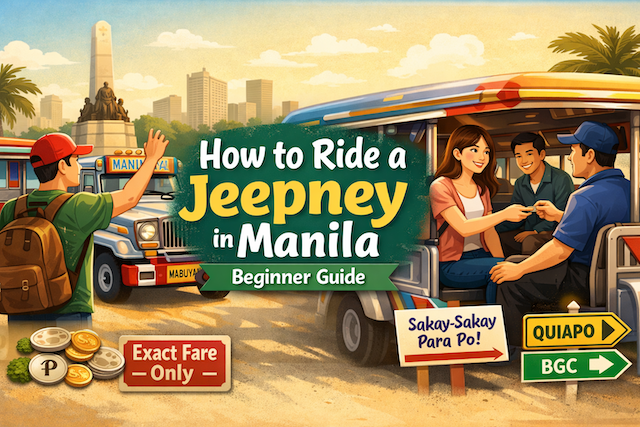
How to Ride a Jeepney in Manila: Beginner Guide
Contents
- How to Ride a Jeepney in Manila: Beginner Guide
- What Is a Jeepney?
- Why Ride a Jeepney in Manila?
- Understanding Jeepney Routes
- Where to Find Jeepneys
- How to Get on a Jeepney
- How to Pay the Jeepney Fare
- How to Get Off a Jeepney
- Common Jeepney Etiquette
- Safety Tips for First-Time Riders
- Jeepneys vs Other Transportation Options
- When Not to Ride a Jeepney
- Jeepney Modernization Program
- Useful Filipino Phrases for Riding a Jeepney
- Final Thoughts: Is Riding a Jeepney Worth It?
- FAQs (Frequently Asked Questions)
- Is it safe for tourists to ride jeepneys in Manila?
- How do I know which jeepney to take if there is no map?
- Where can I find jeepneys in Manila?
- How do I pay the fare inside a jeepney?
- How much is the jeepney fare in Manila?
- How do I tell the driver to stop?
- Can I ride a jeepney if I have luggage?
- What should I do if the jeepney is too crowded?
- What is the difference between traditional and modern jeepneys?
- Do jeepneys run late at night?
- What are common mistakes beginners make when riding jeepneys?
- Is it okay to ask the driver questions?
- Should I use jeepneys or trains as a tourist?
How to Ride a Jeepney in Manila: Beginner Guide
Jeepneys are one of the most iconic and widely used forms of public transportation in Manila. Colorful, loud, and often confusing for first-time visitors, jeepneys can feel intimidating at first. However, once you understand how they work, they become one of the cheapest and most authentic ways to get around the city.
This beginner guide explains everything you need to know about riding a jeepney in Manila, from routes and fares to etiquette and safety tips. If you are visiting Manila for the first time, this guide will help you ride a jeepney with confidence.
What Is a Jeepney?
A jeepney is a shared public vehicle originally made from surplus US military jeeps after World War II. Over time, they evolved into extended vehicles with bench seating along both sides, decorated with vibrant artwork, religious symbols, and pop culture designs.
Jeepneys operate on fixed routes but do not have fixed stops like buses or trains. Passengers can hop on and off almost anywhere along the route, making them flexible but sometimes confusing for beginners.
Why Ride a Jeepney in Manila?
There are several reasons why people still choose jeepneys despite the rise of MRT, LRT, and ride-hailing apps.
First, jeepneys are extremely affordable. They are the cheapest motorized transport option in Manila.
Second, jeepneys go to many local areas that trains and buses do not reach.
Third, riding a jeepney offers a local experience and a closer look at daily life in Manila.
That said, jeepneys are not always the most comfortable or fastest option, especially during peak hours.
Understanding Jeepney Routes
Route Signs on Jeepneys
Jeepney routes are displayed on signboards located on the front windshield or on the side of the vehicle. These signs list key places, roads, or landmarks along the route.
For example:
-
“Quiapo – Baclaran”
-
“Cubao – Divisoria”
-
“Taft – Lawton”
The route names are not standardized maps but references locals recognize.
How to Know If a Jeepney Is Going Your Way
As a beginner, this is the hardest part.
You can:
-
Ask locals nearby: “Does this jeepney go to [destination]?”
-
Ask the driver directly before boarding
-
Use Google Maps and compare route names
-
Watch where other passengers are heading
Do not hesitate to ask. Locals are generally helpful, especially when they realize you are unfamiliar with the system.
Where to Find Jeepneys
Jeepneys are everywhere in Manila, especially along major roads such as:
-
Taft Avenue
-
España Boulevard
-
EDSA service roads
-
Quezon Avenue
-
Recto Avenue
You can usually flag one down by standing near the roadside and making eye contact with the driver.
In some busy areas, jeepneys line up at terminals or designated loading zones.
How to Get on a Jeepney
Step 1: Flag the Jeepney
Stand by the roadside and raise your hand slightly, similar to hailing a taxi. If the jeepney has space, the driver will slow down or stop.
If it is already full, it will usually drive past you.
Step 2: Board from the Back
Most jeepneys are boarded from the rear entrance. Step up carefully, as the step can be high.
Hold onto the handrails or ceiling bars for balance, especially if the jeepney starts moving immediately.
Step 3: Take a Seat
Seats are long benches on both sides of the vehicle. If no seats are available, you may have to sit near the entrance or stand slightly bent over.
Space can be tight, especially during rush hours.
How to Pay the Jeepney Fare
Jeepney Fare Basics
Jeepney fares are based on distance, but for beginners, most rides within a short range cost the minimum fare.
As of recent years:
-
Minimum fare is usually around PHP 12–15
-
Longer distances cost slightly more
Drivers do not give change easily for large bills.
How to Pay Inside the Jeepney
This is one of the most unique aspects of riding a jeepney.
-
Once seated, prepare your fare in cash.
-
Hand the money to the passenger closest to you.
-
Say “Bayad po” (which means “payment”).
-
The money will be passed forward from passenger to passenger until it reaches the driver.
-
If you need change, say “Bayad po, [amount], sukli po” (payment, amount, change please).
-
Your change will be passed back to you the same way.
This system works surprisingly well and is part of daily life in Manila.
How to Get Off a Jeepney
Jeepneys do not have stop buttons like buses.
When you are near your destination:
-
Knock lightly on the metal roof or side
-
Say “Para po” (please stop)
-
The driver will slow down and stop at a safe spot
Exit from the back carefully and watch for passing vehicles.
Common Jeepney Etiquette
Understanding basic etiquette will make your ride smoother.
-
Make space for other passengers
-
Pass fares and change promptly
-
Avoid blocking the entrance
-
Speak politely when asking questions
-
Keep your belongings close
Jeepneys are communal spaces, and cooperation is expected.
Safety Tips for First-Time Riders
Protect Your Belongings
Jeepneys are generally safe, but petty theft can happen.
-
Keep bags in front of you
-
Avoid using your phone near open windows
-
Do not display valuables openly
Be Extra Careful During Rush Hours
Rush hours in Manila are typically:
-
Morning: 7:00 AM – 9:00 AM
-
Evening: 5:00 PM – 8:00 PM
During these times, jeepneys can be extremely crowded.
Choose Your Seat Wisely
If possible, avoid sitting near the entrance if you have bags. Seats closer to the middle are usually safer.
Jeepneys vs Other Transportation Options
Jeepney vs MRT and LRT
Jeepneys are slower but more flexible. Trains are faster but limited to fixed stations.
Jeepneys are better for:
-
Short distances
-
Areas without train access
-
Budget travel
Trains are better for:
-
Long distances
-
Avoiding traffic
-
Predictable travel time
Jeepney vs Bus
Jeepneys are cheaper and more frequent, while buses are more regulated and comfortable.
Jeepney vs Grab and Taxi
Grab and taxis are safer and more comfortable but significantly more expensive.
When Not to Ride a Jeepney
While jeepneys are practical, there are times when they may not be ideal.
-
Late at night if you are unfamiliar with the area
-
During heavy rain
-
If you are carrying large luggage
-
If you are in a hurry
In these cases, consider using Grab, taxi, or train services.
Jeepney Modernization Program
The Philippine government has been gradually implementing a Jeepney Modernization Program, introducing newer vehicles with:
-
Air-conditioning
-
Fixed stops
-
Cashless payment options
However, traditional jeepneys are still very common, especially in central and residential areas.
As a beginner, you may encounter both traditional and modern jeepneys.
Useful Filipino Phrases for Riding a Jeepney
Knowing a few simple phrases helps a lot.
-
“Bayad po” – Payment
-
“Para po” – Please stop
-
“Sukli po” – Change please
-
“Dadaan po ba ito sa [place]?” – Does this pass by [place]?
-
“Salamat po” – Thank you
Using “po” adds politeness and is appreciated.
Final Thoughts: Is Riding a Jeepney Worth It?
Riding a jeepney in Manila may feel overwhelming at first, but it becomes much easier after one or two rides. It is affordable, practical, and deeply woven into Manila’s culture.
For beginners, the key is preparation:
-
Know your destination
-
Carry small bills
-
Ask questions
-
Stay alert
If you are open to the experience, riding a jeepney can be one of the most memorable parts of your time in Manila.
FAQs (Frequently Asked Questions)
Is it safe for tourists to ride jeepneys in Manila?
For most daytime trips on busy routes, riding a jeepney is generally safe if you use common-sense precautions. Jeepneys are public, shared vehicles, so petty theft can happen, especially in crowded areas. Keep your phone and wallet out of sight, wear your bag in front of you, and avoid placing valuables near the open entrance. If you are traveling late at night, carrying large luggage, or unsure about the neighborhood, consider using a taxi, Grab, or the MRT/LRT instead.
How do I know which jeepney to take if there is no map?
Jeepney routes are usually shown on signboards at the front or side, listing major streets and landmarks. The simplest method is to ask, “Does this jeepney pass by [your destination]?” You can also use Google Maps to identify the major road you need, then match it with the place names on the jeepney sign. In many areas, jeepneys queue at terminals, where a dispatcher or driver can confirm the route. If you are unsure, it is better to ask before boarding than to ride and hope.
Where can I find jeepneys in Manila?
Jeepneys commonly run along major roads such as Taft Avenue, España Boulevard, Recto Avenue, Quezon Avenue, and near transport hubs like MRT/LRT stations, university areas, and public markets. In busy districts, you may see jeepney terminals or loading zones, especially near malls and stations. Because jeepneys can be flagged down along the road, you can usually ride one as long as the route matches your destination and the vehicle has space.
How do I pay the fare inside a jeepney?
Most jeepneys use a simple cash system. After sitting down, prepare small bills or coins. Hand your money to the nearest passenger and say “Bayad po” (payment, please). The passengers will pass it forward to the driver. If you need change, say “Sukli po” (change, please) while handing your fare. Your change is passed back the same way. Try to avoid large bills because drivers may not have enough change, especially early in the morning.
How much is the jeepney fare in Manila?
Jeepney fares depend on distance and can change over time, but most short rides start at a minimum fare, and longer rides cost slightly more. Many local commuters carry coins and small bills for this reason. If you are not sure about the correct fare, you can ask the driver or a nearby passenger, especially if you are traveling beyond a typical short route. Having exact change makes the ride smoother and reduces confusion.
How do I tell the driver to stop?
Jeepneys do not usually have stop buttons. When you are near your destination, you can knock gently on the roof or side of the jeepney and say “Para po” (please stop). The driver will slow down and stop at a safe spot. Prepare to move toward the rear exit in advance, especially if the jeepney is crowded. Always watch for motorcycles and cars when stepping down onto the road.
Can I ride a jeepney if I have luggage?
It is possible, but not ideal. Jeepneys have limited space and can get crowded quickly. Large suitcases may block the entrance and inconvenience other passengers. If you have a backpack or small carry-on, keep it in front of you to protect your belongings and save space. For airport transfers or travel with heavy luggage, it is usually better to take a taxi, Grab, or an airport bus where available.
What should I do if the jeepney is too crowded?
If a jeepney is packed, it may be uncomfortable and harder to keep your belongings secure. In that situation, you can wait for the next jeepney, look for an alternative route, or switch to the MRT/LRT if the station is nearby. During peak hours, multiple jeepneys may arrive full, so consider traveling earlier or later if your schedule is flexible. If you do board a crowded jeepney, hold on tightly and keep your bag close to your chest.
What is the difference between traditional and modern jeepneys?
Traditional jeepneys are the iconic, open-air vehicles with bench seating and hand-to-hand fare passing. Modern jeepneys are newer units introduced under the government modernization efforts. They often have features like higher ceilings, more standardized seating, and sometimes air-conditioning. Some modern units also support cashless payments, but cash is still widely accepted in many areas. As a visitor, you may ride either type depending on the route and district.
Do jeepneys run late at night?
Some routes operate late, but schedules are not always consistent. In general, jeepney availability decreases as it gets later, especially outside major nightlife or commercial districts. If you are traveling late at night, it can be harder to confirm routes and safer to use a ride-hailing app or a reputable taxi. If you do ride late, choose well-lit areas, avoid empty vehicles, and sit where you can keep your bag secure.
What are common mistakes beginners make when riding jeepneys?
The most common mistakes include boarding without confirming the route, carrying only large bills, not knowing where to get off, and not keeping valuables secure. Another mistake is waiting for a “bus stop” that never comes—jeepneys can often stop anywhere safe, so you need to signal the driver. Finally, some beginners are shy about asking for help. In Manila, asking a quick question before boarding can save a lot of time and prevent you from ending up far from your destination.
Is it okay to ask the driver questions?
Yes. It is normal to ask, especially if you are unsure. Ask politely before boarding or while the jeepney is stopped. Short questions work best, such as “Dadaan po ba ito sa [place]?” (Does this pass by [place]?). If the jeepney is moving fast or the road is busy, it may be easier to ask another passenger. Being polite and direct is the best approach.
Should I use jeepneys or trains as a tourist?
It depends on your route, comfort level, and schedule. Jeepneys are great for short trips and places not served by rail lines, and they offer a local cultural experience. Trains can be faster for longer cross-city travel and reduce traffic uncertainty, but they can also be crowded. Many tourists use a mix: trains for major corridors, jeepneys for local connections, and Grab or taxis when convenience and safety are priorities.

How to Register for eTravel Philippines (2025 Guide)
Step-by-step guide to completing your eTravel registration before arriving in the Philippines, with images and tips.

Night Market in Cebu – Things You Don’t Know About Cebu Life
Discover the hidden charm of Cebu’s night markets, from street food stalls to local life tips you won’t find in tourist guides.

How to Use ChatGPT for IELTS Preparation: A Complete Guide
Learn how to prepare for IELTS using ChatGPT — including strategies for Writing, Reading, Listening, Speaking, and grammar support.

How to Build a Website Without Coding Using ChatGPT
Discover how to build your own website using AI—no coding skills needed. From structure planning to SEO and design, let ChatGPT guide you.