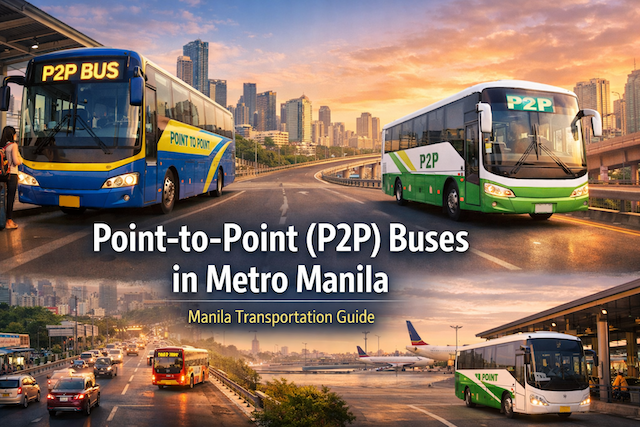
Point-to-Point (P2P) Buses in Metro Manila: Manila Transportation Guide
What Are Point-to-Point (P2P) Buses in Metro Manila?
Point-to-Point (P2P) buses are premium, non-stop bus services designed to provide a faster, more comfortable, and more predictable way to travel across Metro Manila and nearby provinces. Unlike traditional city buses or jeepneys that make frequent stops along the route, P2P buses operate only between designated terminals, usually located in major business districts, malls, airports, and transport hubs.
P2P buses were introduced to ease traffic congestion, encourage commuters to shift away from private cars, and offer a reliable alternative to driving. Today, they are widely used by office workers, airport passengers, business travelers, and first-time visitors who want a simple and stress-free transport option.
Why P2P Buses Are Popular in Manila
Metro Manila is known for heavy traffic, complex routes, and varying transport standards. P2P buses address many of these issues, which explains their growing popularity.
First, they offer predictability. With fixed schedules, limited stops, and designated terminals, passengers know exactly where to board and where to get off. Second, comfort is a major advantage. P2P buses are air-conditioned, have cushioned seats, and are generally cleaner and quieter than regular buses. Third, safety and security are better managed, with regulated operators, ticketing systems, and professional drivers.
For visitors unfamiliar with Manila’s transport system, P2P buses provide an easy entry point into public transportation.
Key Differences Between P2P Buses and Regular City Buses
P2P buses differ significantly from standard city buses in Metro Manila.
Regular buses pick up and drop off passengers along the road, often without fixed stopping points. Travel time can vary widely depending on traffic and passenger volume. In contrast, P2P buses operate on a terminal-to-terminal basis, making them faster and more consistent.
Fare systems are also different. P2P buses use fixed fares based on the route, while regular buses may charge distance-based or flat rates depending on the system. Additionally, P2P buses usually require cashless payment or ticket purchase at the terminal, whereas regular buses often accept cash on board.
Typical P2P Bus Routes in Metro Manila
P2P routes are designed to connect key residential areas, business districts, airports, and transport hubs. While routes may change or expand over time, common P2P connections include:
-
Central business districts such as Makati, Bonifacio Global City (BGC), and Ortigas
-
Major shopping malls like Trinoma, SM Megamall, Glorietta, and SM North EDSA
-
Airport routes connecting NAIA terminals to Makati, BGC, and other hubs
-
Suburban and provincial connections to areas like Alabang, Sta. Rosa, Antipolo, and Clark
These routes are especially useful for commuters traveling long distances across the metro without multiple transfers.
P2P Bus Terminals and Boarding Locations
P2P buses only pick up and drop off passengers at official terminals. These terminals are usually located inside or near malls, office complexes, transport hubs, or dedicated bus bays.
Terminals are clearly marked and often staffed with personnel who assist passengers with ticketing and boarding. Waiting areas are usually covered and may have seating, making the experience more comfortable than roadside bus stops.
Because P2P buses do not stop along the way, passengers must board at the correct terminal. It is important to confirm the exact location in advance, especially if visiting Manila for the first time.
Operating Hours and Schedules
P2P buses run on fixed schedules, which is one of their main advantages. Operating hours vary by route, but most services begin early in the morning and end late in the evening.
Peak-hour schedules are usually more frequent, especially on routes serving business districts. Off-peak and weekend schedules may have longer intervals between buses.
Schedules are typically posted at terminals and on official operator websites or social media pages. Unlike jeepneys or regular buses, P2P buses generally follow their schedules closely, although traffic conditions can still cause delays.
Fare Structure and Payment Methods
P2P bus fares are higher than regular bus fares but lower than taxis or ride-hailing services for long distances. Fares depend on the route length and destination.
Payment methods vary by operator, but most P2P services use cashless systems. Common payment options include stored-value transport cards, QR code payments, mobile wallets, or pre-purchased tickets at the terminal. Some routes still accept cash, but this is becoming less common.
Because payment methods differ, it is recommended to check accepted payment options before boarding, especially for airport routes.
Comfort and Amenities on P2P Buses
Comfort is one of the strongest selling points of P2P buses. Vehicles are typically modern coaches with air-conditioning, comfortable seating, and ample legroom.
Many P2P buses have designated luggage space, making them suitable for airport transfers. Some units also offer onboard Wi-Fi or USB charging ports, although availability varies.
Passenger capacity is controlled, and standing passengers are usually not allowed. This ensures a quieter, less crowded ride compared to traditional buses.
P2P Buses for Airport Transfers
One of the most popular uses of P2P buses is airport transportation. Routes connecting NAIA terminals to Makati, BGC, and other major areas are widely used by travelers who want to avoid expensive taxis or unpredictable traffic routes.
Airport P2P buses are designed with luggage in mind and usually stop directly at airport terminals. This makes them a convenient option for solo travelers, business travelers, and tourists arriving in Manila for the first time.
Compared to ride-hailing services, P2P airport buses offer transparent pricing and fixed routes, reducing the risk of confusion or overcharging.
Who Should Use P2P Buses?
P2P buses are ideal for several types of passengers.
Office workers commuting between residential areas and business districts benefit from the predictable schedules and comfortable environment. Travelers heading to or from the airport appreciate the luggage space and direct routes. Visitors unfamiliar with Manila’s transport system find P2P buses easier to understand than jeepneys or local buses.
However, P2P buses may not be suitable for short trips or destinations not near official terminals. In such cases, jeepneys, trains, or ride-hailing services may be more practical.
Advantages of Using P2P Buses in Metro Manila
The main advantages of P2P buses include reliability, comfort, and simplicity. Fixed routes and schedules reduce uncertainty, while limited stops shorten travel time. Clean interiors and controlled passenger numbers create a more pleasant travel experience.
For visitors, P2P buses remove many of the challenges associated with navigating Manila’s complex transport network. Clear terminals, professional staff, and predictable fares make them one of the easiest public transport options available.
Limitations and Things to Keep in Mind
Despite their benefits, P2P buses have some limitations. Routes are limited, and not all areas of Metro Manila are covered. Passengers must travel to a terminal, which may require a taxi, train, or short walk.
Fares are higher than standard buses, which may not suit budget travelers making frequent short trips. Additionally, service frequency outside peak hours may be lower, requiring some planning.
Understanding these limitations helps travelers choose the most appropriate transport option for their needs.
How P2P Buses Fit into the Manila Transportation System
P2P buses complement other transport options in Metro Manila, including MRT, LRT, jeepneys, and ride-hailing services. They are not designed to replace local transport but to provide a premium alternative for longer, cross-city trips.
Many commuters combine P2P buses with trains or local transport, using P2P services for the longest or most congested part of their journey. This integration makes them an important part of Manila’s evolving transportation landscape.
Tips for First-Time P2P Bus Users
First-time users should arrive at the terminal early, especially during peak hours. Confirm the route, destination, and operating hours in advance to avoid confusion.
Check payment options beforehand and prepare the correct card or mobile wallet. Keep personal belongings secure, especially in busy terminals, although P2P environments are generally safer and more controlled than roadside stops.
If traveling with luggage, choose a route known for airport or long-distance service, as these buses are better equipped for baggage.
Future of P2P Buses in Metro Manila
As Metro Manila continues to face traffic congestion and population growth, P2P buses are expected to play an increasing role in urban mobility. Expansion of routes, improved integration with train lines, and upgraded payment systems are all part of ongoing transport development plans.
For residents and visitors alike, P2P buses represent a practical step toward more organized, efficient, and commuter-friendly public transportation in the city.
Conclusion: Are P2P Buses Worth Using in Manila?
Point-to-Point buses offer one of the most convenient and comfortable ways to travel across Metro Manila. While they are not the cheapest option, their reliability, cleanliness, and ease of use make them especially appealing for commuters, travelers, and first-time visitors.
Understanding how P2P buses work allows you to move around Manila with greater confidence and less stress. As part of a balanced transportation system, they are a valuable option worth considering when navigating the city.
Frequently Asked Questions (FAQs)
What does “P2P bus” mean in Metro Manila?
P2P stands for Point-to-Point. In Metro Manila, a P2P bus is a premium bus service that operates between designated terminals only, such as major malls, business districts, and airport stops. The main idea is simple: fewer or no intermediate stops, clearer boarding points, and more predictable travel compared to regular city buses. Because the route is terminal-to-terminal, P2P buses are popular with commuters who want a straightforward ride and travelers who prefer an easier system than local buses or jeepneys.
Are P2P buses safe for tourists and first-time visitors?
Generally, yes. P2P buses are regulated services that use established terminals, controlled boarding areas, and professional drivers. This structure can feel safer and more organized than roadside stops. That said, you should still follow basic travel precautions: keep valuables close, avoid placing phones and wallets in open pockets, and stay aware in busy terminals. If you are traveling late at night, plan your route carefully because some lines reduce frequency in the evening.
Do P2P buses operate 24/7?
No, most P2P routes do not run 24 hours. Operating hours depend on the route and the day of the week. Many commuter-heavy routes run early morning to late evening, with more frequent trips during peak hours. Airport-oriented routes can run longer than typical commuter routes, but they still have a last trip. Always check the current schedule at the terminal or through the operator’s official announcements before you plan an early flight or a late arrival.
How often do P2P buses come?
Frequency varies by route. During weekday rush hours, buses may arrive every 15 to 30 minutes on popular lines. Midday, evenings, weekends, and holidays may have longer intervals, such as every 30 to 60 minutes, or even less frequent on limited-demand routes. If you are traveling during peak hours, arrive early because lines can form and some departures may fill up quickly, especially on routes serving central business districts.
Where can I find P2P bus terminals in Manila?
P2P terminals are usually located at major malls, transport hubs, business districts, or dedicated bus bays. Common terminal locations are inside mall complexes (near transport terminals or parking areas) or along major roads with clearly designated P2P loading zones. Because P2P buses do not pick up passengers along random roadside stops, you must board at the correct terminal. If you are unfamiliar with the area, use maps and confirm the exact entrance, since some terminals are inside large complexes.
How do I pay for a P2P bus ride?
Payment depends on the operator and route. Many P2P services use cashless payments such as stored-value transport cards, QR payments, or mobile wallets, while some still accept cash at ticket booths. Typically, you pay before boarding rather than paying the driver onboard. For first-time riders, the easiest approach is to arrive early, locate the ticket counter, and ask staff which payment methods are accepted that day. If you are heading to the airport, having a backup payment option is smart in case a system is offline.
Are P2P bus fares fixed or distance-based?
P2P fares are usually fixed for each route because the service is terminal-to-terminal. This makes it easier to budget compared to modes that require negotiating or that charge by distance with variable conditions. Even so, fares can change over time due to fuel prices, policy updates, or route adjustments. If you are writing a travel plan or itinerary, treat fares as “estimate-friendly” but still verify at the terminal or on the operator’s official channels close to your travel date.
Can I bring luggage on a P2P bus?
Yes, and this is one reason P2P buses are popular for airport transfers. Many P2P units are coach-style buses with designated luggage space. However, luggage rules vary. Some allow large suitcases in compartments, while others have limited storage depending on the bus type. If you are traveling with multiple large bags, choose an airport-oriented route or a long-distance commuter route that typically uses coaches. Keep valuables and fragile items with you, not in the luggage compartment.
Do P2P buses stop along the way if I request it?
Usually, no. P2P stands for point-to-point, so the service is designed to stop only at official terminals and authorized stops, if any. This is part of what makes the travel time more predictable. If you need to get off somewhere between terminals, a regular bus, train, or ride-hailing service may be a better choice. Plan your trip so that your final destination is reasonably close to the arrival terminal, then use a short Grab ride, taxi, or train connection.
What’s the best way to use P2P buses with MRT or LRT?
P2P buses work well as a “long segment” of your journey, with rail used for the final connection. For example, you might take a P2P bus into a business district or mall terminal, then transfer to MRT or LRT if the station is nearby. When planning, focus on walking distance between terminals and rail stations, and build in extra time for transferring—especially during rush hour. Also note that P2P schedules are fixed, so check the last trip if you plan to return late.
Are seats guaranteed on a P2P bus?
In many cases, P2P buses are seated-only, meaning standing passengers are not allowed. This improves comfort but can also mean the bus can fill up. Whether a seat is “guaranteed” depends on how ticketing is handled. Some services sell tickets for specific departures, while others sell a ticket that can be used for the next available bus. To increase your chances of getting a seat on your preferred departure, arrive early during peak hours and avoid the very last trip of the night.
What should I do if the P2P bus is delayed?
Delays can happen due to traffic, weather, or road incidents. If your bus is late, stay near the terminal’s information area and look for updates from staff or posted notices. If you are connecting to a flight, plan a buffer of at least one to two hours beyond the “normal” travel time because Manila traffic can change quickly. For time-sensitive trips, it can be safer to take an earlier departure or consider rail plus a short taxi connection if available.
Is a P2P bus better than Grab or a taxi?
For long cross-city trips, a P2P bus can be cheaper and more predictable than a taxi or Grab, especially during surge pricing or heavy traffic. However, door-to-door convenience is where ride-hailing wins. The best choice depends on your priorities: if you want simplicity and comfort at a fixed fare and you can reach the terminal easily, P2P is excellent. If you have limited time, lots of luggage, or a destination far from terminals, Grab or a taxi may be more practical.