2025年12月31日
3D ACADEMY offers affordable English study programs in Cebu, Philippines – perfect for beginners, professionals, and exam takers.

3D UNIVERSAL ENGLISH INSTITUTE INC
info.3d-universal.com
8:00-17:00(Mon-Fri)
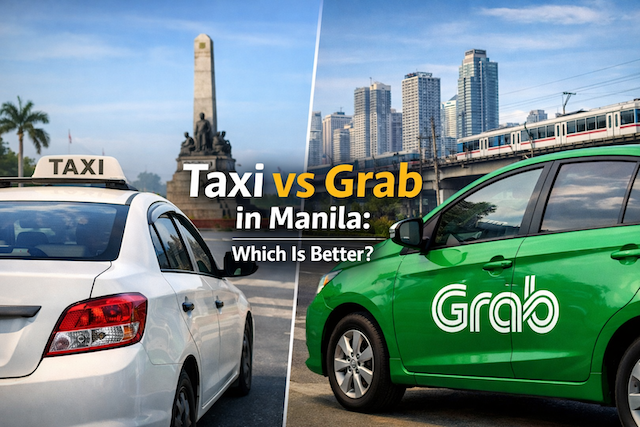
Taxi vs Grab in Manila: Which Is Better?: Manila Transportation Guide
Contents
- Taxi vs Grab in Manila: Which Is Better?: Manila Transportation Guide
- Quick Answer: It Depends on Your Priorities
- Understanding the Basics: What “Taxi” and “Grab” Mean in Manila
- Cost Comparison: Which One Is Cheaper?
- Safety: Which Is Safer for Tourists?
- Convenience: Which Is Easier?
- Speed and Availability: Who Gets You There Faster?
- Payment: Cash vs Cashless
- Comfort: Aircon, Car Quality, and Ride Experience
- Common Scams and Annoyances (and How to Avoid Them)
- Airport Trips: Taxi or Grab from NAIA?
- Best Choice by Situation (Practical Scenarios)
- Tips to Make Either Option Better
- Final Verdict: Which Is Better?
- FAQs (Frequently Asked Questions)
- Is Grab safer than taking a taxi in Manila?
- Which is cheaper in Manila: taxi or Grab?
- Do taxis in Manila always use the meter?
- Can I pay cash on Grab in Manila?
- Is it easy to get a taxi in Manila during rush hour or when it rains?
- What is the best option for airport transfers from NAIA: taxi or Grab?
- What should I do if a taxi driver asks for a fixed price?
- What should I do if a Grab driver asks me to cancel and pay outside the app?
- Which is better for short trips: taxi or Grab?
- How can I avoid misunderstandings about pickup and drop-off points?
Taxi vs Grab in Manila: Which Is Better?: Manila Transportation Guide
Quick Answer: It Depends on Your Priorities
In Metro Manila, Grab is usually better for first-time visitors because pricing is shown upfront (or at least estimated clearly), driver details are logged in the app, and pickup/drop-off is easier to confirm. Taxis can be better when demand is high (Grab surge pricing) or when you’re somewhere with many taxis available and you can quickly get in and go.
This guide compares cost, safety, convenience, speed, and best-use scenarios so you can choose confidently.
Understanding the Basics: What “Taxi” and “Grab” Mean in Manila
In Manila, “taxi” typically means a metered taxi (yellow airport taxis and regular white taxis exist, plus premium options in some areas). Grab is an app-based ride-hailing service where you book a car through your phone, see vehicle/driver details, and pay either cashless or cash depending on settings and availability.
Both are widely used—but the experience can be very different depending on traffic, location, and time of day.
Cost Comparison: Which One Is Cheaper?
Grab: More predictable, sometimes more expensive
Grab fares are generally more predictable because you see the fare or estimate before confirming. The downside is surge pricing during peak hours, rainstorms, weekends, holidays, or when demand spikes (for example after events or when trains are delayed).
Grab can feel “expensive” at times—but many travelers still choose it because it reduces uncertainty.
Taxi: Potentially cheaper on paper, but variability matters
Metered taxis can be cheaper than Grab when traffic is light and the driver uses the meter properly. But travelers often run into issues such as:
-
Refusal to use the meter
-
“Fixed price” demands
-
Long routing (intentional or not)
-
Difficulty hailing during peak times or rain
If you get a clean meter ride with no drama, taxis can win on price. If not, your final cost and stress level can go up fast.
Practical rule of thumb
-
If you want price certainty: Grab
-
If you’re comfortable negotiating / checking the meter: Taxi
-
If it’s raining or rush hour: Grab may surge; taxis may also be scarce (or picky)
Safety: Which Is Safer for Tourists?
Grab: Stronger accountability
Grab is often considered safer for tourists because:
-
Driver and vehicle details are recorded
-
Trips are logged (route + time)
-
You can share trip details with a friend
-
There’s a built-in support system if something goes wrong
This doesn’t mean every Grab ride is perfect, but the accountability layer is a major advantage.
Taxi: Safety depends on how you hail it
Many taxi rides are fine, especially if you:
-
Use taxi stands at malls/hotels
-
Ask your hotel concierge to flag one
-
Avoid unmarked or “special offer” cars
Safety concerns usually increase when you:
-
Accept rides from aggressive solicitors
-
Get into taxis that refuse the meter
-
Ride late at night alone without sharing details
-
Use poorly lit roadside pickups
Best safety practice regardless of choice
-
Sit in the back seat
-
Keep valuables out of sight
-
Don’t flash your phone near open windows in traffic
-
Use a bag with zippers and keep it on your lap
-
If something feels off, trust your gut and exit safely
Convenience: Which Is Easier?
Grab wins for most visitors
Grab is convenient because:
-
You don’t need to explain fares
-
You can pin your pickup point
-
You can message/call the driver in-app
-
You can avoid language or negotiation issues
-
You can choose vehicle types (where available)
If you’re staying in Makati, BGC, Ortigas, or near major malls, Grab pickup is usually straightforward.
Taxi convenience depends on where you are
Taxis are convenient if you’re:
-
At a hotel taxi queue
-
At a mall taxi bay
-
In an area where taxis are constantly circulating
But they can be inconvenient when:
-
Drivers refuse your destination (too far, too near, heavy traffic area)
-
Drivers demand “fixed price”
-
You struggle to find a taxi during rain or rush hour
Speed and Availability: Who Gets You There Faster?
In Manila, traffic is the main enemy, not the vehicle type. But availability varies by time and location.
When Grab is faster
-
You’re in a residential area where taxis don’t pass often
-
You want door-to-door pickup without walking to a taxi stand
-
You’re traveling late at night from a safe pickup point
When taxis are faster
-
Grab demand is high and ETAs are long
-
You’re leaving a major mall/hotel where taxis are queued
-
Your phone signal/data is weak and you need a ride immediately
Smart strategy
Open Grab and check:
-
ETA (minutes)
-
Fare (surge or not)
If ETA is high and fare is inflated, walk to a mall/hotel taxi stand and try a metered taxi.
Payment: Cash vs Cashless
Grab
-
Cashless is the smoothest (card/e-wallet if supported)
-
Cash is sometimes allowed, but may reduce driver acceptance depending on time/location
Taxi
-
Cash is the norm
-
Some taxis claim to accept cashless, but it’s not consistent
Always carry small bills. If you only have large notes, you may face “no change” issues—especially with taxis.
Comfort: Aircon, Car Quality, and Ride Experience
Grab cars are often newer and more consistently air-conditioned (not always luxury, but usually comfortable). Taxis vary widely. Some are fine; others can be older, have weak aircon, or feel less maintained.
If you’re coming from the airport after a long flight, comfort and predictability may matter more than saving a small amount—Grab tends to win there.
Common Scams and Annoyances (and How to Avoid Them)
Taxi: What to watch for
-
“No meter” or “meter broken” claims
-
Quoting a high fixed price before you enter
-
Detours that feel unnecessary
-
“I don’t have change” pressure
-
Refusing certain destinations (especially short rides)
How to avoid:
-
Insist on the meter before you get in
-
If they won’t, politely walk away
-
Prefer taxis from reputable stands (malls/hotels)
-
Use Google Maps to roughly track your route
Grab: What to watch for
-
Driver asks you to cancel and pay outside the app
-
Driver requests additional cash beyond the app fare without a legitimate reason
-
Confusion about pickup point (especially at malls/airports)
How to avoid:
-
Don’t cancel to “help the driver” if you feel pressured
-
Keep communication inside the app
-
Move to clearly marked pickup areas and use landmarks
Airport Trips: Taxi or Grab from NAIA?
Grab from NAIA
Good if you want:
-
Clear pricing
-
Recorded trip details
-
Less negotiation
But airport pickup can be confusing at first. Follow signage, use designated pickup areas, and expect that phone signal can be spotty in some zones.
Taxi from NAIA
Airport taxis exist, and there may be organized systems (including coupon/ticket style options). These can be convenient if:
-
Grab prices are surging
-
Your phone battery is low
-
You want to leave immediately
Tourist-friendly approach: If you choose taxi at the airport, use official queues and avoid unsolicited offers.
Best Choice by Situation (Practical Scenarios)
Choose Grab when…
-
It’s your first time in Manila
-
You’re traveling late at night
-
You have luggage
-
You want price predictability
-
You’re going to a specific building entrance (condos, offices, hotels)
-
You want an easy way to share trip details for safety
Choose Taxi when…
-
Grab is surging heavily
-
Grab wait time is long
-
You’re at a hotel or mall with a proper taxi stand
-
You can confirm “meter” before entering
-
You’re doing a short hop in a taxi-dense area
If you’re on a tight schedule (flight, meeting, tour)
Check both:
-
Grab ETA and price
-
Taxi availability at a stand
Pick the option that gets you moving fastest with the least uncertainty.
Tips to Make Either Option Better
Grab tips
-
Pin your pickup on the correct side of the road
-
Use mall pickup bays (they often have a specific Grab area)
-
Message the driver with a clear landmark: “I’m beside Entrance A, near the pharmacy”
-
Keep your phone charged (power bank helps)
Taxi tips
-
Ask “Meter?” before getting in
-
Sit in the back, keep bags close
-
Take a quick photo of the taxi number (if you can do it discreetly)
-
Use Google Maps to confirm you’re generally on track
-
Have small bills ready
Final Verdict: Which Is Better?
For most travelers, Grab is better overall in Manila because it reduces friction: less negotiation, more accountability, and clearer expectations. However, taxis can be the smarter choice when Grab prices surge or when you can easily get a proper metered ride at a reputable taxi stand.
If you want one simple approach:
-
Default to Grab
-
Use taxis as your backup when Grab is too expensive or slow
FAQs (Frequently Asked Questions)
Is Grab safer than taking a taxi in Manila?
For many first-time visitors, Grab often feels safer because the trip is recorded in the app, the driver and vehicle details are visible, and you can share your ride information with someone you trust. This creates accountability that can reduce anxiety, especially at night or in unfamiliar neighborhoods. Taxis can also be safe, particularly when you take them from official taxi stands at hotels and major malls, but the experience depends more on the individual driver and whether the ride is properly metered. No option is risk-free in any big city, so basic habits still matter: sit in the back, keep valuables out of sight, avoid showing large amounts of cash, and trust your instincts if something feels off.
Which is cheaper in Manila: taxi or Grab?
It depends on time, traffic, and demand. A metered taxi can be cheaper when traffic is light and the driver uses the meter properly. Grab can be cheaper during normal demand periods, but it may become more expensive during peak hours, heavy rain, holidays, or major events when surge pricing kicks in. The practical advantage of Grab is that you usually see the fare or estimate before confirming, which helps you decide quickly. If you are comparing options, open Grab first to check the price and ETA, then decide whether a taxi stand nearby might be faster or cheaper.
Do taxis in Manila always use the meter?
No. While many drivers will use the meter, some may refuse and quote a fixed price, especially in tourist-heavy areas, late at night, during rain, or when traffic is terrible. The best approach is to confirm “meter” before you get in. If the driver refuses, it is usually better to politely decline and find another taxi or switch to Grab. To improve your odds, take taxis from organized queues at malls, hotels, and transport hubs where staff or guards may discourage abusive pricing.
Can I pay cash on Grab in Manila?
Cash payment is sometimes available, but it can vary depending on your account settings, location, and driver preferences. Some drivers may be more willing to accept cashless rides because it reduces time spent dealing with change. For tourists, cashless payment can feel smoother and more predictable, but it is still wise to carry small bills for backup. If your Grab booking is difficult to get accepted, switching payment methods (if possible) or moving to a clearer pickup point can help.
Is it easy to get a taxi in Manila during rush hour or when it rains?
It can be difficult. During rush hour and rain, demand spikes and availability drops. You may find long lines at taxi stands, more frequent refusals, and drivers who prefer longer trips. Grab may also become slower and more expensive during these periods due to higher demand and traffic congestion. If you need to move during a downpour, the most reliable strategy is to choose whichever option is actually available: check Grab’s ETA and price, then compare that with the taxi situation near you. If neither looks good, consider waiting out the worst of the surge for 15–30 minutes if your schedule allows.
What is the best option for airport transfers from NAIA: taxi or Grab?
Grab is popular for airport transfers because the ride is tracked and the fare is shown upfront or estimated clearly. However, pickup areas at NAIA can be confusing, and mobile signal can be inconsistent in some zones, so it helps to follow signs to the designated pickup area and use clear landmarks. Official airport taxi queues can be convenient when you want to leave immediately, your phone battery is low, or Grab prices are unusually high. The key is to avoid unsolicited offers inside or outside the terminal and stick to official lines or regulated services.
What should I do if a taxi driver asks for a fixed price?
If you prefer a metered ride, confirm the meter before entering the taxi. If the driver insists on a fixed price, you can politely decline and look for another taxi. If you are already inside and the situation feels uncomfortable, ask to stop in a safe, public place and exit. Some travelers choose to negotiate a fixed fare when they understand the normal range and traffic conditions, but first-time visitors typically have a better experience using Grab or insisting on a metered taxi from a reputable stand.
What should I do if a Grab driver asks me to cancel and pay outside the app?
This is generally not recommended for tourists. Paying outside the app can remove important protections such as trip records and support channels. If you feel pressured, you can refuse politely and request that the ride proceed as booked, or cancel and book another driver if you are in a safe location. Keep communication within the app whenever possible. If you experience repeated issues, changing your pickup point to a clearer location (a mall entrance, hotel lobby, or marked bay) can reduce driver confusion and cancellations.
Which is better for short trips: taxi or Grab?
For short trips, a metered taxi can be a good deal if you can quickly find one and the driver uses the meter without complaint. Grab can also work well for short trips, but sometimes drivers are less eager to accept very short rides during busy periods, and surge pricing may make the fare feel high compared with the distance. If you are in a taxi-dense area like near major malls or business districts, trying a metered taxi first can make sense. If you are in a quieter area or want guaranteed pickup, Grab is usually easier.
How can I avoid misunderstandings about pickup and drop-off points?
With Grab, use the pin carefully and stand where the driver can stop safely without blocking traffic. Large malls and airports often have specific pickup bays, so follow posted signs and use recognizable landmarks when messaging the driver. With taxis, clearly state the destination and, if possible, show it on your phone’s map to avoid confusion. If you are going to a condo or office tower, mention the exact entrance or a well-known nearby landmark. Good communication reduces detours, delays, and frustration for both options.

How to Register for eTravel Philippines (2025 Guide)
Step-by-step guide to completing your eTravel registration before arriving in the Philippines, with images and tips.

Night Market in Cebu – Things You Don’t Know About Cebu Life
Discover the hidden charm of Cebu’s night markets, from street food stalls to local life tips you won’t find in tourist guides.

How to Use ChatGPT for IELTS Preparation: A Complete Guide
Learn how to prepare for IELTS using ChatGPT — including strategies for Writing, Reading, Listening, Speaking, and grammar support.

How to Build a Website Without Coding Using ChatGPT
Discover how to build your own website using AI—no coding skills needed. From structure planning to SEO and design, let ChatGPT guide you.