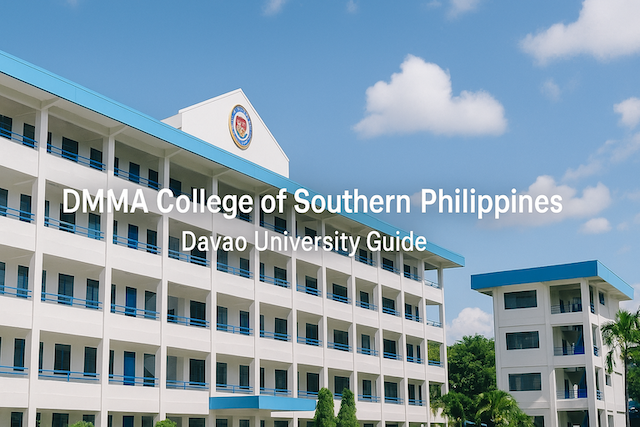
DMMA College of Southern Philippines: Davao University Guide
Overview of DMMA College of Southern Philippines
DMMA College of Southern Philippines (DMMA-CSP) is one of Davao City’s reputable private institutions known for its strong industry-aligned programs, especially in maritime education, engineering, criminology, and hospitality. Established with the goal of producing globally competitive graduates, the college maintains partnerships with local and international companies, ensuring that students gain practical experience before joining the workforce.
The institution offers a mix of technical–vocational programs, undergraduate courses, and specialized training certifications. Its campus in Tigatto, Buhangin, is recognized for a hands-on learning environment supported by updated facilities, simulation labs, and training centers designed to emulate real-world working conditions.
For students seeking an affordable yet quality education in Davao, DMMA College continues to be a top choice due to its commitment to discipline, skill development, and employability.
History and Background
DMMA College of Southern Philippines traces its roots to the early 1990s when it was founded to address the growing demand for competent maritime professionals in the region. Over time, the institution expanded its offerings to include engineering, criminology, business, and various service-oriented programs.
Through decades of development, DMMA-CSP has earned the trust of industry partners due to its consistent emphasis on discipline, hands-on training, and student readiness. This evolution has transformed the school into a multi-disciplinary institution with thousands of alumni working both in the Philippines and abroad.
Academic Programs Offered
Maritime Programs
DMMA is best known for its strong maritime education, producing skilled seafarers who work on international vessels. Programs typically include:
-
BS in Marine Transportation (BSMT)
-
BS in Marine Engineering (BSMarE)
-
Seafarer Training and Certifications (STCW)
These programs incorporate simulation training, onboard practice, and mandatory shipboard apprenticeships with partner shipping lines.
Engineering Programs
DMMA also offers engineering courses catered to the region’s industrial needs:
Engineering students benefit from laboratories, practical training modules, and exposure to fieldwork supervised by licensed engineers.
Criminology Program
The BS in Criminology program remains one of the most popular offerings. It focuses on:
Students undergo physical fitness training, tactical exercises, and crime scene simulations in preparation for licensure exams and law enforcement careers.
Business and Hospitality Programs
DMMA caters to the service sector workforce with programs such as:
These programs combine classroom instruction with immersion, tourism fieldwork, kitchen and restaurant simulation activities, and hotel practicum.
Technical-Vocational Courses
For students seeking quick employment pathways, DMMA offers TESDA-accredited short programs including:
These courses emphasize practical, hands-on training aligned with local and international employment requirements.
Campus Facilities and Learning Environment
Simulation and Training Centers
DMMA is equipped with:
These facilities help students gain real-world insights before they begin fieldwork or practicum.
Library and Learning Resources
The school operates a modern library with print and digital collections, study spaces, and research tools. Online learning platforms supplement traditional classroom delivery.
Sports and Physical Development
The campus includes open courts, fitness areas, and training grounds used by criminology and maritime students for physical exercises and drills.
Student Support Facilities
Students enjoy on-campus conveniences including:
These support systems help students maintain academic and personal balance throughout their studies.
Admission Requirements
Undergraduate Admission
Typical requirements include:
-
Completed application form
-
High school report card (Form 138)
-
PSA birth certificate
-
2×2 or passport-sized photos
-
Good moral certificate
-
Entrance examination or interview (depending on program)
Some programs, especially maritime and criminology, may require additional medical and physical fitness assessments.
Transferee Requirements
Transferees must submit:
-
Transcript of Records or copy of grades
-
Honorable dismissal
-
Certificate of good moral character
-
Program evaluation from the registrar
International Students
International applicants are typically required to submit:
DMMA’s admissions team can provide guidance on visa processing and document preparation.
Tuition Fees and Scholarships
DMMA College is considered affordable compared with larger universities in Davao City. Tuition varies depending on the program, particularly for maritime and engineering courses which require specialized training modules.
The school also offers several financial assistance options:
-
Academic scholarships
-
Athletic scholarships
-
Government-funded programs (TESDA scholarships, Tertiary Education Subsidy)
-
Discounts for siblings or continuing students
Students are encouraged to inquire early as scholarship slots may be limited.
Industry Partnerships and Career Opportunities
Maritime and Seafaring Careers
Maritime students gain priority access to apprenticeship programs with shipping companies. Many graduates secure overseas employment as:
-
Deck officers
-
Marine engineers
-
Seafarer ratings
-
Technical crew
Engineering and Technical Jobs
Graduates of engineering and technical-vocational programs find opportunities in:
Criminology Careers
Criminology graduates pursue roles in:
-
Philippine National Police (PNP)
-
Bureau of Fire Protection (BFP)
-
Bureau of Corrections
-
Investigation and security agencies
Hospitality and Tourism Employment
Hospitality and tourism graduates can work in:
DMMA’s extensive network assists graduates with job placement both locally and abroad.
Student Life and Organizations
The college supports various student organizations that contribute to leadership, creativity, and personal development. These include:
Annual events such as foundation celebrations, intramurals, and academic competitions create a vibrant campus atmosphere.
Location and Accessibility
DMMA College of Southern Philippines is located in Tigatto, Buhangin, Davao City—an accessible area with public transportation routes including jeepneys, taxis, and tricycles. Its location makes it convenient for students coming from both urban and suburban communities of Davao.
Why Choose DMMA College of Southern Philippines?
Students choose DMMA-CSP because of:
-
Strong maritime reputation
-
Hands-on, practical learning environment
-
Affordable tuition
-
Wide range of programs
-
Industry partnerships providing real-world experience
-
High employability of graduates
The school’s commitment to discipline and professional development makes it an appealing option for students aiming for technical careers locally or abroad.
FAQs (Frequently Asked Questions)
What programs does DMMA College of Southern Philippines offer?
DMMA College of Southern Philippines offers a wide range of programs, including maritime courses such as BS in Marine Transportation and BS in Marine Engineering, engineering programs, criminology, business, hospitality, and tourism. The school also provides TESDA-accredited technical-vocational courses like welding, electrical installation, housekeeping, and seafarer rating programs. Specific offerings and majors may change over time, so it is best to refer to the official school information channels for the most updated list of programs.
Is DMMA College of Southern Philippines a good choice for maritime studies?
Yes, DMMA College of Southern Philippines is widely recognized for its maritime-related programs and training. The college emphasizes hands-on learning through ship bridge simulators, engine room simulators, and shipboard apprenticeship with partner companies. Many graduates pursue careers on international vessels as deck officers, marine engineers, and sea-based technical staff. However, prospective students should always compare several schools and review updated accreditation and partner shipping lines before deciding.
Where is DMMA College of Southern Philippines located?
DMMA College of Southern Philippines is located in Tigatto, Buhangin, Davao City. The campus is generally accessible via public transportation such as jeepneys, taxis, and tricycles coming from different parts of Davao. Because routes and traffic conditions can change, students are encouraged to confirm the most convenient routes using local transport apps or by asking current students or staff for guidance.
How much is the tuition fee at DMMA College of Southern Philippines?
Tuition fees at DMMA College of Southern Philippines vary depending on the program, year level, and additional laboratory or training requirements. Maritime and engineering courses may have higher fees because they require simulation hours, equipment, and specialized training. On the other hand, some programs and TESDA courses may be more affordable or partially subsidized. For accurate and updated tuition details, it is essential to contact the registrar or finance office directly, as fees can change from semester to semester.
Are there scholarships or financial assistance available?
Yes, DMMA College of Southern Philippines typically provides several forms of financial assistance, such as academic scholarships for honor students, athletic scholarships, and discounts for siblings or continuing students. Some learners may also qualify for government-funded scholarships and subsidies, especially for TESDA-accredited programs. Availability, requirements, and coverage of scholarships can change, so applicants should inquire early at the scholarship or student affairs office to avoid missing deadlines.
What are the basic admission requirements for new college students?
For new college freshmen, common requirements include a completed application form, senior high school report card, birth certificate, ID photos, and a certificate of good moral character. Some programs, particularly maritime and criminology, may require medical examinations, eyesight and hearing tests, and physical fitness assessments. In certain cases, an entrance exam or interview may also be part of the screening process. Applicants should always verify the latest list of requirements from the admissions office before submitting documents.
Does DMMA College of Southern Philippines accept transferees?
Yes, DMMA College of Southern Philippines generally accepts transferee students who meet the school’s academic and conduct standards. Transferees are usually required to present their Transcript of Records or certified copy of grades, honorable dismissal, and a certificate of good moral character from their previous institution. The registrar will also evaluate which subjects can be credited toward the chosen program. Because policies can change, transferees should coordinate directly with the registrar’s office for evaluation procedures and deadlines.
Is DMMA suitable for international students?
International students may study at DMMA College of Southern Philippines as long as they meet admission, visa, and language requirements set by the school and Philippine authorities. Typically, foreign applicants need to provide passport copies, academic records, and supporting documents for a student visa. Some programs may recommend or require proof of English proficiency, especially if the applicant’s previous schooling was not in English. Interested international students should contact the international or admissions office for detailed guidance.
What kinds of facilities are available on campus?
The campus usually features simulation laboratories for maritime and engineering programs, including ship bridge and engine room simulators, technical workshops, and mock crime scene rooms for criminology. There are also hotel and restaurant training labs, classrooms, a library, and student support offices. In addition, sports areas and open spaces are used for physical training, especially for criminology and maritime learners. Facility upgrades and expansions may occur over time, so it is a good idea to visit the campus or check official materials for the latest information.
What are the career prospects for DMMA graduates?
Graduates of DMMA College of Southern Philippines can pursue careers in various sectors depending on their program. Maritime graduates often work on local and international vessels, while engineering alumni may join construction, utilities, or manufacturing firms. Criminology graduates may enter law enforcement agencies, corrections, or private security, and hospitality and tourism graduates can work in hotels, resorts, cruise ships, and food service companies. The school’s industry linkages and on-the-job training requirements can help students build networks and improve employability, but individual outcomes still depend on performance, licensure exam results, and job market conditions.
What is student life like at DMMA College of Southern Philippines?
Student life at DMMA typically includes academic work balanced with extracurricular activities such as student organizations, program-based clubs, sports teams, cultural events, and campus celebrations. Learners can join maritime or engineering societies, criminology organizations, hospitality clubs, and interest-based groups that promote leadership and teamwork. The school also conducts intramurals, foundation day events, and outreach programs. The overall experience may vary per student, but those who get involved in organizations often gain soft skills and friendships that complement their academic training.
How can I get more information or apply to DMMA College of Southern Philippines?
To get more detailed and updated information, it is best to contact the school through its official website, social media pages, or admissions office. Prospective students can request brochures, ask about entrance schedules, or clarify program-specific requirements. If possible, visiting the campus personally can provide a clearer picture of the facilities, environment, and commuting options. Since policies, fees, and offerings can change, always rely on official channels rather than outdated or third-party sources.