2025年12月13日
3D ACADEMY offers affordable English study programs in Cebu, Philippines – perfect for beginners, professionals, and exam takers.

3D UNIVERSAL ENGLISH INSTITUTE INC
info.3d-universal.com
8:00-17:00(Mon-Fri)
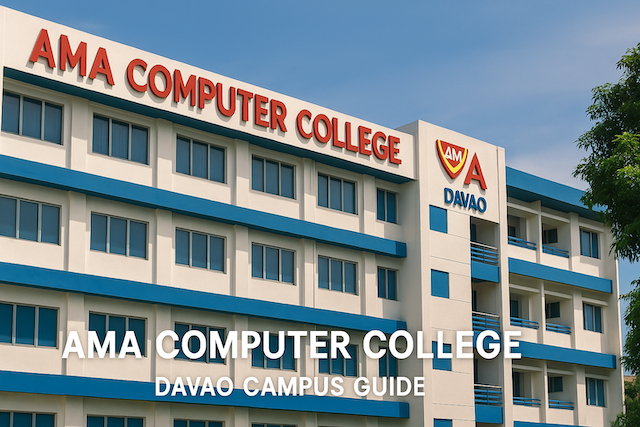
AMA Computer College Davao Campus Guide
Contents
- AMA Computer College Davao Campus Guide
- Overview of AMA Computer College Davao Campus
- History and Legacy of AMA Education System
- Academic Programs Offered
- Campus Facilities and Learning Environment
- Location and Accessibility
- Student Life and Extracurricular Activities
- Industry Linkages and Career Opportunities
- Admission Requirements
- Tuition Fees and Payment Options
- Why Choose AMA Computer College Davao Campus
- Contact Information
- Conclusion
- FAQs
- What programs does AMA Computer College Davao offer?
- How is AMA Davao different from other IT schools?
- Where is the campus located and how do I get there?
- What are the admission requirements for college applicants?
- Does AMA Davao accept Senior High School students?
- Is there an entrance exam or placement test?
- How much are the tuition and fees?
- Are scholarships or discounts available?
- What does student life look like on campus?
- What facilities and resources can students use?
- Is there support for internships and career placement?
- Can international students enroll?
- Are online or blended classes available?
- Is on-campus housing provided?
- How can I transfer from another school or shift programs?
- What is the typical academic load and schedule?
- How safe is the campus environment?
- How do I apply and when are the intakes?
- What preparation is recommended for first-year IT students?
- Who can I contact for more information?
AMA Computer College Davao Campus Guide
AMA Computer College Davao Campus is one of the most prominent institutions for technology and computer education in Mindanao. As part of the well-known AMA Education System, it provides high-quality, industry-relevant education that prepares students for the fast-paced world of IT, business, and engineering. Located in the heart of Davao City, the campus offers a dynamic learning environment that blends academic excellence, practical training, and innovation.
Overview of AMA Computer College Davao Campus
Established to serve the growing demand for skilled professionals in technology and business, AMA Computer College Davao Campus is one of the flagship branches of AMA Education System in the southern Philippines. It carries the same commitment to academic rigor, technological advancement, and career-oriented programs that the institution has become known for nationwide.
The Davao campus is equipped with modern computer laboratories, multimedia rooms, and student facilities that support effective and engaging learning. With its strategic location in Davao City, students also have access to nearby commercial establishments, dormitories, and transportation networks, making it a convenient and vibrant place to study.
History and Legacy of AMA Education System
AMA Computer College was founded in 1980 by Dr. Amable R. Aguiluz V, a visionary leader who recognized the importance of computer education in the country’s development. The first AMA school opened in Quezon City, and due to its success, the institution rapidly expanded across the Philippines, including major cities like Cebu, Iloilo, and Davao.
Over the years, AMA has evolved into one of the largest IT education networks in Asia, offering not only tertiary education but also senior high school, online learning, and international programs. The Davao campus continues this legacy by training thousands of students in computer science, information technology, business, and related fields.
Academic Programs Offered
AMA Computer College Davao offers a variety of programs that cater to both technology-oriented and business-minded students. The curriculum emphasizes hands-on learning, software development, and professional readiness.
Bachelor’s Degree Programs
-
Bachelor of Science in Computer Science (BSCS)
Focuses on programming, algorithms, and system development. Students learn to design and implement complex software systems. -
Bachelor of Science in Information Technology (BSIT)
Offers practical skills in networking, database management, and IT infrastructure. Graduates often pursue careers as network administrators or IT consultants. -
Bachelor of Science in Information Systems (BSIS)
Combines technology with business management, preparing students for careers in corporate IT departments and project management. -
Bachelor of Science in Business Administration (BSBA)
Concentrates on finance, marketing, and entrepreneurship, equipping students with essential business leadership skills. -
Bachelor of Science in Computer Engineering (BSCpE)
Integrates electronics, software, and hardware engineering, making graduates capable of designing and maintaining computer systems.
Senior High School Programs
The campus also offers senior high school programs under the Academic Track, including:
-
STEM (Science, Technology, Engineering, and Mathematics)
-
ABM (Accountancy, Business, and Management)
-
HUMSS (Humanities and Social Sciences)
-
ICT (Information and Communications Technology)
These tracks allow students to prepare for their chosen college programs while gaining relevant technical and academic foundations.
Campus Facilities and Learning Environment
AMA Computer College Davao provides a tech-focused environment designed for 21st-century learners. Facilities include:
-
State-of-the-art computer laboratories equipped with the latest software and hardware for coding, networking, and multimedia projects.
-
Smart classrooms featuring digital learning tools and internet connectivity.
-
Student resource center and library with both printed and digital materials.
-
Wi-Fi-enabled campus for seamless access to online learning materials and collaboration platforms.
-
Multipurpose halls and student lounges for activities, seminars, and events.
The college also prioritizes safety and accessibility, providing comfortable and secure facilities for both local and international students.
Location and Accessibility
AMA Computer College Davao Campus is located in the urban area of Davao City, making it easily accessible by public transportation, jeepneys, and taxis. It is surrounded by restaurants, convenience stores, and student housing options, ideal for students coming from outside the city.
Nearby landmarks include:
-
SM City Davao
-
Matina Town Square
-
Davao Doctors Hospital
-
University of Mindanao
The convenient location allows students to enjoy both academic focus and city life balance.
Student Life and Extracurricular Activities
Beyond academics, AMA Computer College Davao encourages students to engage in clubs, organizations, and community service. These activities help develop leadership, teamwork, and social responsibility.
Popular student groups include:
-
Computer Science Society
-
Engineering Student Organization
-
AMA Sports Club
-
Student Government Council
The campus regularly hosts IT fairs, hackathons, job fairs, and cultural events, giving students opportunities to showcase skills and connect with industry professionals.
Industry Linkages and Career Opportunities
AMA Computer College Davao maintains strong partnerships with local and international companies, ensuring that graduates are job-ready upon completion of their studies. Students benefit from on-the-job training (OJT) placements in IT firms, BPO companies, and government offices.
Graduates from AMA are highly sought after in the following fields:
-
Software development and engineering
-
Web and mobile application development
-
Network and system administration
-
Business process outsourcing (BPO)
-
Data analytics and cybersecurity
The school’s emphasis on digital literacy and innovation gives its alumni a competitive edge in both the local and global job market.
Admission Requirements
For college-level applicants, the following are required:
-
Completed application form
-
Original Form 138 (Report Card)
-
Certificate of Good Moral Character
-
Birth Certificate (PSA)
-
2×2 ID photo
-
Entrance examination (if applicable)
For senior high school applicants, requirements include:
-
Junior High School Report Card (Form 138)
-
Birth Certificate (PSA)
-
Certificate of Good Moral Character
-
Two recent ID photos
International students must also submit passport copies, visa documents, and proof of English proficiency.
Tuition Fees and Payment Options
Tuition at AMA Computer College Davao is competitive compared to other private institutions in the region. Fees depend on the course and year level but generally range from ₱25,000 to ₱45,000 per semester. Flexible payment schemes and installment plans are available to assist students financially.
The college also participates in scholarship programs and financial aid opportunities such as:
-
CHED Scholarship Grants
-
TES (Tertiary Education Subsidy)
-
AMA Foundation Scholarships
Why Choose AMA Computer College Davao Campus
-
Strong IT and Engineering Programs – Recognized leader in computer education nationwide.
-
Industry-Relevant Curriculum – Courses aligned with real-world technology demands.
-
Modern Facilities – Equipped with updated computer labs and learning spaces.
-
Global Opportunities – Graduates gain skills applicable in international industries.
-
Accessible Location – Conveniently situated in Davao’s educational district.
-
Active Student Life – Encourages holistic growth through organizations and events.
AMA Computer College Davao stands out for its dedication to developing future-ready professionals capable of thriving in a digital world.
Contact Information
AMA Computer College Davao Campus
Address: AMA Building, J.P. Laurel Avenue, Bajada, Davao City, Philippines
Phone: (082) 222-XXXX (example)
Email: davao@amaes.edu.ph
Website: www.amaes.edu.ph
Conclusion
AMA Computer College Davao Campus continues to uphold the institution’s legacy of excellence in information technology and business education. Its modern facilities, dedicated faculty, and comprehensive programs create an environment where students can thrive academically and professionally. Whether you are a tech enthusiast, aspiring engineer, or business innovator, AMA Davao offers the tools, training, and community you need to succeed.
FAQs
What programs does AMA Computer College Davao offer?
AMA Davao offers bachelor’s degrees such as BS in Computer Science, BS in Information Technology, BS in Information Systems, BS in Computer Engineering, and BS in Business Administration. For pre-college, the campus offers Senior High School Academic Track strands including STEM, ABM, HUMSS, and ICT. Short industry certificates or bridging modules may be opened each term based on demand.
How is AMA Davao different from other IT schools?
The campus emphasizes industry-aligned curricula, hands-on lab work, and project-based assessment. Students spend substantial hours in modern computer laboratories, build capstone projects with real clients, and undergo required internships/OJT. Courses are regularly mapped to skills needed in software development, networking, data management, and tech-enabled business roles.
Where is the campus located and how do I get there?
The campus is along a major thoroughfare in Davao City, close to malls, hospitals, and transport routes. Jeepneys, taxis, and ride-hailing services provide easy access. Applicants should check the latest pin/location via the school’s official page before visiting for exams or enrollment.
What are the admission requirements for college applicants?
Usual requirements include: completed application form, Form 138 (Report Card), Certificate of Good Moral Character, PSA Birth Certificate, two 2×2 photos, and valid ID. Transferees add a Certificate of Transfer Credentials and an updated TOR. International applicants submit passport, visa documents, and English proficiency proof where applicable.
Does AMA Davao accept Senior High School students?
Yes. The SHS program offers STEM, ABM, HUMSS, and ICT strands. Requirements typically include JHS Form 138, Good Moral Certificate, PSA Birth Certificate, and photos. Strand selection should match the student’s intended college path—e.g., STEM or ICT for computing and engineering; ABM for business.
Is there an entrance exam or placement test?
Some programs and intakes may administer entrance or placement testing to evaluate math, logic, and IT readiness. Even if optional, new students are encouraged to take diagnostics to identify bridging needs in programming, discrete math, or networking fundamentals.
How much are the tuition and fees?
Tuition is competitively priced among private colleges in the region and varies by program and unit load. A working ballpark for many programs per semester can fall in the mid five-figure peso range, excluding one-time fees or lab add-ons. Installment plans are usually available. Applicants should request a current assessment from the cashier or admissions to get exact figures for their chosen load.
Are scholarships or discounts available?
Qualified students may apply for government programs (e.g., CHED scholarships, TES) and institutional grants or academic scholarships. Some discounts may be offered for honor graduates, sibling enrollees, or early registration. Slots and policies change each term, so submit requirements early.
What does student life look like on campus?
Student life includes tech societies (e.g., CS/IT groups), engineering clubs, student government, entrepreneurship circles, sports, and community outreach. Events such as hackathons, IT fairs, career talks, and product showcases are common, giving students exposure to mentors, recruiters, and peers from the broader tech community.
What facilities and resources can students use?
Learners have access to multiple computer laboratories, networking and electronics benches (for CpE students), a library or learning resource center, Wi-Fi in common areas, and multimedia-equipped classrooms. Many courses integrate learning management systems for submissions, feedback, and asynchronous work.
Is there support for internships and career placement?
Yes. The campus coordinates required OJT with IT firms, BPOs, startups, and government or enterprise partners. Students receive guidance on resumes, technical portfolios, interview preparation, and capstone pitching. Graduates commonly enter roles in software and web development, QA, systems and network administration, data and business analysis, and tech-enabled business operations.
Can international students enroll?
International students are welcome subject to visa and documentary compliance. The registrar or international office can advise on timelines, medical insurance, and English proficiency documentation. It is best to start the application process early to account for processing and travel plans.
Are online or blended classes available?
Depending on the term and course outcomes, some subjects may be delivered in blended mode—combining on-site labs with online lectures, tutorials, or assessments. Lab-intensive subjects typically require in-person sessions for hands-on competencies.
Is on-campus housing provided?
The campus does not usually operate dormitories, but students can find nearby boarding houses, apartments, or shared rentals within commuting distance. Budget, security, travel time, and access to food and laundry services should guide housing choices.
How can I transfer from another school or shift programs?
Transferees should request an evaluation of their TOR and subject descriptions. Crediting decisions depend on course equivalence and program outcomes. Internal shiftees consult their program chair for sequencing, bridging subjects, and impacts on graduation timelines.
What is the typical academic load and schedule?
Loads vary by program and year level. First- and second-year students take foundational computing, math, and general education courses; upper years focus on specialization, research/capstone, and OJT. Classes may be scheduled across morning, afternoon, or early evening blocks, subject to lab availability.
How safe is the campus environment?
The campus follows standard security protocols, with identification checks and coordination with local authorities when needed. Students are reminded to observe city ordinances, keep valuables secure, and plan travel during well-lit hours or with trusted companions.
How do I apply and when are the intakes?
Prospective students create an application profile, submit documents, and request a fee assessment. Multiple intakes are often available (e.g., semester or trimester calendars). Early application improves access to preferred sections, lab slots, and scholarships.
What preparation is recommended for first-year IT students?
Strengthen fundamentals in algebra, logic, and problem solving; review basic programming concepts (variables, control flow, functions); and practice digital literacy skills such as version control basics, office productivity, and safe computing. Bringing a reliable laptop that meets course specs is helpful for coding outside lab hours.
Who can I contact for more information?
Reach out to the campus admissions or registrar office by phone or email during business hours. For program-specific queries, contact the department chair. When visiting, bring a valid ID and any existing academic records for faster evaluation and advice.
Davao University Guide: Top Schools, Programs, and Student Life in Mindanao’s Education Hub

How to Register for eTravel Philippines (2025 Guide)
Step-by-step guide to completing your eTravel registration before arriving in the Philippines, with images and tips.

Night Market in Cebu – Things You Don’t Know About Cebu Life
Discover the hidden charm of Cebu’s night markets, from street food stalls to local life tips you won’t find in tourist guides.

How to Use ChatGPT for IELTS Preparation: A Complete Guide
Learn how to prepare for IELTS using ChatGPT — including strategies for Writing, Reading, Listening, Speaking, and grammar support.

How to Build a Website Without Coding Using ChatGPT
Discover how to build your own website using AI—no coding skills needed. From structure planning to SEO and design, let ChatGPT guide you.