2026年4月5日
3D ACADEMY offers affordable English study programs in Cebu, Philippines – perfect for beginners, professionals, and exam takers.

3D UNIVERSAL ENGLISH INSTITUTE INC
info.3d-universal.com
8:00-17:00(Mon-Fri)
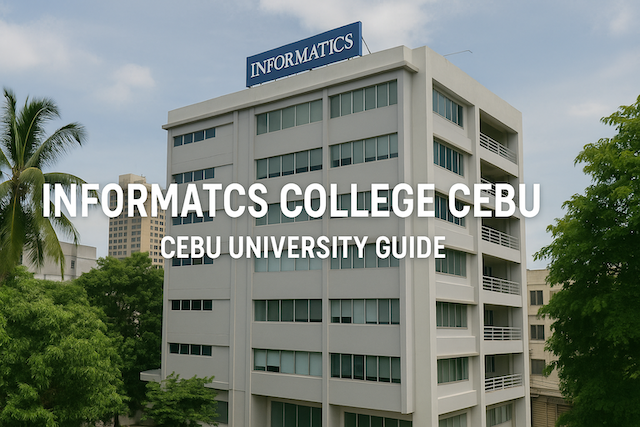
Informatics College Cebu: Cebu University Guide
Contents
- Informatics College Cebu: Cebu University Guide
- Overview of Informatics College Cebu
- Location and Campus Environment
- Academic Programs Offered
- Teaching Approach and Learning Experience
- Admission Requirements
- Tuition and Fees
- Facilities and Resources
- Student Life at Informatics College Cebu
- Internship Opportunities
- Career Paths for Graduates
- Strengths of Informatics College Cebu
- Possible Limitations
- Who Should Choose Informatics College Cebu?
- Conclusion
- FAQs (Frequently Asked Questions)
- What kind of school is Informatics College Cebu?
- What programs and courses are offered at Informatics College Cebu?
- Is Informatics College Cebu a good choice for IT students?
- How does the teaching and learning style work at Informatics College Cebu?
- What are the basic admission requirements for new students?
- How much is the tuition at Informatics College Cebu?
- What facilities and resources are available for students?
- Are there internship and job opportunities for Informatics College Cebu students?
- What career paths can graduates pursue after studying at Informatics College Cebu?
- Who is Informatics College Cebu best suited for?
Informatics College Cebu: Cebu University Guide
Informatics College Cebu is one of the most recognized institutions in the Philippines for information technology, business, and digital skills training. As part of the global Informatics Education network, the Cebu campus provides students access to internationally aligned curricula, industry-focused programs, and practical learning pathways. This makes it a strong choice for students—Filipino and international—who want to prepare for tech-driven careers in Cebu, the Philippines, or abroad.
This comprehensive guide covers the programs, admission process, facilities, tuition, career opportunities, and student life at Informatics College Cebu. It is designed for prospective students, parents, and anyone researching universities in Cebu.
Overview of Informatics College Cebu
Informatics College Cebu is part of Informatics Philippines, affiliated with Informatics Holdings Ltd., a global education company headquartered in Singapore. With campuses across Asia, Europe, and Africa, Informatics has built a strong reputation for providing technology-focused courses that respond to international IT and business trends.
The Cebu campus reflects this global branding by offering programs aligned with industry certifications and hands-on learning. Students gain exposure to real-world platforms, business software, and technical environments that prepare them for competitive industries.
Location and Campus Environment
Informatics College Cebu is typically situated near commercial districts and accessible public transportation, giving students the advantage of an urban learning environment. Although it is not a large university campus, the institution maintains modern facilities and specialized laboratories. Students benefit from being close to Cebu City’s major business and IT hubs, including Cebu Business Park and IT Park, which helps with internship placements and job opportunities.
The campus environment is intentionally designed to be practical rather than sprawling. Class sizes tend to be smaller, allowing more personalized instruction and extensive hands-on training.
Academic Programs Offered
Informatics College Cebu offers a mix of undergraduate degrees, diploma programs, and modular short courses. These programs are generally aligned with global digital skill demands.
Information Technology Programs
The IT programs are the strongest pillar of the college, with courses designed to provide both theoretical knowledge and practical application. Core subjects often include:
-
Programming and application development
-
Network and systems administration
-
Cybersecurity fundamentals
-
Cloud computing basics
-
Database management
-
Web development
-
Software engineering principles
Programs may lead to CHED-recognized bachelor’s degrees or TESDA-accredited diplomas, depending on the chosen track.
Business and Management Programs
Informatics also offers programs related to business, which integrate technology and modern management tools. Topics commonly include:
-
Digital marketing
-
Business analytics
-
Entrepreneurship
-
Financial management
-
Organizational behavior
-
E-commerce business models
Because modern businesses rely heavily on information systems, Informatics emphasizes the intersection of business and technology.
Short Courses and Certifications
Short-term professional courses are a trademark of the Informatics brand. These courses are ideal for working professionals, job seekers, or students who want additional certifications. Popular offerings include:
-
Microsoft Office Specialist (MOS) training
-
Graphic design and multimedia
-
Web development bootcamps
-
Programming (Python, Java, C++)
-
Digital marketing fundamentals
-
Network administration
-
Cybersecurity basics
These programs often include globally recognized assessments and certificates.
Teaching Approach and Learning Experience
The strength of Informatics College Cebu lies in its applied teaching model. The school emphasizes:
Practical, industry-aligned training
Class activities involve real-world simulations, laboratory exercises, and project-based outputs. IT students might build programs, design websites, troubleshoot systems, or configure networks. Business students are exposed to digital tools such as CRM systems, marketing analytics dashboards, and financial software.
Blended learning
Informatics is known for using blended learning (online + face-to-face), especially for subjects that involve software-based learning modules. This approach allows flexibility while maintaining academic quality.
Certification-focused curriculum
Many courses integrate preparation for certification exams. This adds significant value for graduates because certifications can boost employability in both local and international job markets.
Small class sizes
Classrooms are typically smaller compared to larger universities. This creates a more personalized learning environment and gives students easier access to instructors for consultations or project guidance.
Admission Requirements
Admission to Informatics College Cebu is generally straightforward. Requirements may vary depending on the program, but commonly include:
For incoming freshmen:
-
Completed application form
-
Original Form 138 (Report Card)
-
Birth certificate (PSA)
-
Good moral certificate
-
1–2 ID photos
Some programs might require an entrance assessment, though Informatics usually focuses more on academic screening than competitive testing.
For transferees:
-
Transcript of Records (TOR) or evaluation copy
-
Honorable dismissal or transfer credentials
-
Updated good moral certificate
For international students:
-
Passport copy
-
Student visa or Special Study Permit (SSP)
-
Academic records authenticated by the embassy
-
English proficiency documentation (if required)
International student enrollment tends to be smaller than in large universities, but Informatics campuses generally welcome foreign applicants.
Tuition and Fees
Tuition at Informatics College Cebu is typically more affordable than large private universities in Cebu, but higher than community colleges or purely TESDA-based institutions. Tuition ranges vary depending on:
-
Degree program
-
Year level
-
Laboratory class requirements
-
Certification exam fees
Informatics also has scholarship programs, installment payment plans, and financing options that help make programs accessible. Short courses have separate fee schedules, which depend on course duration and certification type.
Facilities and Resources
Although the campus is more compact than major universities, it maintains modern and specialized learning areas essential for IT and business training.
Computer laboratories
Fully equipped labs are central to the Informatics learning experience. These labs support:
-
Programming exercises
-
System configuration
-
Network simulations
-
Multimedia production
-
Digital marketing activities
Classrooms
Classrooms are air-conditioned and equipped with projectors and digital learning tools. Class sizes are manageable and allow active participation.
Online learning platforms
Informatics integrates online modules, digital libraries, and virtual environments. These platforms often include:
-
E-learning content
-
Recorded lectures
-
Learning management systems (LMS)
-
Online assessments
Student lounge or study areas
Students typically have access to common spaces where they can study, collaborate, or socialize.
Student Life at Informatics College Cebu
Because Informatics is more specialized and compact, student life differs from that of a large university. Nevertheless, it provides a supportive and engaging environment.
Academic-focused culture
The culture is primarily oriented toward skill development, training, and career preparation. Students spend significant time in laboratories or working on projects.
Clubs and organizations
Informatics campuses often feature:
-
IT and Programming Clubs
-
Multimedia and Design Groups
-
Business and Entrepreneurship Societies
-
Student Government
Participation helps students enhance soft skills and build networks.
Events and competitions
Students may join:
-
Hackathons
-
Coding competitions
-
Business pitch contests
-
Job fairs
-
Workshops and seminars
These activities strengthen students’ portfolios and confidence.
Internship Opportunities
Internships are a critical part of Informatics College Cebu’s academic programs. Because of its strong ties to technology and business sectors, students often secure internships in:
-
IT support and helpdesk teams
-
Software development companies
-
Business process outsourcing (BPO) organizations
-
Digital marketing agencies
-
Network and cybersecurity firms
-
Administrative and operations departments
Cebu’s thriving IT and BPO industries create abundant opportunities for real-world experience.
Career Paths for Graduates
Graduates from Informatics College Cebu often pursue careers in both technology and business sectors. Common job roles include:
For IT graduates:
-
Software developer
-
Web developer
-
Network administrator
-
IT support specialist
-
Systems analyst
-
Data analyst
-
Cybersecurity assistant
-
Cloud technician
For business graduates:
-
Marketing assistant
-
Digital marketing specialist
-
Business development associate
-
Administrative officer
-
Operations coordinator
-
Customer relations specialist
Short-course graduates may secure entry-level tech roles or enhance their employability in their current fields.
Strengths of Informatics College Cebu
Informatics has several notable advantages that make it attractive to students:
International affiliation
The global presence of Informatics Education gives the institution strong credibility and access to updated curricula.
Technology-oriented programs
Students gain relevant digital skills essential in modern industries.
Certification pathways
Many programs include preparation for globally recognized certification exams, boosting career prospects.
Flexible enrollment and class schedules
Short courses, blended learning, and modular classes cater to working adults and students with non-traditional schedules.
Accessible tuition
Tuition is generally more affordable than large private universities in Cebu while still offering modern facilities.
Possible Limitations
Like any institution, Informatics College Cebu also has limitations:
-
Smaller campus compared to large universities
-
Fewer extracurricular activities than traditional colleges
-
Limited program variety for fields outside IT and business
-
Less emphasis on research-based education
These limitations matter more for students seeking a broad university experience rather than career-focused, skill-oriented training.
Who Should Choose Informatics College Cebu?
This institution is an excellent choice for:
-
Students who want an IT- or business-focused education
-
Individuals aiming for industry certifications
-
Those who prefer smaller class sizes and personalized instruction
-
Working professionals seeking short courses
-
Students looking for practical, job-ready skills
-
Budget-conscious learners seeking quality training
Students seeking large-campus activities, competitive university culture, or diverse academic fields might prefer other institutions. However, for focused skills development, Informatics is a strong option.
Conclusion
Informatics College Cebu is a respected institution for students who want to pursue careers in information technology, business, and digital industries. With its global affiliation, modern IT-focused facilities, practical teaching approach, and accessible tuition, it serves as a valuable pathway for both young students and working professionals.
Its greatest strength lies in preparing students for the real-world digital environment through hands-on training and certification-focused programs. Whether your goal is employment, career advancement, or skill enhancement, Informatics College Cebu offers solid opportunities in Cebu’s rapidly growing tech-driven economy.
FAQs (Frequently Asked Questions)
What kind of school is Informatics College Cebu?
Informatics College Cebu is a technology- and business-focused institution that offers degree programs, diplomas, and short courses in information technology, business, and digital skills. It is part of the wider Informatics Education network, which has campuses in various countries. The Cebu campus emphasizes practical training, industry-aligned curricula, and certification pathways designed to help students become job-ready for careers in IT, business, and related digital industries in the Philippines and abroad.
What programs and courses are offered at Informatics College Cebu?
Informatics College Cebu offers a mix of bachelor’s degree programs, diplomas, and short courses. The main focus is on information technology and business-related fields. Typical offerings may include courses in programming, web development, network administration, database management, software engineering, and cybersecurity. On the business side, students may find programs in digital marketing, business administration, entrepreneurship, and e-commerce. In addition, there are short professional courses and certification-oriented training for specific software, tools, or platforms.
Is Informatics College Cebu a good choice for IT students?
Informatics College Cebu is a strong option for students who want to focus on IT and digital careers. The school emphasizes hands-on training in computer laboratories, project-based learning, and exposure to real-world software and systems. Many courses are aligned with industry certifications, which can improve a graduate’s competitiveness in the job market. While it may not have the large campus environment of a big university, it offers a more focused and practical learning experience for IT-oriented students.
How does the teaching and learning style work at Informatics College Cebu?
The teaching and learning approach at Informatics College Cebu is generally practical, applied, and industry-oriented. Students spend considerable time in computer labs, working on projects, case studies, and simulations. In many programs, there is a blended learning setup that combines classroom instruction with online modules or digital platforms. This blend allows students to practice at their own pace while still receiving guidance from instructors. The class sizes are usually smaller, which can provide more opportunities for interaction and personalized feedback.
What are the basic admission requirements for new students?
Admission requirements may vary slightly by program, but incoming freshmen typically need to submit a completed application form, high school report card or Form 138, a birth certificate, and a certificate of good moral character. The school may request ID photos and other supporting documents. Some programs might require an entrance assessment or interview, mainly to evaluate academic readiness. Transferees and international students have additional requirements, such as transcripts, honorable dismissal documents, visas, or authenticated records.
How much is the tuition at Informatics College Cebu?
Tuition fees at Informatics College Cebu are generally in the mid-range compared to other private institutions. They are often more affordable than large, established universities but higher than purely government-subsidized or community colleges. Total costs depend on the specific program, year level, and the number of lab subjects or certification-related fees. Short courses and professional programs have separate pricing. The school may offer scholarships, discounts, or installment payment schemes, so applicants are encouraged to inquire directly with the campus for updated fee details.
What facilities and resources are available for students?
The campus typically includes air-conditioned classrooms, computer laboratories, and common areas for group work and study. The computer labs are central to the learning experience, providing hardware and software for programming, design, networking, and other tech-related tasks. The school also uses online platforms for assignments, materials, and assessments. While it may not have large sports fields or dormitories like big universities, the facilities are designed to support focused IT and business training in a modern, tech-friendly environment.
Are there internship and job opportunities for Informatics College Cebu students?
Yes. Internship and on-the-job training are integral components of many programs at Informatics College Cebu. Because Cebu has a strong IT, BPO, and services sector, students often find internship placements in software companies, BPO firms, tech support teams, digital marketing agencies, and corporate offices. These internships allow students to apply classroom learning in real-world settings, gain experience, and build professional networks. Many graduates later secure employment in similar industries, both locally and in other cities.
What career paths can graduates pursue after studying at Informatics College Cebu?
Graduates can follow a variety of tech and business career paths. IT graduates may become software developers, web developers, systems analysts, network administrators, IT support specialists, or junior cybersecurity and cloud technicians. Business and digital marketing graduates may work as marketing assistants, business development associates, operations staff, or e-commerce and social media specialists. Those who complete short courses and certifications can enhance their existing careers or qualify for entry-level roles that require specific digital skills.
Who is Informatics College Cebu best suited for?
Informatics College Cebu is best suited for students and professionals who want a focused, practical education in IT, business, and digital skills. It is ideal for individuals who value hands-on training, smaller classes, and curricula that are closely aligned with real-world technologies and certifications. It may also appeal to working learners who need flexible schedules or short-term courses to upgrade their skills. Students seeking a highly traditional, research-intensive, or broad liberal arts environment may prefer larger universities, but for tech- and business-driven goals, Informatics can be a very practical choice.
Philippines University Guide
Cebu University Guide
Cebu Province All Universities Lists

How to Register for eTravel Philippines (2025 Guide)
Step-by-step guide to completing your eTravel registration before arriving in the Philippines, with images and tips.

Night Market in Cebu – Things You Don’t Know About Cebu Life
Discover the hidden charm of Cebu’s night markets, from street food stalls to local life tips you won’t find in tourist guides.

How to Use ChatGPT for IELTS Preparation: A Complete Guide
Learn how to prepare for IELTS using ChatGPT — including strategies for Writing, Reading, Listening, Speaking, and grammar support.

How to Build a Website Without Coding Using ChatGPT
Discover how to build your own website using AI—no coding skills needed. From structure planning to SEO and design, let ChatGPT guide you.