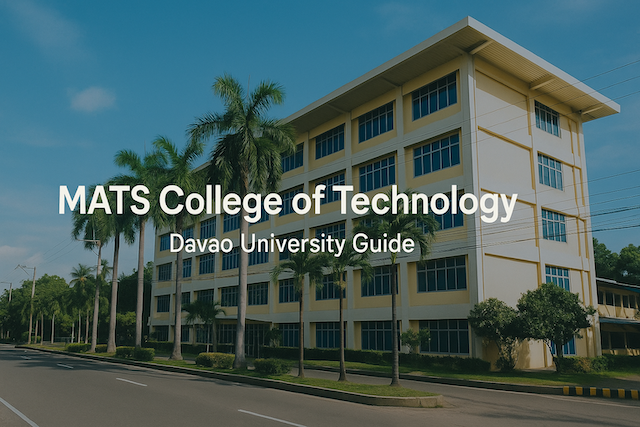
MATS College of Technology: Davao University Guide
MATS College of Technology is one of Davao City’s long-standing institutions specializing in aviation, maritime studies, engineering, and technical education. Known for its hands-on training and industry-aligned programs, the school has built a reputation for producing graduates who are ready for real-world technical and vocational careers. This guide provides an in-depth look at MATS College of Technology, including its programs, campus environment, admission process, student life, and more.
Overview of MATS College of Technology
MATS College of Technology (formerly the Mindanao Aeronautical Technical School) was established to provide quality technical education in aviation, maritime, and engineering fields. With decades of experience, the institution remains committed to offering affordable yet comprehensive training that meets local and global industry standards.
The school is particularly known for its aviation programs, which include aircraft maintenance, aeronautical engineering fundamentals, and flight-related technical skills. It also offers maritime and technical-vocational courses, making it a top choice for students seeking specialized and industry-ready education in Davao City.
Academic Programs Offered
MATS College of Technology provides a wide selection of programs focused on technical and applied sciences. The key departments include:
Aviation Programs
The aviation programs are among the most popular and reputable offerings at MATS. These programs include:
-
Aircraft Maintenance Technology (AMT) – A hands-on course that trains students to inspect, repair, and maintain aircraft systems.
-
Aeronautical Engineering Technology – A program designed for students aiming for careers in aircraft design, structural analysis, and engineering support.
-
Avionics Technology – Focuses on aircraft electronics, communication systems, and navigation systems.
Students benefit from laboratory work, simulated training, and exposure to actual aircraft components and systems.
Maritime Programs
The school also offers strong maritime programs catering to students aspiring to work at sea:
-
Marine Transportation
-
Marine Engineering
These programs follow maritime industry standards and prepare students for certification and on-board training required for global seafaring careers.
Technical-Vocational and Engineering Programs
Aside from aviation and maritime, the school offers:
These programs are highly practical and integrate real-world application through workshops and industry simulations.
Campus Facilities and Learning Environment
MATS College of Technology provides a functional and skill-oriented learning environment. While not as modern as some large universities, its facilities are designed to support technical training and include:
Aviation Workshops
Equipped with aircraft parts, engines, and tools used in actual maintenance and engineering work. Students gain direct experience handling aviation equipment.
Maritime Simulation Rooms
These facilities include navigation simulators and equipment that mimic real-life seafaring conditions, preparing students for shipboard responsibilities.
Technical Laboratories
The laboratories support electronics, automotive, mechanical, and electrical training programs. Students spend significant hours mastering tools and machinery.
Lecture Rooms and Basic Campus Amenities
Standard classrooms, student lounges, and administrative offices support day-to-day academic life. The campus has a practical, work-focused atmosphere suitable for hands-on learners.
Admission Requirements and Application Process
MATS College of Technology maintains an accessible admissions process, making it a good fit for students seeking technical education without strict academic barriers.
Basic Admission Requirements
Applicants typically need the following:
-
Form 138 or Senior High School Report Card
-
PSA Birth Certificate
-
Certificate of Good Moral Character
-
2×2 or passport-size ID photos
-
Application form (available on campus or online)
Steps in the Application Process
-
Submit Requirements – Prepare and submit the required documents to the admissions office.
-
Program Selection – Choose your preferred course from aviation, maritime, or technical fields.
-
Assessment and Interview – Some programs require an interview or initial assessment to determine your readiness.
-
Payment of Fees – Settle the enrollment fee and secure your official enrollment.
-
Orientation – Attend the school’s orientation to understand policies, schedules, and facilities.
Tuition Fees and Financial Assistance
Tuition fees at MATS College of Technology are generally more affordable compared to major private universities offering similar technical programs.
Estimated Costs
-
Aviation Programs – Higher due to specialized equipment and laboratory training.
-
Maritime Programs – Moderate, with additional fees for certifications.
-
Technical and Engineering Programs – More affordable, ideal for budget-conscious students.
The school may offer payment plans, installment options, and possible government financial assistance depending on eligibility.
Student Life at MATS College of Technology
Although MATS College is primarily a technical institution, students can still look forward to an engaging and supportive learning environment.
Clubs and Organizations
Student groups are mostly program-related, including:
-
Aviation enthusiasts clubs
-
Maritime student organizations
-
Engineering and technology groups
These allow students to develop soft skills, leadership abilities, and professional networks.
Practical Training Culture
Unlike academic-focused universities, MATS prioritizes hands-on training. Students spend much of their time in laboratories, workshops, or simulation rooms, reflecting the school’s practical approach to education.
Community and Discipline
The student community is diverse, with many students coming from different parts of Mindanao to pursue technical careers. The school enforces rules on discipline, punctuality, attire, and safety standards, particularly for aviation and maritime programs.
Career Pathways and Employment Opportunities
Graduates of MATS College of Technology have strong employment potential due to the demand for technical skills in aviation, maritime, and engineering sectors.
Aviation Careers
Many graduates secure positions in airports, airlines, and maintenance, repair, and overhaul (MRO) companies.
Maritime Careers
Maritime graduates often pursue global employment opportunities with competitive salaries.
Technical and Engineering Careers
Graduates enter industries such as automotive, electronics, construction, and manufacturing.
Why Choose MATS College of Technology?
Strong Technical Focus
The school is ideal for students who prefer hands-on learning over theoretical study.
Affordable Technical Education
Compared to other aviation and maritime institutions, MATS offers cost-effective programs without compromising essential training.
Industry-Relevant Training
The curriculum is aligned with workforce demands, ensuring graduates are job-ready and competitive.
Established Reputation
With decades of experience, the school remains trusted by employers seeking skilled technicians and engineers.
Tips for Prospective Students
-
Choose a program aligned with your strengths—aviation and maritime require discipline and technical precision.
-
Expect hands-on work; be ready to spend hours in workshops and training facilities.
-
Prepare financially—aviation programs may involve extra costs for tools, uniforms, or equipment.
-
Visit the campus to understand the learning environment and program expectations.
MATS College of Technology continues to be a strong option for students in Davao City seeking specialized technical education. With its focus on aviation, maritime, and engineering training, the institution provides a clear pathway toward stable and rewarding careers both locally and abroad.
FAQs (Frequently Asked Questions)
What programs does MATS College of Technology offer?
MATS College of Technology offers a range of technical and career-oriented programs.
Its core strengths are in aviation-related courses such as Aircraft Maintenance Technology,
Aeronautical or Aviation Technology, and Avionics-focused programs. The school also offers
maritime-related programs like Marine Transportation and Marine Engineering, as well as
technical-vocational and engineering programs such as electrical, mechanical, automotive,
electronics, and computer hardware technology. Exact offerings may change over time, so it is
always best to check directly with the college for the latest list of courses.
Is MATS College of Technology a good choice for aviation studies?
Yes, MATS College of Technology is widely known for its aviation-related programs and long
experience in technical training. The school emphasizes hands-on learning, particularly in
aircraft maintenance and aviation technology. Students often train with actual or simulated
aircraft parts, engines, and tools to build practical skills. While the quality of any program
depends on individual effort and expectations, many prospective students consider MATS a solid
option if they are specifically targeting aviation or aircraft maintenance careers.
What kind of facilities does the college have for technical training?
The college generally provides specialized laboratories and workshops designed for technical
and vocational courses. For aviation, there are aircraft maintenance areas and labs with
engines, components, and basic tools used in the industry. Maritime students may use simulation
rooms and navigation equipment, while technical programs often have automotive, electronics,
electrical, and mechanical workshops. Facilities are focused more on function and skill-building
than on luxury, so students should expect a practical, training-centered environment rather than
a purely academic campus atmosphere.
What are the admission requirements for new students?
Admission requirements usually include a completed Senior High School Report Card or its
equivalent, a birth certificate from the national statistics office, a Certificate of Good
Moral Character, ID photos, and a filled-out application form. Some programs may also require
an interview, basic screening, or program-specific guidelines. Since admission policies can
change, applicants are encouraged to contact the registrar or admissions office directly to get
an updated checklist of documents and deadlines before applying.
How much is the tuition fee at MATS College of Technology?
Tuition at MATS College of Technology is generally considered more affordable than that of many
large private universities, but costs vary by program. Aviation courses tend to be more expensive
because they require specialized equipment, lab use, uniforms, and technical materials. Maritime
and other technical programs may have moderate fees and additional costs for tools, safety gear,
or certifications. Instead of relying on fixed figures from third-party sources, it is safer to
request an official tuition breakdown and payment options directly from the school.
Does the school offer scholarships or financial assistance?
The availability of scholarships or financial assistance may depend on the year, partnerships,
and government programs in place. Some technical schools accept scholars under national
scholarship or voucher schemes, and there may be discounts or installment plans for qualified
students. However, the exact terms, qualifications, and financial aid types can change without
public notice. For accurate information, prospective students should ask the guidance office or
student affairs office about current scholarship opportunities and eligibility requirements.
What is student life like at MATS College of Technology?
Student life at MATS is typically practical and skills-focused. Many students spend a large part
of their day in workshops, labs, or simulation rooms instead of purely theoretical lectures.
There may be student organizations related to aviation, maritime, engineering, and other technical
fields, which give students chances to join events, competitions, or seminars. The overall campus
atmosphere leans toward discipline, punctuality, and adherence to safety protocols, especially
for courses that involve tools, machinery, or technical equipment.
What career opportunities can graduates expect after finishing their course?
Career paths depend on the chosen program. Aviation graduates may work as aircraft maintenance
technicians, avionics support staff, or engineering assistants in airlines and maintenance
companies. Maritime graduates may become deck or engine cadets and eventually officers on
domestic or international vessels. Those from technical and engineering programs can enter
industries such as automotive repair, electronics servicing, construction, and manufacturing.
Job outcomes are influenced by the graduate’s performance, experience, licensing exams, and
labor market conditions.
Is MATS College of Technology recognized by employers?
MATS College of Technology has been operating for many years and is known in Davao and other
regions for its technical training. Many employers are familiar with its programs, especially
in aviation and maritime fields, and they often look for candidates with hands-on skills acquired
from schools like MATS. That said, recognition still differs by company and country, and some
employers may have additional requirements such as certifications, licensing, or years of
experience. Students are encouraged to build a strong portfolio and maintain good academic and
practical performance to increase employability.
How can I verify the latest information about MATS College of Technology?
Because program offerings, tuition fees, admission rules, and partnerships can change over time,
the most reliable way to verify information is to contact the college directly through its
official communication channels. You may call the school, send an email to their published
address, or visit their official website and social media pages, if available. It is also
helpful to visit the campus in person, attend orientations, or talk to current students and
staff. Relying on updated, official sources is the best way to make informed decisions about
enrolling at MATS College of Technology.