2025年12月23日
3D ACADEMY offers affordable English study programs in Cebu, Philippines – perfect for beginners, professionals, and exam takers.

3D UNIVERSAL ENGLISH INSTITUTE INC
info.3d-universal.com
8:00-17:00(Mon-Fri)
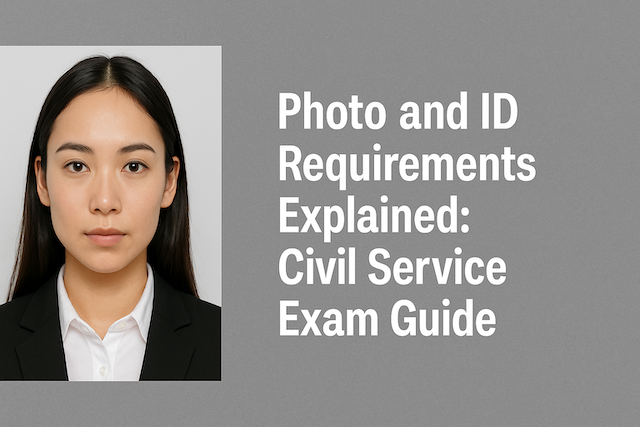
Photo and ID Requirements Explained: Civil Service Exam Guide
Contents
- Photo and ID Requirements Explained: Civil Service Exam Guide
- Why Photo and ID Requirements Matter
- Official Photo Requirements for the Civil Service Exam
- Photo Size and Format Specifications
- Photo Appearance Guidelines
- Clothing and Attire Requirements
- Photo Recency Requirement
- Common Photo-Related Reasons for Rejection
- ID Requirements for the Civil Service Exam Application
- Primary Acceptable Government-Issued IDs
- Secondary IDs (If Primary ID Is Unavailable)
- ID Information That Must Be Visible
- Expired and Invalid IDs
- ID Matching with Application Details
- ID Requirements on Exam Day
- What to Do If You Lost Your ID
- Special Cases and Exceptions
- Online Application (CSC COMEX) Photo and ID Upload Tips
- Walk-in Application Photo and ID Tips
- Practical Tips to Avoid Disqualification
- Final Checklist Before Submission
- Conclusion
- FAQs (Frequently Asked Questions)
- Do I need a 2×2 photo for the Civil Service Exam application?
- How recent should my application photo be?
- Are selfies allowed for the Civil Service Exam photo?
- Can I wear eyeglasses in my photo?
- What kind of background is acceptable?
- What clothing should I wear in the photo?
- Can I edit my photo or use filters?
- What IDs are accepted for the Civil Service Exam application?
- Are expired IDs accepted?
- Can I use a photocopy or a digital version of my ID?
- What if my name on the ID does not exactly match my application form?
- What should I bring on exam day related to photo and ID?
- What can cause disqualification related to photo or ID?
- If I lost my ID, can I still take the exam?
Photo and ID Requirements Explained: Civil Service Exam Guide
Applying for the Civil Service Exam (CSE) requires careful attention to documentation, especially when it comes to photo and identification (ID) requirements. Many applicants are disqualified or delayed not because they fail the exam, but because they submit incorrect photos or invalid IDs during application or on exam day.
This guide explains everything you need to know about photo and ID requirements for the Civil Service Exam, including exact specifications, acceptable and unacceptable IDs, common mistakes, and practical tips to ensure your application is accepted smoothly.
Why Photo and ID Requirements Matter
The Civil Service Commission (CSC) uses your photo and identification to:
-
Verify your identity during application
-
Prevent impersonation or duplicate applications
-
Match your exam records with your official eligibility
-
Validate your identity on exam day and during result processing
Even minor issues—such as wearing the wrong attire in your photo or submitting an expired ID—can lead to application rejection or exam disqualification.
Official Photo Requirements for the Civil Service Exam
Applicants must submit a recent, passport-style photo that strictly follows CSC guidelines. These requirements apply to both online (CSC COMEX) and walk-in applications, although submission formats may differ.
Photo Size and Format Specifications
Your photo must meet the following technical requirements:
-
Size: 2 x 2 inches
-
Color: Colored photo only (black-and-white is not accepted)
-
Background: Plain white or light-colored background
-
Orientation: Portrait
-
File format (online application): JPG or JPEG
-
File size: Usually under 1 MB (exact limit may vary)
Photos that are cropped incorrectly, resized improperly, or distorted are commonly rejected.
Photo Appearance Guidelines
Your appearance in the photo must be formal and neutral.
Facial Expression and Position
-
Face the camera directly
-
Neutral facial expression
-
Both eyes open and visible
-
Mouth closed
-
Full face visible (no tilting or side angles)
Head and Hair
-
Head must be uncovered
-
Hair should not cover the eyes or eyebrows
-
Bangs are allowed only if eyes are fully visible
Glasses and Accessories
-
Eyeglasses: Allowed only if they are clear, non-tinted, and non-reflective
-
Sunglasses: Not allowed
-
Hats, caps, headbands: Not allowed (except for religious reasons)
-
Earphones or earbuds: Not allowed
Clothing and Attire Requirements
Your clothing must reflect a formal, government-appropriate appearance.
Allowed Attire
-
Collared shirt or blouse
-
Plain-colored top
-
Conservative and neat clothing
Not Allowed
-
Sleeveless tops
-
Tank tops
-
T-shirts with slogans or graphics
-
Uniforms (school, company, military)
-
Costumes or casual wear
Avoid wearing white tops that blend into the background.
Photo Recency Requirement
-
Your photo must be taken within the last 6 months
-
Photos reused from old IDs or previous applications may be rejected
-
Any noticeable change in appearance (hair color, facial hair, weight change) should be reflected in the photo
Common Photo-Related Reasons for Rejection
Applications are often rejected due to the following mistakes:
-
Incorrect photo size (not 2×2)
-
Busy or colored background
-
Overexposed or underexposed image
-
Blurry or low-resolution photo
-
Wearing casual or inappropriate clothing
-
Selfies or photos taken with filters
-
Digitally altered or edited photos
Professional studio photos are strongly recommended.
ID Requirements for the Civil Service Exam Application
Applicants must present at least one valid government-issued ID during application and on exam day.
Primary Acceptable Government-Issued IDs
The following IDs are generally accepted by the CSC:
-
Philippine Passport
-
Driver’s License (LTO)
-
Unified Multi-Purpose ID (UMID)
-
Philippine National ID (PhilSys ID)
-
Professional Regulation Commission (PRC) ID
-
Voter’s ID
-
Postal ID
-
Senior Citizen ID (for eligible applicants)
The ID must be original, valid, and not expired.
In some cases, the CSC may accept secondary IDs, but requirements are stricter:
-
Barangay ID (must have photo and signature)
-
Company ID issued by a government office
-
School ID (only for currently enrolled students, with registration form)
You may be required to present two secondary IDs if no primary ID is available.
ID Information That Must Be Visible
Your ID must clearly show:
-
Full name
-
Recent photo
-
Signature
-
Date of birth or unique identifying number
-
Issuing authority
IDs with faded text, damaged surfaces, or unclear photos may be rejected.
Expired and Invalid IDs
The following are not accepted:
-
Expired IDs
-
Photocopies of IDs
-
Digital or mobile app versions of IDs
-
IDs without photos or signatures
-
Temporary IDs or acknowledgment slips
Always bring the original physical ID.
ID Matching with Application Details
Ensure that your ID details exactly match your application form:
-
Spelling of full name
-
Middle name or initial
-
Suffixes (Jr., Sr., III)
-
Date of birth
Any mismatch may cause delays or require additional verification.
ID Requirements on Exam Day
On the day of the exam, you must bring:
-
The same valid ID used during application
-
Your application receipt or confirmation slip
-
Exam-related documents as instructed by CSC
Failure to present a valid ID on exam day may result in denial of entry.
What to Do If You Lost Your ID
If your ID is lost before exam day:
-
Immediately apply for a replacement
-
Secure an official certification or temporary ID if available
-
Contact the CSC regional office for guidance
-
Bring additional supporting documents (birth certificate, affidavit of loss)
Approval is not guaranteed, so act as early as possible.
Special Cases and Exceptions
Applicants Wearing Religious Head Coverings
-
Religious attire is allowed
-
The face must remain fully visible
-
A declaration or explanation may be required
Applicants with Medical Conditions
-
Medical devices or aids are allowed if medically necessary
-
Inform the CSC in advance if accommodations are needed
Online Application (CSC COMEX) Photo and ID Upload Tips
For online applicants:
-
Scan or photograph your ID clearly
-
Avoid glare, shadows, or reflections
-
Upload only the required file format
-
Double-check image clarity before submission
Blurry or cropped uploads are among the top reasons for online application delays.
Walk-in Application Photo and ID Tips
For walk-in applicants:
-
Bring multiple copies of your 2×2 photo
-
Carry extra valid IDs if available
-
Arrive early to allow time for document verification
Some CSC offices may reject incomplete submissions outright.
Practical Tips to Avoid Disqualification
-
Use a professional photo studio
-
Prepare your ID weeks before application
-
Double-check CSC announcements for updates
-
Avoid last-minute submissions
-
Keep physical and digital backups of documents
Preparation saves time and prevents unnecessary stress.
Final Checklist Before Submission
Before submitting your application, confirm that:
-
Your photo meets all size and appearance requirements
-
Your ID is valid and unexpired
-
Your name matches across all documents
-
Uploaded files are clear and properly formatted
-
You have extra copies of required documents
Completing this checklist significantly improves your chances of a smooth application process.
Conclusion
Understanding and following the photo and ID requirements for the Civil Service Exam is just as important as exam preparation itself. Many applicants underestimate these requirements, only to face delays or disqualification later.
By preparing a compliant photo, securing valid identification, and double-checking all details in advance, you can focus on what truly matters—passing the Civil Service Exam and starting your public service career.
Careful preparation begins with correct documentation.
FAQs (Frequently Asked Questions)
Do I need a 2×2 photo for the Civil Service Exam application?
Yes. Most Civil Service Exam (CSE) application processes require a recent 2×2 colored photo that follows passport-style standards. The photo is used for identity verification, record matching, and exam-day validation. To avoid rejection, make sure the photo is properly sized, clear, and printed or uploaded according to the application method you use (walk-in or online). If you are applying online, keep a digital copy in the required format and file size. If you are applying walk-in, bring extra printed copies in case the office requests additional photos.
How recent should my application photo be?
Your photo should be recent, typically taken within the last six months. A recent photo helps ensure that your appearance matches your current identity, especially when you present your ID on exam day. If your appearance has changed significantly (such as a major haircut, noticeable weight change, or new facial hair), it is safer to submit an updated photo. Using old photos from previous IDs or older applications can lead to delays if the evaluator believes the photo no longer accurately represents you.
Are selfies allowed for the Civil Service Exam photo?
Selfies are strongly discouraged and often rejected because they usually fail CSC photo standards. Common selfie problems include uneven lighting, visible background objects, improper cropping, lens distortion, and informal framing. Even if the image looks clear, it may not be considered a formal passport-style photo. To avoid application issues, take your photo in a studio or use a proper camera setup with a plain light background, correct head positioning, and no filters.
Can I wear eyeglasses in my photo?
In many cases, eyeglasses are allowed as long as your eyes remain clearly visible. Avoid tinted lenses, colored lenses, and sunglasses. The biggest issue is glare: reflections can hide your eyes and may cause rejection. If possible, remove your glasses for the photo. If you must wear them, ensure there is no reflection and that the frames do not cover your eyes or eyebrows. The goal is a clear, unobstructed view of your face.
What kind of background is acceptable?
Your photo should have a plain white or light-colored background. A clean background helps the CSC verify your facial features without distractions. Avoid patterned walls, curtains, outdoor scenes, or any background with visible objects. Even a lightly textured wall may cause issues if it appears “busy” in the final photo. When in doubt, choose a professional studio background or a smooth, bright wall with even lighting.
What clothing should I wear in the photo?
Wear neat, conservative attire. A collared shirt or formal blouse is the safest option. Avoid sleeveless tops, tank tops, and shirts with slogans or large graphics. Uniforms are also not recommended because they can be considered non-standard. Choose a solid, non-white color that contrasts with the background so your shoulders and neckline are visible. The overall goal is a formal and professional appearance suitable for a government exam record.
Can I edit my photo or use filters?
No. Do not use filters or heavy editing. Any photo that looks digitally altered may be rejected. Minor adjustments like basic brightness correction might be acceptable, but avoid smoothing, skin retouching, face reshaping, background replacement, or beautification effects. The photo should represent your natural, current appearance. If you want the best results, take a properly lit studio photo rather than relying on edits.
What IDs are accepted for the Civil Service Exam application?
Accepted IDs are usually government-issued IDs that show your full name, clear photo, and signature. Commonly accepted examples include passport, driver’s license, national ID, UMID, PRC ID, postal ID, and other official IDs. The ID must be original and unexpired. Because acceptable IDs can vary by CSC office or announcement, it is smart to bring an extra valid ID if you have one, especially if your primary ID is close to expiration or has unclear details.
Are expired IDs accepted?
No. Expired IDs are generally not accepted because they are no longer valid for official identity verification. If your ID is expired or expiring soon, renew it as early as possible. If renewal is not possible before application day, prepare alternative valid IDs. Do not assume that a recently expired ID will be accepted “just this once.” CSC staff may strictly enforce validity rules to protect exam integrity.
Can I use a photocopy or a digital version of my ID?
Usually, no. Photocopies and digital-only IDs are commonly not accepted for in-person verification because they can be altered and do not meet standard authenticity checks. You should bring the original physical ID. For online applications, you may upload a scanned copy as part of the process, but you will still need to present the original ID later (often on exam day). Always keep the original ID available.
What if my name on the ID does not exactly match my application form?
Name mismatches can cause delays or may require additional verification. Check spelling, middle name format, and suffixes (such as Jr. or III). If your application name differs from your ID due to marriage, correction, or formatting, prepare supporting documents (for example, a marriage certificate or birth certificate) if applicable. It is best to use the same name format across all documents to avoid confusion during evaluation and exam-day validation.
Bring the valid ID you used during application and any exam confirmation or receipt required by the CSC. Your ID is used to confirm that you are the registered examinee. If you bring a different ID on exam day, it may still be accepted if valid, but mismatches could cause additional checks. To reduce risk, keep your primary ID secure and confirm it will still be valid on your exam date.
Common issues include submitting a non-compliant photo (wrong size, busy background, unclear image, improper attire, or filtered photo), presenting an expired or invalid ID, or failing to present an acceptable original ID on exam day. Another risk is inconsistent personal information across documents. Treat photo and ID requirements as strict rules, not suggestions, because they affect identity verification and exam integrity.
If I lost my ID, can I still take the exam?
It depends on what replacement documents you can provide and the CSC office’s policy. If you lose your ID, request a replacement immediately. You may also prepare an affidavit of loss and bring other valid government-issued IDs. However, approval is not guaranteed. The safest approach is to prevent last-minute problems by securing at least one backup valid ID well before the exam date.
Civil Service Exam Philippines: Complete Preparation and Passing Guide

How to Register for eTravel Philippines (2025 Guide)
Step-by-step guide to completing your eTravel registration before arriving in the Philippines, with images and tips.

Night Market in Cebu – Things You Don’t Know About Cebu Life
Discover the hidden charm of Cebu’s night markets, from street food stalls to local life tips you won’t find in tourist guides.

How to Use ChatGPT for IELTS Preparation: A Complete Guide
Learn how to prepare for IELTS using ChatGPT — including strategies for Writing, Reading, Listening, Speaking, and grammar support.

How to Build a Website Without Coding Using ChatGPT
Discover how to build your own website using AI—no coding skills needed. From structure planning to SEO and design, let ChatGPT guide you.