2025年12月23日
3D ACADEMY offers affordable English study programs in Cebu, Philippines – perfect for beginners, professionals, and exam takers.

3D UNIVERSAL ENGLISH INSTITUTE INC
info.3d-universal.com
8:00-17:00(Mon-Fri)
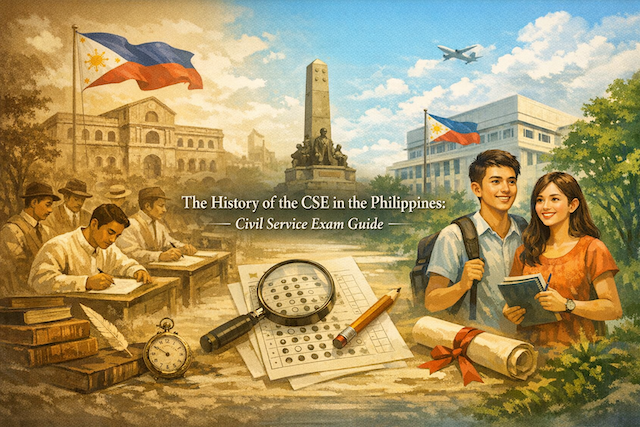
The History of the CSE in the Philippines: Civil Service Exam Guide
Contents
- The History of the CSE in the Philippines: Civil Service Exam Guide
- Introduction to the Civil Service Exam (CSE)
- Origins of the Philippine Civil Service System
- Establishment of the Civil Service Commission
- The Civil Service Exam After Philippine Independence
- Evolution of the Civil Service Exam Structure
- The Role of the CSE in Public Sector Professionalization
- Modernization of the Civil Service Exam
- The CSE in the Context of Governance Reforms
- Public Perception and Cultural Significance of the CSE
- The Future of the Civil Service Exam in the Philippines
- Conclusion
- FAQs (Frequently Asked Questions)
- What does “CSE” mean in the Philippines?
- Why was a civil service exam created in the first place?
- When did civil service examinations begin in the Philippines?
- How did Spanish colonial rule influence the later civil service system?
- How did the American period shape the modern CSE?
- Is the Civil Service Commission the same as the Civil Service Exam?
- What is the difference between Professional and Subprofessional eligibility?
- Has the CSE always had the same format and coverage?
- Why is understanding the history of the CSE useful for exam takers today?
- Does passing the CSE guarantee a government job?
- How has the CSE supported fairness and equal opportunity historically?
- Are there major criticisms of the CSE?
- Will the CSE continue to change in the future?
- Where should I confirm the latest rules about the CSE?
The History of the CSE in the Philippines: Civil Service Exam Guide
Introduction to the Civil Service Exam (CSE)
The Civil Service Exam (CSE) in the Philippines is one of the most important standardized examinations in the country. It serves as the primary gateway for Filipinos who aspire to work in government positions, ensuring that public servants meet minimum standards of competence, integrity, and professionalism. Over time, the CSE has evolved alongside the Philippine government itself, reflecting changes in political systems, administrative reforms, and societal expectations.
Understanding the history of the CSE provides valuable context for examinees, educators, and policymakers. It explains why the exam exists, how it developed into its current form, and what principles continue to guide its administration today.
Origins of the Philippine Civil Service System
Early Administrative Systems Under Spanish Rule
The foundations of the Philippine civil service can be traced back to the Spanish colonial period (1565–1898). During this era, government positions were largely filled through patronage, social status, and loyalty to the Spanish Crown. There was no standardized system to assess merit or competence, and most high-ranking positions were reserved for Spaniards or Spanish-born elites.
Local Filipinos who held administrative roles were often appointed based on personal connections rather than qualifications. This system resulted in inefficiency, corruption, and limited opportunities for the general population, setting the stage for later reforms under subsequent administrations.
Transition During the American Colonial Period
The American occupation of the Philippines beginning in 1898 marked a turning point in public administration. The United States introduced democratic institutions and emphasized merit-based governance. Inspired by the American civil service system, the colonial government sought to professionalize public service and reduce corruption.
In 1900, the Taft Commission laid the groundwork for a modern civil service. One of its major goals was to establish a merit-based system for government employment, including competitive examinations for public office. This philosophy would later become the cornerstone of the Civil Service Exam.
Establishment of the Civil Service Commission
The Philippine Civil Service Act of 1900
The formal establishment of the Philippine civil service system came with Act No. 5, also known as the Civil Service Act of 1900. This law created the Civil Service Board and mandated competitive examinations for government positions. It was the first legal framework that institutionalized merit and fitness as criteria for public employment.
Under this system, applicants were required to pass written examinations designed to test their knowledge, skills, and suitability for government work. While the early exams were limited in scope and accessibility, they represented a significant shift away from patronage-based appointments.
Expansion and Localization of the System
As Filipinos gradually assumed more roles in governance, the civil service system expanded. Examination content and administration were adapted to local conditions, languages, and educational standards. By the 1930s, a growing number of Filipinos were taking civil service examinations as a prerequisite for government employment.
This period also saw increased public awareness of the civil service as a career path, particularly for educated Filipinos seeking stability and social mobility.
The Civil Service Exam After Philippine Independence
Post-World War II Reforms
Following World War II and the granting of Philippine independence in 1946, the civil service system underwent major restructuring. The new republic recognized the importance of a professional bureaucracy to support nation-building and economic recovery.
The Civil Service Commission (CSC) was strengthened as a central personnel agency responsible for examinations, appointments, and discipline within the government. The CSE became more standardized, with clearer eligibility categories and examination procedures.
Constitutional Recognition of the Civil Service
The 1973 Constitution formally recognized the civil service as a key pillar of government. It emphasized merit and fitness as the basis for appointment and promotion, to be determined through competitive examinations. This constitutional mandate further solidified the role of the CSE in shaping the public workforce.
The 1987 Constitution, which remains in effect today, reinforced these principles. It established the Civil Service Commission as an independent constitutional body, granting it authority over the entire civil service system, including the administration of the CSE.
Evolution of the Civil Service Exam Structure
From Specialized Exams to General Eligibility
In the early decades, civil service examinations were often position-specific. Applicants took exams tailored to particular roles or agencies. Over time, this approach was replaced by a general eligibility system, where passing the CSE qualified an individual for a wide range of government positions.
This shift made the exam more accessible and flexible, allowing examinees to pursue various career paths within the government without retaking multiple exams.
Introduction of Professional and Subprofessional Levels
One of the most significant developments in the history of the CSE was the introduction of two main levels: Professional and Subprofessional (now often referred to as the Professional and Subprofessional/Clerical levels).
The Professional level was designed for positions requiring a college degree, such as administrative officers, analysts, and supervisors. The Subprofessional level catered to clerical, technical, and support roles. This classification ensured that the exam matched the educational and skill requirements of different government positions.
Changes in Exam Content and Format
Over the years, the content of the CSE has been revised to reflect changing competencies needed in public service. Early exams focused heavily on rote knowledge and language skills. Modern versions emphasize:
-
Verbal ability and communication
-
Numerical and analytical reasoning
-
General information about government and society
-
Clerical operations and basic problem-solving
The format has also evolved, transitioning from handwritten exams to machine-processed answer sheets, improving efficiency and accuracy in scoring.
The Role of the CSE in Public Sector Professionalization
Promoting Merit and Equal Opportunity
One of the core purposes of the CSE has always been to promote fairness and equal opportunity in government employment. By requiring applicants to pass a standardized exam, the CSC aims to minimize favoritism and political influence in hiring decisions.
Historically, this has opened doors for individuals from diverse backgrounds, including those without powerful connections, to enter public service based on merit alone.
Supporting Career Development in Government
Passing the CSE is often the first step in a long-term government career. Eligibility allows individuals to apply for permanent positions, qualify for promotions, and access training and development programs.
As the civil service system matured, the CSE became not just an entry requirement, but a symbol of professionalism and commitment to public service values.
Modernization of the Civil Service Exam
Computerization and Digital Processes
In recent decades, the CSC has adopted technology to modernize exam administration. Online application systems, digital appointment scheduling, and faster result processing have significantly improved the examinee experience.
While the exam itself is still largely paper-based in many regions, pilot programs and digital initiatives reflect ongoing efforts to align the CSE with global best practices.
Accessibility and Nationwide Coverage
Another key development in the history of the CSE is its expansion across the country. The CSC now conducts exams in numerous testing centers nationwide, making it more accessible to applicants from remote provinces.
Special accommodations for persons with disabilities and special groups have also been introduced, reinforcing the exam’s role as an inclusive gateway to public service.
The CSE in the Context of Governance Reforms
Anti-Corruption and Accountability Measures
The CSE plays an indirect but important role in anti-corruption efforts. By emphasizing competence and ethical standards, the exam supports a culture of accountability within government institutions.
Historically, reforms in the civil service system—including stricter eligibility requirements—have often coincided with broader anti-corruption campaigns and governance reforms.
Adapting to Changing Public Expectations
As public expectations of government services evolve, so too does the civil service. The CSE has gradually incorporated competencies related to critical thinking, adaptability, and public responsibility.
This evolution reflects a broader shift from viewing government work as merely administrative to recognizing it as service-oriented and citizen-focused.
Public Perception and Cultural Significance of the CSE
The CSE as a Rite of Passage
For many Filipinos, taking and passing the CSE is a significant personal milestone. It represents not only eligibility for government employment but also stability, respectability, and long-term career security.
Over generations, the exam has become embedded in Filipino culture, often discussed within families and communities as a key step toward a “secure future.”
Challenges and Criticisms Over Time
Despite its importance, the CSE has not been without criticism. Some have questioned whether the exam fully captures the skills needed for modern governance, while others point to limitations in matching eligibility with actual job performance.
These critiques have fueled ongoing reviews and reforms, ensuring that the exam continues to evolve rather than remain static.
The Future of the Civil Service Exam in the Philippines
Ongoing Reforms and Policy Directions
Looking ahead, the CSC continues to explore reforms aimed at improving the relevance and effectiveness of the CSE. These include competency-based assessments, potential digital testing models, and closer alignment with actual job requirements.
The historical adaptability of the CSE suggests that it will continue to change in response to technological advances and governance needs.
Preserving Core Principles Amid Change
While formats and content may evolve, the core principles behind the CSE—merit, fairness, and professionalism—remain unchanged. These values have guided the exam from its colonial origins to its modern form and will likely continue to shape its future.
Conclusion
The history of the Civil Service Exam in the Philippines mirrors the nation’s journey toward professional, accountable, and inclusive governance. From its roots in colonial reforms to its current role as a nationwide standard for public employment, the CSE has consistently served as a cornerstone of the civil service system.
For today’s examinees, understanding this history provides more than background knowledge. It offers insight into why the exam matters, how it upholds democratic principles, and what it represents in the broader context of public service. As the Philippine government continues to evolve, the Civil Service Exam will remain a vital institution, linking the past, present, and future of public administration.
FAQs (Frequently Asked Questions)
What does “CSE” mean in the Philippines?
CSE stands for Civil Service Exam. In the Philippines, it commonly refers to the standardized test administered under the Civil Service Commission (CSC) that helps determine eligibility for many government positions. When people say they “passed the CSE,” they usually mean they earned civil service eligibility, which is often required to apply for permanent or career service roles in national government agencies, local government units, and other public institutions covered by civil service rules.
Why was a civil service exam created in the first place?
The civil service exam was created to support a merit-based system for government hiring. Historically, many governments relied on patronage, meaning jobs were awarded through personal connections rather than competence. The CSE concept developed to reduce favoritism, professionalize public administration, and set a minimum standard for entry into public service. In the Philippine context, civil service reforms also reflected broader administrative changes as the country moved through different political periods and constitutional frameworks.
When did civil service examinations begin in the Philippines?
Competitive examinations for public positions became more formal during the American colonial period, when the idea of merit and fitness for government work was emphasized. Early civil service rules introduced examination requirements, gradually shifting the system away from purely connection-based appointments. Over time, examination coverage expanded, and the process became more standardized nationwide. While the details have evolved, the basic idea of measuring qualification through testing has been present for more than a century.
How did Spanish colonial rule influence the later civil service system?
Spanish colonial administration did not operate with a modern, standardized civil service exam system like today’s CSE. Many roles were influenced by status and patronage. This historical background matters because later reforms were partly a response to the limitations of earlier governance structures. When new administrative models arrived, reformers aimed to create clearer rules, more predictable hiring standards, and a professional bureaucracy. In that sense, the Spanish period shaped the “problem” that later civil service reforms tried to fix.
How did the American period shape the modern CSE?
The American period introduced stronger institutional frameworks for public administration and emphasized competitive examinations. Merit-based hiring became a guiding principle, and civil service bodies were organized to oversee recruitment and eligibility. Many features that people associate with a modern civil service system—standardized testing, appointment rules, and centralized oversight—were strengthened during this time. Later Philippine governments built on these foundations, adjusting them to local realities and national priorities.
Is the Civil Service Commission the same as the Civil Service Exam?
No. The Civil Service Commission (CSC) is the constitutional body that oversees the civil service system. The Civil Service Exam (CSE) is one of the CSC’s major programs and tools for determining eligibility. The CSC’s work is broader than the exam. It covers policies on appointments, promotions, discipline, training standards, and other human resource rules across government. The CSE is simply the most visible part for many applicants because it is a common entry requirement.
What is the difference between Professional and Subprofessional eligibility?
Traditionally, the CSE has been associated with two main levels: Professional and Subprofessional (sometimes discussed in terms of clerical or support-level roles). The Professional level is generally connected with positions that require higher-level reasoning and often a college degree or equivalent qualifications, while the Subprofessional level is more aligned with clerical or support functions. Exact qualification rules can change depending on CSC issuances, so applicants should always check the most current guidelines before applying.
Has the CSE always had the same format and coverage?
No. The CSE has evolved over time. In earlier eras, civil service testing could be more limited, less standardized, and sometimes tied closely to specific positions. As the bureaucracy expanded, the exam became more general and nationally consistent. Content areas have also shifted to reflect the competencies considered important for public service, such as communication skills, analytical ability, numerical reasoning, and general information relevant to government and society.
Why is understanding the history of the CSE useful for exam takers today?
Knowing the history helps you understand the purpose behind the exam. The CSE is not only about passing a test; it reflects the government’s effort to hire based on merit and fitness. This context can shape how you prepare, especially if you view the exam as measuring broad workplace competencies rather than memorization alone. Historical understanding also highlights why integrity, fairness, and professionalism are repeatedly emphasized in civil service policies.
Does passing the CSE guarantee a government job?
No. Passing the CSE typically gives you eligibility, which allows you to apply for many government positions, but it does not guarantee hiring. Government agencies still have their own selection processes, including screening, interviews, and evaluation of qualifications and experience. Some roles may require additional exams, specialized credentials, licenses, or training. Think of CSE eligibility as a key requirement that opens doors, not a final job offer.
How has the CSE supported fairness and equal opportunity historically?
In principle, a standardized exam reduces reliance on personal connections by setting an objective requirement that applies to many applicants. Over time, broader testing coverage and more testing sites have also improved access for people outside major cities. While no system is perfect, the civil service exam has historically been one mechanism for promoting competitive entry into government service, especially compared with purely patronage-based systems.
Are there major criticisms of the CSE?
Some critics argue that a written exam may not fully capture job performance, practical skills, or professional behavior in real workplace settings. Others point out that different government jobs require different competencies, and a single general exam may not reflect all specialized needs. These criticisms have encouraged ongoing review and reform discussions, including interest in competency-based assessments and improved alignment between eligibility testing and job requirements.
Will the CSE continue to change in the future?
It likely will. Civil service systems evolve as governments modernize and as public expectations shift. Many countries explore digital testing, improved assessment methods, and competency-focused evaluations. In the Philippines, the CSC continues to refine processes such as applications, scheduling, and result release systems. While the core idea of merit-based hiring is stable, the tools used to measure merit can change over time.
Where should I confirm the latest rules about the CSE?
You should confirm the latest requirements and procedures through official Civil Service Commission announcements and resources. This is important because exam schedules, application steps, eligibility categories, and document requirements can be updated. If you are preparing for the exam, rely on official guidance for deadlines and rules, and use review materials that match the most current exam scope and format.
Civil Service Exam Philippines: Complete Preparation and Passing Guide

How to Register for eTravel Philippines (2025 Guide)
Step-by-step guide to completing your eTravel registration before arriving in the Philippines, with images and tips.

Night Market in Cebu – Things You Don’t Know About Cebu Life
Discover the hidden charm of Cebu’s night markets, from street food stalls to local life tips you won’t find in tourist guides.

How to Use ChatGPT for IELTS Preparation: A Complete Guide
Learn how to prepare for IELTS using ChatGPT — including strategies for Writing, Reading, Listening, Speaking, and grammar support.

How to Build a Website Without Coding Using ChatGPT
Discover how to build your own website using AI—no coding skills needed. From structure planning to SEO and design, let ChatGPT guide you.