2025年12月23日
3D ACADEMY offers affordable English study programs in Cebu, Philippines – perfect for beginners, professionals, and exam takers.

3D UNIVERSAL ENGLISH INSTITUTE INC
info.3d-universal.com
8:00-17:00(Mon-Fri)
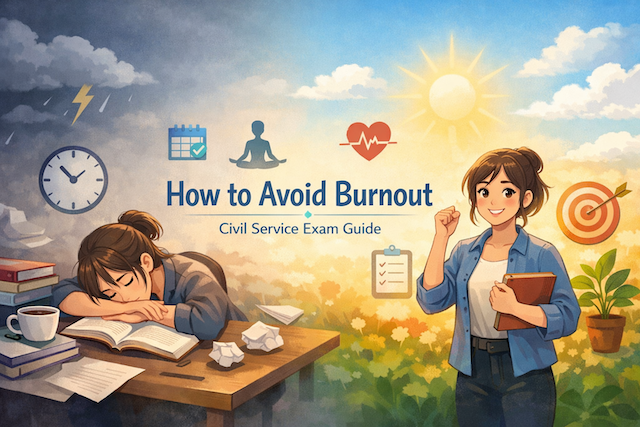
How to Avoid Burnout: Civil Service Exam Guide
Contents
- How to Avoid Burnout: Civil Service Exam Guide
- Understanding Burnout in Civil Service Exam Preparation
- Common Causes of Burnout Among Exam Takers
- Recognizing the Early Warning Signs of Burnout
- Setting Realistic and Sustainable Study Goals
- Creating a Balanced Study Schedule
- Prioritizing Quality Over Quantity
- Taking Care of Your Physical Health
- Managing Stress and Anxiety Effectively
- Maintaining Motivation Without Pressure
- Building a Support System
- Knowing When to Adjust Your Strategy
- Preparing for Exam Day Without Burning Out
- Final Thoughts: Sustainable Success Matters
- FAQs (Frequently Asked Questions)
- How do I know if I’m experiencing burnout or just normal tiredness?
- How many hours should I study per day to avoid burnout while preparing for the Civil Service Exam?
- Is taking a full rest day really helpful, or will it slow my progress?
- What should I do if I feel guilty when I take breaks?
- How can I stay motivated without putting too much pressure on myself?
- What are the best ways to prevent burnout during the final month before the exam?
- Should I change my study schedule if I notice burnout symptoms?
- What if my family or friends don’t understand why I need rest?
- Can burnout affect my exam performance even if I studied a lot?
- What should I do the day before the Civil Service Exam to avoid last-minute burnout?
How to Avoid Burnout: Civil Service Exam Guide
Preparing for the Civil Service Exam is not just an academic challenge—it is a long mental and emotional journey. Many candidates start strong, motivated by career goals and a sense of purpose. However, weeks or months into preparation, exhaustion, frustration, and self-doubt can quietly set in. This state is known as burnout, and it is one of the most common yet least discussed reasons candidates underperform or give up entirely.
Burnout does not mean you are weak or incapable. It is often the result of poor study balance, unrealistic expectations, and prolonged stress. The good news is that burnout is preventable. With the right mindset, structure, and habits, you can protect your energy, maintain focus, and reach exam day feeling confident rather than depleted.
This guide explains what burnout really is, why it happens during Civil Service Exam preparation, and—most importantly—how to avoid it.
Understanding Burnout in Civil Service Exam Preparation
Burnout is a state of chronic physical, mental, and emotional exhaustion caused by prolonged stress. In exam preparation, it often appears gradually rather than suddenly. Candidates may not realize what is happening until motivation disappears or study sessions feel unbearable.
Unlike normal tiredness, burnout does not go away with one good night’s sleep. It affects concentration, memory, emotional stability, and even physical health. For Civil Service Exam candidates, burnout can be especially dangerous because the exam requires sustained focus, logical thinking, and emotional control.
Burnout is not a sign that you are studying too little—it is usually a sign that you are studying without balance.
Common Causes of Burnout Among Exam Takers
Understanding why burnout happens is the first step to preventing it. Most candidates experience burnout for predictable reasons.
One major cause is overstudying without rest. Many candidates believe that studying longer hours automatically leads to better results. In reality, excessive study time without breaks leads to diminishing returns and mental fatigue.
Another cause is unrealistic expectations. Candidates often expect constant progress, perfect scores in practice tests, or rapid improvement. When reality does not match these expectations, frustration builds.
Fear of failure is also a powerful contributor. The Civil Service Exam often represents job security, family expectations, or long-term life goals. When the exam feels like “everything,” pressure becomes overwhelming.
Finally, lack of structure can lead to burnout. Studying randomly, without a clear plan or measurable goals, creates anxiety and a sense of being lost.
Recognizing the Early Warning Signs of Burnout
Burnout rarely appears overnight. It sends warning signals that many candidates ignore.
Early mental signs include difficulty concentrating, constant distraction, and forgetting material you previously understood. You may reread the same page multiple times without absorbing anything.
Emotional signs often include irritability, anxiety, loss of motivation, or feeling numb toward studying. You may start questioning your abilities or comparing yourself negatively to others.
Physical signs can include headaches, sleep problems, eye strain, fatigue, or frequent illness. These symptoms are often dismissed as “normal,” but they are not.
Recognizing these signs early allows you to adjust your approach before burnout becomes severe.
Setting Realistic and Sustainable Study Goals
One of the most effective ways to avoid burnout is to set goals that are realistic, specific, and flexible.
Instead of vague goals like “study all day” or “finish everything this week,” focus on manageable tasks such as completing a specific topic, answering a set number of questions, or reviewing one weak area.
Break long-term goals into weekly and daily targets. This creates a sense of progress and control. Each completed task becomes a small success, which helps maintain motivation.
It is also important to accept that not every study day will be perfect. Some days will be productive, others less so. Sustainable preparation allows room for imperfect days without guilt.
Creating a Balanced Study Schedule
A well-designed study schedule protects you from burnout by balancing effort and recovery.
Start by identifying your peak focus hours. Some people study best in the morning, others in the evening. Schedule your most demanding subjects during these times.
Avoid marathon study sessions. Research consistently shows that shorter, focused sessions with breaks are more effective than long, uninterrupted study hours. Techniques such as the Pomodoro method—25 to 50 minutes of study followed by a short break—help maintain mental clarity.
Include rest days in your schedule. At least one lighter day per week allows your brain to recover and consolidate information. Rest is not wasted time; it is part of effective learning.
Prioritizing Quality Over Quantity
Burnout often comes from confusing effort with effectiveness. Studying longer does not always mean studying better.
Focus on active learning rather than passive reading. Practice questions, mock exams, summarizing concepts in your own words, and teaching material aloud are all more effective than simply rereading notes.
Identify high-impact topics that appear frequently in the Civil Service Exam. Spending focused time on these areas is more efficient than trying to master everything equally.
When you notice your concentration dropping, stop. Continuing to study while mentally exhausted only increases burnout without improving retention.
Taking Care of Your Physical Health
Your brain cannot perform well if your body is neglected. Physical health is a foundational part of burnout prevention.
Sleep is especially critical. Lack of sleep impairs memory, focus, and emotional regulation. Aim for consistent sleep hours rather than studying late into the night.
Regular movement, even light exercise such as walking or stretching, reduces stress hormones and improves cognitive performance. You do not need intense workouts—consistency matters more than intensity.
Nutrition also plays a role. Skipping meals or relying heavily on caffeine and sugar can lead to energy crashes. Balanced meals and proper hydration help maintain steady focus.
Managing Stress and Anxiety Effectively
Stress is unavoidable during exam preparation, but unmanaged stress leads directly to burnout.
Simple stress-management techniques can make a significant difference. Deep breathing, mindfulness, or short meditation sessions help calm the nervous system and improve focus.
Writing down worries or fears can also reduce mental overload. When concerns stay only in your head, they feel larger and more threatening. Putting them on paper creates distance and clarity.
Avoid constant exposure to negative information, such as online forums filled with anxiety or comparison. Everyone’s journey is different, and excessive comparison fuels self-doubt.
Maintaining Motivation Without Pressure
Motivation should support your study—not punish you.
Reconnect with your personal reason for taking the Civil Service Exam. Whether it is stability, public service, career growth, or personal achievement, reminding yourself of this purpose provides meaningful motivation.
Celebrate small wins. Completing a difficult topic, improving a practice score, or maintaining consistency for a week are all achievements worth acknowledging.
Avoid using fear as your main motivator. Studying out of fear of failure may work short-term, but it accelerates burnout over time.
Building a Support System
Preparing alone increases the risk of burnout. Having support makes the journey more manageable.
Share your goals and struggles with trusted friends or family members. Even if they do not understand the exam content, emotional support reduces isolation.
Study groups can be helpful if used correctly. The purpose should be clarification and accountability, not competition or comparison.
If burnout symptoms become severe, consider seeking professional support. Speaking with a counselor or mental health professional is a proactive step, not a weakness.
Knowing When to Adjust Your Strategy
Burnout often signals that something in your approach needs to change.
If a study method is consistently draining and ineffective, replace it. Flexibility is a strength, not a failure.
If your schedule is too strict, allow more breathing room. If it is too loose, add structure. The best study plan is one that evolves with your needs.
Remember that the goal is not to study endlessly—it is to perform well on exam day with a clear, focused mind.
Preparing for Exam Day Without Burning Out
As the exam approaches, many candidates increase pressure instead of reducing it. This is a critical period for burnout prevention.
Shift focus from learning new material to reviewing and reinforcing what you already know. Confidence comes from consolidation, not overload.
Avoid drastic changes to your routine. Stick to familiar study times, sleep schedules, and habits.
In the final days, prioritize rest and mental clarity. A calm, rested mind performs better than an exhausted one.
Final Thoughts: Sustainable Success Matters
Avoiding burnout is not about studying less—it is about studying smarter and kinder to yourself. The Civil Service Exam is important, but your health, confidence, and long-term well-being matter more.
Consistent effort, balanced routines, realistic expectations, and self-awareness are the foundations of sustainable success. When you protect your energy, you protect your performance.
Preparing for the Civil Service Exam is a marathon, not a sprint. Pace yourself, trust the process, and remember that steady progress—without burnout—leads to the strongest results.
FAQs (Frequently Asked Questions)
How do I know if I’m experiencing burnout or just normal tiredness?
Normal tiredness usually improves after a good night’s sleep or a short break. Burnout feels heavier and lasts longer. You may notice that even after resting, you still feel mentally drained, unmotivated, or emotionally irritated when you try to study. Burnout can also affect your memory and concentration, making familiar topics feel confusing. If you feel persistent exhaustion, growing negativity, or a sense of dread toward study sessions for more than a week, it’s a strong sign you need to adjust your routine before the problem becomes worse.
How many hours should I study per day to avoid burnout while preparing for the Civil Service Exam?
There is no perfect number because it depends on your background, schedule, and energy level. A better approach is to aim for consistent, high-quality study sessions rather than extreme hours. Many candidates do well with 2–4 focused hours on weekdays and longer sessions on weekends, but only if they include breaks. If you study full-time, you still need structure: blocks of study, short breaks, meals, and an end time. When your concentration drops, continuing to “push through” often increases burnout without improving learning.
Is taking a full rest day really helpful, or will it slow my progress?
A planned rest day can actually speed up progress. Your brain needs downtime to process and consolidate information, especially after practice tests and intense review. Without rest, your accuracy and retention often decline even if you study longer. A rest day does not mean doing nothing all day; it can mean light review, short reading, or simply stepping away from heavy topics. The key is to reduce mental load so your motivation and focus return. Rest days are part of a sustainable plan, not a sign of laziness.
What should I do if I feel guilty when I take breaks?
Guilt during breaks is common, especially if you believe success requires constant effort. Try reframing breaks as a study tool rather than a reward. Short breaks protect attention and prevent mental fatigue, which improves performance in practice questions. You can also schedule breaks in advance, so they feel “earned” by the plan. Another helpful strategy is to define what a good break looks like: stretching, water, a quick walk, or a short meal. Avoid scrolling endlessly on social media, because that often increases guilt and anxiety.
How can I stay motivated without putting too much pressure on myself?
Motivation is more stable when it is connected to purpose, not fear. Remind yourself why you want a civil service career: stability, service, professional growth, or personal goals. Then focus on process goals, such as “complete one practice set today,” instead of outcome goals like “get a perfect score.” Small wins matter. Track improvement over time rather than judging yourself by a single bad day. If pressure rises, simplify your plan for a few days and rebuild momentum slowly instead of forcing intensity.
What are the best ways to prevent burnout during the final month before the exam?
The final month is a high-risk period because many candidates panic and overload their schedule. Instead, prioritize review and practice over learning entirely new content. Use mock exams to identify weak areas, then review those topics in focused blocks. Keep your sleep consistent and avoid late-night cramming, which often backfires. Short daily exercise and proper meals make a surprising difference in stress control. Also, reduce comparison with others during this period. Your goal is not to match someone else’s pace, but to arrive on exam day with clarity and confidence.
Should I change my study schedule if I notice burnout symptoms?
Yes. Burnout symptoms are a signal that your current approach is not sustainable. Start by reducing intensity for a short period—often 2–3 days of lighter study helps reset your mind. Then adjust the structure: shorter sessions, more frequent breaks, and clearer daily targets. You may also need to rotate subjects to avoid boredom and mental strain. If you are doing too many passive activities like rereading, switch to active learning such as practice questions or summarizing. The goal is not to stop studying completely, but to study in a way your brain can sustain.
What if my family or friends don’t understand why I need rest?
This happens often, especially when people assume studying should be nonstop. You do not need to defend every break, but it helps to explain that rest improves learning and reduces mistakes. You can say you are following a structured plan with study blocks and recovery time. Another option is to show results: steady practice scores and consistent study habits usually speak louder than arguments. If your environment is noisy or stressful, consider creating a study boundary—specific hours where you focus, and specific hours where you rest without interruptions.
Can burnout affect my exam performance even if I studied a lot?
Yes. Burnout reduces concentration, shortens attention span, and makes recall slower. It can also increase anxiety, which affects timing and decision-making during the exam. Many candidates who “studied a lot” still underperform because their brain is overworked and their confidence is unstable. That is why sustainable preparation matters. A balanced routine often produces better results than extreme cramming. If you feel mentally foggy, emotionally reactive, or consistently exhausted, addressing burnout can improve your exam performance more than adding extra study hours.
What should I do the day before the Civil Service Exam to avoid last-minute burnout?
The day before the exam should be light and calm. Avoid attempting to learn new material. Review key notes, formulas, rules, or common question patterns, but keep sessions short. Prepare everything you need for exam day: identification, supplies, route, and timing. Eat balanced meals and hydrate. If anxiety rises, do a simple breathing exercise and remind yourself that your job is to show what you already know. Go to bed earlier than usual. A rested brain will give you faster recall and better judgment than a tired brain.
Civil Service Exam Philippines: Complete Preparation and Passing Guide

How to Register for eTravel Philippines (2025 Guide)
Step-by-step guide to completing your eTravel registration before arriving in the Philippines, with images and tips.

Night Market in Cebu – Things You Don’t Know About Cebu Life
Discover the hidden charm of Cebu’s night markets, from street food stalls to local life tips you won’t find in tourist guides.

How to Use ChatGPT for IELTS Preparation: A Complete Guide
Learn how to prepare for IELTS using ChatGPT — including strategies for Writing, Reading, Listening, Speaking, and grammar support.

How to Build a Website Without Coding Using ChatGPT
Discover how to build your own website using AI—no coding skills needed. From structure planning to SEO and design, let ChatGPT guide you.