2025年12月26日
3D ACADEMY offers affordable English study programs in Cebu, Philippines – perfect for beginners, professionals, and exam takers.

3D UNIVERSAL ENGLISH INSTITUTE INC
info.3d-universal.com
8:00-17:00(Mon-Fri)
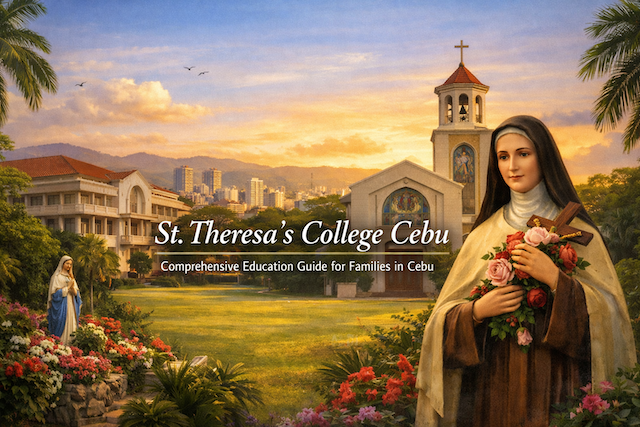
St. Theresa’s College Cebu: Comprehensive Education Guide for Families in Cebu
Contents
- St. Theresa’s College Cebu: Comprehensive Education Guide for Families in Cebu
- Quick Snapshot for Parents
- Who St. Theresa’s College Cebu Is Best For
- School Culture and Values
- Academic Program and Learning Approach
- Student Support and Guidance
- Campus Environment and Facilities
- Extracurricular Activities, Clubs, and Student Life
- All-Girls Education: What Families Should Consider
- Admissions: What the Process Usually Involves
- Tuition, Fees, and the “True Cost” of Attendance
- Transportation and Daily Logistics in Cebu City
- How to Decide If STC Cebu Is the Right Fit
- Questions Parents Should Ask During an Inquiry or Tour
- Final Thoughts: A Strong Option for Values-Driven Families
- FAQs (Frequently Asked Questions)
- Is St. Theresa’s College Cebu a good choice for families moving to Cebu?
- Is St. Theresa’s College Cebu an all-girls school?
- What curriculum does St. Theresa’s College Cebu follow?
- How competitive is admission at St. Theresa’s College Cebu?
- What documents do families usually need for application?
- Does St. Theresa’s College Cebu offer scholarships or financial assistance?
- How much should parents budget beyond tuition?
- What is student life like at St. Theresa’s College Cebu?
- How does the school handle discipline and student support?
- Is the commute practical for families living in Cebu City?
St. Theresa’s College Cebu: Comprehensive Education Guide for Families in Cebu
Quick Snapshot for Parents
St. Theresa’s College Cebu (often called STC Cebu) is one of the best-known Catholic private schools in Cebu City, recognized for a values-centered education and strong community culture. For many families—especially those looking for a disciplined learning environment with faith formation, character education, and consistent school traditions—STC is a familiar and trusted option.
That said, “best” depends on what your child needs. Some students thrive in structured settings with clear expectations, uniforms, and strong routines. Others do better in more flexible or progressive programs. This guide helps you evaluate STC Cebu from a family’s perspective: learning approach, student life, campus experience, admission expectations, and practical decision points.
Who St. Theresa’s College Cebu Is Best For
STC Cebu tends to be a strong match for families who prioritize:
-
Catholic education and formation as part of daily school life
-
Structured routines (clear rules, consistent expectations, strong guidance)
-
Balanced development: academics plus clubs, leadership, and service
-
All-girls environment (if your family prefers single-sex schooling)
-
A long-established school culture with traditions and active alumni/parent communities
STC Cebu may be less ideal if you’re specifically looking for:
-
A highly “alternative” learning model with minimal structure
-
An international curriculum (such as IB or a foreign national curriculum) as the main program
-
A co-educational environment (depending on your preferences)
School Culture and Values
STC Cebu is known for a culture that leans toward respect, discipline, compassion, and service. Families often choose Catholic schools not only for faith formation, but because a values-driven environment can create clear behavioral standards and a strong sense of accountability.
What this typically looks like in practice:
-
Regular values integration in classroom expectations and student conduct
-
Formation activities that may include prayer, assemblies, liturgical events, retreats, and outreach
-
Community service and social involvement, encouraging students to look beyond academics
If you’re a non-Catholic family, it’s still possible to consider STC Cebu, but you should be comfortable with an environment where Catholic identity is visible and active. A good approach is to ask the admissions office how the school supports students from different backgrounds while keeping its faith-based culture.
Academic Program and Learning Approach
Like many established private schools in Cebu, STC Cebu generally aims to build strong foundations in:
-
Language and communication
-
Mathematics and logical thinking
-
Science and inquiry
-
Social studies and civic awareness
-
Values education and character formation
Beyond subjects, many families evaluate a school by its learning “feel.” STC Cebu commonly appeals to parents who want:
-
Clear academic standards
-
Predictable assessment structures
-
Teacher-guided learning with strong supervision
-
A focus on study habits, responsibility, and consistent performance
When comparing STC Cebu with other top private schools, pay attention to your child’s temperament:
-
If your child is motivated by structure, deadlines, and routine, STC Cebu can be a very good fit.
-
If your child needs a more flexible learning model or struggles with strict routines, you may need to discuss support systems with the school.
Student Support and Guidance
Families often ask: “If my child struggles—academically or emotionally—what happens next?”
In many private schools with strong guidance cultures, students may have access to:
-
Guidance counseling and student services
-
Teacher advisories or class advisers
-
Behavioral support systems that are proactive rather than only disciplinary
When speaking to STC Cebu, it’s smart to ask direct, practical questions:
-
How does the school support students with learning gaps?
-
What interventions exist for students who fall behind?
-
How are parent-teacher communications handled?
-
Are there structured check-ins or conferences?
If your child has specific learning needs, ask whether STC Cebu can provide accommodations and what documentation is required.
Campus Environment and Facilities
The “daily experience” matters as much as curriculum. Families often consider:
-
Classroom quality and learning spaces (ventilation, lighting, class size feel)
-
Library and learning resources
-
Science labs and computer labs
-
Sports and activity areas
-
Safety and campus security (entry protocols, dismissal process, guard presence)
Even if facilities are strong on paper, what matters is flow: how students move from class to class, how breaks are managed, and how safe and organized dismissal feels.
If possible, visit during a normal school day or ask for a campus tour to observe:
-
student behavior and staff supervision
-
how crowded hallways are
-
how the school handles pickup and traffic
Extracurricular Activities, Clubs, and Student Life
A great school isn’t only measured by grades. Student life builds confidence, leadership, and social skills.
Many STC-type schools emphasize:
-
Clubs and student organizations (academic, arts, leadership, service)
-
Performing arts and events
-
Athletics and sports programs
-
Competitions and training opportunities
-
Student leadership roles
For your family, the key question is not “Does the school have clubs?” but:
-
Are clubs accessible to average students, or mainly competitive students?
-
Are there beginner-friendly options?
-
How much time commitment is expected?
If your child is shy or new to Cebu, clubs can be a major factor in social adjustment.
All-Girls Education: What Families Should Consider
If STC Cebu is an all-girls environment, it’s worth thinking through the real pros and cons.
Potential advantages:
-
Some students participate more actively in class when they don’t feel judged by boys.
-
Leadership opportunities can be broader because girls hold more roles by default.
-
Confidence and peer identity can develop strongly in a supportive cohort.
Potential challenges:
-
Some students prefer the social balance of a co-ed environment.
-
Social dynamics can sometimes feel intense (this varies by batch and culture, and is not unique to all-girls schools).
The best way to decide is to reflect on your child:
-
Does she thrive in a tight-knit peer group?
-
Does she prefer a calmer or more competitive environment?
-
Does she adapt quickly to new social settings?
Admissions: What the Process Usually Involves
Admissions processes can change year to year, but families typically encounter some mix of:
-
Application forms and document submission
-
Entrance assessment (varies by grade level)
-
Interview or parent conference
-
Previous school records and recommendations
-
Medical records and basic student information
Because popular private schools in Cebu can fill up quickly, especially at key entry points (Kinder, Grade 1, Grade 7, Senior High), it’s wise to:
-
inquire early
-
ask about reservation fees and timelines (if applicable)
-
prepare documents ahead of time
To reduce stress, keep a checklist:
-
birth certificate / passport copy
-
report cards and school records
-
recommendation letters (if requested)
-
ID photos and forms
-
proof of payment (if required)
Tuition, Fees, and the “True Cost” of Attendance
Families often focus on tuition, but the total cost can include:
-
uniforms (multiple sets)
-
books or learning materials
-
school supplies
-
field trips and special projects
-
activity and club fees
-
transport costs (driver, fuel, Grab, or school service)
Instead of asking only “How much is tuition?”, ask:
-
What fees are mandatory vs optional?
-
Are books included or separate?
-
Are there payment plans per semester/quarter?
-
What additional costs should we expect in a typical year?
If you’re comparing schools, build a simple annual cost estimate so you can compare fairly.
Transportation and Daily Logistics in Cebu City
For many families, the biggest day-to-day challenge isn’t academics—it’s commuting.
When evaluating STC Cebu logistics, consider:
-
Your home area (Banilad, Lahug, IT Park, Talamban, Guadalupe, Mabolo, etc.)
-
Pickup and drop-off traffic patterns
-
Whether your child will use a school service, private driver, or family car
-
The safety and practicality of waiting areas, gates, and dismissal systems
A school that looks perfect academically can become exhausting if commute time is consistently long. In Cebu City, minimizing daily travel stress can significantly improve a child’s overall school experience.
How to Decide If STC Cebu Is the Right Fit
When families choose a school, the decision often comes down to “fit,” not reputation. Here’s a practical way to assess fit.
Ask: What kind of learner is my child?
-
Needs structure and routine → STC Cebu may be a strong match
-
Needs flexible pacing and lots of autonomy → ask about support and teaching style
Ask: What environment helps my child grow?
-
Enjoys traditions, community events, faith-based culture → likely a good fit
-
Prefers a less formal environment → consider alternatives too
Ask: What does success look like in our family?
-
Academic excellence + character formation + service mindset → aligns well with STC-style education
-
Highly specialized track (sports academy feel, arts conservatory feel, or international pathway) → check if STC Cebu matches those goals
Questions Parents Should Ask During an Inquiry or Tour
To make your inquiry genuinely useful, ask questions that reveal daily reality:
-
What is the average class size per grade level?
-
How does the school communicate with parents (apps, email, advisers)?
-
What tutoring or academic intervention options exist?
-
How are bullying and discipline concerns handled?
-
What is the homework load like for each level?
-
How often are projects and performance tasks given?
-
What does a typical week look like for a student (time in school, clubs, events)?
-
What are the expectations for parent involvement?
These questions help you compare schools beyond marketing and reputation.
Final Thoughts: A Strong Option for Values-Driven Families
St. Theresa’s College Cebu is often chosen by families looking for a stable, values-based private school environment with strong traditions and a clear structure. For the right student, it can be an excellent place to build academic discipline, confidence, leadership, and a service-oriented mindset.
Your best next step is to treat the decision like a “fit check”:
-
align the school culture with your child’s temperament,
-
confirm the practical realities (commute, schedule, total costs), and
-
ask targeted questions about support systems.
FAQs (Frequently Asked Questions)
Is St. Theresa’s College Cebu a good choice for families moving to Cebu?
Yes, St. Theresa’s College Cebu is often considered a strong option for families relocating to Cebu who want a structured private-school environment with a values-centered culture. Many parents appreciate schools with clear routines, consistent expectations, and well-established traditions because these can help children adjust faster in a new city. For incoming students, the most important factors are usually school-community support, guidance services, and daily logistics such as traffic and pickup routines. If you are moving from abroad or from another Philippine province, it helps to ask about orientation programs, how the school supports transferees academically, and how the homeroom or adviser system communicates with parents during the first months.
Is St. Theresa’s College Cebu an all-girls school?
St. Theresa’s College Cebu is widely known for offering an all-girls learning environment in many of its programs, which is a key reason some families choose it. Parents who prefer single-sex education often believe it can encourage stronger classroom participation, confidence, and leadership opportunities for girls. However, families should confirm the current structure for their child’s specific level (for example, preschool, grade school, junior high, or senior high) because program arrangements can vary by campus policy and may evolve over time. The best approach is to contact the admissions office and ask directly about the current setup for the grade level you are applying for.
What curriculum does St. Theresa’s College Cebu follow?
Most private schools in Cebu follow the Philippine K–12 framework while adding enrichment through values formation, extracurricular programs, and school-based academic standards. St. Theresa’s College Cebu is typically associated with a Catholic education approach that integrates character formation and service into student life alongside academic learning. If your family is comparing schools, ask about teaching methods, assessment style, and the balance between exams, projects, and performance tasks. You can also ask whether the school offers specialized tracks in Senior High School, and what kind of guidance is available to help students choose a track aligned with their goals.
How competitive is admission at St. Theresa’s College Cebu?
Admission competitiveness can depend on the grade level, the number of slots available, and the timing of your application. Entry points such as Kindergarten, Grade 1, Grade 7, and Senior High School often receive higher interest in many established private schools. In general, families should prepare early, complete requirements carefully, and watch application deadlines. Schools may require an entrance assessment, interview, and submission of previous school records. If your child is transferring, it is also helpful to ask how the school evaluates transcripts, whether bridging support is offered, and what the typical timeline is from application to final acceptance.
What documents do families usually need for application?
Requirements vary by year, but families commonly prepare basic student identification documents, recent report cards or school records, good moral certificates, and completed application forms. Some schools also request recommendation letters or conduct interviews. For transferees, additional paperwork may be needed to confirm grade placement and ensure your child meets prerequisites for specific subjects. To avoid delays, it is smart to keep digital copies of key documents and ask the admissions office for a checklist specific to your child’s level. If you are applying from overseas, clarify whether scanned documents are accepted initially and when original copies must be submitted.
Does St. Theresa’s College Cebu offer scholarships or financial assistance?
Many private schools offer some form of scholarship, tuition discount, or financial assistance, but availability, eligibility, and application steps differ. Some programs are merit-based, while others may be need-based or linked to special achievements such as academics, leadership, or athletics. Because these options can change from year to year, the most reliable step is to ask the school directly about current scholarship categories, deadlines, and documentation. If your family is budgeting, also ask about payment plans, installment schedules, and what fees are included or excluded from the main tuition.
How much should parents budget beyond tuition?
Beyond tuition, parents should plan for uniforms, books or learning materials, school supplies, and possible activity fees. There may also be costs for field trips, special projects, school photos, club participation, or events. Transportation is another major factor in Cebu City, especially if you will use a private driver, school service, or ride-hailing apps. A practical way to budget is to request a breakdown of standard fees from the school, then add a buffer for optional activities. When comparing schools, ask what costs are mandatory versus optional so you can make a fair comparison across options.
What is student life like at St. Theresa’s College Cebu?
Student life in established private schools often includes a mix of academics, club activities, leadership programs, and community events. In a Catholic school setting, families can also expect formation activities such as prayer services, values-based assemblies, retreats, and outreach programs. For many students, clubs and organizations are where friendships and confidence grow, especially for transferees. Parents can ask what clubs are available for beginners, how students join organizations, and whether participation is encouraged for balance rather than only for highly competitive students. It is also helpful to ask how the school supports students’ well-being during busy periods such as exams or major events.
How does the school handle discipline and student support?
Most private schools maintain a clear discipline framework to support a safe and focused learning environment. Families considering St. Theresa’s College Cebu should ask about the student handbook, behavior expectations, and how the school responds to concerns such as bullying or repeated misconduct. Just as important, ask about student support systems: guidance counseling, adviser check-ins, and how parents are informed when issues arise. A good sign is when a school balances accountability with support, focusing not only on rules but also on helping students build better habits and emotional resilience. If your child has specific learning or adjustment needs, ask what interventions are available and how the school coordinates with families.
Is the commute practical for families living in Cebu City?
Commute practicality depends heavily on where you live. Cebu traffic can be unpredictable, so families often choose schools based on both quality and logistics. Before committing, estimate travel time during peak hours, and consider drop-off and pickup procedures. Ask about dismissal schedules, gate systems, and whether there are recommended pickup windows to reduce congestion. If you are moving to Cebu and have not finalized your neighborhood, school choice can help guide your housing decision. A manageable daily routine can significantly improve a child’s energy, performance, and overall happiness at school.
Recommend
2025年12月26日
University of Cebu – Integrated School: Comprehensive Education Guide for Families in Cebu
2025年12月26日
University of San Jose–Recoletos – Basic Education: Complete Guide for Families in Cebu
2025年12月26日
University of San Carlos – Basic Education Department: Comprehensive Guide for Families in Cebu

How to Register for eTravel Philippines (2025 Guide)
Step-by-step guide to completing your eTravel registration before arriving in the Philippines, with images and tips.

Night Market in Cebu – Things You Don’t Know About Cebu Life
Discover the hidden charm of Cebu’s night markets, from street food stalls to local life tips you won’t find in tourist guides.

How to Use ChatGPT for IELTS Preparation: A Complete Guide
Learn how to prepare for IELTS using ChatGPT — including strategies for Writing, Reading, Listening, Speaking, and grammar support.

How to Build a Website Without Coding Using ChatGPT
Discover how to build your own website using AI—no coding skills needed. From structure planning to SEO and design, let ChatGPT guide you.