2026年4月3日
3D ACADEMY offers affordable English study programs in Cebu, Philippines – perfect for beginners, professionals, and exam takers.

3D UNIVERSAL ENGLISH INSTITUTE INC
info.3d-universal.com
8:00-17:00(Mon-Fri)
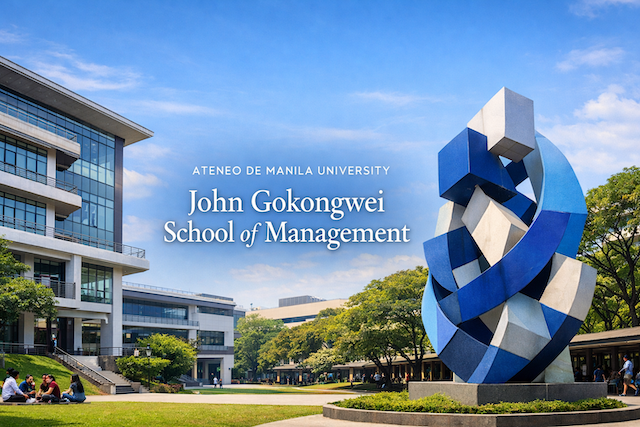
Ateneo de Manila University – John Gokongwei School of Management (JGSOM)
FAQs (Frequently Asked Questions)
Is Ateneo de Manila University’s John Gokongwei School of Management (JGSOM) the same as Ateneo Graduate School of Business (AGSB)?
No. JGSOM is Ateneo de Manila University’s school for business and management programs at the undergraduate level and selected graduate offerings within the university structure, while the Ateneo Graduate School of Business (AGSB) is a separate unit that focuses primarily on professional graduate programs such as MBA tracks for working professionals. They share the broader Ateneo brand and values-based approach, but they operate as distinct academic units with different program focuses, student profiles, and administrative setups.
What makes JGSOM different from other business schools in the Philippines?
JGSOM is widely associated with a Jesuit approach to education, which emphasizes ethics, reflection, and service alongside academic rigor. Students are trained to think critically about the social impact of business decisions, not just profitability. Another differentiator is the school’s strong reputation for leadership formation and its culture of student involvement in organizations, competitions, and community engagement. Many learners also value the network effects that come from Ateneo’s broader alumni community.
Which undergraduate programs are most popular at JGSOM?
Some of the best-known programs include BS Management, BS Management Engineering, BS Management Information Systems, and BS Communications Technology Management. Each track has a different emphasis. For example, Management Engineering is known for advanced quantitative and analytical coursework, while MIS focuses on business and technology integration. Students often choose based on their interest in analytics, entrepreneurship, corporate careers, or tech-driven roles.
Is BS Management Engineering at Ateneo really difficult?
It has a reputation for being academically demanding, particularly because it combines business fundamentals with strong quantitative requirements. Students can expect courses that require disciplined problem-solving, data analysis, and structured thinking. That said, difficulty is also influenced by preparation, time management, and the support system a student builds. Many students thrive in the program because of peer collaboration and access to faculty guidance, but it is best suited for learners who are comfortable with math, logic, and intensive academic pacing.
Does JGSOM offer MBA programs directly?
In many cases, MBA programs associated with Ateneo are managed through AGSB rather than JGSOM. However, the broader Ateneo ecosystem includes multiple graduate-level management options, and program availability can vary depending on year, track design, and university structure. If you are specifically looking for an MBA, it is important to confirm which Ateneo unit administers the program, the target student profile (early career vs. executive), and the campus or delivery format where classes are held.
What are the typical admissions requirements for JGSOM undergraduate programs?
Applicants usually go through Ateneo’s university-wide admissions process, which commonly evaluates high school academic records, entrance test performance, and other application components such as recommendations and personal information. Because selectivity can be high, applicants benefit from demonstrating consistent academic performance and strong communication skills. If you are applying from outside the Philippines, it helps to prepare documentation early, especially transcripts, grading equivalencies, and any required identity or school certification paperwork.
Are there scholarships available for students who want to study at JGSOM?
Yes, scholarship options are typically available within the broader Ateneo scholarship ecosystem, including merit-based and need-based assistance. Some grants may cover partial tuition, while others can be more comprehensive depending on eligibility and available funding. Because scholarship policies and deadlines can change, applicants should plan ahead, gather proof of eligibility (such as financial documents if required), and treat scholarship application steps as separate from the main admissions timeline.
What kind of careers do JGSOM graduates pursue?
JGSOM graduates enter a wide range of fields including corporate management, banking and finance, consulting, marketing, technology, and entrepreneurship. Management Engineering graduates are often associated with analytics-heavy paths such as consulting, investment roles, and strategy functions. MIS and CTM graduates may pursue careers in product management, IT consulting, digital transformation, or roles that connect business strategy with technology execution. Many alumni also join family enterprises or start ventures of their own.
How strong is the internship and industry network for JGSOM students?
The strength of internship opportunities often comes from a combination of school reputation, alumni presence in major companies, and active student involvement in organizations. Students commonly build experience through internships, case competitions, and consulting-style projects. While outcomes differ by student initiative and market conditions, the environment generally encourages professional engagement early. Students who network proactively, develop strong communication skills, and gain practical experience tend to access better internship pipelines.
Does JGSOM support entrepreneurship and startups?
Yes. Entrepreneurship is a visible part of the JGSOM identity, especially because many students are interested in innovation and venture building. Support often includes entrepreneurship electives, mentoring, pitch events, and student organizations that connect learners with founders and business leaders. Students who want to start a company benefit most when they treat entrepreneurship as a structured learning process: validating ideas, building teams, testing markets, and learning finance and operations fundamentals.
Are there international exchange or global exposure opportunities?
Many business students in top Philippine universities seek exchange programs, short-term study tours, or collaborative projects with partner institutions. Ateneo’s international linkages can create opportunities for global learning, though the exact options depend on program track, academic standing, and availability each year. Interested students should plan their academic schedule early so that exchange participation does not delay graduation, and they should budget for travel and living costs if the program is not fully funded.
What is student life like at JGSOM and Ateneo’s campus?
Student life is often described as active and community-oriented. Many learners join organizations related to consulting, entrepreneurship, finance, marketing, leadership, and social impact. Ateneo’s broader campus culture places emphasis on formation, service, and reflection, so students may also participate in outreach programs and volunteer initiatives. For many students, the network they build through org work and team projects becomes just as valuable as classroom learning.
What should international students know before applying to Ateneo for management programs?
International applicants should confirm admission timelines, document requirements, and whether additional credential evaluation is needed. It is also helpful to research living costs in Quezon City, housing options near campus, and visa or study permit procedures. Because adjustment can involve cultural and academic differences, international students benefit from preparing for communication-heavy coursework, group projects, and a classroom environment that may emphasize participation and discussion-based learning.
How can students decide which JGSOM program fits them best?
A practical approach is to match your strengths and preferred career direction with each program’s core focus. If you enjoy quantitative problem-solving and want analytics-driven roles, Management Engineering may fit. If you like building systems and working with technology strategy, MIS can be ideal. If you want a broad management foundation with flexibility, BS Management is a solid option. Students unsure of their path can also consider how electives, internships, and student organizations can help them test interests early before committing to a specific specialization.
Philippines University Guide: Top Universities, Admissions, Scholarships, and Student Life

How to Register for eTravel Philippines (2025 Guide)
Step-by-step guide to completing your eTravel registration before arriving in the Philippines, with images and tips.

Night Market in Cebu – Things You Don’t Know About Cebu Life
Discover the hidden charm of Cebu’s night markets, from street food stalls to local life tips you won’t find in tourist guides.

How to Use ChatGPT for IELTS Preparation: A Complete Guide
Learn how to prepare for IELTS using ChatGPT — including strategies for Writing, Reading, Listening, Speaking, and grammar support.

How to Build a Website Without Coding Using ChatGPT
Discover how to build your own website using AI—no coding skills needed. From structure planning to SEO and design, let ChatGPT guide you.