2026年4月3日
3D ACADEMY offers affordable English study programs in Cebu, Philippines – perfect for beginners, professionals, and exam takers.

3D UNIVERSAL ENGLISH INSTITUTE INC
info.3d-universal.com
8:00-17:00(Mon-Fri)
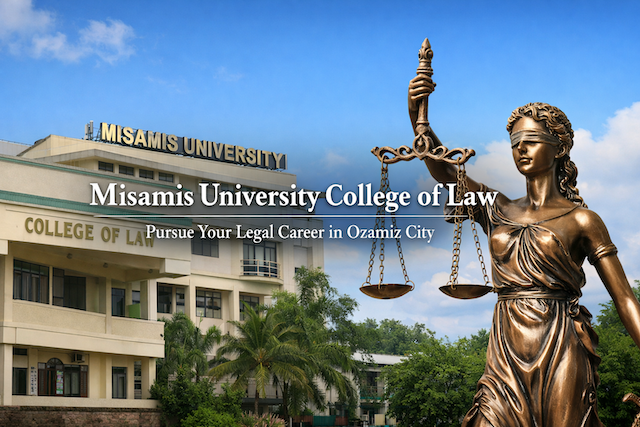
Misamis University College of Law: Complete Guide for Prospective Students
Contents
- Misamis University College of Law: Complete Guide for Prospective Students
- Introduction
- Overview of Misamis University
- About the College of Law
- Juris Doctor Program
- Admission Requirements
- Learning Environment
- Facilities and Resources
- Student Life
- Bar Exam Preparation
- Career Opportunities
- Advantages of Studying at Misamis University College of Law
- Challenges to Consider
- Who Should Consider This Law School?
- Conclusion
- FAQs (Frequently Asked Questions)
- What is Misamis University College of Law known for?
- What program does Misamis University College of Law offer?
- Is Misamis University College of Law a good option for working students?
- What are the admission requirements for Misamis University College of Law?
- How difficult is studying law at Misamis University?
- Does the college help students prepare for the Bar Examination?
- What kind of student environment can I expect at Misamis University College of Law?
- What career opportunities are available after graduating from Misamis University College of Law?
- Why should a student choose Misamis University College of Law over a bigger law school?
Misamis University College of Law: Complete Guide for Prospective Students
Introduction
Misamis University College of Law is one of the emerging legal education institutions in Mindanao, Philippines. Located in Ozamiz City, Misamis Occidental, the university has steadily built a reputation for providing accessible, community-oriented, and values-driven legal education. For students who aspire to become lawyers but prefer a more localized and supportive academic environment outside major metropolitan areas, Misamis University offers a compelling option.
This guide provides a comprehensive overview of the Misamis University College of Law, including its programs, admission process, curriculum, facilities, student life, and career prospects. Whether you are a recent graduate, a working professional, or someone considering a career shift into law, this article will help you evaluate if this institution aligns with your goals.
Overview of Misamis University
Misamis University is a private higher education institution founded in 1929. It has grown into a well-established university offering a wide range of undergraduate and graduate programs across multiple disciplines, including education, business, criminology, and law.
The university is known for its commitment to:
-
Academic excellence
-
Community engagement
-
Holistic student development
-
Moral and ethical values
Its strategic location in Ozamiz City makes it accessible to students from nearby provinces such as Zamboanga del Norte, Lanao del Norte, and parts of Northern Mindanao.
About the College of Law
The Misamis University College of Law was established to meet the increasing demand for legal professionals in the region. It aims to produce competent, ethical, and socially responsible lawyers who can contribute to nation-building, particularly in underserved communities.
The college emphasizes:
-
Practical legal training
-
Strong ethical foundation
-
Community-based legal education
-
Preparation for the Philippine Bar Examination
While it may not have the long-standing prestige of some Manila-based law schools, it offers a more personalized learning experience with smaller class sizes and closer interaction with faculty.
Juris Doctor Program
Program Structure
The primary offering of the College of Law is the Juris Doctor (JD) program, which is designed to be completed in four years. The program follows the standards set by the Legal Education Board (LEB) in the Philippines.
The curriculum combines:
-
Theoretical legal knowledge
-
Case analysis
-
Practical skills training
-
Legal writing and research
Core Subjects
Students enrolled in the JD program will study a wide range of subjects, including:
-
Constitutional Law
-
Civil Law
-
Criminal Law
-
Commercial Law
-
Remedial Law
-
Legal Ethics
These subjects are essential for building a strong foundation in Philippine law and preparing for the Bar Examination.
Skills Development
Beyond lectures, the program focuses on developing critical lawyering skills such as:
-
Legal reasoning and analysis
-
Oral advocacy
-
Drafting legal documents
-
Negotiation and mediation
Mock trials and class recitations are integral parts of the learning process.
Admission Requirements
Basic Requirements
To apply to Misamis University College of Law, applicants must meet the following criteria:
-
A bachelor’s degree from a recognized institution
-
Transcript of Records (TOR)
-
Certificate of Good Moral Character
-
Birth certificate (PSA copy)
Entrance Exams and Interviews
Some applicants may be required to:
-
Take an entrance examination
-
Attend a panel interview
These assessments are designed to evaluate the applicant’s readiness for the rigorous demands of legal education.
English Proficiency
Since legal education in the Philippines is conducted in English, applicants are expected to have a strong command of the language. This is particularly important for:
-
Reading case law
-
Writing legal arguments
-
Participating in class discussions
Learning Environment
Class Size and Faculty Interaction
One of the key advantages of studying at Misamis University College of Law is its relatively small class size. This allows for:
-
More personalized instruction
-
Direct interaction with professors
-
Better mentoring opportunities
Faculty members are often practicing lawyers, judges, or legal consultants, providing students with real-world insights.
Teaching Methods
The college employs a combination of:
-
Socratic method
-
Case-based learning
-
Interactive discussions
Students are expected to actively participate in class, which helps develop confidence and analytical skills.
Facilities and Resources
Library and Legal Materials
The university provides access to a library equipped with:
-
Law books and reference materials
-
Philippine Supreme Court decisions
-
Legal journals and publications
These resources are essential for research and case study preparation.
Study Areas
Students have access to quiet study spaces that support:
-
Individual reading
-
Group discussions
-
Case preparation
Technology Integration
While not as technologically advanced as top-tier urban law schools, the university continues to improve its digital resources, including:
-
Online research tools
-
Learning management systems
Student Life
Law Student Culture
Life as a law student at Misamis University is both challenging and rewarding. Students often form strong bonds due to:
-
Shared academic pressure
-
Group study sessions
-
Collaborative learning
Organizations and Activities
Students can participate in various activities such as:
-
Moot court competitions
-
Legal aid programs
-
Student government
These activities enhance both academic and personal development.
Work-Life Balance
Many students in the College of Law are working professionals. The university accommodates this by offering:
-
Flexible class schedules
-
Evening classes
This makes it an attractive option for those balancing work and studies.
Bar Exam Preparation
Academic Preparation
The curriculum is designed to align with the subjects tested in the Philippine Bar Examination. Professors emphasize:
-
Mastery of legal principles
-
Case analysis
-
Exam techniques
Review Programs
Students are encouraged to enroll in bar review programs during their final year or after graduation. The university may also provide:
-
In-house review sessions
-
Practice exams
Support System
Faculty and alumni often provide guidance and mentorship to graduates preparing for the Bar.
Career Opportunities
Graduates of Misamis University College of Law can pursue various career paths, including:
Legal Practice
-
Private law firms
-
Solo practice
-
Public defense
Government Service
-
Prosecutor’s office
-
Public Attorney’s Office (PAO)
-
Government agencies
Corporate Sector
-
In-house counsel
-
Compliance officer
-
Legal consultant
Academia
Some graduates may choose to:
-
Teach law subjects
-
Engage in legal research
Advantages of Studying at Misamis University College of Law
Accessibility
For students in Mindanao, especially in nearby provinces, the university offers a convenient and cost-effective option compared to relocating to major cities.
Affordable Tuition
Tuition fees are generally lower than those of top law schools in Metro Manila or Cebu, making legal education more accessible.
Community-Oriented Education
The college emphasizes service to the community, encouraging students to use their legal knowledge to help others.
Supportive Environment
The smaller academic setting fosters:
-
Strong student-professor relationships
-
A collaborative learning atmosphere
Challenges to Consider
Limited National Recognition
Compared to top-tier law schools, Misamis University may have less national visibility. However, individual performance—especially in the Bar Exam—can offset this.
Resource Limitations
Facilities and resources may not be as extensive as those in larger universities.
Self-Discipline Required
Students must be proactive in:
-
Studying independently
-
Seeking additional resources
-
Preparing for the Bar
Who Should Consider This Law School?
Misamis University College of Law is ideal for:
-
Students based in Mindanao
-
Working professionals seeking flexible schedules
-
Individuals looking for affordable legal education
-
Those who prefer a smaller, more supportive academic environment
It may not be the best fit for students seeking:
-
Highly competitive, top-ranked institutions
-
Extensive international exposure
-
Large-scale campus facilities
Conclusion
Misamis University College of Law offers a practical and accessible pathway to becoming a lawyer in the Philippines. While it may not have the prestige of more prominent law schools, it compensates with a supportive learning environment, affordable tuition, and a strong commitment to community service.
For aspiring lawyers who value personalized education, regional accessibility, and a mission-driven approach to legal practice, Misamis University stands as a worthy option. Ultimately, success in law school—and in the legal profession—depends not only on the institution but also on the dedication, discipline, and determination of the student.
FAQs (Frequently Asked Questions)
What is Misamis University College of Law known for?
Misamis University College of Law is known for offering accessible legal education in Ozamiz City, Misamis Occidental. It is often considered a practical choice for students in Mindanao who want to study law without relocating to larger cities such as Manila or Cebu. The college is also recognized for its community-oriented approach, values-based instruction, and supportive academic environment. Many prospective students are drawn to the school because it offers a more personal learning experience, especially when compared with larger law schools where class sizes may be bigger and faculty interaction may be less direct.
What program does Misamis University College of Law offer?
The college primarily offers the Juris Doctor program, which is the standard professional law degree in the Philippines. This program is generally designed to be completed in four years, although the actual duration may vary depending on a student’s pace, academic performance, and personal circumstances. The curriculum includes major areas of Philippine law such as civil law, criminal law, constitutional law, remedial law, commercial law, legal ethics, and legal writing. The goal of the program is to prepare students both for law practice and for the Philippine Bar Examination.
Is Misamis University College of Law a good option for working students?
Yes, it can be a good option for working students, especially those who need a law school with a more manageable and supportive setup. Many regional law schools in the Philippines attract students who are already employed, and Misamis University is often seen as a practical choice for that type of learner. Flexible scheduling, evening classes, and a more localized campus setting may make it easier for working professionals to balance employment, family obligations, and legal education. However, law school remains academically demanding, so students should still expect a heavy reading load and intense preparation for classes.
What are the admission requirements for Misamis University College of Law?
Admission requirements typically include a bachelor’s degree from a recognized college or university, a transcript of records, a certificate of good moral character, and other basic enrollment documents such as a birth certificate. Some applicants may also need to go through an entrance examination or interview, depending on the school’s current admission policies. Because requirements can change, it is always best for applicants to confirm the latest list of documents and procedures directly with the university before applying. Preparing documents early is important, especially for students coming from other cities or provinces.
How difficult is studying law at Misamis University?
Studying law at Misamis University College of Law can be challenging, just as it is in any law school in the Philippines. Students are expected to read large volumes of cases, understand statutes, participate in class recitations, and write legal analyses. The difficulty level does not come only from the number of subjects but also from the depth of reasoning required. Even if the environment is more supportive and less intimidating than some larger law schools, students still need discipline, consistency, and strong time management skills. Success depends heavily on daily study habits and the ability to handle pressure over several years.
Does the college help students prepare for the Bar Examination?
Yes, the college’s curriculum is designed to build the legal knowledge and analytical skills needed for the Philippine Bar Examination. Core law subjects are taught with the long-term goal of bar readiness in mind. Students are trained in case analysis, legal reasoning, and exam-oriented study habits throughout the program. In many law schools, professors also share practical advice on how to organize notes, answer essay questions, and review efficiently. While formal bar review may still require separate preparation after graduation, a strong law school foundation plays a major role in eventual bar performance.
What kind of student environment can I expect at Misamis University College of Law?
Students can generally expect a more close-knit academic environment than what is often found in large metropolitan law schools. Smaller class sizes can create stronger connections among classmates and more direct access to professors. This type of setting often benefits students who prefer a collaborative atmosphere rather than a highly competitive one. Study groups, shared notes, peer support, and group preparation for recitations are common parts of law student life. At the same time, students should be ready for the demanding nature of legal education, where personal responsibility and independent study remain essential.
What career opportunities are available after graduating from Misamis University College of Law?
Graduates who pass the Bar Examination can pursue a wide range of legal careers. These may include private law practice, work in government agencies, positions in the judiciary, public service roles such as public attorney or prosecutor, corporate legal work, compliance functions, and academic teaching. Some graduates may choose to focus on community-based legal work or local government service, especially if they want to contribute to regional development in Mindanao. The school’s value is not limited to courtroom practice alone. A law degree can also support careers in policy, administration, education, and business leadership.
Why should a student choose Misamis University College of Law over a bigger law school?
A student may choose Misamis University College of Law because of its accessibility, affordability, and supportive academic environment. For many aspiring lawyers, especially those based in Mindanao, studying closer to home reduces living costs and makes long-term education more sustainable. A smaller law school can also offer more personal mentorship and a stronger sense of academic community. While larger and more famous law schools may offer broader prestige or more extensive facilities, they are not always the best fit for every learner. Students who value practical education, local access, and a grounded learning experience may find Misamis University to be a strong choice.

How to Register for eTravel Philippines (2025 Guide)
Step-by-step guide to completing your eTravel registration before arriving in the Philippines, with images and tips.

Night Market in Cebu – Things You Don’t Know About Cebu Life
Discover the hidden charm of Cebu’s night markets, from street food stalls to local life tips you won’t find in tourist guides.

How to Use ChatGPT for IELTS Preparation: A Complete Guide
Learn how to prepare for IELTS using ChatGPT — including strategies for Writing, Reading, Listening, Speaking, and grammar support.

How to Build a Website Without Coding Using ChatGPT
Discover how to build your own website using AI—no coding skills needed. From structure planning to SEO and design, let ChatGPT guide you.