2026年4月3日
3D ACADEMY offers affordable English study programs in Cebu, Philippines – perfect for beginners, professionals, and exam takers.

3D UNIVERSAL ENGLISH INSTITUTE INC
info.3d-universal.com
8:00-17:00(Mon-Fri)
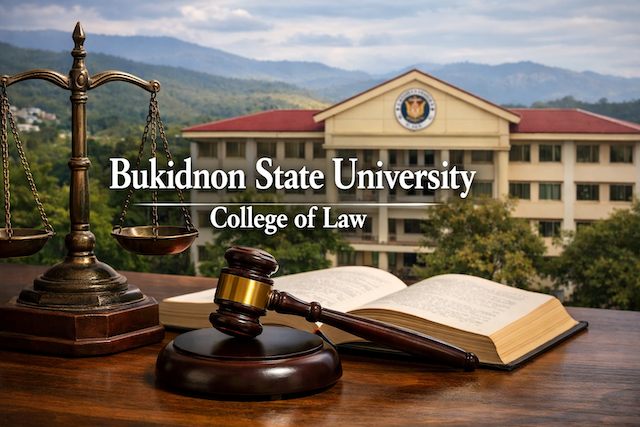
Bukidnon State University College of Law
Contents
- Bukidnon State University College of Law
- Introduction
- History and Background
- Vision and Mission
- Juris Doctor Program
- Admission Requirements
- Faculty and Teaching Approach
- Facilities and Learning Environment
- Clinical Legal Education Program
- Student Life
- Bar Examination Performance
- Career Opportunities
- Advantages of Studying at BukSU College of Law
- Challenges and Considerations
- Future Prospects
- Conclusion
- FAQs (Frequently Asked Questions)
- What is Bukidnon State University College of Law known for?
- What degree does Bukidnon State University College of Law offer?
- How long does it usually take to complete law school at Bukidnon State University?
- Who can apply to Bukidnon State University College of Law?
- Is Bukidnon State University College of Law a good choice for working students?
- What subjects are usually included in the Juris Doctor curriculum?
- What makes studying law in Bukidnon different from studying in a major city?
- Does Bukidnon State University College of Law help prepare students for the Bar Examinations?
- What career opportunities are available after graduating from Bukidnon State University College of Law?
- Why should a student consider Bukidnon State University College of Law?
Bukidnon State University College of Law
Introduction
Bukidnon State University College of Law is one of the emerging legal education institutions in Mindanao, Philippines. Located in Malaybalay City, Bukidnon, the university is known for its strong commitment to academic excellence, community service, and regional development. The College of Law plays a significant role in producing competent, ethical, and socially responsible lawyers who contribute to justice and nation-building, particularly in Northern Mindanao.
As legal education in the Philippines continues to evolve, Bukidnon State University (BukSU) has positioned its College of Law as a vital institution for aspiring lawyers who seek quality education outside major metropolitan centers. This article provides a comprehensive overview of the Bukidnon State University College of Law, including its history, programs, admission requirements, facilities, and career opportunities.
History and Background
Bukidnon State University was established in 1924 as a secondary school and later evolved into a state university. Over the years, it expanded its academic offerings to include various undergraduate and graduate programs. The College of Law is a relatively recent addition, reflecting the growing demand for legal education in Mindanao.
The establishment of the College of Law aligns with the university’s mission to provide accessible and quality education to students in rural and underserved areas. By offering a Juris Doctor program, BukSU aims to empower local communities by producing legal professionals who understand regional issues, including indigenous rights, land disputes, and environmental concerns.
Vision and Mission
Vision
Bukidnon State University College of Law envisions itself as a center of excellence in legal education in Mindanao, producing competent lawyers with integrity, social awareness, and a commitment to justice.
Mission
The College of Law is committed to:
- Providing high-quality legal education grounded in theory and practice
- Promoting ethical standards and professional responsibility
- Encouraging critical thinking and legal research
- Serving the community through legal aid and outreach programs
- Addressing local and national legal issues through academic engagement
Juris Doctor Program
Overview
The primary program offered by the Bukidnon State University College of Law is the Juris Doctor (JD) program. This program is designed to prepare students for the Philippine Bar Examination and equip them with the necessary skills to practice law effectively.
Curriculum Structure
The JD program typically spans four years and includes both foundational and advanced legal subjects. The curriculum is aligned with the standards set by the Legal Education Board (LEB) in the Philippines.
First Year
- Persons and Family Relations
- Constitutional Law I
- Criminal Law I
- Legal Writing
- Introduction to Law
Second Year
- Obligations and Contracts
- Criminal Law II
- Constitutional Law II
- Property Law
- Statutory Construction
Third Year
- Civil Procedure
- Evidence
- Corporation Law
- Labor Law
- Taxation Law
Fourth Year
- Remedial Law Review
- Legal Ethics
- Practice Court
- Clinical Legal Education
- Bar Review Subjects
The curriculum integrates both theoretical knowledge and practical training, ensuring that students are well-prepared for real-world legal practice.
Admission Requirements
Academic Qualifications
Applicants must possess a bachelor’s degree from a recognized institution. While there is no specific undergraduate course required, degrees in political science, business, or social sciences may provide an advantage.
Entrance Examination
Prospective students are required to pass the law school entrance examination administered by BukSU. This exam evaluates critical thinking, reading comprehension, and analytical skills.
Additional Requirements
- Transcript of Records
- Certificate of Good Moral Character
- Birth Certificate
- Personal Interview
The admission process is designed to identify candidates who demonstrate academic potential, discipline, and a genuine interest in the legal profession.
Faculty and Teaching Approach
The College of Law prides itself on having a dedicated faculty composed of experienced legal practitioners, judges, and scholars. Many professors bring practical insights from their legal careers, enriching classroom discussions.
Teaching Methodology
The teaching approach emphasizes:
- Case method analysis
- Socratic questioning
- Legal research and writing
- Mock trials and simulations
This method encourages students to think critically, argue effectively, and apply legal principles to real-life scenarios.
Facilities and Learning Environment
Bukidnon State University provides a conducive learning environment for law students. While it may not have the same level of infrastructure as larger universities, it offers essential facilities that support academic growth.
Library Resources
The university library includes:
- Law books and reference materials
- Legal journals and publications
- Access to online legal databases
Classrooms and Study Areas
Classrooms are designed to facilitate interactive discussions. Quiet study areas are also available for students who need focused learning time.
Practice Court
The College of Law features a practice court where students can simulate legal proceedings. This hands-on experience is crucial for developing litigation skills.
Clinical Legal Education Program
One of the key strengths of the BukSU College of Law is its Clinical Legal Education Program (CLEP). This program allows students to gain practical experience by assisting in real legal cases under the supervision of licensed attorneys.
Key Features
- Legal aid services for marginalized communities
- Client counseling and representation
- Drafting legal documents
- Court appearances (under supervision)
This program not only enhances students’ practical skills but also instills a sense of social responsibility.
Student Life
Law school is demanding, but BukSU provides a supportive environment that fosters camaraderie among students.
Organizations and Activities
Students can participate in:
- Law student associations
- Moot court competitions
- Legal aid missions
- Academic seminars and workshops
These activities help students build networks, develop leadership skills, and gain exposure to various aspects of the legal profession.
Bar Examination Performance
Bar exam performance is a key indicator of a law school’s quality. While Bukidnon State University College of Law is still developing its track record, it continuously strives to improve its passing rates.
Support for Bar Candidates
The university provides:
- Intensive bar review programs
- Mock bar examinations
- Mentorship from faculty members
These initiatives aim to prepare graduates for the rigorous Bar Examination in the Philippines.
Career Opportunities
Graduates of BukSU College of Law have various career paths available to them.
Legal Practice
- Private law firms
- Solo practice
- Corporate legal departments
Government Service
- Prosecutor’s office
- Public Attorney’s Office (PAO)
- Judiciary
Academia and Research
- Law teaching
- Legal research
- Policy development
Non-Governmental Organizations
- Human rights advocacy
- Environmental law
- Community development
The diverse career options reflect the versatility of a legal education.
Advantages of Studying at BukSU College of Law
Accessibility
BukSU offers an affordable alternative to law schools in major cities, making legal education more accessible to students from Mindanao.
Community-Oriented Education
The college emphasizes service to local communities, particularly indigenous groups and rural populations.
Smaller Class Sizes
Smaller classes allow for more personalized instruction and closer interaction with professors.
Regional Relevance
The curriculum often addresses legal issues specific to Mindanao, providing students with relevant and practical knowledge.
Challenges and Considerations
While BukSU College of Law has many strengths, prospective students should also consider potential challenges.
Limited Resources
Compared to larger universities, resources such as extensive law libraries or advanced facilities may be limited.
Developing Reputation
As a relatively new law school, it is still building its reputation and alumni network.
Intensive Workload
Like all law schools, the program is academically demanding and requires strong commitment and discipline.
Future Prospects
Bukidnon State University College of Law continues to grow and improve. With increasing demand for legal professionals in Mindanao, the college is expected to expand its programs, enhance its facilities, and strengthen its academic reputation.
The university’s commitment to quality education and community service positions it as a promising institution for future law students.
Conclusion
Bukidnon State University College of Law is an emerging institution that offers accessible and quality legal education in Mindanao. With its strong focus on community service, practical training, and academic excellence, it provides a solid foundation for aspiring lawyers.
While it may not yet have the prestige of older law schools, its dedication to producing competent and ethical legal professionals makes it a valuable option for students seeking to pursue a legal career in the Philippines.
FAQs (Frequently Asked Questions)
What is Bukidnon State University College of Law known for?
Bukidnon State University College of Law is known for providing legal education in Northern Mindanao and giving aspiring lawyers in Bukidnon and nearby provinces an opportunity to study law closer to home. For many students, this is important because it reduces the need to move to larger cities such as Cagayan de Oro, Davao, or Manila just to pursue a Juris Doctor degree. The college is often appreciated for its regional accessibility, public university setting, and mission of serving local communities through education.
Another reason it stands out is its potential role in developing future legal professionals who understand the realities of Mindanao. Students who study in Bukidnon may become more familiar with legal issues affecting rural communities, land use, governance, indigenous peoples, public service, and local business development. This local perspective can be valuable for those who want to practice law in the region after graduation.
What degree does Bukidnon State University College of Law offer?
The College of Law generally offers the Juris Doctor, commonly called the JD program. This is the standard professional law degree in the Philippines for students who want to qualify for the Bar Examinations and eventually become lawyers. The Juris Doctor program is designed to build knowledge in major areas of law, including constitutional law, civil law, criminal law, labor law, taxation, remedial law, legal ethics, and legal writing.
The JD program is not simply about memorizing legal provisions. It also trains students to analyze cases, interpret statutes, construct legal arguments, and apply legal principles to real-life situations. This means students are expected to develop both academic understanding and practical legal thinking throughout their law school journey.
How long does it usually take to complete law school at Bukidnon State University?
Like most law schools in the Philippines, the Juris Doctor program usually takes four years to complete under a regular academic path. However, the actual time required may vary depending on a student’s course load, academic standing, school policies, and personal circumstances. Some students follow a full load every semester, while others may take a lighter load, especially if they are working professionals or have family responsibilities.
Law school is demanding, so the timeline is not only about the number of years but also about consistency, discipline, and the ability to meet academic standards. Students should be prepared for extensive reading, case analysis, class recitations, written work, and examinations throughout the program.
Who can apply to Bukidnon State University College of Law?
Applicants are generally expected to have completed a bachelor’s degree from a recognized college or university before entering law school. In the Philippines, there is no single required pre-law course, so graduates from many academic backgrounds may apply. Students with degrees in political science, accountancy, business, education, psychology, communication, or social sciences may all be considered, provided they meet the school’s academic and admission requirements.
In addition to holding an undergraduate degree, applicants are usually required to submit school records and other admission documents. They may also need to undergo an entrance examination and interview, depending on the law school’s admission procedures for the academic year.
Is Bukidnon State University College of Law a good choice for working students?
For some working students, Bukidnon State University College of Law may be an attractive option because public universities often serve a wider range of learners, including those who balance studies with work or family duties. That said, whether it is a good fit depends on the actual class schedule, course load flexibility, and the student’s personal capacity to handle law school pressure.
Law school is challenging regardless of location. Even if a program is geographically convenient, students still need enough time for reading assignments, class preparation, and exams. A working student should not assume that a more accessible law school automatically means an easier experience. Success usually depends on time management, employer support, and a realistic study plan.
What subjects are usually included in the Juris Doctor curriculum?
Students in a Juris Doctor program usually study foundational and advanced law subjects over four years. These often include constitutional law, persons and family relations, obligations and contracts, criminal law, property law, administrative law, commercial law, evidence, civil procedure, criminal procedure, labor law, taxation, and legal ethics. Schools also commonly include legal research, legal writing, and practice-oriented courses.
As students progress, the curriculum becomes more intensive and more focused on application. Later subjects often require a stronger grasp of earlier topics. This is why law students need to build a solid foundation from the beginning. Bar review-related preparation and practical exercises may also form part of the final years of study.
What makes studying law in Bukidnon different from studying in a major city?
Studying law in Bukidnon can offer a different learning environment compared with studying in a large urban center. One major difference is context. Students may encounter legal issues that are closely tied to agriculture, land ownership, local governance, rural development, environmental protection, and indigenous communities. These realities can shape classroom discussions and influence the practical perspective students develop.
Another difference is lifestyle. Some students prefer a less congested setting and lower day-to-day living costs than what they might face in bigger cities. Others may appreciate being able to stay near their families while pursuing a professional degree. At the same time, students should also understand that major city law schools may offer broader networks or larger institutional resources, so the best choice depends on individual priorities.
Does Bukidnon State University College of Law help prepare students for the Bar Examinations?
Yes, that is one of the core purposes of any Philippine law school. The Juris Doctor program is structured to prepare students academically and professionally for the Bar Examinations. Preparation usually happens over the full duration of the program, not only during the final year. Students build their knowledge gradually through classroom study, case reading, examinations, recitations, and writing exercises.
In many law schools, the later part of the program includes review-focused subjects, integration of major legal areas, and practice in legal analysis under exam conditions. Even so, passing the Bar still depends heavily on the student’s long-term discipline, comprehension, retention, and performance under pressure.
What career opportunities are available after graduating from Bukidnon State University College of Law?
Graduates who complete their law degree and later pass the Bar Examinations may pursue a wide range of career paths. They may enter private practice, join law firms, work in government agencies, serve in local government units, assist in prosecution or public defense, or work in compliance and legal departments of private companies. Others may choose careers in policy, education, advocacy, or community-based legal service.
For students who want to remain in Mindanao, a law degree from a regional institution can be especially meaningful. It may support a career rooted in public service, local governance, dispute resolution, and access to justice in communities that need more trained legal professionals.
Why should a student consider Bukidnon State University College of Law?
A student may consider Bukidnon State University College of Law because it represents an opportunity to pursue legal education in a more accessible regional setting while still working toward the same professional goal of becoming a lawyer in the Philippines. For many students, the combination of location, public university identity, and potential community-centered mission makes it appealing.
It can be a practical choice for those who want to study law without relocating far from home, and it may also suit students who hope to use their legal education in service of Bukidnon, Northern Mindanao, and surrounding communities. Ultimately, the right choice depends on the student’s academic goals, budget, schedule, and preferred learning environment.

How to Register for eTravel Philippines (2025 Guide)
Step-by-step guide to completing your eTravel registration before arriving in the Philippines, with images and tips.

Night Market in Cebu – Things You Don’t Know About Cebu Life
Discover the hidden charm of Cebu’s night markets, from street food stalls to local life tips you won’t find in tourist guides.

How to Use ChatGPT for IELTS Preparation: A Complete Guide
Learn how to prepare for IELTS using ChatGPT — including strategies for Writing, Reading, Listening, Speaking, and grammar support.

How to Build a Website Without Coding Using ChatGPT
Discover how to build your own website using AI—no coding skills needed. From structure planning to SEO and design, let ChatGPT guide you.