2026年4月3日
3D ACADEMY offers affordable English study programs in Cebu, Philippines – perfect for beginners, professionals, and exam takers.

3D UNIVERSAL ENGLISH INSTITUTE INC
info.3d-universal.com
8:00-17:00(Mon-Fri)
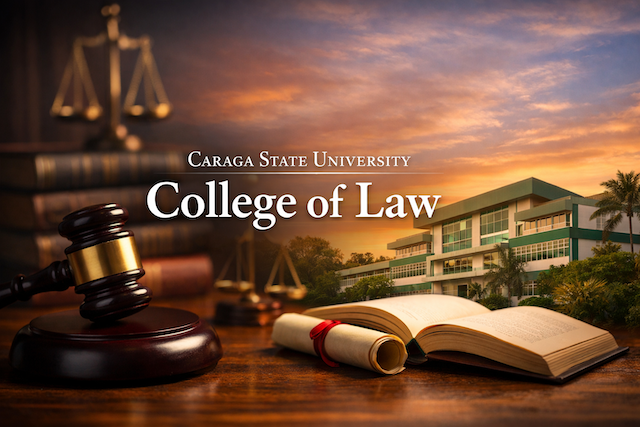
Caraga State University College of Law
Contents
- Caraga State University College of Law
- Introduction
- History and Establishment
- Vision and Mission
- Juris Doctor Program Overview
- Curriculum and Key Subjects
- Admission Requirements
- Faculty and Teaching Approach
- Facilities and Learning Environment
- Clinical Legal Education Program (CLEP)
- Bar Examination Preparation
- Career Opportunities for Graduates
- Contribution to Regional Development
- Student Life and Experience
- Why Choose Caraga State University College of Law
- Future Prospects and Development
- Conclusion
- FAQs (Frequently Asked Questions)
- What is Caraga State University College of Law?
- What degree does the College of Law offer?
- How long does it take to complete the Juris Doctor program?
- Who can apply to Caraga State University College of Law?
- Is law school at Caraga State University difficult?
- What subjects are usually included in the curriculum?
- Does the college help students prepare for the Bar Examination?
- What career opportunities are available after graduating from law school?
- Why might students choose Caraga State University College of Law?
- What makes studying law in the Caraga Region important?
Caraga State University College of Law
Introduction
Caraga State University (CSU), located in Butuan City in the Caraga Region of the Philippines, is widely recognized for its strong programs in engineering, environmental science, and technology. In recent years, the university has expanded its academic offerings to include legal education through the College of Law, reflecting its commitment to producing professionals who can contribute to nation-building and regional development.
The establishment of the Caraga State University College of Law represents a significant milestone not only for the institution but also for the entire Caraga Region. Historically, aspiring lawyers from this region had to travel to major cities such as Cebu, Davao, or Manila to pursue legal studies. CSU’s College of Law now provides a more accessible, affordable, and regionally relevant legal education.
This article provides a comprehensive overview of the Caraga State University College of Law, including its background, academic programs, curriculum, admission process, facilities, and career opportunities.
History and Establishment
The Caraga State University College of Law was established as part of CSU’s vision to broaden its academic portfolio and respond to the growing demand for legal professionals in Mindanao, particularly in underserved areas like Caraga.
The Philippine government and educational institutions have increasingly recognized the need to decentralize legal education. By establishing law schools outside Metro Manila and other urban centers, access to legal education becomes more equitable. CSU answered this call by launching its College of Law, aiming to produce lawyers who are deeply rooted in local realities.
The law college aligns with CSU’s broader mission of promoting sustainable development, environmental stewardship, and social responsibility. As such, its legal education is not only focused on traditional law subjects but also emphasizes issues relevant to the region, such as environmental law, indigenous peoples’ rights, and resource management.
Vision and Mission
Vision
The Caraga State University College of Law envisions itself as a leading law school in Mindanao that produces competent, ethical, and socially responsible lawyers who contribute to justice, good governance, and sustainable development.
Mission
The mission of the College of Law is to:
- Provide high-quality legal education grounded in theory and practice
- Develop students’ critical thinking, analytical reasoning, and advocacy skills
- Promote ethical values and professional responsibility
- Encourage community engagement and public service
- Address regional and national legal challenges
Juris Doctor Program Overview
The primary program offered by the Caraga State University College of Law is the Juris Doctor (JD) degree, which is the standard law degree in the Philippines.
Program Duration
The Juris Doctor program typically takes four years to complete. However, working students may opt for extended schedules depending on the university’s policies.
Program Structure
The JD curriculum is designed to provide a comprehensive understanding of Philippine law. It includes:
- Foundational subjects in the first year
- Core legal subjects in the second and third years
- Advanced courses, electives, and practical training in the fourth year
The program combines theoretical instruction with practical application, ensuring that graduates are prepared for the Philippine Bar Examination and legal practice.
Curriculum and Key Subjects
The curriculum at CSU College of Law follows the guidelines set by the Legal Education Board (LEB) in the Philippines.
First Year Subjects
Students are introduced to the fundamentals of law, including:
- Persons and Family Relations
- Constitutional Law I
- Criminal Law I
- Legal Writing and Research
- Statutory Construction
These subjects lay the groundwork for understanding legal principles and systems.
Second Year Subjects
The second year builds on foundational knowledge:
- Constitutional Law II
- Criminal Law II
- Obligations and Contracts
- Property Law
- Administrative Law
Students begin to develop deeper analytical skills and a more structured approach to legal reasoning.
Third Year Subjects
Advanced subjects are introduced:
- Civil Procedure
- Evidence
- Taxation Law
- Commercial Law
- Labor Law
At this stage, students are expected to integrate their knowledge and apply it to complex legal scenarios.
Fourth Year Subjects
The final year focuses on practice and specialization:
- Remedial Law Review
- Legal Ethics
- Practice Court / Moot Court
- Clinical Legal Education (CLEP)
- Electives such as Environmental Law or Human Rights Law
The Clinical Legal Education Program (CLEP) allows students to gain hands-on experience by assisting in real cases under supervision.
Admission Requirements
Admission to the Caraga State University College of Law is competitive and selective. Applicants must meet the following general requirements:
Academic Requirements
- A bachelor’s degree from a recognized institution
- Official transcripts of records
- Satisfactory academic performance
Entrance Examination
Applicants are required to pass a law school admission test, which evaluates:
- English proficiency
- Logical reasoning
- Analytical skills
Interview Process
Shortlisted applicants typically undergo an interview to assess:
- Motivation for studying law
- Communication skills
- Ethical awareness
Additional Requirements
- Certificate of Good Moral Character
- Birth certificate
- Other documents as required by CSU
Faculty and Teaching Approach
The College of Law at CSU is staffed by a combination of:
- Experienced legal practitioners
- Judges and government lawyers
- Academicians with advanced legal degrees
Teaching Methodology
The teaching approach emphasizes:
- Socratic method – Encouraging students to think critically through questioning
- Case analysis – Studying landmark decisions of the Supreme Court
- Interactive discussions – Promoting active participation
- Practical exercises – Simulations, mock trials, and legal drafting
This approach ensures that students not only understand the law but also learn how to apply it effectively.
Facilities and Learning Environment
Caraga State University provides a conducive learning environment for law students.
Law Library
The university library includes:
- Updated law books and legal references
- Access to jurisprudence and legal databases
- Study spaces for individual and group work
Classrooms
Modern classrooms are equipped with:
- Audio-visual tools
- Comfortable seating
- Technology for interactive learning
Moot Court and Practice Court
Students have access to facilities designed for:
- Mock trials
- Oral arguments
- Legal simulations
These facilities help students build confidence and practical skills.
Clinical Legal Education Program (CLEP)
One of the most important components of legal education at CSU is the Clinical Legal Education Program (CLEP).
Purpose
CLEP aims to:
- Provide real-world legal experience
- Develop lawyering skills
- Promote access to justice
Activities
Students may:
- Assist in legal aid clinics
- Draft legal documents
- Conduct client interviews
- Participate in court proceedings under supervision
This program bridges the gap between theory and practice.
Bar Examination Preparation
Preparing students for the Philippine Bar Examination is a central goal of the College of Law.
Review Programs
CSU offers:
- Comprehensive bar review classes
- Practice examinations
- Mentorship from faculty and alumni
Focus Areas
Students are trained in:
- Legal reasoning
- Issue spotting
- Answer structuring
- Time management
The university aims to improve its bar passing rate by providing strong academic and review support.
Career Opportunities for Graduates
Graduates of the Caraga State University College of Law have a wide range of career options.
Legal Practice
- Private law firms
- Solo practice
- Corporate legal departments
Government Service
- Prosecutor’s Office
- Public Attorney’s Office (PAO)
- Judiciary
Corporate Sector
- Compliance officer
- Legal consultant
- Risk management specialist
Academia and Research
- Law teaching
- Legal research
- Policy development
Contribution to Regional Development
One of the defining features of CSU College of Law is its focus on regional impact.
Addressing Local Legal Needs
The Caraga Region faces unique challenges, including:
- Land disputes
- Environmental issues
- Indigenous peoples’ rights
CSU law graduates are expected to play a key role in addressing these issues.
Promoting Access to Justice
Through legal aid and community outreach, the College of Law helps underserved communities gain access to legal services.
Student Life and Experience
Law school is known for being rigorous, and CSU is no exception.
Academic Challenges
Students must manage:
- Heavy reading loads
- Case digests
- Recitations
- Examinations
Support Systems
CSU provides:
- Academic advising
- Peer support groups
- Faculty mentorship
Extracurricular Activities
Students may participate in:
- Moot court competitions
- Legal debates
- Student organizations
These activities enhance both academic and personal development.
Why Choose Caraga State University College of Law
There are several reasons why students choose CSU for their legal education:
Accessibility
Located in Butuan City, CSU is more accessible for students in Mindanao compared to schools in Metro Manila.
Affordability
As a state university, CSU offers relatively lower tuition fees compared to private law schools.
Regional Relevance
The curriculum and programs are tailored to address local and regional issues.
Quality Education
Despite being a newer law school, CSU is committed to maintaining high academic standards.
Future Prospects and Development
The Caraga State University College of Law continues to grow and improve.
Planned Enhancements
- Expansion of facilities
- Strengthening of faculty
- Increased partnerships with legal institutions
Long-Term Goals
- Achieve higher bar passing rates
- Gain national recognition
- Produce leaders in the legal profession
Conclusion
The Caraga State University College of Law is an emerging institution that plays a crucial role in expanding access to legal education in the Philippines. By combining academic excellence, practical training, and a strong sense of social responsibility, CSU is shaping the next generation of lawyers who are not only competent but also committed to serving their communities.
For students in Mindanao—especially those in the Caraga Region—CSU offers a valuable opportunity to pursue a legal career without the need to relocate far from home. With its growing reputation and commitment to quality, the College of Law is poised to become a significant contributor to the Philippine legal landscape.
FAQs (Frequently Asked Questions)
What is Caraga State University College of Law?
Caraga State University College of Law is the law school of Caraga State University in Butuan City, Philippines. It offers legal education for students who want to earn a Juris Doctor degree and eventually qualify to take the Philippine Bar Examination. The college was established to help make legal education more accessible to students in the Caraga Region and nearby parts of Mindanao. Instead of moving to larger cities far from home, many aspiring law students can now pursue their legal studies within the region. The college aims to produce future lawyers who are academically prepared, ethically grounded, and committed to public service.
What degree does the College of Law offer?
The main degree offered by Caraga State University College of Law is the Juris Doctor, commonly called the JD. This is the standard professional law degree in the Philippines. The program is designed to give students a broad and structured understanding of Philippine laws, legal principles, court procedures, and professional ethics. It also prepares students for the Bar Examination and future careers in law practice, government service, business, public interest work, and academia. The JD program combines classroom instruction with legal writing, case analysis, and practical training to help students develop both knowledge and skills.
How long does it take to complete the Juris Doctor program?
In most cases, the Juris Doctor program takes four years to complete. This is the usual duration for law studies in the Philippines. During these four years, students take foundational subjects, major legal courses, review subjects, and practical components such as legal clinics or practice court exercises. Some students may take longer depending on their academic load, work commitments, or university policies. Law school is demanding, so time management and discipline are essential. Students are generally expected to read extensively, prepare case digests, participate in recitations, and complete written requirements throughout the program.
Who can apply to Caraga State University College of Law?
Applicants must usually be college graduates from recognized institutions before they can enter law school. A bachelor’s degree in any field may qualify a student to apply, although the applicant must also meet the university’s admission standards. In addition to academic credentials, applicants are often required to submit documents such as transcripts of records, proof of graduation, and a certificate of good moral character. The law school may also require applicants to take an entrance examination and attend an interview. These steps help the college assess whether the applicant is ready for the academic and personal demands of legal education.
Is law school at Caraga State University difficult?
Like most law schools, Caraga State University College of Law is academically challenging. Students are expected to read large volumes of cases, understand legal doctrines, and apply the law to different situations. Recitations, examinations, research assignments, and written work are common. The difficulty is not only in memorizing rules but also in learning how to analyze facts, argue logically, and communicate clearly. However, students who are disciplined, motivated, and willing to work consistently can succeed. Support from classmates, professors, mentors, and family can also make a major difference during the law school journey.
What subjects are usually included in the curriculum?
The curriculum generally includes major areas of Philippine law such as Constitutional Law, Criminal Law, Civil Law, Labor Law, Commercial Law, Taxation Law, Remedial Law, Legal Ethics, and Legal Writing. In the early years, students build a foundation in basic legal concepts and methods. As they progress, they study more specialized and procedural subjects. They may also take part in practical exercises that train them in advocacy, drafting, and client interaction. The curriculum is meant to create well-rounded law graduates who understand not just legal rules, but also the responsibilities and professional standards expected of future lawyers.
Does the college help students prepare for the Bar Examination?
Yes, one of the major goals of a law school is to prepare students for the Philippine Bar Examination, and Caraga State University College of Law is expected to align its academic training toward that goal. Students build their preparation over several years through lectures, recitations, exams, and review-based subjects. In the later part of the program, they may receive more focused guidance through review classes, mentoring, and practice in answering bar-type questions. Strong preparation usually includes mastering legal concepts, improving writing clarity, managing time well, and learning how to organize answers under pressure.
What career opportunities are available after graduating from law school?
Graduates of the Juris Doctor program may pursue many paths after finishing law school, especially if they pass the Bar Examination. They may enter private law practice, join law firms, work in corporate legal departments, or serve in government offices. Some may choose careers in prosecution, public defense, policy work, compliance, regulation, teaching, or research. Others may use their legal education in business, public administration, community development, or advocacy roles. A law degree can open many professional doors because it develops analytical thinking, persuasive communication, and problem-solving skills that are valuable in many fields beyond courtroom practice.
Why might students choose Caraga State University College of Law?
Many students may choose Caraga State University College of Law because it offers a chance to study law closer to home, especially for those from Butuan City, the Caraga Region, and nearby parts of Mindanao. Studying at a state university can also be more affordable than enrolling in a private law school. Another reason is regional relevance. Students who want to serve local communities or work on issues affecting Mindanao may find the school’s setting especially meaningful. For many aspiring lawyers, CSU can be a practical and mission-driven choice that combines accessibility, affordability, and public service orientation.
What makes studying law in the Caraga Region important?
Studying law in the Caraga Region is important because it helps develop legal professionals who understand the realities, needs, and challenges of the communities in that area. Local access to legal education can encourage more students to stay in the region, build their careers there, and serve people who may have limited access to legal services. Lawyers trained in the region may become valuable contributors in matters involving governance, land issues, environmental concerns, community rights, and public welfare. In that sense, the presence of a law school in Caraga is not only academically important but also socially significant for long-term regional development.

How to Register for eTravel Philippines (2025 Guide)
Step-by-step guide to completing your eTravel registration before arriving in the Philippines, with images and tips.

Night Market in Cebu – Things You Don’t Know About Cebu Life
Discover the hidden charm of Cebu’s night markets, from street food stalls to local life tips you won’t find in tourist guides.

How to Use ChatGPT for IELTS Preparation: A Complete Guide
Learn how to prepare for IELTS using ChatGPT — including strategies for Writing, Reading, Listening, Speaking, and grammar support.

How to Build a Website Without Coding Using ChatGPT
Discover how to build your own website using AI—no coding skills needed. From structure planning to SEO and design, let ChatGPT guide you.