2025年10月18日
3D ACADEMY offers affordable English study programs in Cebu, Philippines – perfect for beginners, professionals, and exam takers.

3D UNIVERSAL ENGLISH INSTITUTE INC
info.3d-universal.com
8:00-17:00(Mon-Fri)
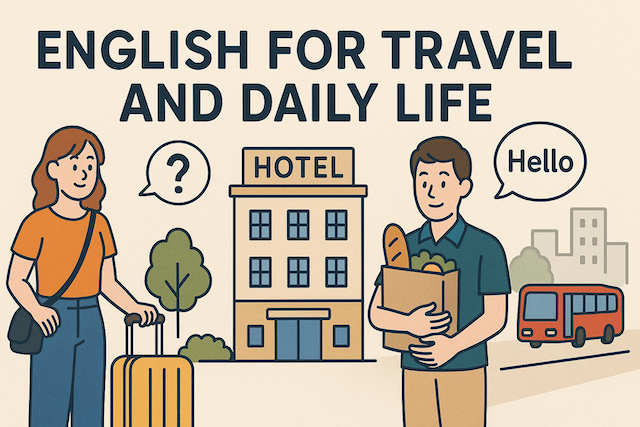
English for Travel and Daily Life
Contents
- English for Travel and Daily Life
- Why English for Travel and Daily Life Matters
- Key Areas of English for Daily Life
- English for Everyday Routines
- Cultural Tips for Communication
- How to Practice English for Travel and Daily Life
- Common Mistakes to Avoid
- Sample Dialogues
- Long-Term Benefits
- Final Thoughts
- FAQs
- What is “English for travel and daily life,” and how is it different from academic English?
- Which essential phrases should I memorize before a trip?
- How can I sound polite without overthinking grammar?
- What listening strategies help me understand fast native speech?
- How do I ask for directions and actually understand the answer?
- What should I say at hotels, hostels, or Airbnbs?
- How can I handle restaurants, menus, and special diets?
- What are useful transport phrases for buses, trains, and taxis?
- How do I explain problems or emergencies clearly?
- What small talk topics are safe in international settings?
- How can I practice alone before traveling?
- What pronunciation tips make the biggest difference quickly?
- How do I manage when I don’t know a word?
- What should I know about money, tipping, and payment language?
- How can I be understood even with limited vocabulary?
- What cultural tips help interactions go smoothly?
- How do I prepare useful digital tools for the trip?
- What are good daily-life phrases for banking, post offices, and shops?
- How can I build a personal phrasebook that I’ll actually use?
- What are sample mini-dialogues I can rehearse?
- How do I stay calm and communicate under pressure?
- What’s a simple weekly plan to improve fast?
- Final tip: How do I measure progress in real life?
English for Travel and Daily Life
Learning English for travel and daily life is one of the most practical and rewarding goals for language learners. Whether you are planning a trip abroad, living in an English-speaking country, or simply interacting with international friends, being able to communicate confidently in everyday situations can open many doors. This guide will help you understand what kinds of English are useful for travel and daily life, how to practice effectively, and how to build natural speaking habits.
Why English for Travel and Daily Life Matters
English is often called the global language because it connects people across different cultures. When you travel, you’ll find that airport signs, hotel check-in forms, restaurant menus, and tourist guides are often in English. Even in non-English-speaking countries, English is the bridge language used by travelers and locals to communicate.
Learning English for travel and daily life is not about mastering complex grammar or academic vocabulary. It’s about learning functional English—the words and phrases that help you get things done in real situations, such as ordering food, asking for directions, or making small talk with new people.
Key Areas of English for Daily Life
1. Greetings and Small Talk
Daily life in any English-speaking context starts with greetings. Common expressions include:
-
“Hi, how are you?”
-
“Good morning!”
-
“Nice to meet you.”
-
“How’s your day going?”
Small talk topics often include weather, travel experiences, food, or hobbies. Practicing these helps you sound friendly and approachable.
2. Asking for Information
This is essential both for travelers and residents. Examples:
-
“Excuse me, where is the nearest bus stop?”
-
“How much does this cost?”
-
“Can you recommend a good restaurant nearby?”
Learning polite expressions like please, thank you, and excuse me makes communication smoother and shows respect.
3. Shopping and Ordering
When buying things or eating out, you’ll need practical phrases like:
-
“I’d like this one, please.”
-
“Can I try this on?”
-
“Could I see the menu?”
-
“I’ll have the chicken sandwich, please.”
Understanding currency, numbers, and basic food vocabulary helps a lot.
4. Transportation English
If you’re traveling, transport vocabulary is essential:
-
“Where can I buy a ticket?”
-
“Does this train go to downtown?”
-
“How long does it take to get there?”
-
“Could you call a taxi for me?”
Listening for announcements in airports or bus terminals can also improve your comprehension.
5. Accommodation and Services
In hotels, Airbnb, or hostels, you might say:
-
“I have a reservation under [your name].”
-
“Can I check in early?”
-
“Is breakfast included?”
-
“Could you send someone to fix the air conditioner?”
Polite and clear language makes it easier for staff to help you quickly.
6. Emergencies and Health
Sometimes unexpected situations happen:
-
“I need a doctor.”
-
“Where is the nearest hospital?”
-
“I’ve lost my passport.”
-
“Please call the police.”
It’s wise to learn these phrases before traveling, just in case.
English for Everyday Routines
If you live in an English-speaking country or use English in your daily life, you’ll also need vocabulary for routines like:
-
At home: cleaning, cooking, fixing things.
-
At work: talking to colleagues, joining meetings, writing emails.
-
At school: asking questions, taking notes, understanding instructions.
-
In the community: shopping, banking, mailing packages, using public services.
For example:
-
“Could I withdraw some cash?”
-
“Can I pay by card?”
-
“I’m looking for a post office.”
-
“Do you have this in a larger size?”
These phrases are practical and build your confidence through frequent use.
Cultural Tips for Communication
When speaking English in daily life, culture matters as much as language. Here are a few points to remember:
-
Politeness is key. Use “please,” “thank you,” and “sorry” often.
-
Personal space: In many Western cultures, standing too close during conversation can feel uncomfortable.
-
Eye contact: It shows confidence, but avoid staring.
-
Indirect language: Instead of saying “No,” people often say, “I’m not sure” or “Maybe later.”
Understanding these unwritten rules helps you fit naturally into English-speaking environments.
How to Practice English for Travel and Daily Life
1. Role-Playing
Simulate real-life situations with a partner or even alone. For instance:
-
Pretend to order at a café.
-
Practice checking into a hotel.
-
Imagine you’re asking for directions.
You can use YouTube or AI chat tools to simulate realistic conversations.
2. Learn with Real Materials
Watch travel vlogs, airport interviews, or restaurant reviews in English. These expose you to authentic speech and practical expressions you can reuse.
3. Use English Every Day
Make English part of your life:
-
Change your phone’s language to English.
-
Think in English when shopping or cooking.
-
Write a daily journal in English.
-
Greet friends or coworkers in English.
Consistency is more powerful than long study sessions once a week.
4. Focus on Listening
When traveling, you’ll often need to understand others more than talk yourself. Listening to podcasts or short dialogues helps you catch real pronunciation and rhythm.
5. Build Phrase Memory
Instead of memorizing single words, learn full phrases:
-
“Could you help me find…?”
-
“I’m just looking, thank you.”
-
“What time does it open?”
These chunks sound natural and are easier to recall.
Common Mistakes to Avoid
-
Translating directly from your native language.
It can make your sentences sound unnatural. Instead, learn English phrases as they are used. -
Focusing too much on grammar.
For daily life, fluency is more important than perfection. People will understand you even if your grammar isn’t perfect. -
Being afraid to speak.
Mistakes are part of the learning process. Confidence grows only when you use English regularly. -
Ignoring pronunciation.
Clear pronunciation helps others understand you better, even if your vocabulary is simple.
Sample Dialogues
At a Café
-
Barista: “What would you like today?”
-
You: “I’ll have a cappuccino, please.”
-
Barista: “For here or to go?”
-
You: “To go, please. Thank you!”
At the Airport
-
Staff: “May I see your passport?”
-
You: “Sure, here it is.”
-
Staff: “Do you have any luggage to check in?”
-
You: “Yes, one suitcase.”
At the Hotel
-
Receptionist: “Good evening, how can I help you?”
-
You: “I have a reservation under John Smith.”
-
Receptionist: “Welcome, Mr. Smith. Please fill out this form.”
These short examples reflect real exchanges you can expect in travel situations.
Long-Term Benefits
Mastering English for travel and daily life brings more than convenience:
-
It boosts independence while traveling.
-
It builds confidence in social and work settings.
-
It allows deeper cultural experiences, as you can connect with locals directly.
-
It creates career advantages, especially in tourism, hospitality, and international business.
English becomes not just a skill—but a passport to global experiences.
Final Thoughts
English for travel and daily life is about connection, not perfection. You don’t need to sound like a native speaker; you just need to be understood and open to learning from every interaction. The key is daily exposure, active practice, and curiosity about real-world English.
Start small—learn how to ask for coffee, book a hotel, or make a new friend in English. Every conversation is a step forward. With time, using English will feel as natural as your first language, whether you’re exploring new countries or simply living your daily routine.
FAQs
What is “English for travel and daily life,” and how is it different from academic English?
English for travel and daily life focuses on practical communication you need to navigate everyday situations—booking a room, ordering food, buying tickets, asking for help, and making small talk. It prioritizes high-frequency vocabulary, polite expressions, and short, clear sentences. Academic English emphasizes complex grammar, formal vocabulary, and structured essays or reports. For travel and daily life, you’re aiming for effectiveness and clarity, not perfection.
Which essential phrases should I memorize before a trip?
Memorize quick, flexible “utility” phrases that work in many contexts:
- “Excuse me, could you help me with…?”
- “Where can I find… / buy… / get…?”
- “How much is this?”
- “Do you take card?” / “Can I pay by cash?”
- “I have a reservation under [name].”
- “Could I please have…?” (ordering)
- “I’m just looking, thank you.” (shopping)
- “Is there someone who speaks [language]?”
- “Could you say that more slowly, please?”
- “Where is the nearest bus stop / station / pharmacy?”
How can I sound polite without overthinking grammar?
Use the “politeness trio”: please, thank you, and excuse me. Add softeners like “could,” “would,” and “may” for requests: “Could I get a receipt, please?” Combine with friendly body language—smile, a gentle tone, and brief eye contact. In many contexts, this matters more than complex grammar.
What listening strategies help me understand fast native speech?
Focus on key words rather than every word: numbers, times, places, and verbs (go, leave, arrive, pay). Train with short, real clips (announcements, vlogs, service dialogs). Practice “shadow listening”: replay 10–15 seconds, write what you hear, then check. Ask for repetition naturally: “Sorry, could you repeat that?” or “One more time, please.”
How do I ask for directions and actually understand the answer?
Ask one clear question at a time: “Excuse me, how do I get to the museum?” Then, confirm with a short repeat: “So, straight, then left at the bank?” If possible, ask for landmarks: “Is it near the park?” Keep a maps app open and say, “Could you point on the map?” This reduces misunderstandings.
What should I say at hotels, hostels, or Airbnbs?
At check-in: “Hi, I have a reservation under [name]. Could I check in?” For problems: “The air conditioner isn’t working. Could someone take a look?” For requests: “Is early check-in possible?” “Could I store my luggage?” “Is breakfast included?” Always end with “Thank you for your help.”
Start with: “Could I see the menu, please?” To order: “I’ll have the grilled chicken.” To customize: “No peanuts, please.” “Could you make it less spicy?” For allergies: “I’m allergic to shellfish.” For the bill: “Could we get the check, please?” For tips: ask politely, “Is service included?”
What are useful transport phrases for buses, trains, and taxis?
Ticketing: “Where can I buy a ticket?” “One-way or round trip?” On platforms: “Does this train go to downtown?” In taxis or rideshares: “Please take me to [address].” “How long will it take?” “Could you use the meter?” On delays: “Is there a delay today?” “What time is the next bus?”
How do I explain problems or emergencies clearly?
Use short, direct sentences: “I lost my passport.” “I need a doctor.” “Call the police, please.” “I need help now.” Learn one or two emergency numbers at your destination and store them in your phone. If you have a medical condition, keep a brief note in English: diagnosis, medication, emergency contact, and allergies.
What small talk topics are safe in international settings?
Good topics: food, travel plans, local tips, weather, hobbies, sports events, and landmarks. Avoid sensitive areas like politics or religion unless invited. Simple starters: “Is this your first time here?” “Do you have a favorite local dish?” “Any must-see places nearby?” Keep it light and friendly.
How can I practice alone before traveling?
Role-play common scenes (airport check-in, café orders, ticket counters). Record yourself and listen for clarity. Use spaced repetition to memorize phrases. Switch your phone and maps to English. Narrate tasks: “I’m buying a ticket. I need platform 3.” Consistent micro-practice (10 minutes daily) beats long, irregular sessions.
What pronunciation tips make the biggest difference quickly?
Prioritize clarity over accent. Focus on word stress (HOT-el, re-SER-va-tion) and sentence stress (content words louder/longer). Practice common reductions you’ll hear: “wanna,” “gonna,” “couldja.” Open vowels and crisp consonants at word ends (/t/ and /d/) improve intelligibility: “ticket,” “paid.”
How do I manage when I don’t know a word?
Paraphrase and gesture. Use category words and examples: “I need a device to charge my phone” (charger). “It’s like a train but underground” (subway). Ask for the word: “What do you call this?” Then repeat it aloud to remember.
What should I know about money, tipping, and payment language?
Useful phrases: “Do you take contactless?” “Is there an ATM nearby?” “Could I have a receipt?” For tipping norms, ask: “Is service included?” If you’re unsure of prices: “How much is the total?” “Any extra fees?” Confirm currencies and decimals to avoid mistakes.
How can I be understood even with limited vocabulary?
Keep sentences short. Use basic SVO structure: “I need a ticket.” “We are checking in.” Speak a bit slower and pause between ideas. Confirm shared understanding: “So, platform 2 at 10:15, right?” Smile and stay calm; confidence improves comprehension on both sides.
What cultural tips help interactions go smoothly?
Be patient, say “please/thank you,” and avoid interrupting. In many places, queues matter—ask, “Is this the line?” Respect personal space and volume. If someone doesn’t understand, rephrase instead of repeating the same sentence louder. Politeness often solves problems faster than perfect grammar.
How do I prepare useful digital tools for the trip?
Download offline maps, an offline dictionary, and key phrase notes. Save booking confirmations and ID photos in a secure folder. Star your accommodation on maps and pin transit stations. Create a “quick phrases” note you can show: “I’m allergic to…” “Please write it down.”
What are good daily-life phrases for banking, post offices, and shops?
- Banking: “I’d like to withdraw/deposit cash.” “What’s the fee?”
- Post office: “I’d like to send this internationally.” “How long will it take?”
- Shops: “Do you have this in a larger size?” “I’m just browsing, thanks.”
- Returns: “Could I return this?” “Here is the receipt.”
How can I build a personal phrasebook that I’ll actually use?
Organize by situation (airport, hotel, transport, food, emergencies). Limit each section to 10–15 phrases you truly need. Add a “top 10” page you review daily. Record yourself saying each phrase; re-listen while commuting. Update after every trip based on real experiences.
What are sample mini-dialogues I can rehearse?
Café: “Hi, I’ll have a latte and a croissant, please.” “For here or to go?” “To go, thanks.”
Ticket desk: “Excuse me, does this bus go to the airport?” “Yes, every 20 minutes.” “Where do I buy tickets?” “At the kiosk over there.”
Hotel: “Good evening, I have a reservation under Kim.” “Welcome. May I see your passport?” “Sure. Is breakfast included?”
How do I stay calm and communicate under pressure?
Breathe, slow down, and use ready-made templates: “I’m having a problem with…” “I need help with…” “Could you please show me?” If emotions rise, ask for a pause: “One moment, please.” Clarity plus politeness usually leads to quick solutions.
What’s a simple weekly plan to improve fast?
Day 1: Build a 20-phrase airport/hotel list. Day 2: Practice listening with 10-minute travel clips. Day 3: Role-play transport and directions. Day 4: Restaurant language and special requests. Day 5: Money, tickets, and time expressions. Day 6: Emergencies and health. Day 7: Review, record, and refine.
Final tip: How do I measure progress in real life?
Track outcomes, not grammar points: Did you check in smoothly? Order without confusion? Get to the right platform? Keep a short travel log in English (3–4 lines a day). Celebrate each successful interaction. The goal is confident, helpful communication—connection over perfection.

How to Register for eTravel Philippines (2025 Guide)
Step-by-step guide to completing your eTravel registration before arriving in the Philippines, with images and tips.

Night Market in Cebu – Things You Don’t Know About Cebu Life
Discover the hidden charm of Cebu’s night markets, from street food stalls to local life tips you won’t find in tourist guides.

How to Use ChatGPT for IELTS Preparation: A Complete Guide
Learn how to prepare for IELTS using ChatGPT — including strategies for Writing, Reading, Listening, Speaking, and grammar support.

How to Build a Website Without Coding Using ChatGPT
Discover how to build your own website using AI—no coding skills needed. From structure planning to SEO and design, let ChatGPT guide you.