2026年4月3日
3D ACADEMY offers affordable English study programs in Cebu, Philippines – perfect for beginners, professionals, and exam takers.

3D UNIVERSAL ENGLISH INSTITUTE INC
info.3d-universal.com
8:00-17:00(Mon-Fri)
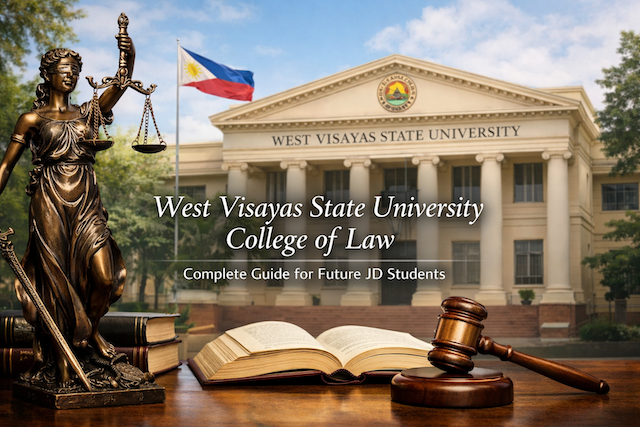
West Visayas State University College of Law: Complete Guide for Future JD Students
Contents
- West Visayas State University College of Law: Complete Guide for Future JD Students
- Overview of WVSU College of Law
- Location: Studying Law in Iloilo City
- Who Should Consider WVSU College of Law?
- JD Program Structure: What the Experience Usually Looks Like
- Teaching Style: Recitations, Case Method, and Exams
- Admissions Process: What Applicants Should Prepare For
- Pre-Law Units and Academic Eligibility
- How to Prepare for the Entrance Exam
- How to Prepare for the Interview
- Student Life and Time Management
- Costs and Budget Planning
- Career Outcomes: What You Can Do After the JD
- Practical Tips Before You Apply
- Conclusion
- FAQs (Frequently Asked Questions)
- Is West Visayas State University (WVSU) College of Law a good option for studying law in Iloilo?
- What degree do I need before I can apply to the WVSU JD program?
- Do I need specific pre-law units to be eligible for admission?
- How competitive is the WVSU College of Law admissions process?
- What should I expect in the WVSU law school entrance exam?
- How important is the interview in the admissions process?
- Is the JD program at WVSU full-time or can I study while working?
- How long does it take to finish the Juris Doctor program?
- What is the teaching style like in law school, and how should I prepare?
- What study habits are most effective for first-year law students?
- Can I transfer to WVSU College of Law from another law school?
- How much does it cost to study law at WVSU?
- Does WVSU College of Law help students prepare for the Bar Exam?
West Visayas State University College of Law: Complete Guide for Future JD Students
West Visayas State University (WVSU) College of Law is a public law school in Iloilo City that offers a Juris Doctor (JD) program for students who want a serious, structured legal education in Western Visayas. For many applicants, the biggest appeal is simple: it provides an accessible path to becoming a lawyer without leaving the region, while still delivering the workload, discipline, and professional training expected in Philippine legal education.
This guide explains what WVSU College of Law is, who it is best for, what the JD experience is typically like, how admissions usually work, and how to prepare a realistic plan before you apply. If you are comparing law schools in Iloilo or considering returning home to study, this article will help you evaluate whether WVSU fits your goals and lifestyle.
Overview of WVSU College of Law
WVSU is a state university, and the College of Law reflects that identity. Students often choose public universities because of their mission-driven culture, focus on social impact, and relatively affordable cost compared to many private institutions. At the same time, being a public university does not mean “easy.” Law school remains demanding anywhere, and a JD program requires consistent effort, strong reading habits, and resilience.
WVSU College of Law serves students who want to build a legal career in Iloilo and the broader Western Visayas region. Studying in the same area where you plan to practice can be a major advantage: you are closer to courts, government offices, and future professional networks. For many students, that regional connection matters as much as the academic program itself.
Location: Studying Law in Iloilo City
Iloilo City is known as a regional center with a strong education culture. For law students, that environment can be practical: reliable transportation options, access to libraries and study-friendly spaces, and proximity to government and legal institutions. In law school, convenience is not a luxury—short commutes and stable daily routines can directly improve academic performance.
Another advantage of studying in Iloilo is that your early legal exposure can be grounded in the community where you may eventually work. Whether your goal is litigation, government service, corporate work, or advocacy, learning within a city where legal activity is visible and accessible can strengthen both motivation and professional readiness.
Who Should Consider WVSU College of Law?
WVSU College of Law may be a strong fit if you:
- Want to study in Iloilo City and build your network in Western Visayas
- Prefer a public university environment with a community-oriented mission
- Are ready for a structured program with a demanding reading and recitation culture
- Can realistically commit to consistent study time across multiple years
- Value affordability and practical career-building over prestige branding
It may be less ideal if you need a highly flexible schedule due to full-time work or major family responsibilities. Law school can be combined with work for some students, but it requires careful planning and often comes with trade-offs in rest, performance, and long-term sustainability.
JD Program Structure: What the Experience Usually Looks Like
A JD program in the Philippines is typically built around core law subjects, case reading, and performance-based assessment. You can expect a rhythm that repeats every week: assigned cases, reading loads, class participation, recitations, quizzes, and longer exams. The program is not designed for cramming. Even students with strong academic backgrounds struggle if they rely on last-minute studying.
Most first-year students experience an adjustment period because law school requires a new way of learning. Instead of memorizing facts, you learn to identify legal issues, extract rules, compare doctrines, and apply principles to new scenarios. The goal is not just to “know” the law but to reason like a lawyer under time pressure.
As you progress, the workload tends to shift from “learning how to survive” to “learning how to perform.” You will become faster at reading, better at spotting issues, and more confident in producing structured exam answers. But that progress depends heavily on building strong habits early.
Teaching Style: Recitations, Case Method, and Exams
Philippine law school culture often relies on recitations and case-based discussion. This means you may be called in class to explain a case, define a legal principle, or answer a hypothetical situation. Recitations can feel intimidating, but they develop skills that matter in practice: clarity, quick thinking, and disciplined preparation.
The case method forces you to read court decisions carefully and understand not only the final ruling but the reasoning behind it. Many new students make the mistake of reading cases like stories. In law school, you must read like an analyst: identify the facts that matter legally, isolate the issue, extract the doctrine, and understand the rationale.
Exams are usually the major determinant of grades. In many subjects, you will be evaluated primarily through midterms and finals, often with essay-type questions requiring issue-spotting and legal analysis. This is why outlining and practice answers are critical. Simply rereading notes is rarely enough.
Admissions Process: What Applicants Should Prepare For
While specific requirements can change from year to year, a law school admissions process commonly includes document submission, an entrance or qualifying exam, and an interview. The goal is to evaluate whether the applicant has the academic readiness, communication ability, and maturity needed for legal training.
To prepare effectively, treat admissions as a complete package rather than focusing on only one component. Strong grades help, but interviews and exam performance also matter. Even if you are confident academically, you should train for the entrance test format and practice interview responses under realistic pressure.
Practical advice: begin your preparation early. Some applicants lose opportunities not because they are unqualified, but because they submit incomplete documents, miss deadlines, or underestimate the time needed to secure certificates and records.
Pre-Law Units and Academic Eligibility
In the Philippines, applicants to JD programs typically must meet requirements related to prior education and may need specific pre-law units. If your bachelor’s degree was highly specialized, there is a chance you may be missing certain units that are commonly expected. This is not unusual and does not automatically disqualify you, but it can create administrative tasks you should address early.
The best approach is to review your transcript before applying. Identify if you have courses that cover English, social sciences, mathematics, and other common unit areas. If you discover gaps, plan where and how you will complete missing units. Do not wait until after you start law school—once classes begin, your time will be heavily limited.
How to Prepare for the Entrance Exam
Many law school entrance exams emphasize reading comprehension, logical reasoning, basic writing skills, and analytical thinking. The best preparation is targeted and timed. You want to build both competence and stamina.
- Reading comprehension practice: Train with long passages and timed questions. Learn to identify main arguments quickly.
- Logic drills: Work on basic reasoning questions and pattern recognition. Focus on avoiding careless errors.
- Grammar and writing: Review sentence structure and clarity. Practice short written responses with a clear structure.
- Test simulation: Do at least a few full-length practice sessions under timed conditions.
Remember: entrance exams are not only about intelligence. They reward calm execution, time management, and accuracy. Many strong students perform poorly because they panic or mismanage time.
How to Prepare for the Interview
Interviews often test your motivation, maturity, and communication skill. Interviewers typically look for applicants who understand what law school actually involves and who have a realistic plan to handle the workload.
Prepare answers for these themes:
- Why you want to study law (beyond status or vague interest)
- Why you want to study at WVSU (regional goals, personal fit, values)
- How you will manage time and stress (schedule, support system, discipline)
- What kind of legal career you imagine (even if it’s not final yet)
- How you handle setbacks (because law school includes frequent pressure)
A good interview answer is specific and grounded. Avoid dramatic statements. Show that you understand law school is a long training process and that you are prepared to do daily work consistently.
Student Life and Time Management
Law school quickly becomes a lifestyle. Your schedule will revolve around reading, class preparation, and exam readiness. Students who succeed usually build routines early: fixed daily reading blocks, weekly outline reviews, and consistent case briefing. Students who struggle often rely on “catching up later,” which rarely works because assignments keep coming.
To manage your time, focus on high-impact habits:
- Daily case reading: Read earlier than you think you need to. Avoid reading late at night when comprehension drops.
- Case briefs: Keep them short and functional—facts, issue, ruling, rationale. Don’t overwrite.
- Weekly outlines: Convert readings into organized frameworks while the material is still fresh.
- Practice answers: Learn how to write exam-style responses, not just how to understand doctrine.
Also protect your health. Sleep affects memory, focus, and emotional regulation—three things law school demands daily. Many students treat sleep as optional and then wonder why they cannot retain information or perform well under pressure.
Costs and Budget Planning
Even if you choose a public university, you should budget carefully. Law school costs are not only tuition. They include books, printing, transportation, meals, and study materials. Over time, you may also pay for review materials, mock exams, and other preparation resources.
A practical approach is to create a semester budget with a buffer. Midterms and finals often increase expenses: extra printing, review materials, and sometimes reduced work hours. Planning ahead reduces stress and allows you to focus on studying rather than scrambling financially.
Career Outcomes: What You Can Do After the JD
After completing the JD and passing the bar, graduates pursue many paths. Common directions include litigation, government service, corporate legal work, compliance, advocacy, and policy-related roles. Some graduates also pursue legal research and academic careers, usually after gaining practice experience.
If you plan to work in Western Visayas, studying in Iloilo can be a strategic advantage. You can build relationships with mentors, classmates, and professionals in the local legal community. In law, reputation and relationships matter. Your consistency and professionalism as a student can become part of your future opportunities.
Practical Tips Before You Apply
- Review your transcript early: Identify any missing pre-law units and plan how to complete them.
- Train reading stamina: Start reading dense material daily and practice summarizing clearly.
- Practice speaking: Recitation is performance under pressure. Practice explaining cases out loud.
- Build a realistic schedule: Law school rewards consistency more than last-minute effort.
- Strengthen your support system: Family and friends who understand your workload can make a big difference.
Conclusion
West Visayas State University College of Law offers a practical JD pathway for students who want to study in Iloilo City within a public university environment. It can be an excellent option for applicants committed to disciplined daily study and those who plan to build their legal careers in Western Visayas. The keys to success are not secret: prepare early, build routines, and treat law school as long-term professional training rather than a short academic challenge.
If you are serious about becoming a lawyer, your best next step is to prepare your application plan and your personal lifestyle plan at the same time. A strong application can help you get in, but strong habits are what will help you finish.
FAQs (Frequently Asked Questions)
Is West Visayas State University (WVSU) College of Law a good option for studying law in Iloilo?
Yes—especially if you want to study law in Iloilo City within a public university setting. WVSU College of Law is designed to serve students in Western Visayas who want a structured JD program and prefer an environment that aligns with public service values. “Good” also depends on personal fit: if you can commit to consistent reading, class preparation, and a full-time schedule, a structured program in a regional center like Iloilo can be a strong foundation for building local networks and long-term career opportunities.
What degree do I need before I can apply to the WVSU JD program?
You generally need a completed bachelor’s degree (or higher) from a recognized institution. Law school is a graduate-level professional program, so applicants must already hold an undergraduate degree. If your degree is from outside the Philippines or if your academic records are unusual (for example, a non-traditional pathway), you should prepare to submit additional documentation. It is also wise to check whether your transcript includes the typical pre-law units required under national legal education guidelines.
Do I need specific pre-law units to be eligible for admission?
Many Philippine JD programs require certain pre-law units (commonly in English, Social Sciences, Mathematics, and a Rizal course). If you are missing some units, you may still be considered for admission depending on school policy, but you could be asked to complete those units within a set timeframe. To avoid last-minute stress, review your transcript early and identify any gaps. If you are missing units, plan how and where you will complete them before your first year becomes too busy.
How competitive is the WVSU College of Law admissions process?
Competition can vary by year depending on how many applicants apply and how many slots are available. In general, expect screening based on your academic records, entrance exam results, interview performance, and overall readiness for law school. To be competitive, focus on presenting a balanced application: clear documents, strong written and verbal communication, and a realistic explanation of why you want to pursue legal education. Being prepared and consistent often matters as much as having perfect grades.
What should I expect in the WVSU law school entrance exam?
While exact content can change by year, law school entrance exams commonly assess reading comprehension, logical reasoning, basic grammar and writing skills, and sometimes general knowledge or analytical thinking. A practical preparation strategy is to practice timed reading comprehension sets, logic questions, and short writing tasks. The goal is not only to “know” answers but also to build test stamina. Many applicants underestimate how tiring a timed exam can be, so do at least a few full practice sessions under realistic conditions.
How important is the interview in the admissions process?
The interview is often highly important because it helps evaluators assess maturity, motivation, communication skills, and readiness for the demands of law school. Interviewers typically look for applicants who understand what law school requires: heavy reading, frequent recitations, and sustained effort over years—not weeks. Prepare to explain why you want to study law, why WVSU is a fit for your goals, how you plan to manage a full-time schedule, and what support systems you have in place.
Is the JD program at WVSU full-time or can I study while working?
WVSU describes its JD program as a full-time course of study, typically designed for completion in four years. In practical terms, full-time law study can be difficult to combine with demanding work hours. Some students manage part-time work, but it depends on your job flexibility, commute time, and personal stamina. If you need to work, plan conservatively: choose a schedule that remains realistic even during exam weeks, when readings and deadlines intensify.
How long does it take to finish the Juris Doctor program?
The JD program is commonly structured as a four-year program under a full-time mode of study. However, the actual time to finish can vary depending on academic standing, course load management, and personal circumstances. Students who struggle with certain subjects or face major life disruptions may take longer. The best way to stay on track is to build strong daily habits early—consistent reading, organized outlines, and proactive preparation for recitations and exams.
What is the teaching style like in law school, and how should I prepare?
Expect case-based learning and frequent recitations. You will often be required to read judicial decisions, identify legal issues, extract rules, and apply them to new fact patterns. To prepare, start practicing structured reading: summarize what happened, what the legal issue was, what rule the court applied, and why. Also practice explaining cases out loud. Many new students can understand a case silently but struggle to articulate it under pressure—recitation practice helps reduce that gap.
What study habits are most effective for first-year law students?
The most effective habits are consistent and boring—in a good way. Set a daily reading schedule, brief cases consistently, and review weekly to convert readings into outlines. Avoid relying purely on “motivation,” because motivation drops when you are tired. Build systems: fixed study blocks, checklists for each subject, and monthly outline updates. Also protect your sleep. Law school performance is tied to attention and memory, and both decline sharply with poor sleep and constant stress.
Can I transfer to WVSU College of Law from another law school?
Transfer policies depend on the school’s current rules, evaluation of your records, and available slots. Typically, transferring may involve submitting your transcript of records from the previous law school, course descriptions or syllabi, and meeting minimum grade requirements. Some subjects may be credited while others may need to be retaken depending on equivalency. If you are considering a transfer, prepare complete documentation and expect that the school may require an assessment before approving subject crediting.
How much does it cost to study law at WVSU?
Costs can change by academic year and are typically published in an official schedule of fees. Even at a public university, you should budget for more than tuition: books, printing, transportation, meals, internet, and other learning expenses can add up. A good approach is to set a semester budget with a buffer for peak periods (midterms and finals), when students often spend more on materials and may need extra time off from work.
Does WVSU College of Law help students prepare for the Bar Exam?
Law school preparation for the Bar is cumulative: strong fundamentals, consistent legal writing practice, and disciplined outlining help most. Many schools support students through review-focused subjects, academic advising, and structured training in higher years. Still, Bar readiness is largely built by your habits from the first year onward. If you want to be Bar-ready later, focus now on mastering doctrine, practicing clear exam answers, and building a long-term system for organizing notes and jurisprudence.

How to Register for eTravel Philippines (2025 Guide)
Step-by-step guide to completing your eTravel registration before arriving in the Philippines, with images and tips.

Night Market in Cebu – Things You Don’t Know About Cebu Life
Discover the hidden charm of Cebu’s night markets, from street food stalls to local life tips you won’t find in tourist guides.

How to Use ChatGPT for IELTS Preparation: A Complete Guide
Learn how to prepare for IELTS using ChatGPT — including strategies for Writing, Reading, Listening, Speaking, and grammar support.

How to Build a Website Without Coding Using ChatGPT
Discover how to build your own website using AI—no coding skills needed. From structure planning to SEO and design, let ChatGPT guide you.