2025年12月13日
3D ACADEMY offers affordable English study programs in Cebu, Philippines – perfect for beginners, professionals, and exam takers.

3D UNIVERSAL ENGLISH INSTITUTE INC
info.3d-universal.com
8:00-17:00(Mon-Fri)
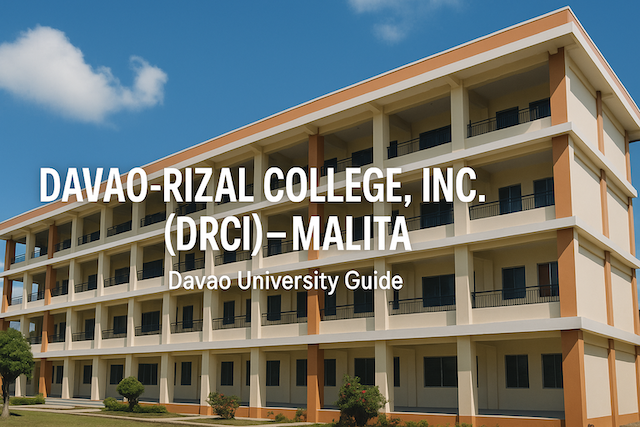
Davao-Rizal College, Inc. (DRCI) – Malita: Davao University Guide
Contents
- Davao-Rizal College, Inc. (DRCI) – Malita: Davao University Guide
- Overview of Davao-Rizal College, Inc. (DRCI)
- Location and Campus Environment
- Academic Programs Offered
- Admission Requirements
- Tuition and Fees
- Campus Facilities and Learning Resources
- Student Life and Organizations
- Why Choose Davao-Rizal College, Inc.?
- Tips for Prospective Students
- Conclusion
- FAQs (Frequently Asked Questions)
- What is Davao-Rizal College, Inc. (DRCI)?
- Where is DRCI located in Malita?
- Is DRCI a public or private institution?
- What degree programs are commonly offered at DRCI?
- Does DRCI offer Senior High School (SHS) programs?
- What are the basic admission requirements for new college students?
- Can transferees and second coursers enroll at DRCI?
- How much is the tuition at DRCI, and are there scholarships?
- What facilities can students expect on campus?
- What is student life like at DRCI?
- Is DRCI a good option for students from outside Malita?
- How can I get official and updated information about DRCI?
Davao-Rizal College, Inc. (DRCI) – Malita: Davao University Guide
Davao-Rizal College, Inc. (DRCI) stands as one of the most established private higher education institutions in Malita, Davao Occidental. Known for its strong commitment to accessible, values-based education, DRCI serves as an important academic hub in the province. This guide provides an in-depth look at its programs, campus life, facilities, admissions, tuition expectations, and key reasons why students choose this institution.
Overview of Davao-Rizal College, Inc. (DRCI)
Davao-Rizal College, Inc. is a private, non-sectarian institution located in Malita, the capital of Davao Occidental. With decades of service in the region, it has built a reputation for producing graduates who contribute significantly to local development, government service, education, and business.
The college offers a range of bachelor’s degree programs, technical-vocational tracks, and Senior High School under the K–12 curriculum. DRCI is particularly known for its business, education, and criminology programs—fields aligned with regional employment needs.
Location and Campus Environment
Situated in the heart of Malita, DRCI is accessible from the town center and neighboring barangays. Students benefit from a peaceful environment conducive to studying while still enjoying access to essential services such as transportation, boarding houses, eateries, and shops.
The atmosphere on campus is modest yet vibrant, reflecting the friendly and community-oriented culture typical of Davao Occidental. While the facilities are not as large-scale as major universities in big cities, DRCI offers essential academic spaces that support effective learning.
Academic Programs Offered
DRCI offers a variety of undergraduate programs designed to meet the needs of students aiming for careers in education, business, criminology, and other applied fields.
Bachelor’s Degree Programs
While offerings may vary depending on availability and faculty resources, common programs include:
-
Bachelor of Elementary Education (BEEd)
Focuses on preparing future educators for elementary-level teaching. Courses include child development, pedagogy, field study, and teaching internships. -
Bachelor of Secondary Education (BSEd)
Designed for aspiring high school teachers and may offer majors such as English, Math, or Social Studies depending on faculty availability. -
Bachelor of Science in Business Administration (BSBA)
A popular program focusing on management, marketing, entrepreneurship, and finance—ideal for students who wish to enter the business world or start their own ventures. -
Bachelor of Science in Criminology (BSCrim)
One of the most in-demand programs, offering training for careers in law enforcement, forensic science, corrections, and public safety.
Technical-Vocational Courses
The school may partner with TESDA or offer its own short courses focused on practical job skills, such as office management, computer systems servicing, or hospitality-related training.
Senior High School (SHS)
DRCI supports the K–12 system by offering academic and technical-vocational tracks, such as:
-
Academic Track (ABM, HUMSS, GAS)
-
TVL Track (ICT, Home Economics)
This ensures that students from Malita and nearby municipalities can continue their education without leaving the province.
Admission Requirements
Admission procedures at DRCI are designed to be accessible, especially for local students. While exact requirements may vary, applicants generally need to provide the following:
For Fresh Senior High School Graduates
-
Form 138 (Report Card)
-
PSA Birth Certificate
-
Certificate of Good Moral Character
-
Two to four ID Photos
-
Completed application form
-
Entrance exam (if required)
For Transferees
-
Transcript of Records (TOR) or Copy of Grades
-
Honorable Dismissal
-
Good Moral Certificate
-
Birth Certificate
-
ID Photos
For Senior High School Applicants
-
Form 138 (Junior High School Card)
-
PSA Birth Certificate
-
Certificate of Good Moral Character
-
ID Photos
-
Completed SHS application form
Admissions typically follow a semester-based schedule aligned with the national academic calendar.
Tuition and Fees
As a private institution in a provincial setting, DRCI maintains relatively affordable tuition rates compared with private colleges in larger cities like Davao or Manila. While exact amounts may vary each year, students can expect moderate tuition fees accessible to most families in the region.
DRCI may also offer:
-
Payment plans
-
Financial assistance from LGU programs
-
CHED scholarships (such as TES, TDP, or CSP)
-
TESDA support for vocational programs
-
Discounts for honor students or siblings
These options make education more attainable for families, especially those from rural barangays.
Campus Facilities and Learning Resources
While DRCI is not a large urban university, it maintains facilities that support learning and student development.
Key Campus Features
-
Classrooms designed for traditional and interactive learning
-
Library with textbooks, reference materials, and study areas
-
Computer laboratories for ICT-related subjects
-
Criminology facilities, which may include simulation rooms or training areas
-
Science laboratories for general science courses
-
Outdoor spaces for events, assemblies, and student activities
-
Multipurpose hall for academic and community programs
Facilities are functional, well-maintained, and continually upgraded depending on institutional resources.
Student Life and Organizations
DRCI fosters a supportive community where student involvement is encouraged. Campus organizations provide opportunities for leadership, volunteering, and creativity.
Common Campus Organizations
-
Student Government
-
Education Society
-
Business Administration Society
-
Criminology Students’ Association
-
Campus Ministry or Values Formation Groups
-
Sports Clubs (basketball, volleyball, etc.)
-
Cultural and performing arts groups
Annual events such as intramurals, college days, academic competitions, and outreach activities contribute to a balanced campus life.
Why Choose Davao-Rizal College, Inc.?
1. Affordable and Accessible Education
Students from Malita and nearby towns need not travel far or pay high city-based tuition fees.
2. Strong Programs in Education, Business, and Criminology
The college focuses on fields that offer immediate job opportunities locally and nationally.
3. Community-Oriented Learning Environment
The school promotes values, discipline, and community involvement—qualities appreciated by families in Davao Occidental.
4. Local Employment Opportunities
Graduates often find work within the region, especially in schools, LGUs, police services, and private companies.
5. Supportive and Close-Knit Campus Culture
With smaller class sizes, students receive more personalized guidance and mentorship.
Tips for Prospective Students
-
Visit the campus to check facilities and environment before enrolling.
-
Ask about available scholarships and financial aid.
-
Consider your career goals when choosing your program.
-
Join organizations early to build skills and networks.
-
Stay updated on admission schedules and requirements.
Conclusion
Davao-Rizal College, Inc. (DRCI) continues to play a significant role in strengthening education in Malita and the broader Davao Occidental region. With its affordable programs, community-centered environment, and commitment to student development, it remains a practical and dependable choice for students seeking quality education close to home.
If you’re looking for a school that balances accessibility, values formation, and career-oriented training, DRCI stands out as one of the top local institutions in the province.
FAQs (Frequently Asked Questions)
What is Davao-Rizal College, Inc. (DRCI)?
Davao-Rizal College, Inc. (DRCI) is a private, non-sectarian higher education institution based in Malita, Davao Occidental. It offers college degree programs, Senior High School tracks, and in some cases technical-vocational courses. The school is known in the area for its focus on practical, employment-oriented education and for serving students from Malita and neighboring municipalities who prefer to study close to home.
Where is DRCI located in Malita?
DRCI is located within the municipality of Malita, the capital of Davao Occidental. The campus is generally accessible from the town center, making it convenient for students who commute from nearby barangays. Around the campus you can usually find boarding houses, small eateries, sari-sari stores, and basic services that support student life. For exact directions, it is best to check local maps or ask residents in Malita.
Is DRCI a public or private institution?
DRCI is a private institution. This means it is not directly operated by the national or local government, although it still follows regulations from agencies such as CHED, DepEd, and TESDA, depending on the programs offered. As a private college, tuition is paid by students and their families, but many learners find it more affordable than big-city private universities, especially considering living costs.
What degree programs are commonly offered at DRCI?
Program offerings may change over time, but DRCI typically offers courses in areas that match local employment needs. These often include education programs like Bachelor of Elementary Education (BEEd) and Bachelor of Secondary Education (BSEd), business degrees such as Bachelor of Science in Business Administration (BSBA), and applied fields like Bachelor of Science in Criminology. For the most accurate and updated list, always confirm with the registrar or official school announcements.
Does DRCI offer Senior High School (SHS) programs?
Yes, DRCI offers Senior High School in line with the K–12 curriculum. Common tracks include academic strands such as Accountancy, Business and Management (ABM), Humanities and Social Sciences (HUMSS), and General Academic Strand (GAS). Some Technical-Vocational-Livelihood (TVL) strands may also be available, particularly in ICT or Home Economics. Exact SHS offerings can vary by school year, so it is wise to ask the SHS office for the current options.
What are the basic admission requirements for new college students?
Typical requirements for incoming first-year college students include an original Form 138 (Senior High School report card), a PSA Birth Certificate, a Certificate of Good Moral Character, ID photos, and a completed application form. Some programs may require an entrance exam or interview. Requirements can be updated by the administration, so applicants should always check directly with the registrar before submitting documents.
Can transferees and second coursers enroll at DRCI?
Yes, DRCI generally accepts transferees and second coursers, subject to evaluation of credentials and available slots. Transferees are usually asked to submit a Transcript of Records or certified copy of grades, Honorable Dismissal, Good Moral Certificate, and standard identification documents. Units from previous schools are credited based on equivalency and program policies. Prospective transferees should schedule a consultation with the registrar or program head before enrolling.
How much is the tuition at DRCI, and are there scholarships?
Tuition at DRCI is typically more affordable compared with private schools in major cities, but exact amounts depend on the program, year level, and number of units. The school may participate in government assistance programs such as CHED scholarships or TES-type grants, and some local government units provide financial aid to qualified students. Because fees and scholarship schemes change over time, always rely on official school notices or direct inquiries for current figures.
What facilities can students expect on campus?
DRCI offers functional facilities that support learning in a provincial college setting. These usually include standard classrooms, a library with textbooks and references, computer laboratories for ICT-related courses, science laboratories, and specialized spaces for programs like criminology or education. There may also be a multipurpose hall, open areas for events, and sports courts used for intramurals. While the campus is simpler than a large urban university, it is designed to cover essential academic needs.
What is student life like at DRCI?
Student life at DRCI is community-centered and relatively close-knit. Learners often know their classmates and instructors personally, which can lead to a supportive and friendly environment. Student councils and academic organizations organize activities such as orientations, leadership trainings, outreach programs, and intramurals. Cultural, religious, and sports groups may also exist on campus, giving students opportunities to develop talents and soft skills beyond academics.
Is DRCI a good option for students from outside Malita?
For students from neighboring municipalities in Davao Occidental and surrounding areas, DRCI can be a practical choice. It allows them to earn a degree or complete Senior High School without moving to a large city, which reduces costs for transportation, boarding, and daily living. However, students should still consider program availability, personal safety, living arrangements, and long-term career goals when deciding whether to study in Malita or elsewhere.
How can I get official and updated information about DRCI?
Because program offerings, fees, and policies can change, the best way to get accurate information is to contact the school directly. You can usually reach DRCI through its official office phone numbers, email address, or social media pages, commonly Facebook for many provincial colleges. If you are in Malita or nearby, visiting the campus in person to speak with the registrar or guidance office is also highly recommended before making final enrollment decisions.
Davao University Guide
Davao Province All Universities Lists
Philippines University Guide

How to Register for eTravel Philippines (2025 Guide)
Step-by-step guide to completing your eTravel registration before arriving in the Philippines, with images and tips.

Night Market in Cebu – Things You Don’t Know About Cebu Life
Discover the hidden charm of Cebu’s night markets, from street food stalls to local life tips you won’t find in tourist guides.

How to Use ChatGPT for IELTS Preparation: A Complete Guide
Learn how to prepare for IELTS using ChatGPT — including strategies for Writing, Reading, Listening, Speaking, and grammar support.

How to Build a Website Without Coding Using ChatGPT
Discover how to build your own website using AI—no coding skills needed. From structure planning to SEO and design, let ChatGPT guide you.