2025年12月15日
3D ACADEMY offers affordable English study programs in Cebu, Philippines – perfect for beginners, professionals, and exam takers.

3D UNIVERSAL ENGLISH INSTITUTE INC
info.3d-universal.com
8:00-17:00(Mon-Fri)
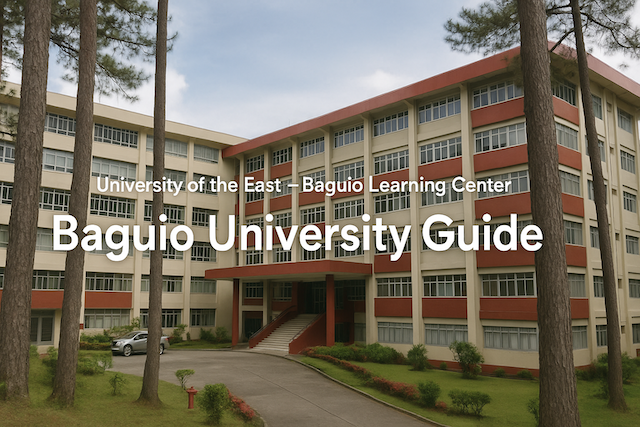
University of the East – Baguio Learning Center: Baguio University Guide
Contents
- University of the East – Baguio Learning Center: Baguio University Guide
- Overview of University of the East (UE)
- What Is the UE Baguio Learning Center?
- Who Is the Learning Center For?
- Academic Programs Available Through the Baguio Learning Center
- Learning Modalities at the Baguio Learning Center
- Facilities and Student Support Services
- Admission Process for Baguio-Based Students
- Tuition Fees and Financial Assistance
- Career Opportunities for Graduates
- Why Choose UE Baguio Learning Center?
- Living and Studying in Baguio City
- Final Thoughts
- FAQs (Frequently Asked Questions)
- What is the University of the East – Baguio Learning Center?
- Is the Baguio Learning Center a full university campus?
- Do students at the Baguio Learning Center receive a regular UE diploma?
- What types of programs are typically available through the Baguio Learning Center?
- How does online and blended learning work at the Baguio Learning Center?
- Can I enroll if I live outside Baguio City?
- How do I apply to programs offered through the Baguio Learning Center?
- What are the typical tuition fees and are scholarships available?
- What support services are available for students using the Learning Center?
- Is Baguio City a good place to live while studying through UE?
- How can I get the most up-to-date information about UE Baguio Learning Center?
University of the East – Baguio Learning Center: Baguio University Guide
The University of the East (UE) is one of the Philippines’ most recognized private universities, known for its strong academic programs, professional training, and long-standing reputation for producing competent graduates. While its main campuses are located in Manila, the UE Baguio Learning Center serves as an extended hub designed to deliver flexible learning opportunities to students based in Northern Luzon—particularly in Baguio City and the Cordillera region.
This guide provides an in-depth look at the Baguio Learning Center, including its purpose, academic offerings, student services, learning modalities, and what Baguio-based students can expect from studying under one of the country’s leading universities.
Overview of University of the East (UE)
Founded in 1946, the University of the East is a private, non-sectarian university with a long history of academic excellence. It has earned high recognition from various accrediting bodies, and several of its programs are known nationwide—particularly in business, education, IT, engineering, and allied health.
UE operates three main campuses:
-
UE Manila (main campus)
-
UE Caloocan
-
UE Ramon Magsaysay Memorial Medical Center (UERMMMC), specializing in medical and health sciences
The university’s long-standing reputation makes UE a preferred choice for students seeking quality education paired with strong industry connections. The Baguio Learning Center extends this mission to a broader geographic scope.
What Is the UE Baguio Learning Center?
The University of the East – Baguio Learning Center is an academic extension facility designed to deliver selected UE programs through flexible and remote-learning modalities. It allows students in Northern Luzon to access UE’s curriculum without relocating to Manila.
Key Functions of the Learning Center:
-
Serve as a venue for blended learning activities, orientation sessions, and academic support.
-
Provide students with administrative assistance such as enrollment, verification, and consultation.
-
Offer learning support services, including supervised modules, digital access, and assessment facilitation.
-
Connect Baguio-based students with UE faculty through virtual platforms.
It is not a full campus but functions as an academic access point, ideal for learners who prefer remote education or require flexibility due to work, family, or geographic limitations.
Who Is the Learning Center For?
The UE Baguio Learning Center is designed for a wide range of learners, including:
-
Working professionals in Baguio and Benguet
-
Students who cannot relocate to Manila
-
Individuals seeking online degree programs with occasional onsite requirements
-
Lifelong learners enrolling in short courses or digital programs
-
Parents who prefer flexible schooling options for their children entering college
This learning center model has become increasingly relevant in the post-pandemic education landscape, where hybrid learning is widely practiced.
Academic Programs Available Through the Baguio Learning Center
UE offers a range of academic programs through its online and remote-learning platforms, which the Baguio Learning Center helps facilitate. Programs may vary year to year, but commonly include:
Bachelor’s Degree Programs
-
Business Administration
Majors may include Financial Management, Marketing Management, and Business Economics. -
Information Technology / Computer Science
Designed for students seeking careers in software development, information systems, and digital technologies. -
Education
Programs geared toward future teachers, with specialization options depending on availability. -
Hospitality and Tourism Management
Suitable for students entering the tourism industry, which is strong in Northern Luzon and Baguio City.
Graduate Programs
Depending on the academic year, select postgraduate programs may be offered online and facilitated through the center:
-
Master of Business Administration (MBA)
-
Master of Education (MAEd)
-
Other distance-learning graduate programs
Short Courses and Certificate Programs
UE occasionally offers skill-based training programs such as:
-
Digital literacy
-
Entrepreneurship
-
Hospitality basics
-
Professional development modules
These programs are ideal for working adults seeking short-term credentials.
Learning Modalities at the Baguio Learning Center
The UE Baguio Learning Center supports several flexible learning systems designed to meet diverse student needs.
1. Online Learning (Synchronous + Asynchronous)
Students attend live virtual classes while completing self-paced modules accessible through UE’s learning management systems.
2. Blended Learning
While most coursework happens online, the center provides physical space for:
-
Special classes
-
Group sessions
-
Proctored examinations
-
Academic consultations
3. Modular Learning
Printed or digital modules are available for students with limited internet access—common in some areas of Benguet or nearby provinces.
4. Hybrid Assessment
Depending on program requirements, exams may be conducted:
-
Fully online
-
Through proctored onsite evaluation at the Learning Center
The goal is to ensure high academic quality while maintaining accessibility.
Facilities and Student Support Services
Although the Baguio Learning Center is not a full university campus, it offers essential facilities for academic support.
Available Facilities
-
Study and consultation rooms
-
Computer stations with internet access
-
Printing and document assistance
-
Enrollment and administrative desk
-
Meeting and seminar space for academic gatherings
Student Support Services
-
Enrollment assistance
-
Academic advising
-
Helpdesk for online learning systems
-
Access to student records and verification
-
Coordination with the Manila and Caloocan campuses
These resources ensure that UE students in Baguio receive reliable support throughout their studies.
Admission Process for Baguio-Based Students
The admission process is mainly conducted online, but the Learning Center provides assistance for those who need help with documentation or orientation.
Steps to Apply:
-
Online Application via the UE admissions portal
-
Submission of Requirements (digital copies accepted for initial evaluation)
-
Entrance Evaluation depending on program
-
Interview (online, if required)
-
Enrollment Confirmation
-
Orientation Session (may be conducted onsite at the Baguio Learning Center)
The center ensures smoother communication between applicants and the main campus.
Tuition Fees and Financial Assistance
UE is known for offering affordable private education compared to other Metro Manila universities. While exact fees vary per program, students can expect:
-
Competitive tuition costs
-
Flexible payment schedules
-
Discounts for early enrollees (depending on the academic year)
-
Scholarships based on academic performance
-
Possible financial aid programs through UE’s scholarship office
The Learning Center can guide students in applying for these programs.
Career Opportunities for Graduates
Students who complete their programs through the Baguio Learning Center earn the same diploma and credentials as those who graduate from the Manila campus.
UE graduates are known for high employability in fields such as:
-
Business and finance
-
IT and digital technology
-
Education
-
Hospitality and tourism
-
Government service
-
Healthcare (if enrolled in related programs)
The university’s strong alumni network adds value to career development.
Why Choose UE Baguio Learning Center?
1. Access to a Top Manila-Based University
Students can earn a UE degree without relocating.
2. Flexible Learning Options
Ideal for working professionals and students balancing multiple responsibilities.
3. Cost-Efficient Education
Living expenses in Manila can be avoided.
4. Student Support in Baguio
A physical learning hub provides reliable assistance.
5. Recognized Credentials
UE’s degree programs are respected nationwide and internationally.
Living and Studying in Baguio City
Baguio City is known as the “Summer Capital of the Philippines,” offering a cool climate, safe environment, and rich cultural heritage. For students enrolled through the UE Baguio Learning Center, the city provides:
-
Affordable living costs
-
Student-friendly neighborhoods
-
Numerous cafes, libraries, and co-working spaces
-
A peaceful environment suitable for online study
The city’s strong education ecosystem, with dozens of universities nearby, further enhances the learning experience.
Final Thoughts
The University of the East – Baguio Learning Center gives students in Northern Luzon a valuable opportunity to access quality education without relocating to Manila. With flexible programs, affordable tuition options, strong academic support, and recognized degrees, it offers a practical pathway for modern learners—especially those who prefer online or hybrid learning systems.
UE’s commitment to accessibility and academic excellence is reflected in this learning center model, making it an excellent choice for students seeking reputable education within the Baguio region.
FAQs (Frequently Asked Questions)
What is the University of the East – Baguio Learning Center?
The University of the East – Baguio Learning Center is an extension hub of the University of the East that serves students in Baguio City and the surrounding provinces of Northern Luzon. It is not a full standalone campus, but a learning facility that supports online, blended, and modular programs offered by UE’s main campuses. Through this center, students can enroll in UE programs, access remote instruction, and receive academic and administrative assistance without relocating to Manila.
Is the Baguio Learning Center a full university campus?
No. The Baguio Learning Center functions as an academic and administrative access point rather than a traditional campus. It typically does not offer the same scale of facilities as a main university campus, such as large dormitories or full laboratory complexes. Instead, it focuses on supporting distance-learning programs, facilitating orientations, examinations, consultations, and providing a localized space where students can interact with support staff and sometimes meet with faculty members via scheduled activities.
Do students at the Baguio Learning Center receive a regular UE diploma?
Yes. Students who complete their programs through the Baguio Learning Center generally receive the same diploma as students enrolled at the corresponding UE campus in Manila or Caloocan, provided that they are admitted into official UE degree programs. The learning center is an extension of the main university, so academic standards, curricula, and graduation requirements are aligned. However, it is always best to confirm the exact program structure and diploma details with UE’s admissions or registrar’s office at the time of application, as policies may evolve.
What types of programs are typically available through the Baguio Learning Center?
Programs supported by the Baguio Learning Center often include undergraduate degrees in fields such as business, information technology, education, and hospitality, as well as selected graduate or professional programs delivered via online or blended formats. Availability may vary by year based on demand, regulatory approvals, and institutional priorities. Because of this, prospective students should always check with UE or the Baguio Learning Center directly for the most current list of programs, majors, and specializations before applying.
How does online and blended learning work at the Baguio Learning Center?
Most programs use a combination of synchronous and asynchronous online learning. Synchronous sessions involve live virtual classes, real-time discussions, and consultations with professors. Asynchronous learning includes recorded lectures, readings, quizzes, and assignments completed on the student’s own schedule. The Baguio Learning Center may host occasional in-person activities such as orientations, group sessions, or supervised examinations, depending on course requirements. This flexible setup is designed to accommodate working professionals and students who need more control over their study time.
Can I enroll if I live outside Baguio City?
Yes. The Baguio Learning Center primarily serves Baguio City, Benguet, and nearby provinces in Northern Luzon, but residency within Baguio is not usually a strict requirement. Many students travel from surrounding municipalities for orientation, consultations, or assessments, while doing most of their coursework online from home. When considering enrollment, it is helpful to ask how often you will be expected to visit the center in person and what kind of technical requirements you will need for online classes, such as a stable internet connection and a suitable device.
How do I apply to programs offered through the Baguio Learning Center?
The general process starts with completing an online application through the official University of the East admissions portal. You will usually be asked to submit digital copies of your academic records, identification documents, and other program-specific requirements. After initial screening, some applicants may take entrance exams or be invited for an interview, which can often be conducted online. Once accepted, you will receive enrollment instructions, including payment procedures and orientation schedules. The staff at the Baguio Learning Center can guide you through each step and answer questions about forms or deadlines.
What are the typical tuition fees and are scholarships available?
Tuition fees vary depending on the program, credit load, and academic level, but UE is often regarded as competitively priced among private universities in the Philippines. Students may have access to installment payment options, tuition plans, or discounts based on institutional policies for a given year. In addition, UE typically offers scholarships or financial assistance to qualified students such as academic scholars, athletes, or students with specific achievements. Exact amounts, eligibility criteria, and application procedures can change, so checking directly with UE’s scholarship or finance office is strongly recommended.
What support services are available for students using the Learning Center?
Students using the UE Baguio Learning Center can generally expect assistance with admissions, enrollment, and documentation as well as help with navigating online platforms and academic procedures. Staff members may provide basic technical support, coordinate exam schedules, and assist with communications between students and Manila-based offices or faculty. Some centers also arrange small-group orientations, study sessions, and information briefings. While services may not be as extensive as in a large campus, the goal is to ensure that remote learners still feel supported and connected to the university.
Is Baguio City a good place to live while studying through UE?
Baguio City is widely regarded as a student-friendly environment with a cool climate, relatively affordable living costs, and many educational institutions. Learners enjoy access to cafes, libraries, co-working spaces, and quiet residential areas suitable for focused study. Public transportation and essential services are readily available, and the city has a strong community of local and international students. For individuals enrolled through the UE Baguio Learning Center, Baguio offers the benefit of a comfortable study base while still providing access to UE’s academic resources and credentials through flexible learning modes.
How can I get the most up-to-date information about UE Baguio Learning Center?
Because offerings, schedules, and policies can change over time, the best way to obtain reliable information is to contact the University of the East using its official communication channels. This may include the main university website, verified social media pages, or the published phone numbers and email addresses of the Baguio Learning Center or admissions office. When in doubt, always rely on official UE announcements and documents rather than third-party sources, so that you are basing your decisions on accurate and current details about programs and requirements.
Baguio University Guide
Baguio Province All Universities Lists
Philippines University Guide

How to Register for eTravel Philippines (2025 Guide)
Step-by-step guide to completing your eTravel registration before arriving in the Philippines, with images and tips.

Night Market in Cebu – Things You Don’t Know About Cebu Life
Discover the hidden charm of Cebu’s night markets, from street food stalls to local life tips you won’t find in tourist guides.

How to Use ChatGPT for IELTS Preparation: A Complete Guide
Learn how to prepare for IELTS using ChatGPT — including strategies for Writing, Reading, Listening, Speaking, and grammar support.

How to Build a Website Without Coding Using ChatGPT
Discover how to build your own website using AI—no coding skills needed. From structure planning to SEO and design, let ChatGPT guide you.