2025年12月23日
3D ACADEMY offers affordable English study programs in Cebu, Philippines – perfect for beginners, professionals, and exam takers.

3D UNIVERSAL ENGLISH INSTITUTE INC
info.3d-universal.com
8:00-17:00(Mon-Fri)
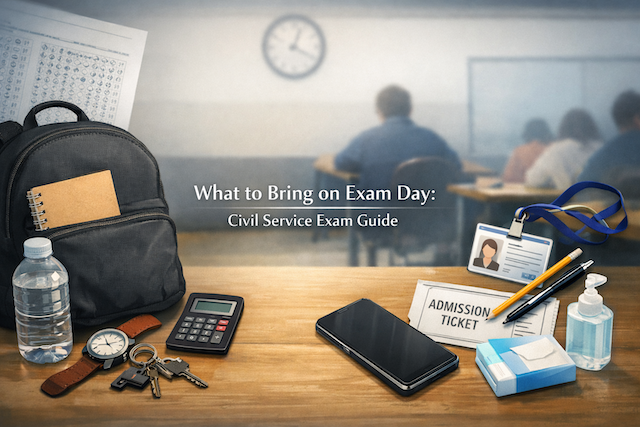
What to Bring on Exam Day: Civil Service Exam Guide
Contents
- What to Bring on Exam Day: Civil Service Exam Guide
- Required Documents You Must Bring
- Essential Writing and Exam Materials
- Personal Items for Comfort and Focus
- Food and Drink Items (If Allowed)
- Mental Preparation Items (Optional but Helpful)
- Items You Should Prepare the Night Before
- Items That Are Strictly Prohibited
- What to Do If You Forget Something
- Exam Day Arrival Checklist
- Final Tips for a Smooth Exam Day
- Conclusion
- FAQs (Frequently Asked Questions)
- What documents do I need to bring to the Civil Service Exam?
- Is a digital copy of my Notice of Admission acceptable?
- What kind of pen should I use on the answer sheet?
- Should I bring pencils and an eraser?
- Can I bring a watch to manage my time?
- Are phones and electronic devices allowed inside the exam room?
- Can I bring snacks and water during the exam?
- What should I wear on Civil Service Exam day?
- What items should I avoid bringing to the testing center?
- What if I forget my NOA or valid ID?
- How early should I arrive at the testing center?
- How can I reduce stress on exam day?
What to Bring on Exam Day: Civil Service Exam Guide
Preparing for the Civil Service Exam is not only about months of studying and practice tests. What you bring on exam day can significantly affect your performance, confidence, and overall experience. Forgetting a required document or bringing prohibited items can lead to unnecessary stress—or worse, disqualification.
This comprehensive guide explains exactly what to bring on Civil Service Exam day, what to prepare in advance, and what to avoid. Whether you are a first-time examinee or retaking the exam, this checklist-style guide will help you walk into the testing center fully prepared and focused.
Required Documents You Must Bring
The most important items on exam day are your official documents. Without these, you may not be allowed to take the exam.
Notice of Admission (NOA)
Your Notice of Admission is your primary proof that you are officially registered for the Civil Service Exam.
Bring:
-
The original printed copy of your NOA
-
Make sure it is clear and readable
-
Verify your:
-
Full name
-
Exam date
-
Testing center
-
Room assignment
-
Exam type and level
-
Do not rely on a digital copy stored on your phone. Most testing centers require a printed version.
Valid ID (As Stated in Your NOA)
You must bring the same valid ID you used during your application process.
Commonly accepted IDs include:
-
Passport
-
Driver’s license
-
PRC ID
-
UMID
-
SSS ID
-
Postal ID
-
Voter’s ID (if accepted in your region)
Important reminders:
-
The ID must be original, not photocopied
-
It must be current and not expired
-
The name must match exactly with your NOA
If your ID is lost or expired, resolve the issue before exam day.
Essential Writing and Exam Materials
Even though the exam administrators provide some materials, you are still responsible for bringing your own basic exam tools.
Black Ballpens
Always bring at least two black ballpens.
Why black ink?
-
Optical scanners often require black ink for accuracy
-
Other colors may not be recognized
Tips:
-
Test your pen before exam day
-
Avoid gel pens that smudge easily
-
Bring extra pens as backup
Pencil and Eraser (If Allowed)
Some exams may still require pencils for certain sections.
Bring:
-
At least one good-quality pencil
-
A clean eraser (no dust or designs)
Always follow the instructions indicated in your NOA regarding pencil use.
Personal Items for Comfort and Focus
The Civil Service Exam can last several hours. Being physically comfortable can help you maintain focus.
Watch (Analog or Simple Digital)
A watch helps you manage your time without relying on wall clocks.
Guidelines:
-
Use a non-smart watch
-
No calculators, Bluetooth, or internet features
-
Silent mode only (no alarms)
Do not bring smartwatches, as they are usually prohibited.
Face Mask and Hygiene Supplies
Depending on current regulations, you may be required to bring:
-
Face mask
-
Alcohol or hand sanitizer
-
Tissues or wipes
Choose unscented products to avoid distracting other examinees.
Jacket or Light Sweater
Testing rooms can be unexpectedly cold due to air conditioning.
Bring:
-
A lightweight jacket
-
Clothing that is comfortable and not restrictive
Avoid outfits with too many pockets or accessories.
Food and Drink Items (If Allowed)
Check your NOA or official exam guidelines regarding food and drinks.
Drinking Water
Staying hydrated is important, especially for long exams.
Recommended:
-
Clear water bottle
-
No labels or markings if possible
Avoid bringing:
-
Sugary drinks
-
Coffee in noisy containers
Light Snacks
Some testing centers allow snacks during breaks.
Good options:
-
Crackers
-
Energy bars
-
Biscuits
Avoid:
-
Strong-smelling food
-
Crumbly or noisy snacks
Always eat discreetly and only when permitted.
Mental Preparation Items (Optional but Helpful)
While not required, these items can help reduce stress and improve focus.
Personal Affirmation Notes
Some examinees bring small notes with motivational phrases.
Rules:
-
Must not contain academic content
-
Should be kept in your bag during the exam
Use them before entering the room, not during the test.
Stress-Relief Items (If Permitted)
Examples:
-
Small stress ball
-
Breathing exercises practiced beforehand
Physical items are often restricted, so rely more on mental techniques.
Items You Should Prepare the Night Before
Preparation is not only about what you bring, but also when you prepare.
Organize Your Exam Kit
Prepare a clear envelope or pouch with:
-
NOA
-
Valid ID
-
Pens and pencils
-
Watch
This avoids last-minute panic.
Check Your Route and Travel Time
Know:
-
The exact location of your testing center
-
Public transport routes
-
Estimated travel time
Plan to arrive at least 1 hour early.
Prepare Your Clothes
Choose:
-
Comfortable clothing
-
Closed shoes
-
Simple attire without accessories
Lay everything out the night before.
Items That Are Strictly Prohibited
Bringing prohibited items can lead to confiscation or disqualification.
Electronic Devices
Do NOT bring:
-
Mobile phones
-
Smartwatches
-
Tablets
-
Earphones
-
Calculators (unless specified)
Some centers allow phones to be surrendered, but it is safer to leave them at home.
Notes, Reviewers, and Books
Once inside the testing room:
-
No review materials are allowed
-
No written notes of any kind
Reviewing inside the room is prohibited.
Bags and Large Items
Large bags may not be allowed inside the room.
If you must bring a bag:
-
Keep it small
-
Follow the proctor’s instructions
Do not bring unnecessary items.
What to Do If You Forget Something
Mistakes happen, but preparation minimizes risk.
If You Forget a Pen
-
Borrowing may be allowed before the exam starts
-
Do not rely on others; always bring your own
If You Forget Your ID or NOA
In most cases:
-
You will not be allowed to take the exam
-
Exceptions are rare and not guaranteed
This is why document preparation is critical.
Exam Day Arrival Checklist
Before leaving your house, double-check the following:
-
Notice of Admission (printed)
-
Valid ID
-
Black ballpens (at least two)
-
Watch (non-smart)
-
Face mask (if required)
-
Water bottle
-
Light snack (if allowed)
-
Jacket or sweater
Do a final check before locking your door.
Final Tips for a Smooth Exam Day
Being fully prepared helps you stay calm and confident.
Arrive Early
Early arrival allows you to:
-
Find your room without rushing
-
Use the restroom
-
Mentally settle down
Follow Instructions Carefully
Listen to:
-
Proctors’ announcements
-
Written instructions on the test booklet
Misunderstanding instructions can cost valuable points.
Stay Calm and Focused
Remember:
-
You have prepared for this
-
Everyone else is just as nervous
-
Take deep breaths and focus on one question at a time
Confidence and preparation go hand in hand.
Conclusion
Knowing what to bring on Civil Service Exam day is just as important as knowing what to study. Proper preparation eliminates unnecessary stress and allows you to focus entirely on answering the exam questions.
By organizing your documents, bringing the right materials, avoiding prohibited items, and preparing the night before, you put yourself in the best position to succeed. Treat exam day as the final step of your preparation—not something to improvise.
Walk into the testing center calm, prepared, and confident. You have done the work. Now it is time to show it.
FAQs (Frequently Asked Questions)
What documents do I need to bring to the Civil Service Exam?
You should bring your printed Notice of Admission (NOA) and at least one valid, original government-issued ID. These are the most essential items because they confirm your identity and your eligibility to take the exam at the assigned testing center. Photocopies are usually not accepted, and expired IDs may be rejected. Before exam day, check that your name and personal details match across your NOA and ID to avoid problems during verification.
Is a digital copy of my Notice of Admission acceptable?
In most cases, no. Even if you have the NOA saved on your phone, testing centers commonly require a printed copy. A printed NOA is easier for proctors to verify quickly, especially when many examinees arrive at the same time. To avoid risk, print at least one clear copy. If possible, bring a second copy and keep it in a separate folder or envelope as backup.
What kind of pen should I use on the answer sheet?
Bring black ballpens, preferably standard ink ballpens that do not smudge. Many exam answer sheets are checked using scanners, and black ink is typically the safest option for clean recognition. Gel pens can smear and cause messy markings, while other ink colors may not be accepted. It is smart to bring at least two working pens, test them the night before, and keep one as your main pen and one as a backup.
Should I bring pencils and an eraser?
Bring them only if your exam instructions allow or require pencil use. Some exams still use pencils for specific parts, while others strictly require black ballpen. A safe approach is to bring a pencil and a clean eraser in your kit, but follow the proctor’s directions and the instructions printed on the exam materials. Avoid fancy erasers or anything that could be considered unusual. Keep supplies simple and practical.
Can I bring a watch to manage my time?
Yes, a simple watch is highly recommended because it helps you pace yourself and reduce time pressure. Choose a basic analog watch or a simple digital watch without smart features. Smartwatches are commonly prohibited because they can store data, connect to the internet, or function as communication devices. Also, ensure that your watch is silent. Do not use alarms, beeps, or vibration alerts that could disturb other examinees.
Are phones and electronic devices allowed inside the exam room?
Generally, no. Mobile phones, tablets, calculators (unless explicitly permitted), Bluetooth devices, and smartwatches are typically prohibited. Even if a testing center allows phones to be surrendered or placed in a bag, bringing them can still create stress and risk. If you can, leave unnecessary electronics at home. If you must bring a phone for transport or emergencies, power it off completely and follow the proctor’s instructions strictly.
Can I bring snacks and water during the exam?
This depends on the testing center rules, but water is often allowed if it is in a clear container and handled quietly. Light snacks may be permitted during breaks, but eating during active test time may not be allowed. If snacks are permitted, choose quiet, non-messy options like crackers or small biscuits. Avoid strong-smelling food that could distract others. Always prioritize cleanliness and courtesy, and never open food if the proctor has not allowed it.
What should I wear on Civil Service Exam day?
Wear comfortable, simple clothing suitable for long hours of sitting. Testing rooms may be cold due to air conditioning, so a light jacket or sweater is helpful. Choose closed shoes if possible for comfort and a neat appearance. Avoid clothing with too many pockets, noisy accessories, or anything that might raise questions during checks. The goal is to feel comfortable, look appropriate, and minimize anything that could distract you or the room.
What items should I avoid bringing to the testing center?
Avoid bringing reviewers, printed notes, loose papers, and any study materials that could be mistaken for cheating aids. Large bags can also be inconvenient because some rooms have limited storage space. Avoid bringing valuables you do not need, such as laptops, expensive jewelry, or multiple gadgets. Even harmless items can become stressful if they are confiscated or if you worry about losing them. Keep your belongings minimal and exam-focused.
What if I forget my NOA or valid ID?
If you forget your NOA or valid ID, you may not be allowed to take the exam. Most testing centers follow strict verification procedures, and exceptions are uncommon. To prevent this, pack your documents the night before and place them somewhere visible, such as beside your bag or near your door. Some examinees prepare a transparent envelope containing their NOA, ID, and pens so everything stays together and is easy to check.
How early should I arrive at the testing center?
Plan to arrive at least one hour early. Early arrival gives you time to find your room, settle down, and handle unexpected issues like traffic, long lines, or room changes. It also helps you start the exam calmly instead of rushing in stressed. If your testing site is unfamiliar, consider checking the location a day before, or at least map your route carefully and prepare extra travel time.
How can I reduce stress on exam day?
Stress is normal, but you can manage it by preparing in advance and keeping your routine simple. Sleep early the night before, eat a light meal, and bring only what you need. Avoid last-minute cramming at the testing center because it can increase anxiety. Use deep breathing while waiting, focus on steady pacing during the exam, and remind yourself that the best approach is to answer one question at a time with full attention.
Civil Service Exam Philippines: Complete Preparation and Passing Guide

How to Register for eTravel Philippines (2025 Guide)
Step-by-step guide to completing your eTravel registration before arriving in the Philippines, with images and tips.

Night Market in Cebu – Things You Don’t Know About Cebu Life
Discover the hidden charm of Cebu’s night markets, from street food stalls to local life tips you won’t find in tourist guides.

How to Use ChatGPT for IELTS Preparation: A Complete Guide
Learn how to prepare for IELTS using ChatGPT — including strategies for Writing, Reading, Listening, Speaking, and grammar support.

How to Build a Website Without Coding Using ChatGPT
Discover how to build your own website using AI—no coding skills needed. From structure planning to SEO and design, let ChatGPT guide you.