2025年12月23日
3D ACADEMY offers affordable English study programs in Cebu, Philippines – perfect for beginners, professionals, and exam takers.

3D UNIVERSAL ENGLISH INSTITUTE INC
info.3d-universal.com
8:00-17:00(Mon-Fri)
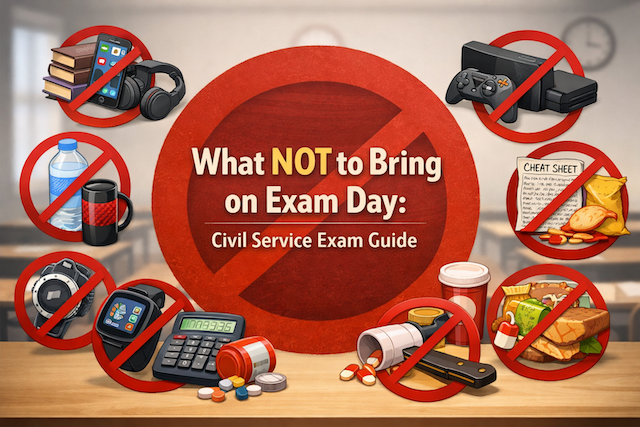
What NOT to Bring on Exam Day: Civil Service Exam Guide
Contents
- What NOT to Bring on Exam Day: Civil Service Exam Guide
- Electronic Devices and Gadgets
- Review Materials and Study Aids
- Bags, Pouches, and Large Personal Items
- Food, Drinks, and Chewing Gum
- Unauthorized Writing Tools and Materials
- Jewelry and Accessories That Cause Disruption
- Personal Comfort Items That Are Not Allowed
- Items That Create Security Risks
- Items That Increase Stress and Distraction
- Why Bringing Prohibited Items Can Hurt Your Performance
- How to Prepare a “Do Not Bring” Checklist
- Final Thoughts: Less Is More on Exam Day
- FAQs (Frequently Asked Questions)
- Can I bring my phone if it is turned off?
- Are smartwatches or fitness trackers allowed as timekeepers?
- Can I bring review notes to read while waiting for the exam to start?
- What happens if I accidentally bring a prohibited item?
- Are bags allowed inside the examination room?
- Can I bring a pencil case or organizer?
- Is it okay to bring pens, highlighters, or markers?
- Can I bring correction tape or correction fluid?
- Are snacks and drinks allowed during the exam?
- Is chewing gum allowed to reduce anxiety?
- Can I wear a cap, hat, or sunglasses?
- What about jewelry, lucky charms, or personal items for motivation?
- What should I do the night before the exam to avoid bringing banned items?
What NOT to Bring on Exam Day: Civil Service Exam Guide
Preparing for the Civil Service Exam requires months of disciplined study, mental conditioning, and careful planning. However, many examinees underestimate one critical factor that can affect their performance—or even disqualify them entirely: what they bring on exam day.
The Civil Service Commission (CSC) enforces strict rules to maintain fairness, security, and order during the examination. Bringing prohibited or unnecessary items can lead to confiscation, penalties, delays, stress, or in worst cases, disqualification. Even items that seem harmless or convenient may cause problems once you arrive at the testing center.
This guide focuses on what NOT to bring on exam day, explaining why these items are prohibited and how avoiding them helps you stay calm, compliant, and focused. By understanding these restrictions in advance, you reduce risks and increase your chances of performing at your best.
Electronic Devices and Gadgets
Electronic devices are among the most strictly prohibited items during the Civil Service Exam. Their presence alone—even if turned off—can be grounds for confiscation or further action.
Mobile Phones and Smartphones
Mobile phones are absolutely not allowed inside the examination room. This includes smartphones, feature phones, and any device capable of sending or receiving messages.
Even if switched off, a phone may:
-
Raise suspicion of cheating
-
Cause anxiety if it accidentally vibrates or rings
-
Be confiscated and held until after the exam
-
Delay your entry if you attempt to declare or surrender it late
To avoid issues, leave your phone at home or give it to a trusted companion who will not enter the exam site.
Smartwatches and Fitness Trackers
Smartwatches, fitness bands, and digital watches with memory or connectivity features are not allowed. These devices can store information or connect wirelessly, making them prohibited under exam security rules.
Even simple-looking smartwatches are often banned because:
-
Proctors cannot easily verify their functionality
-
They may record data or receive notifications
-
They resemble ordinary watches but violate policy
Use a basic analog watch only if allowed by your testing center.
Tablets, Laptops, and E-Readers
Any large electronic device—including tablets, laptops, and e-readers—is strictly prohibited. These devices are unnecessary and impossible to store securely during the exam.
Bringing them may result in:
-
Entry delays
-
Forced storage outside the exam room at your own risk
-
Increased stress before the test even begins
Review Materials and Study Aids
Once you enter the examination room, no review materials are allowed, regardless of format.
Books, Notes, and Reviewers
Review books, notebooks, printed summaries, and handwritten notes are not permitted inside the exam room.
While reviewing before the exam is encouraged, bringing materials inside can:
-
Violate exam rules
-
Distract other examinees
-
Lead to confiscation or warnings
Finish your last-minute review outside the testing room and mentally switch into exam mode once called inside.
Flashcards and Cheat Sheets
Flashcards, formula lists, vocabulary notes, and any condensed study aids are strictly prohibited.
Even if unused, their presence may:
-
Be interpreted as an attempt to cheat
-
Create unnecessary suspicion
-
Result in disciplinary action
Avoid carrying these items altogether to prevent misunderstandings.
Bags, Pouches, and Large Personal Items
The Civil Service Exam environment is designed to be simple and controlled. Large personal items disrupt this setup.
Backpacks, Handbags, and Large Totes
Most testing centers do not allow examinees to bring large bags into the examination room. If allowed inside the building, they are usually left in a designated area without supervision.
Problems with bringing large bags include:
-
Limited storage space
-
Risk of loss or theft
-
Delays during security checks
Bring only what is necessary and use a small transparent envelope or pouch if permitted.
Pencil Cases and Organizers
Bulky pencil cases with multiple compartments may be restricted. Proctors often require examinees to place writing tools directly on the desk for visibility.
A large case may:
-
Be inspected repeatedly
-
Slow down seating arrangements
-
Cause unnecessary attention
Carry only the required pencils and erasers without excess containers.
Food, Drinks, and Chewing Gum
Food policies vary by testing center, but many items are discouraged or prohibited.
Meals and Snacks with Strong Smells
Foods with strong odors—such as fast food, fried items, or heavily seasoned snacks—are usually not allowed inside the exam room.
These can:
-
Distract other examinees
-
Create discomfort in enclosed spaces
-
Violate cleanliness standards
If snacks are allowed, they are typically limited to light, quiet options and consumed only during breaks, if any.
Sugary Drinks and Energy Beverages
Energy drinks, sodas, and sugary beverages are often discouraged. They can cause:
-
Energy crashes during the exam
-
Frequent bathroom breaks
-
Spills that damage exam papers
Stick to water if permitted, and only in approved containers.
Chewing Gum and Candy
Chewing gum may be prohibited because it can:
-
Create noise
-
Appear unprofessional
-
Be considered disruptive
Candy wrappers may also cause distractions. It is best to avoid both unless explicitly allowed.
Using incorrect or unauthorized writing tools can invalidate your answer sheet.
Pens Instead of Pencils
The Civil Service Exam typically requires No. 2 pencils for shading answers. Pens—whether ballpoint, gel, or marker—are not allowed for answering.
Using a pen may:
-
Prevent machine reading of your answers
-
Lead to automatic disqualification
-
Void your answer sheet
Bring only the required pencils as specified in your exam notice.
Correction Tape and Liquid Erasers
Correction tape, correction fluid, and similar products are not allowed.
These materials can:
-
Interfere with optical scanning
-
Damage answer sheets
-
Cause invalid markings
Use a clean eraser only and follow shading instructions carefully.
Jewelry and Accessories That Cause Disruption
While personal accessories are usually allowed, some items may be restricted.
Noisy Jewelry
Bracelets, bangles, and large earrings that make noise can distract others and draw attention.
These items may:
-
Be uncomfortable during long exams
-
Cause unnecessary movement
-
Be requested for removal by proctors
Choose minimal, quiet accessories or avoid them entirely.
Hats, Caps, and Sunglasses
Headwear and sunglasses are often prohibited unless for medical or religious reasons.
They may:
-
Obstruct facial visibility
-
Raise security concerns
-
Be mistaken for concealment tools
If you require such items for valid reasons, coordinate with the testing center in advance.
Personal Comfort Items That Are Not Allowed
Not all comfort items are acceptable in an exam setting.
Pillows, Blankets, and Cushions
While comfort is important, bringing large comfort items is not allowed.
These items:
-
Take up space
-
Are impractical in exam rooms
-
Disrupt uniform seating arrangements
Dress comfortably instead and prepare mentally for sitting long periods.
Personal Fans and Heaters
Portable fans, heaters, or cooling devices are not allowed.
They can:
-
Create noise
-
Distract others
-
Interfere with room setup
Dress appropriately for the expected temperature.
Items That Create Security Risks
Security is a top priority during the Civil Service Exam.
Cameras and Recording Devices
Any device capable of recording audio, video, or images is prohibited.
These include:
-
Cameras
-
Voice recorders
-
Action cams
Their presence is considered a serious violation.
Sharp Objects and Tools
Scissors, cutters, multi-tools, or any sharp object are not allowed.
Even small tools may:
-
Be considered safety hazards
-
Be confiscated immediately
-
Cause entry delays
Items That Increase Stress and Distraction
Some items are not explicitly banned but are best avoided.
Excessive Lucky Charms
While personal motivation matters, bringing too many lucky items can:
-
Clutter your workspace
-
Increase anxiety
-
Distract you during the exam
Confidence should come from preparation, not objects.
Unnecessary Paper and Documents
Bringing unrelated documents, old exam permits, or random papers can cause confusion.
Only bring:
-
Your exam permit
-
Valid identification
-
Required writing tools
Anything extra increases the chance of mistakes.
Why Bringing Prohibited Items Can Hurt Your Performance
Even if you are not penalized, prohibited items can negatively affect your exam experience.
They may:
-
Increase anxiety during inspections
-
Cause delays before the exam starts
-
Distract you mentally
-
Disrupt your focus during critical moments
A calm, organized start is essential for peak performance.
How to Prepare a “Do Not Bring” Checklist
The night before the exam, prepare a checklist of items to leave behind.
Consider:
-
Leaving electronics at home
-
Packing only essential items
-
Using a clear envelope if required
-
Reviewing official CSC guidelines again
Preparation is not only about studying—it is also about eliminating risks.
Final Thoughts: Less Is More on Exam Day
On Civil Service Exam day, simplicity is your strongest ally. The fewer items you bring, the fewer problems you face. Avoiding prohibited items protects you from unnecessary stress, delays, and potential disqualification.
Your focus should be on answering questions—not worrying about inspections or rule violations. Trust your preparation, follow the guidelines strictly, and walk into the exam room with confidence.
Remember: what you leave behind can be just as important as what you bring.
FAQs (Frequently Asked Questions)
Can I bring my phone if it is turned off?
No. In most Civil Service Exam testing centers, mobile phones are not allowed inside the examination room even if they are switched off or set to silent mode. Proctors often treat the mere presence of a phone as a potential security risk. If you bring one, it may be collected and kept in a designated area, but storage policies vary and may not be secure. To avoid stress, delays, or misunderstandings, it is safer to leave your phone at home or with a companion who will not enter the exam site.
Are smartwatches or fitness trackers allowed as timekeepers?
Usually not. Smartwatches and fitness trackers can store information and may have wireless features, which makes them prohibited in many exam settings. Even if you only use the device to check time, proctors may not be able to confirm its features quickly and may require you to remove it. If you want a timekeeper, bring a simple analog wristwatch with no smart functions, and confirm if watches are permitted in your testing room.
Can I bring review notes to read while waiting for the exam to start?
You can often review outside the room while waiting, but you should not bring notes, reviewers, or books into the examination room itself. Some testing sites may instruct examinees to place all personal items in a separate area before seating. If you carry notes into the room, even with good intentions, it can be interpreted as a violation and may lead to confiscation or warnings. A safer approach is to do any quick review outside, then enter the room with only the required items.
What happens if I accidentally bring a prohibited item?
It depends on the testing center’s rules and how strict the proctors are. In some cases, the item may be confiscated and returned after the exam. In other cases, you may be asked to store it outside the room at your own risk, which can cause anxiety. If the item is serious (such as a recording device), it may lead to disqualification. The best prevention is to pack the night before, remove prohibited items from your bag, and carry only essentials.
Are bags allowed inside the examination room?
Many sites allow you to bring a small bag into the testing building, but not necessarily into the room. Often, proctors will instruct examinees to place bags in front of the room, along a wall, or in a designated storage area. Space is limited, and storage may not be supervised. If possible, bring a small, simple bag or a transparent envelope so inspections are faster and you have fewer things to worry about during the test.
Can I bring a pencil case or organizer?
Some centers allow a small pencil case, but bulky organizers with multiple compartments may be discouraged because they take time to inspect. Proctors may require you to place your pencils and eraser directly on the desk for visibility. The simplest option is to carry only what you need: a few No. 2 pencils, a good eraser, and a sharpener if allowed. Keeping your supplies minimal reduces delays and avoids suspicion.
Is it okay to bring pens, highlighters, or markers?
In most Civil Service Exams, answers are shaded on an answer sheet that is checked by a machine. Because of that, pens, markers, and highlighters are not appropriate for answering and may be prohibited for use on the answer sheet. You may still be allowed to bring a pen for filling out personal information, but do not assume this is permitted unless stated in your exam instructions. As a rule, rely on No. 2 pencils and follow the official guidelines.
Can I bring correction tape or correction fluid?
No. Correction tape and correction fluid are commonly prohibited because they can interfere with machine scanning and may damage the answer sheet. If you make a mistake, the standard method is to erase cleanly and shade the correct answer properly. Bring a high-quality eraser and practice neat erasing during your review period so you do not panic on exam day.
Are snacks and drinks allowed during the exam?
This varies by testing site. Some rooms may allow a small bottle of water, while others may restrict all food and drink to prevent spills and distractions. Strong-smelling food and noisy wrappers are generally not recommended even if snacks are allowed. If your site permits it, choose quiet, low-mess options and keep them sealed unless you are clearly allowed to consume them. When in doubt, eat before arriving and focus on hydration beforehand.
Is chewing gum allowed to reduce anxiety?
Often no, or it may be discouraged. Chewing gum can be considered distracting, especially in a quiet room where small sounds are noticeable. It can also appear unprofessional or violate room cleanliness rules. If gum helps you manage stress, consider alternatives such as breathing techniques, grounding exercises, or silent relaxation methods that do not risk rule violations.
Can I wear a cap, hat, or sunglasses?
Most testing centers do not allow hats, caps, and sunglasses inside the examination room because they can obstruct facial visibility and raise security concerns. If you have a medical reason (such as light sensitivity) or a religious reason, you may need to inform the proctor or bring supporting documentation depending on the policy. Otherwise, avoid bringing these items to prevent being asked to remove them during check-in.
What about jewelry, lucky charms, or personal items for motivation?
Small, quiet items are usually not a problem, but bringing too many can clutter your workspace and distract you. Large or noisy jewelry may also disturb others, and proctors may ask you to remove it. If you carry a lucky charm, keep it small and unobtrusive. The best “good luck item” is preparation: a calm mind, a clear plan, and confidence built from consistent practice.
What should I do the night before the exam to avoid bringing banned items?
Prepare a simple packing routine. Lay out the essentials (exam permit, valid ID, No. 2 pencils, eraser, and any required documents) and then remove anything extra from your bag, especially electronics and notes. Check your pockets for phones, earbuds, or smart devices. If you must bring a phone for transportation or safety, plan where it will stay before you enter the testing room, such as with a companion outside the building.
Civil Service Exam Philippines: Complete Preparation and Passing Guide

How to Register for eTravel Philippines (2025 Guide)
Step-by-step guide to completing your eTravel registration before arriving in the Philippines, with images and tips.

Night Market in Cebu – Things You Don’t Know About Cebu Life
Discover the hidden charm of Cebu’s night markets, from street food stalls to local life tips you won’t find in tourist guides.

How to Use ChatGPT for IELTS Preparation: A Complete Guide
Learn how to prepare for IELTS using ChatGPT — including strategies for Writing, Reading, Listening, Speaking, and grammar support.

How to Build a Website Without Coding Using ChatGPT
Discover how to build your own website using AI—no coding skills needed. From structure planning to SEO and design, let ChatGPT guide you.