2025年12月23日
3D ACADEMY offers affordable English study programs in Cebu, Philippines – perfect for beginners, professionals, and exam takers.

3D UNIVERSAL ENGLISH INSTITUTE INC
info.3d-universal.com
8:00-17:00(Mon-Fri)
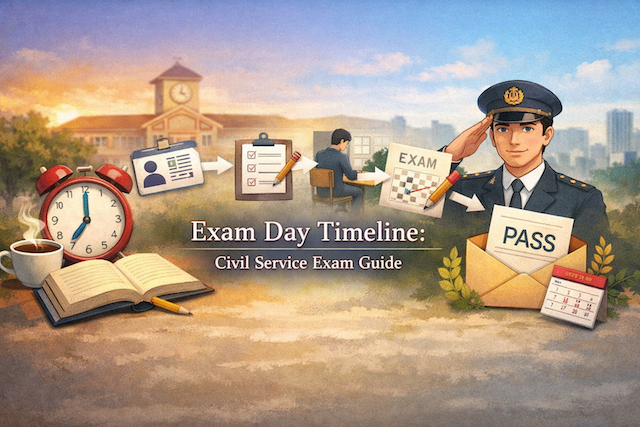
Exam Day Timeline: Civil Service Exam Guide
Contents
- Exam Day Timeline: Civil Service Exam Guide
- Why an Exam Day Timeline Matters
- The Night Before the Exam
- Early Morning: Waking Up and Getting Ready
- Travel Time: Getting to the Testing Center
- Arrival at the Testing Center
- Pre-Exam Room Procedures
- Exam Start: First Subject or Test Part
- During the Exam: Time Management and Focus
- Breaks and Transitions (If Applicable)
- Final Minutes of the Exam
- After the Exam: Leaving the Testing Room
- Immediately After the Exam
- Common Exam Day Mistakes to Avoid
- Mental Checklist for Exam Day Success
- Final Thoughts: Turning Preparation Into Performance
- Frequently Asked Questions (FAQs)
- What time should I arrive at the testing center on exam day?
- What should I do first once I enter the exam room?
- How do I avoid mistakes when filling out the answer sheet?
- What is the best pacing strategy during the exam?
- Should I change answers during the final review?
- What should I do if I feel panic or anxiety during the test?
- Are snacks and water allowed during the Civil Service Exam?
- What happens if I arrive without a required document or valid ID?
- Can I go to the restroom during the exam?
- What should I do immediately after finishing the exam?
Exam Day Timeline: Civil Service Exam Guide
Taking the Civil Service Exam is a major milestone, and exam day itself can feel overwhelming if you are not fully prepared. Knowing exactly what will happen—from the moment you wake up until you leave the testing center—can greatly reduce anxiety and help you perform at your best. This guide provides a detailed, step-by-step exam day timeline so you know what to expect, what to do, and how to stay focused throughout the day.
Whether this is your first attempt or a retake, understanding the flow of exam day allows you to concentrate on answering questions rather than worrying about logistics.
Why an Exam Day Timeline Matters
Many examinees study hard but still underperform because of stress, poor time management, or simple mistakes on exam day. A clear timeline helps you:
-
Avoid rushing or forgetting important steps
-
Stay calm and mentally organized
-
Manage energy and focus throughout the exam
-
Prevent disqualification due to procedural errors
By following a structured plan, you turn exam day into a predictable process rather than a stressful unknown.
The Night Before the Exam
Although exam day officially starts in the morning, success begins the night before.
Final Preparation Check
Before going to bed, double-check all required items:
-
Notice of Admission (printed)
-
Valid ID
-
Black ballpens
-
Simple snacks and water (if allowed)
-
Watch (non-digital, if permitted)
Place everything in one bag so you do not need to search for items in the morning.
Review Light, Not Heavy
Avoid intense last-minute studying. Instead:
-
Skim key concepts or formulas
-
Review test-taking strategies
-
Read brief notes you are already familiar with
Heavy cramming often increases anxiety and reduces sleep quality.
Sleep Early
Aim for at least 7–8 hours of sleep. Mental alertness and focus are far more valuable than squeezing in extra study time.
Early Morning: Waking Up and Getting Ready
Wake Up Earlier Than Usual
Set your alarm earlier than your normal wake-up time to avoid rushing. Give yourself enough time to:
-
Eat calmly
-
Prepare mentally
-
Handle unexpected delays
Rushing in the morning increases stress before you even arrive at the testing center.
Eat a Balanced Breakfast
Choose a light but energizing meal such as:
-
Rice or bread with protein (eggs, peanut butter)
-
Fruits
-
Water or mild tea
Avoid overly sugary or heavy foods that can cause energy crashes or discomfort.
Dress Comfortably and Appropriately
Wear comfortable clothing suitable for a classroom environment. Testing rooms can be cold or warm, so consider light layers. Avoid accessories that may be prohibited, such as smartwatches or excessive jewelry.
Travel Time: Getting to the Testing Center
Leave Earlier Than Necessary
Plan to arrive at least 60–90 minutes before the reporting time. This buffer accounts for:
-
Traffic
-
Transportation delays
-
Long lines at the entrance
Late arrival can result in disqualification, regardless of the reason.
Stay Calm During Travel
Use travel time to relax rather than panic. Avoid heavy reviewing on your phone. Instead:
-
Practice slow breathing
-
Remind yourself that you are prepared
-
Maintain a calm, confident mindset
Arrival at the Testing Center
Initial Entry and Verification
Upon arrival, you will typically go through:
-
Identity verification
-
Notice of Admission checking
-
Assignment to a room or building
Follow instructions carefully and listen to announcements.
Finding Your Assigned Room
Once inside, locate your assigned room as soon as possible. Confirm:
-
Room number
-
Seat assignment (if provided)
-
Restroom location
This helps you feel settled before the exam begins.
Pre-Exam Room Procedures
Seating and Orientation
Inside the testing room, you will be instructed to:
-
Sit in your assigned seat
-
Place bags in designated areas
-
Prepare your ID and admission slip for inspection
Remain quiet and attentive at all times.
Proctor Instructions
The proctor will explain important rules, including:
-
Exam duration
-
Answer sheet filling procedures
-
Prohibited actions
-
When you are allowed to start and stop writing
Do not assume you already know everything—listen carefully, as instructions may change.
Exam Start: First Subject or Test Part
Distributing Test Materials
Once materials are distributed:
-
Check if your test booklet is complete
-
Confirm page numbers and sections
-
Do not open the booklet until instructed
Report any issues immediately.
Filling Out Personal Information
You will be given time to fill in:
-
Name
-
Examinee number
-
Test code
Do this carefully. Errors in personal information can cause serious problems during checking.
During the Exam: Time Management and Focus
First 10 Minutes: Settle In
Use the initial minutes to:
-
Read instructions thoroughly
-
Scan the entire test
-
Plan your pacing
Avoid answering impulsively without understanding the structure of the exam.
Mid-Exam Focus Strategies
As the exam progresses:
-
Answer easy questions first to build confidence
-
Skip difficult questions and return later
-
Monitor your time regularly
Do not spend too long on one question. Time management is critical.
Maintaining Mental Stamina
To stay sharp:
-
Sit properly to avoid fatigue
-
Take slow breaths when feeling tense
-
Refocus if your mind wanders
If anxiety rises, pause briefly and reset your focus.
Breaks and Transitions (If Applicable)
Some Civil Service Exams include short breaks between sections.
During Allowed Breaks
If breaks are permitted:
-
Stretch lightly
-
Drink water
-
Use the restroom if allowed
Avoid discussing questions with other examinees, as this is often prohibited.
Mental Reset Between Sections
Treat each section as a fresh start. Do not dwell on mistakes from earlier parts.
Final Minutes of the Exam
Review Your Answers
If time allows:
-
Recheck unanswered questions
-
Review marked items
-
Ensure answers are clearly shaded or written
Avoid changing answers randomly unless you are confident in the correction.
Prepare for Submission
When time is almost up:
-
Stop writing immediately when instructed
-
Organize your materials
-
Follow the proctor’s instructions for submission
Failure to comply can result in penalties.
After the Exam: Leaving the Testing Room
Submission of Materials
You will be asked to submit:
-
Answer sheet
-
Test booklet (if required)
Ensure everything is properly handed in before leaving.
Exit Procedures
Leave the room quietly and orderly. Do not linger or create noise that may disturb other rooms still testing.
Immediately After the Exam
Emotional Decompression
It is normal to feel relief, exhaustion, or uncertainty. Avoid overanalyzing your answers immediately after the exam.
Avoid Rumors and Speculation
Post-exam discussions often increase anxiety. Remember that:
-
You cannot change your answers now
-
Speculation does not affect results
-
Official results take time
Common Exam Day Mistakes to Avoid
Understanding what not to do is just as important as knowing what to do.
Arriving Late
Even a few minutes late can mean disqualification. Always arrive early.
Ignoring Instructions
Many examinees lose points or get disqualified by failing to follow simple instructions.
Poor Time Allocation
Spending too much time on difficult questions can cost you easier points later.
Letting Anxiety Take Over
Panic leads to careless mistakes. Stick to your plan and trust your preparation.
Mental Checklist for Exam Day Success
Before entering the testing room, remind yourself:
-
I arrived early and prepared
-
I know the exam structure
-
I will manage my time wisely
-
I will stay calm and focused
A confident mindset is one of the most powerful tools on exam day.
Final Thoughts: Turning Preparation Into Performance
The Civil Service Exam is not just a test of knowledge—it is a test of discipline, focus, and composure. By following a clear exam day timeline, you reduce uncertainty and allow your preparation to shine.
When you know what happens at every stage of the day, you gain control over the experience. Stay calm, follow instructions, manage your time well, and trust yourself. Exam day is not something to fear—it is the final step in proving what you already know.
Frequently Asked Questions (FAQs)
What time should I arrive at the testing center on exam day?
You should plan to arrive early enough to handle security checks, room verification, and seating arrangements without rushing. A common best practice is to arrive at least 60 to 90 minutes before the official reporting time stated on your Notice of Admission. This buffer protects you from unexpected delays such as traffic, long entry lines, or confusion locating your assigned building or room. Early arrival also gives you time to calm your nerves, use the restroom if permitted, and organize your materials before the proctor begins instructions. Arriving late is one of the most avoidable reasons candidates fail to take the exam, so treat your arrival time as non-negotiable.
What should I do first once I enter the exam room?
Once you enter the room, follow the proctor’s directions immediately and locate your assigned seat. Place your bag only where instructed, usually in a designated area, and keep only permitted items on your desk. Prepare your valid ID and Notice of Admission for inspection so you do not scramble when the proctor checks documents. After you sit down, take a moment to breathe and mentally settle. Avoid talking to other examinees, even if it is just casual conversation, because many testing rooms enforce strict silence. Your goal in the first few minutes is to be orderly, compliant, and calm.
How do I avoid mistakes when filling out the answer sheet?
Answer sheet errors can be costly, so slow down during this step even if you feel pressured. Carefully write or shade your name, examinee number, and other required details exactly as instructed. If the exam uses shading (like a multiple-choice bubble sheet), ensure you fully shade the correct circles and avoid stray marks. Use the correct pen type if specified. Before the exam begins, double-check that your personal information is complete and accurate. If you notice a mistake, raise your hand and ask the proctor for guidance rather than guessing what to do. Treat the answer sheet as seriously as the questions themselves.
What is the best pacing strategy during the exam?
A practical pacing strategy is to start with easier questions to secure points quickly and build momentum. Skim the section, answer what you know, and mark difficult items to revisit later. This prevents you from getting stuck early and running out of time. As you work, keep an eye on the clock and set mini-deadlines, such as completing a certain number of questions by a specific time. If the exam is divided into parts, adjust your pacing for each part rather than using one time approach for everything. The goal is steady progress and smart time allocation, not perfection on every question.
Should I change answers during the final review?
Changing answers can help if you discover a clear mistake, such as misreading a question, bubbling the wrong number, or recalling a rule you forgot earlier. However, avoid changing answers based on anxiety or vague doubt. A good rule is to change an answer only if you can explain the reason logically and you are confident the new choice is correct. If you are simply unsure, your first instinct may be just as likely to be right. Use the final minutes mainly to check for unanswered items, correct shading alignment, and clean, complete markings on the answer sheet.
What should I do if I feel panic or anxiety during the test?
If you feel panic rising, pause for a brief reset instead of forcing yourself to continue while overwhelmed. Take a slow breath in, hold briefly, and exhale slowly. Relax your shoulders and unclench your jaw. Then return your attention to the next question only, not the entire exam. Anxiety often becomes worse when you mentally jump ahead and imagine failing. Focus on the single task in front of you. If allowed, sip water. Remind yourself that a short pause to regain control is better than rushing and making careless mistakes for the next several minutes.
Are snacks and water allowed during the Civil Service Exam?
Rules vary by testing site and organizer, so you should follow what is stated on your Notice of Admission and the proctor’s instructions. In some settings, water may be allowed as long as it is in a clear container and does not disturb others. Snacks may be restricted or only allowed during breaks, if breaks exist. Even if permitted, choose quiet, non-messy items that will not distract others or leave residue on your hands. If you are uncertain, bring water and a small snack but keep them in your bag until the proctor confirms what is allowed.
What happens if I arrive without a required document or valid ID?
Arriving without required documents is risky and may prevent you from being admitted to the exam. Many testing centers strictly require a printed Notice of Admission and a valid government-issued ID that matches your registration information. If you realize you forgot something before leaving home, return immediately to get it. If you discover the problem near the testing site, inform the staff or proctor as soon as possible, but understand that they may not be able to make exceptions. This is why preparing all items the night before and doing a final morning check is essential.
Can I go to the restroom during the exam?
Restroom policies depend on the testing center. Some allow restroom breaks, but you may be escorted, timed, or required to follow specific procedures. In other cases, restroom use may be limited to scheduled breaks only. To reduce the need for an urgent break, use the restroom before the exam starts, and manage your water intake appropriately. If you truly need to go during the exam, raise your hand quietly and wait for the proctor’s instructions. Never leave your seat without permission, as this can violate testing rules.
What should I do immediately after finishing the exam?
When you finish, remain seated and follow submission procedures exactly. Stop writing the moment the proctor says time is up, even if you are shading your last answer. Submit your answer sheet and other materials as directed, and do not attempt to take any restricted materials out of the room. After leaving, avoid intense post-exam discussions that may increase stress, especially if other examinees are comparing answers. Instead, decompress, hydrate, and rest. The exam is over, and your focus should shift from performance to recovery while you wait for official results.
Civil Service Exam Philippines: Complete Preparation and Passing Guide

How to Register for eTravel Philippines (2025 Guide)
Step-by-step guide to completing your eTravel registration before arriving in the Philippines, with images and tips.

Night Market in Cebu – Things You Don’t Know About Cebu Life
Discover the hidden charm of Cebu’s night markets, from street food stalls to local life tips you won’t find in tourist guides.

How to Use ChatGPT for IELTS Preparation: A Complete Guide
Learn how to prepare for IELTS using ChatGPT — including strategies for Writing, Reading, Listening, Speaking, and grammar support.

How to Build a Website Without Coding Using ChatGPT
Discover how to build your own website using AI—no coding skills needed. From structure planning to SEO and design, let ChatGPT guide you.