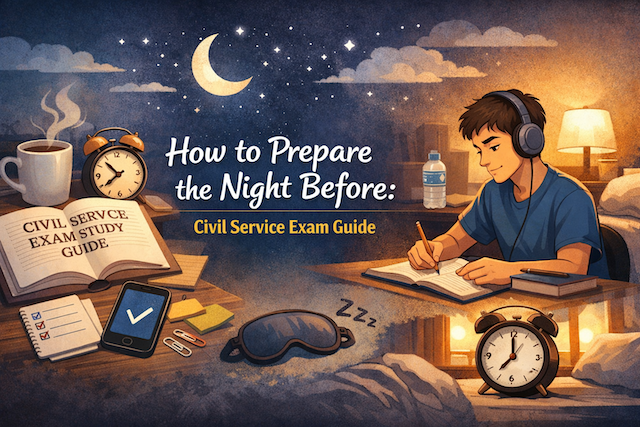
How to Prepare the Night Before: Civil Service Exam Guide
The night before the Civil Service Exam is just as important as the months of preparation leading up to it. While you cannot cram an entire syllabus overnight, what you can do is set yourself up mentally, physically, and emotionally for success. A calm, organized, and well-planned evening can significantly improve your focus, confidence, and performance on exam day.
This guide explains exactly how to prepare the night before the Civil Service Exam, step by step, so you can walk into the testing center feeling ready, composed, and in control.
Understand the Purpose of the Night Before Preparation
The night before the exam is not about learning new concepts. Instead, it serves three main purposes:
-
Reducing anxiety and mental overload
-
Ensuring logistical readiness
-
Allowing your brain to rest and consolidate information
Research shows that memory consolidation happens during sleep. Overloading your brain with new material the night before can actually reduce recall the next day. Your goal is to protect what you already know and enter the exam with a clear mind.
Do a Light Review, Not Heavy Studying
A short, focused review is beneficial, but only if done correctly.
What to Review
-
Key formulas, rules, or principles
-
Frequently tested topics you already understand
-
Personal summary notes or flashcards
-
Common mistakes you want to avoid
This kind of review reinforces familiarity without overwhelming your brain.
What to Avoid Reviewing
-
Entire textbooks or reviewers
-
New topics you have never studied
-
Long practice tests or mock exams
-
Complicated problem-solving sessions
If you find yourself feeling confused or stressed during review, stop immediately. That is a sign you are doing too much.
Prepare All Exam-Day Requirements in Advance
One of the biggest causes of exam-day stress is forgetting something important. Eliminate this risk by preparing everything the night before.
Documents and Identification
Prepare the following items and place them together in a clear folder or envelope:
-
Exam permit or Notice of Admission
-
Valid government-issued ID
-
Additional IDs if required
Double-check that the name on your documents matches exactly.
Writing and Exam Materials
Even if the testing center provides some items, it is safer to bring your own:
-
Black ballpoint pens
-
Pencils (if allowed)
-
Eraser
-
Sharpener
Test your pens to make sure they work properly.
Lay Out Your Clothes and Bag
Decision-making uses mental energy. Reduce unnecessary decisions by preparing your outfit and bag ahead of time.
Clothing Tips
-
Choose comfortable, breathable clothes
-
Avoid tight, flashy, or distracting outfits
-
Bring a light jacket in case the room is cold
-
Wear comfortable shoes
Avoid wearing anything new that might cause discomfort or irritation.
Bag Preparation
Pack your bag with:
-
Exam materials
-
Wallet
-
Snacks (if allowed)
-
Water bottle
-
Handkerchief or tissues
Once packed, place the bag near the door so you do not forget it in the morning.
Plan Your Route and Arrival Time
Transportation problems can ruin even the best preparation.
Confirm the Exam Location
-
Review the exact address of your testing center
-
Check the building name and room number if provided
-
Look up the location on a map
If possible, visualize or recall the route.
Set a Safe Arrival Time
Plan to arrive at least 30 to 60 minutes early. This allows time for:
Arriving early helps calm your nerves and gives you time to settle in.
Eat a Balanced Dinner
Your dinner plays a role in your energy and sleep quality.
What to Eat
-
Balanced meals with protein, complex carbohydrates, and vegetables
-
Light but filling food
-
Foods you are familiar with
Examples include rice with lean meat and vegetables, soup, or simple home-cooked meals.
What to Avoid
Your goal is stable energy and good sleep, not excitement or discomfort.
Limit Screen Time and Social Media
Constant exposure to screens can increase anxiety and disrupt sleep.
Why You Should Reduce Screen Time
-
Blue light interferes with melatonin production
-
Social media comparisons increase stress
-
News or exam-related discussions can trigger panic
Try to stop using your phone or computer at least one hour before bedtime.
What to Do Instead
Creating a calm environment signals your brain that it is time to rest.
Manage Exam Anxiety Before Sleeping
It is normal to feel nervous, but unmanaged anxiety can affect sleep quality.
Simple Relaxation Techniques
Remind yourself that you have prepared and that one exam does not define your entire future.
Positive Mental Framing
Replace negative thoughts like:
“I will fail”
With realistic ones such as:
“I have prepared, and I will do my best.”
Confidence does not mean certainty. It means trusting your preparation.
Set Multiple Alarms
Oversleeping is a preventable disaster.
Alarm Tips
If possible, ask a family member to wake you up as a backup.
Get Enough Sleep
Sleep is one of the most powerful exam performance tools.
How Much Sleep You Need
Aim for 7 to 8 hours of sleep. Even if you feel nervous, lying down and resting still helps your brain.
If You Cannot Fall Asleep
Even a shorter night of sleep is better than staying up studying.
Avoid Last-Minute Cramming
Studying late into the night creates more harm than benefit.
Why Cramming Backfires
Trust the work you have already done. The exam measures understanding over time, not last-minute memorization.
Visualize a Calm and Successful Exam Day
Mental rehearsal can improve confidence and focus.
Visualization Exercise
Close your eyes and imagine:
-
Waking up calmly
-
Traveling smoothly to the test center
-
Sitting comfortably at your seat
-
Reading questions clearly and answering confidently
This primes your mind for a positive experience and reduces fear of the unknown.
Final Checklist Before Sleeping
Before going to bed, quickly confirm:
Once confirmed, give yourself permission to rest.
Final Thoughts
The night before the Civil Service Exam is about preparing your mind, not your memory. A calm evening, light review, proper rest, and organized preparation can significantly boost your performance.
You have already done the hard work. This final step is about protecting your effort and entering the exam with confidence. Trust yourself, take care of your body and mind, and remember that being prepared also means knowing when to stop.
A well-prepared night leads to a focused morning—and that focus can make all the difference on exam day.
FAQs (Frequently Asked Questions)
What should I do if I feel nervous the night before the Civil Service Exam?
Feeling nervous is normal, especially when you have invested weeks or months preparing. The best approach is to acknowledge the anxiety without letting it control your night. Start by doing a short calming routine: breathe slowly for a few minutes, stretch gently, and remind yourself that nerves are a sign that you care. Avoid last-minute cram sessions, because they often increase panic and make you doubt what you already know. Instead, use a light review of familiar notes, then switch to relaxation. If thoughts keep racing, write down your worries on paper and close the notebook. This simple action helps many people mentally “park” anxious thoughts so they do not continue looping while you are trying to sleep.
Should I study at all the night before, or is it better to stop completely?
A light review is usually helpful, but heavy studying is not. Think of the night before as “maintenance,” not “training.” Reviewing a short list of key reminders—like formulas, rules, or common mistakes you tend to make—can reinforce confidence. However, doing a full practice exam or trying to learn new topics can overload your brain and reduce recall the next day. If you choose to study, keep it brief and structured: 20 to 45 minutes is often enough. Set a timer, review only what you already know, and stop while you still feel calm. The goal is to protect your energy and keep your mind clear, not to exhaust yourself.
What are the most important things to prepare the night before the exam?
The most important preparations are the ones that prevent stress on exam morning. First, organize your required documents such as your exam permit and valid identification. Next, prepare your writing materials—pens, pencils, erasers, and any allowed supplies—so you are not searching for them at the last minute. Then plan your outfit and pack your bag. Finally, confirm your route to the testing center and decide what time you need to leave to arrive early. When these basics are ready, your mind can focus on the exam itself instead of worrying about logistics.
How early should I arrive at the testing center?
Arriving early is one of the simplest ways to reduce anxiety. A good guideline is to arrive 30 to 60 minutes before the reporting time. This allows you to handle unexpected traffic, long lines, or last-minute instructions. It also gives you time to find your room, use the restroom, and settle down. If you arrive too close to the start time, your heart rate stays elevated and your concentration may suffer. Being early helps you start the exam in a calmer mental state.
What should I eat for dinner the night before the exam?
Choose a dinner that is balanced, light enough to digest comfortably, and familiar to your body. A good dinner usually includes complex carbohydrates for steady energy, protein for fullness, and vegetables for overall nutrition. Avoid extremely greasy meals, very spicy foods, or anything you know can upset your stomach. It is also wise to avoid overeating, because feeling heavy or uncomfortable can make sleep difficult. Keep caffeine to a minimum in the evening, and avoid alcohol since it can disrupt sleep quality.
Is it okay to drink coffee or energy drinks the night before?
It is generally better to limit caffeine in the afternoon and evening. While coffee might feel like it keeps you alert, it can also increase anxiety and interfere with sleep, even if you do not notice it immediately. Energy drinks are riskier because they often contain high caffeine and sugar, which can cause restlessness and a crash later. If you rely on caffeine, try to keep it in the morning or early afternoon instead. Your performance on exam day depends more on sleep quality and stable focus than on staying up late feeling “awake.”
What if I cannot sleep even after preparing everything?
This happens to many examinees, and it does not automatically mean you will fail. First, do not panic. Stressing about not sleeping often makes the problem worse. If you cannot fall asleep, focus on resting your body: lie down, keep the room quiet, and practice slow breathing. Avoid checking the time repeatedly, because it increases pressure. Do not start scrolling on your phone, since screen light and content can make your brain more active. Even if sleep is shorter than usual, resting still helps your brain recover. Many people perform well despite a slightly restless night because adrenaline and focus naturally rise on exam day.
Should I use my phone or social media to relax before bed?
It might feel relaxing, but it often backfires. Social media can trigger comparison, sudden stress, or unexpected negative content. Screens also expose you to bright light that may delay sleep. If you want to relax, choose low-stimulation activities instead, such as preparing your things calmly, taking a warm shower, reading something light, or listening to gentle music. If you must use your phone, keep it short and avoid exam-related videos, group chats, or posts that increase pressure.
What are good ways to mentally prepare for the exam morning?
Mental preparation is about creating a calm, confident mindset. One effective method is visualization: imagine waking up, traveling smoothly, finding your seat, and answering questions with focus. Another is using a simple mantra like “I prepared well, and I will do my best.” You can also plan a short morning routine—wake up, eat breakfast, get dressed, and leave on time—so the morning feels predictable instead of rushed. When your morning is structured, your mind stays calmer and your attention becomes sharper during the test.
What should I do if I realize I forgot something important at night?
If you notice a missing item, act immediately while you still have time. Check whether you can prepare a substitute, such as an extra pen or another valid ID. If the missing item is a document, look for a digital copy or confirm whether you can reprint it. Make a quick checklist and verify each item one by one. The key is not to spiral into panic. Problems feel bigger late at night, but many can be solved with calm steps. Once you have done what you can, stop thinking about it and return to rest.