2025年12月23日
3D ACADEMY offers affordable English study programs in Cebu, Philippines – perfect for beginners, professionals, and exam takers.

3D UNIVERSAL ENGLISH INSTITUTE INC
info.3d-universal.com
8:00-17:00(Mon-Fri)
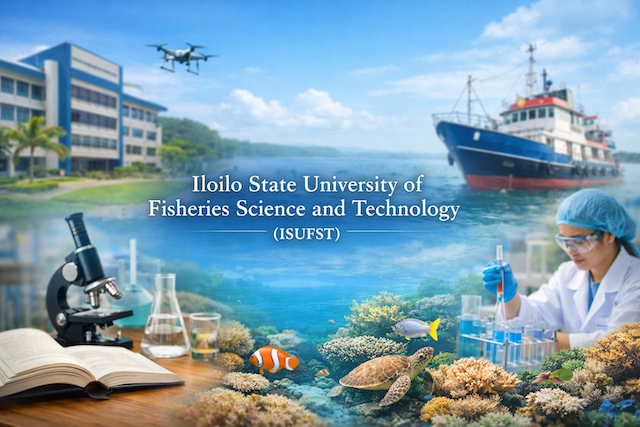
Iloilo State University of Fisheries Science and Technology (ISUFST)
Contents
- Iloilo State University of Fisheries Science and Technology (ISUFST)
- Overview of Iloilo State University of Fisheries Science and Technology
- Historical Background and Institutional Development
- Campuses and Geographic Presence
- Academic Programs and Degree Offerings
- Faculty and Academic Excellence
- Research and Innovation Initiatives
- Extension and Community Engagement
- Facilities and Learning Resources
- Student Life and Campus Culture
- Admission Requirements and Enrollment Process
- Accreditation and Quality Assurance
- Career Prospects and Graduate Outcomes
- Role in Regional and National Development
- Future Directions and Strategic Goals
- Conclusion
- FAQs (Frequently Asked Questions)
- What is Iloilo State University of Fisheries Science and Technology (ISUFST)?
- Is ISUFST a government school?
- Where is ISUFST located in Iloilo?
- What programs is ISUFST best known for?
- Does ISUFST offer fisheries and aquaculture degrees?
- Does ISUFST have graduate programs?
- How do I apply to ISUFST as a freshman?
- Can transferees or second-degree students enroll at ISUFST?
- What is student life like at ISUFST?
- Does ISUFST offer scholarships or financial assistance?
- Are there dormitories or student housing options near ISUFST?
- What career paths can ISUFST graduates pursue?
- Does ISUFST conduct research and community extension?
- How can I confirm the latest programs, campus details, and enrollment schedules?
Iloilo State University of Fisheries Science and Technology (ISUFST)
Overview of Iloilo State University of Fisheries Science and Technology
Iloilo State University of Fisheries Science and Technology (ISUFST) is a public higher education institution in the province of Iloilo, Philippines. Established with a strong mandate to advance fisheries, marine science, agriculture, and technology education, ISUFST plays a critical role in human resource development not only in Western Visayas but also in other coastal and rural communities across the country.
ISUFST is known for its applied, industry-relevant programs that respond directly to the needs of fisheries, aquaculture, agriculture, environmental management, and emerging technologies. As a state university, it offers affordable, quality education supported by government funding, making it accessible to students from diverse socio-economic backgrounds.
With multiple campuses strategically located across Iloilo, ISUFST functions as a regional hub for education, research, extension services, and community engagement, particularly in coastal and agricultural areas.
Historical Background and Institutional Development
ISUFST traces its roots to earlier fisheries and technical institutions that were established to support the growing need for specialized education in fisheries and marine resources. Over the decades, these institutions evolved in response to changes in national development priorities, scientific advancement, and workforce demand.
The transformation into a full-fledged state university marked a significant milestone. This transition expanded ISUFST’s academic scope beyond fisheries alone, integrating agriculture, engineering, information technology, education, business, and environmental sciences into its academic offerings.
The elevation to university status also strengthened ISUFST’s capacity for research, faculty development, graduate education, and international collaboration. Today, ISUFST continues to modernize its curriculum while maintaining its original mission of serving fisheries-dependent and rural communities.
Campuses and Geographic Presence
ISUFST operates multiple campuses throughout the province of Iloilo. Each campus has specialized academic strengths aligned with local industry needs and geographic conditions.
The main campus serves as the administrative and academic center, housing key research facilities, laboratories, and administrative offices. Other campuses focus on specific disciplines such as fisheries technology, marine biology, agriculture, teacher education, and engineering.
This multi-campus structure allows ISUFST to deliver education and extension services closer to the communities it serves. It also enables students from remote municipalities to pursue higher education without relocating far from home.
Academic Programs and Degree Offerings
ISUFST offers a wide range of undergraduate and graduate programs designed to produce skilled professionals, educators, researchers, and community leaders.
Undergraduate Programs
At the undergraduate level, ISUFST offers bachelor’s degrees in fisheries, marine biology, aquaculture, agriculture, environmental science, information technology, engineering, education, and business-related fields. These programs emphasize hands-on training, laboratory work, field immersion, and industry exposure.
Students enrolled in fisheries and marine-related programs receive extensive training in coastal resource management, fish processing, aquaculture systems, and marine conservation. Agriculture programs focus on crop science, animal production, agribusiness, and sustainable farming practices.
Education programs prepare future teachers for elementary and secondary levels, while engineering and technology programs equip students with technical skills relevant to regional development.
Graduate Programs
ISUFST also offers graduate programs at the master’s level, particularly in fisheries, education, and related sciences. These programs are designed for professionals seeking advanced knowledge, leadership roles, or research-oriented careers.
Graduate students benefit from ISUFST’s applied research focus and its strong linkages with government agencies, local government units, and industry partners.
Faculty and Academic Excellence
The faculty of ISUFST consists of experienced educators, researchers, and practitioners in their respective fields. Many faculty members hold advanced degrees and actively participate in research, extension projects, and professional organizations.
ISUFST places strong emphasis on faculty development through training, scholarships, research grants, and international exposure. This ensures that instruction remains current, relevant, and aligned with global academic standards.
Small class sizes in many programs allow for close mentorship and personalized academic support, particularly in laboratory and field-based courses.
Research and Innovation Initiatives
Research is a core function of ISUFST. The university conducts applied and developmental research aimed at improving fisheries productivity, food security, environmental sustainability, and rural livelihoods.
Key research areas include aquaculture technology, fish processing and post-harvest systems, marine biodiversity, coastal resource management, climate change adaptation, and sustainable agriculture.
ISUFST collaborates with national government agencies, local government units, non-government organizations, and international institutions to implement research projects with real-world impact. Research outputs are often translated into practical solutions through extension programs and policy recommendations.
Extension and Community Engagement
Extension services are central to ISUFST’s mission as a state university. Through training programs, workshops, technology transfer, and advisory services, ISUFST supports fisherfolk, farmers, local entrepreneurs, and community organizations.
The university provides technical assistance in areas such as aquaculture practices, fish processing, value-adding, sustainable farming, livelihood development, and environmental conservation. These initiatives help improve income opportunities and promote sustainable resource use in coastal and rural communities.
Students are often involved in extension activities, allowing them to gain practical experience while contributing to community development.
Facilities and Learning Resources
ISUFST maintains a range of academic and support facilities to enhance student learning and research productivity. These include science laboratories, fisheries laboratories, hatcheries, demonstration farms, computer laboratories, libraries, and research centers.
Fisheries and marine science students benefit from access to aquaculture ponds, marine laboratories, and field research sites. Agriculture students utilize experimental farms and greenhouses, while technology and engineering students work in specialized labs equipped with modern tools.
The university continuously invests in upgrading facilities to meet accreditation standards and industry requirements.
Student Life and Campus Culture
Student life at ISUFST is shaped by a strong sense of community, service, and professionalism. The university supports various student organizations, academic clubs, sports teams, and cultural groups that foster leadership, teamwork, and personal development.
Academic competitions, research forums, extension activities, and cultural events provide students with opportunities to develop both technical and soft skills. Despite its specialized focus, ISUFST offers a well-rounded campus experience that balances academic rigor with extracurricular engagement.
The multi-campus system also allows students to experience different community environments, from coastal towns to agricultural areas.
Admission Requirements and Enrollment Process
As a public state university, ISUFST follows standardized admission policies set by national and institutional guidelines. Applicants are typically required to pass an entrance examination, submit academic records, and meet specific program requirements.
Priority is often given to residents of Iloilo and nearby provinces, particularly for programs aligned with regional development needs. However, students from other regions are also welcome.
ISUFST maintains relatively affordable tuition and fees compared to private institutions, making it an attractive option for students seeking quality education with minimal financial burden.
Accreditation and Quality Assurance
ISUFST actively participates in accreditation and quality assurance processes to ensure that its programs meet national and international standards. Many of its academic programs are accredited or in the process of accreditation by recognized accrediting bodies.
Continuous curriculum review, faculty evaluation, and institutional assessment are integral parts of ISUFST’s commitment to academic excellence and accountability.
Career Prospects and Graduate Outcomes
Graduates of ISUFST are employed in a wide range of sectors, including fisheries, aquaculture, agriculture, education, government service, environmental management, and private industry.
Many alumni work as fisheries technologists, aquaculture specialists, agricultural officers, teachers, researchers, extension workers, and entrepreneurs. Others pursue advanced studies or take leadership roles in government agencies and non-government organizations.
ISUFST’s strong emphasis on practical skills, community engagement, and applied research enhances graduate employability, particularly in development-oriented careers.
Role in Regional and National Development
ISUFST plays a strategic role in supporting regional and national development goals related to food security, environmental sustainability, climate resilience, and inclusive growth.
By producing skilled professionals and generating relevant research, the university contributes directly to the development of fisheries and agriculture sectors, which are vital to the Philippine economy.
Its extension programs strengthen local capacities, while its graduates serve as agents of change in communities across the country.
Future Directions and Strategic Goals
Looking ahead, ISUFST aims to further strengthen its academic programs, expand graduate education, and enhance research productivity. The university is also focused on internationalization through partnerships, faculty exchanges, and collaborative research.
Digital transformation, sustainability initiatives, and innovation-driven education are key priorities as ISUFST adapts to changing global and national contexts.
By staying true to its mission while embracing modernization, Iloilo State University of Fisheries Science and Technology continues to position itself as a leading institution for fisheries, agriculture, and technology education in the Philippines.
Conclusion
Iloilo State University of Fisheries Science and Technology stands as a vital public university dedicated to education, research, and community service. With its strong foundation in fisheries and applied sciences, multi-campus presence, and commitment to regional development, ISUFST offers students a meaningful and practical pathway to professional success.
For students seeking affordable, industry-relevant education with strong community impact, ISUFST remains a compelling choice within Iloilo Province and beyond.
FAQs (Frequently Asked Questions)
What is Iloilo State University of Fisheries Science and Technology (ISUFST)?
Iloilo State University of Fisheries Science and Technology (ISUFST) is a public state university in Iloilo, Philippines. It is known for programs connected to fisheries, aquaculture, marine science, agriculture, environmental fields, and applied technology. As a state university, ISUFST aims to provide accessible and practical higher education while supporting research and community extension services that benefit local industries and coastal and rural communities.
Is ISUFST a government school?
Yes. ISUFST is a government-funded institution under the Philippine state university system. Being a state university generally means its tuition and fees are more affordable than many private colleges, and it follows policies and academic standards required for public higher education institutions. Students typically choose ISUFST for practical programs, regional relevance, and cost-effective education.
Where is ISUFST located in Iloilo?
ISUFST operates in Iloilo Province and has multiple campuses. The university’s presence across several locations helps serve students from different municipalities, including those in coastal and agricultural areas. Because campus locations and administrative arrangements can change over time, it is best to confirm the specific campus address and available programs through the university’s official channels before applying or traveling.
What programs is ISUFST best known for?
ISUFST is best known for fisheries-related programs and other applied science fields. Students often associate the university with fisheries technology, aquaculture, marine biology, fish processing, and coastal resource management. Over time, many state universities expand their offerings, so ISUFST may also provide programs in agriculture, education, engineering, information technology, business, and environmental fields, depending on campus and available facilities.
Does ISUFST offer fisheries and aquaculture degrees?
Yes, fisheries and aquaculture are core areas strongly connected to ISUFST’s identity. Students interested in careers such as aquaculture technician, fisheries technologist, hatchery manager, fish processing specialist, or coastal resource staff often explore ISUFST programs. Curriculum commonly includes both classroom learning and practical training such as laboratory work, field immersion, and production or processing exposure.
Does ISUFST have graduate programs?
Many state universities offer graduate programs, and ISUFST may have master’s programs aligned with its strengths, such as fisheries, education, or related sciences. Graduate offerings can vary by academic year depending on faculty availability, accreditation status, and demand. If you are planning to pursue a master’s degree, check current admission requirements, tuition, and schedules directly with the university.
How do I apply to ISUFST as a freshman?
Applicants usually complete an admission process that includes submitting school records and other documents and taking an entrance examination or assessment, depending on the university’s policy. Some programs may have additional requirements or screening steps. Since requirements can change, prepare early, monitor application deadlines, and verify the latest instructions through official ISUFST announcements.
Can transferees or second-degree students enroll at ISUFST?
Yes, transferees and second-degree applicants are commonly accepted in public universities, provided they meet grade requirements, submit complete documents, and pass any required evaluation. Transfer credit policies may differ by program, and some specialized courses may require bridging subjects. Contact the registrar or admissions office for a clear evaluation of your previous coursework.
What is student life like at ISUFST?
Student life at ISUFST typically includes academic organizations, skills-based clubs, sports activities, and campus events. Because many programs are hands-on, students may experience fieldwork, laboratory activities, and community extension participation as part of their learning. The multi-campus system can also create different campus cultures depending on the local community and the academic focus of each site.
Does ISUFST offer scholarships or financial assistance?
As a state university, ISUFST students may access government scholarship programs and financial assistance options depending on eligibility. There may also be institutional scholarships, academic merit support, or needs-based aid. Availability can vary by year and funding, so students should check application periods and required documents early to avoid missing opportunities.
Are there dormitories or student housing options near ISUFST?
Housing options depend on which campus you attend. Some campuses may have limited student housing, while others rely more on nearby rentals, boarding houses, or family accommodations. If you are moving from another province, plan your housing search early and consider safety, commute time, and access to food and transportation when choosing where to live.
What career paths can ISUFST graduates pursue?
ISUFST graduates can pursue careers in fisheries, aquaculture, agriculture, education, environmental management, research, and government service. Many graduates work with local government units, national agencies, private farms and hatcheries, seafood processing businesses, environmental programs, or community development projects. The strongest advantage of ISUFST programs is often their applied training and regional relevance.
Does ISUFST conduct research and community extension?
Yes. Research and extension are key functions of state universities, and ISUFST is closely associated with applied research in fisheries and related fields. Community extension may include training for fisherfolk, farmers, and local entrepreneurs, as well as technology transfer and livelihood support. Students may benefit by joining projects that build real-world skills and professional networks.
How can I confirm the latest programs, campus details, and enrollment schedules?
The most reliable way is to consult official ISUFST sources, such as its official website, verified social media pages, or direct communication with the admissions and registrar offices. Because program offerings, campus assignments, and enrollment schedules can change, confirm details before making decisions about applications, travel, or housing.
Iloilo University Guide: Best Schools, Admissions, Tuition Fees, and Student Life
Iloilo Universities & Colleges — Complete List (City & Province)

How to Register for eTravel Philippines (2025 Guide)
Step-by-step guide to completing your eTravel registration before arriving in the Philippines, with images and tips.

Night Market in Cebu – Things You Don’t Know About Cebu Life
Discover the hidden charm of Cebu’s night markets, from street food stalls to local life tips you won’t find in tourist guides.

How to Use ChatGPT for IELTS Preparation: A Complete Guide
Learn how to prepare for IELTS using ChatGPT — including strategies for Writing, Reading, Listening, Speaking, and grammar support.

How to Build a Website Without Coding Using ChatGPT
Discover how to build your own website using AI—no coding skills needed. From structure planning to SEO and design, let ChatGPT guide you.