2025年12月23日
3D ACADEMY offers affordable English study programs in Cebu, Philippines – perfect for beginners, professionals, and exam takers.

3D UNIVERSAL ENGLISH INSTITUTE INC
info.3d-universal.com
8:00-17:00(Mon-Fri)
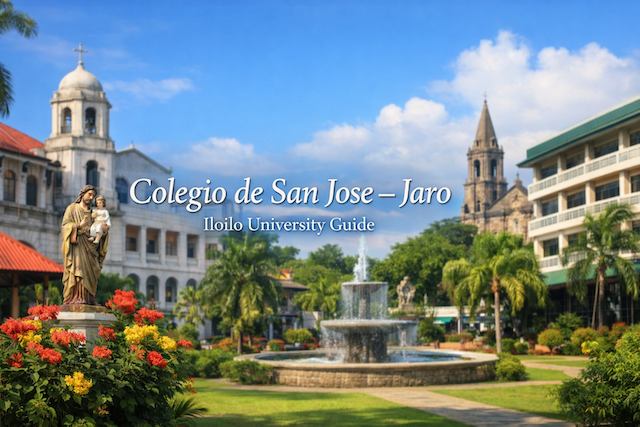
Colegio de San Jose – Jaro: Iloilo University Guide
Contents
- Colegio de San Jose – Jaro: Iloilo University Guide
- Overview of Colegio de San Jose – Jaro
- Location and Campus Environment in Jaro
- School Identity, Culture, and Formation
- Academic Programs and How to Evaluate the Right Fit
- Admission and Enrollment Process
- Tuition, Fees, and Budget Planning
- Student Life, Organizations, and Community
- Learning Environment and Teaching Style
- Support Services and Student Welfare
- Housing Options and Daily Living in Iloilo
- Tips for First-Year Students
- Who Should Consider Colegio de San Jose – Jaro?
- Quick Checklist Before You Enroll
- FAQs (Frequently Asked Questions)
- Where is Colegio de San Jose – Jaro located in Iloilo?
- What kind of school environment can students expect at CSJ–Jaro?
- Do you need to be Catholic to study at Colegio de San Jose – Jaro?
- What programs are offered at CSJ–Jaro?
- How does the admission process usually work?
- Is there an entrance exam or interview?
- How much does it cost to study at CSJ–Jaro?
- Are scholarships or financial assistance available?
- What is student life like at Colegio de San Jose – Jaro?
- Is CSJ–Jaro a good choice for students who commute?
- Are there nearby housing options for students?
- What should first-year students do to succeed academically?
Colegio de San Jose – Jaro: Iloilo University Guide
Overview of Colegio de San Jose – Jaro
Colegio de San Jose – Jaro (often shortened as CSJ–Jaro) is one of the long-established Catholic educational institutions in Iloilo, located in the historic district of Jaro. As a school rooted in faith-based formation, CSJ–Jaro is commonly associated with values-centered education, community service, and a learning environment where academics and character development are taught side by side.
For many students in Iloilo City and nearby towns, the appeal of studying in Jaro is practical: it is a major hub with accessible transportation, a strong local identity, and proximity to essential services (banks, eateries, clinics, and review centers). In that context, CSJ–Jaro can be a convenient and culturally familiar option—especially for students who want a school setting that integrates discipline, tradition, and student support systems.
This guide is written for prospective students (local and international), parents, and anyone researching colleges in Iloilo. It focuses on what you typically need to know before enrolling: what the school environment is like, how to evaluate programs, what student life may look like, and how to prepare for admission and first semester.
Location and Campus Environment in Jaro
Jaro is known for its heritage sites, churches, and central role in Iloilo’s history. Studying in this district gives students a campus experience that feels “city-connected” rather than isolated. Commuting is usually manageable because Jaro is well served by public transport routes connecting to Iloilo City proper and nearby areas.
A Jaro-based campus environment often means:
-
Easy access to food options, printing shops, and school supplies nearby
-
Higher foot traffic during peak hours (especially mornings and late afternoons)
-
A practical daily routine for commuting students
-
A mix of quiet heritage streets and busy commercial pockets
If you prefer a more self-contained “university town” feel, Jaro may feel more urban and open. But if you value convenience and being close to everyday services, studying in Jaro can be a strong advantage.
School Identity, Culture, and Formation
As a Catholic institution, CSJ–Jaro generally emphasizes formation beyond academics. This often shows up in:
-
Values education integrated into student life
-
Community outreach and service programs
-
School traditions, religious activities, and formation events
-
A focus on discipline, respect, and personal responsibility
For many students, this structure provides stability and clear expectations. For others, it can feel strict compared with a more free-form campus culture. If you are choosing between schools, it helps to reflect on what learning environment suits you best: do you thrive in a system with strong guidance and community norms, or do you prefer a more independent, flexible atmosphere?
If you come from a different religious background, the key question is usually not “Can I enroll?” (most Catholic schools accept students of different faiths) but “Am I comfortable with the school’s formation activities and values-oriented environment?” Understanding that early helps you avoid culture shock.
Academic Programs and How to Evaluate the Right Fit
Specific offerings can change over time, and different schools may expand or adjust programs based on demand and accreditation. Instead of choosing a school only by name, evaluate fit using these criteria:
1) Track record and outcomes
Ask questions like:
-
Do graduates find employment in their field?
-
Are there alumni networks or partner institutions?
-
Are there licensure exam pathways or review support (if relevant to your program)?
2) Faculty and learning support
Strong programs tend to have:
-
Faculty with real industry or professional experience
-
Structured syllabi, clear grading standards, and consistent feedback
-
Opportunities for consultation, tutoring, or academic advising
3) Facilities and practical training
Depending on your course, you may need labs, simulation rooms, computer facilities, or training partnerships. If the program is skills-heavy, your learning experience will depend heavily on equipment availability and hands-on practice.
4) Internship and practicum connections
For fields that require immersion (education, hospitality, healthcare-related tracks, business, IT), ask about practicum partners and how internships are arranged. A school with a reliable placement system reduces stress in later years.
5) Student workload and support systems
Some schools are supportive but demanding. Others are lighter but less structured. Neither is automatically better; the best choice is the one that matches your learning style and personal constraints (work schedule, family responsibilities, travel time).
If you are undecided, shortlist two to three programs and compare them side by side, focusing on outcomes, training, and support—not just tuition.
Admission and Enrollment Process
While exact steps vary, most colleges in Iloilo follow a similar flow. Prepare for a process like this:
Step 1: Basic requirements
Typically includes:
-
Completed application form
-
Recent ID photos
-
High school records (for freshmen) or transcript of records (for transferees)
-
Good moral certificate
-
Birth certificate or valid ID documents
Step 2: Entrance assessment or interview (if applicable)
Some schools require an entrance test; others may use interviews, screening, or program-specific assessments. Competitive programs may have additional checks, especially if they include practicum-heavy components.
Step 3: Payment and confirmation
Once accepted, you’ll confirm enrollment by paying initial fees and finalizing your schedule.
Practical tip: Enrollment seasons can be crowded. If you want better schedule options (especially for working students), process your requirements early.
Tuition, Fees, and Budget Planning
Tuition varies by program, year level, and laboratory requirements. Instead of focusing only on headline tuition, build a realistic semester budget. Consider:
-
Tuition and miscellaneous fees
-
Laboratory fees (if your course includes lab work)
-
Uniforms (if required)
-
Books, printing, and project costs
-
Transportation and daily meals
-
Internship expenses (later years: travel, uniforms, documentation)
If you are on a tight budget, ask about:
-
Scholarship opportunities and eligibility
-
Installment payment plans
-
Discounts (if offered for academic performance or special categories)
Budgeting early matters because the real financial stress often comes from mid-semester projects, group requirements, and practicum-related expenses—not only from tuition.
Student Life, Organizations, and Community
Student life in a values-centered school often emphasizes “community participation” more than purely recreational campus culture. You can expect student activities that may include:
-
Student councils and leadership groups
-
Academic clubs aligned with programs
-
Cultural, arts, and sports activities
-
Outreach programs and volunteer work
-
School-wide events tied to institutional traditions
If you want a social life that feels active and supportive, participating in organizations is usually the fastest path. It also helps with confidence, networking, and practical experience—especially if you are shy or new to Iloilo.
Learning Environment and Teaching Style
Many students choose schools like CSJ–Jaro because they prefer a guided learning structure. In a structured environment, you may encounter:
-
Clear attendance and discipline policies
-
Regular assessments and structured coursework
-
Teacher-led classes with defined objectives
-
Emphasis on respectful classroom conduct
This environment can be ideal for students who want routine and accountability. If you are highly independent and prefer self-paced learning, you’ll still succeed—but you may need to adapt to rules and institutional expectations.
A good way to test fit is to ask current students how they experience:
-
Workload intensity
-
Grading transparency
-
Availability of consultations
-
Class sizes and classroom dynamics
Support Services and Student Welfare
The strongest colleges are not only about academics—they help students stay stable and supported. Look for signs of a functioning support system, such as:
-
Guidance counseling services
-
Academic advising for course planning
-
Student discipline handled through clear procedures
-
Health services or partnerships for basic medical needs
-
Career support (resume prep, job fairs, internship coordination)
If you are moving from another province, support services become even more important. Homesickness and adjustment challenges are real, and schools that take student welfare seriously can make a big difference in your academic performance.
Housing Options and Daily Living in Iloilo
Many students studying in Iloilo choose between:
-
Living at home and commuting
-
Renting a bedspace near campus
-
Sharing an apartment with classmates
When choosing housing, prioritize:
-
Safety and lighting at night
-
Flood risk during rainy months
-
Reliable transportation options
-
Internet stability (important for research and online submissions)
-
Noise level (study environment)
Daily living costs in Iloilo are often manageable compared with larger metro areas, but your expenses can rise quickly if you eat out frequently or rely on ride-hailing daily. If you want a stable budget, plan meal options and commuting routes early.
Tips for First-Year Students
Starting college is not only an academic shift—it’s a lifestyle shift. Here are practical tips that help most freshmen:
1) Build a weekly routine immediately
Decide fixed time blocks for studying, rest, commuting, and personal tasks. Routine prevents last-minute panic.
2) Don’t underestimate general education subjects
Many students focus only on major subjects and neglect foundational courses—then get surprised by grades. Treat all subjects seriously.
3) Keep digital copies of everything
Scan and store receipts, enrollment forms, and important documents. You’ll thank yourself later.
4) Make friends early, but choose wisely
A supportive peer group affects your grades, stress level, and motivation.
5) Learn how your instructors grade
Some emphasize quizzes, others projects, others recitation. Once you understand the grading pattern, you can study strategically.
6) Ask for help before it becomes urgent
Consultation and guidance services are most helpful early—don’t wait until you are failing.
Who Should Consider Colegio de San Jose – Jaro?
CSJ–Jaro can be a strong match if you are looking for:
-
A values-centered, faith-informed educational environment
-
A structured campus culture with clear expectations
-
A location in a historic, accessible district of Iloilo
-
A school setting that encourages community involvement and personal formation
It may be less ideal if you strongly prefer:
-
A highly flexible, independent campus culture
-
A large-scale “big university” atmosphere with sprawling facilities
-
Minimal institutional structure or fewer formation activities
The best way to confirm fit is to compare your top two or three schools using the same checklist: program outcomes, learning support, location convenience, and your personal comfort with the campus culture.
Quick Checklist Before You Enroll
Use this checklist to make a confident decision:
-
What program am I enrolling in, and what jobs does it lead to?
-
What are the total semester costs beyond tuition?
-
How long is my commute, and is it sustainable daily?
-
What support exists for academic or personal difficulties?
-
Are internships/practicum placements organized and reliable?
-
Does the campus culture match my personality and learning style?
If you can answer these clearly, you’re not just choosing a school—you’re choosing an environment where you can realistically succeed.
FAQs (Frequently Asked Questions)
Where is Colegio de San Jose – Jaro located in Iloilo?
Colegio de San Jose – Jaro is located in the Jaro district of Iloilo City, an area known for its heritage sites, major transport routes, and student-friendly services. Jaro is generally considered one of the more accessible parts of Iloilo for daily commuting because it connects easily to other districts through jeepneys, modern jeep routes, and other local transport options. If you are planning to visit the campus before enrolling, it helps to arrive during weekday office hours so you can observe the surrounding area, traffic flow, and nearby amenities such as eateries, pharmacies, printing shops, and convenience stores.
What kind of school environment can students expect at CSJ–Jaro?
Students commonly describe CSJ–Jaro as a values-centered learning environment with a structured campus culture. As a Catholic institution, the school typically emphasizes character formation alongside academics. This can include community-oriented activities, school traditions, and expectations around respectful conduct. For many students, this structure provides clarity and stability, especially in the first year when adjusting to college workload and new responsibilities. If you prefer a guided environment with clear rules and routines, you may find the setting supportive and motivating.
Do you need to be Catholic to study at Colegio de San Jose – Jaro?
In many Catholic schools in the Philippines, students from different religious backgrounds are welcome to apply and enroll. However, you should be comfortable with the school’s identity and the possibility of formation activities that reflect Catholic values. These may include school-wide programs, community service initiatives, and events aligned with the institution’s mission. If you are unsure, it is a good idea to ask the admissions office what activities are required and what options exist for students of other faiths, so you can make an informed decision without surprises.
What programs are offered at CSJ–Jaro?
Academic offerings can change over time depending on accreditation, demand, and institutional priorities. The best approach is to confirm the latest program list directly through official school channels. When reviewing programs, look beyond the program title and ask practical questions: What are the major subjects? Are there laboratories or practicum requirements? Does the curriculum include internship partnerships? What outcomes do graduates typically achieve? This method helps you evaluate whether the program fits your career goals, learning style, and budget.
How does the admission process usually work?
Most colleges follow a similar enrollment flow: submission of requirements, assessment or screening (if applicable), then confirmation of enrollment through payment and final scheduling. Typical documents include an application form, ID photos, academic records, and a good moral certificate. Transferees may need additional documents such as a transcript of records and clearance requirements. Because processes and deadlines vary each term, applicants should prepare documents early and check whether there are entrance exams, interviews, or program-specific screening steps.
Is there an entrance exam or interview?
Depending on the school’s policies and the program you are applying for, you may encounter an entrance assessment, interview, or other screening activity. Some institutions use tests to evaluate readiness in basic skills, while others focus more on document screening and interviews. Programs with intensive practicum components may have additional checks. If you want to prepare well, ask admissions what topics are covered, what the format looks like, and whether there are review materials or guidance for applicants.
How much does it cost to study at CSJ–Jaro?
Tuition and fees depend on the program, year level, and whether the course requires laboratories, special equipment, or practicum activities. Instead of budgeting only for tuition, plan for the full semester cost: miscellaneous fees, lab fees, uniforms (if required), books, printing, and project materials. You should also consider transportation and meals, especially if you commute daily. For a clearer estimate, request a current breakdown of fees from the school and ask about installment options if you need flexibility.
Are scholarships or financial assistance available?
Many schools offer scholarships or financial support based on academic performance, need-based criteria, or specific categories. Availability and requirements can change each year, so applicants should ask for the latest list of scholarship types, application deadlines, and required documents. If you are aiming for a scholarship, prepare early and keep your academic records organized. Also ask whether scholarships cover only tuition or also include miscellaneous fees, because this affects your total out-of-pocket cost each semester.
What is student life like at Colegio de San Jose – Jaro?
Student life often includes academic clubs, leadership opportunities, school events, and community-oriented activities. In a values-centered institution, students may find that service programs and formation events are more visible parts of campus culture. Joining an organization can help you build friendships, adjust faster to college routines, and develop soft skills such as communication, teamwork, and leadership. If you are shy or new to Iloilo, joining even one club or volunteering activity can make campus life feel more welcoming.
Is CSJ–Jaro a good choice for students who commute?
Jaro is generally commuter-friendly because it is connected to multiple transport routes and has many nearby services. For commuting students, the biggest success factor is routine: knowing your route, estimating travel time during rush hours, and planning buffer time for rain or traffic. If you commute daily, consider scheduling classes to reduce long gaps between subjects, since waiting hours on campus can increase daily expenses. Having a consistent weekly plan for meals, transport, and study time makes commuting more sustainable.
Are there nearby housing options for students?
Many students in Iloilo choose between staying at home, renting a bedspace, or sharing an apartment with classmates. When selecting housing near Jaro, prioritize safety, lighting at night, and ease of transportation. Check internet reliability if you expect online submissions or research work. Also consider flood risk during heavy rains and the noise level of the neighborhood. If possible, visit the area in the evening as well as daytime to understand the real environment you will experience as a student.
What should first-year students do to succeed academically?
First-year success usually comes down to consistency rather than intensity. Start by building a weekly schedule for study, rest, and commuting. Treat general education subjects seriously, not only major subjects, because these courses still impact your grades and academic standing. Keep digital copies of important documents and track deadlines using a simple planner or calendar. Most importantly, ask for help early if you struggle. Consultation with instructors, academic advising, and peer study groups can prevent small problems from turning into major setbacks.
Iloilo University Guide: Best Schools, Admissions, Tuition Fees, and Student Life
Iloilo Universities & Colleges — Complete List (City & Province)

How to Register for eTravel Philippines (2025 Guide)
Step-by-step guide to completing your eTravel registration before arriving in the Philippines, with images and tips.

Night Market in Cebu – Things You Don’t Know About Cebu Life
Discover the hidden charm of Cebu’s night markets, from street food stalls to local life tips you won’t find in tourist guides.

How to Use ChatGPT for IELTS Preparation: A Complete Guide
Learn how to prepare for IELTS using ChatGPT — including strategies for Writing, Reading, Listening, Speaking, and grammar support.

How to Build a Website Without Coding Using ChatGPT
Discover how to build your own website using AI—no coding skills needed. From structure planning to SEO and design, let ChatGPT guide you.