
Contents
- Northern Iloilo State University (NISU): Iloilo University Guide
- Overview of Northern Iloilo State University
- Historical Background and University Status
- Campuses and Geographic Coverage
- Academic Colleges and Degree Programs
- Accreditation and Academic Quality
- Tuition, Fees, and Cost of Study
- Admissions Process and Requirements
- Student Life and Campus Environment
- Research and Extension Services
- Transportation and Accessibility
- Career Outcomes and Opportunities
- Who Should Consider Studying at NISU
- Final Thoughts
- FAQs (Frequently Asked Questions)
- What is Northern Iloilo State University (NISU)?
- Where is the main campus of NISU located?
- Does NISU operate multiple campuses?
- What academic programs are offered at NISU?
- Is NISU an affordable option for college students?
- How do I apply to NISU as a first-year student?
- Can transferees and returning students enroll at NISU?
- How can I know which campus offers my chosen program?
- What is student life like at NISU?
- Does NISU offer scholarships or financial assistance?
- Is NISU suitable for working students?
- What should I consider before choosing NISU?
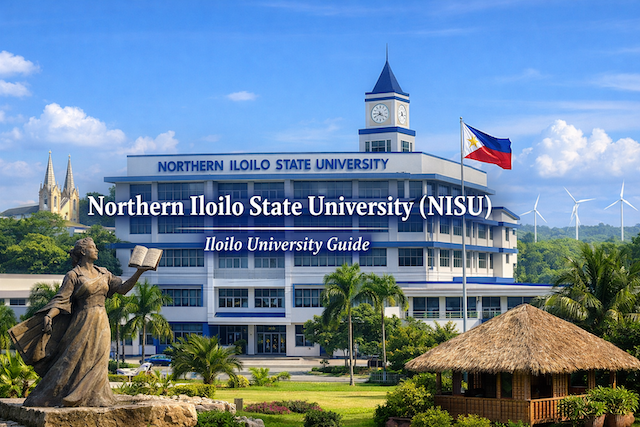
Northern Iloilo State University (NISU): Iloilo University Guide
Overview of Northern Iloilo State University
Northern Iloilo State University (NISU) is a public state university located in the northern part of Iloilo Province, Philippines. It plays a vital role in providing accessible and affordable higher education to students from rural and coastal communities. As a state university, NISU follows a mandate centered on instruction, research, and extension, with strong emphasis on community development and practical education.
NISU operates under a multi-campus system, allowing students from different municipalities to pursue higher education without relocating far from home. This structure reflects the university’s mission to reduce educational barriers and support regional growth by developing skilled graduates who are closely connected to local industries and public service needs.
Historical Background and University Status
Northern Iloilo State University was established through a process of institutional integration and legal conversion. Several former colleges and satellite institutions in Northern Iloilo were consolidated to form a single state university. This transition marked a major step forward, expanding academic scope and strengthening administrative capacity.
Achieving university status required meeting national standards for faculty qualifications, facilities, governance, and academic offerings. The conversion allowed NISU to broaden its degree programs, enhance research and extension activities, and pursue stronger collaborations with government agencies, local industries, and community organizations.
Today, NISU stands as one of the key public higher education institutions serving Iloilo Province outside of Iloilo City.
Campuses and Geographic Coverage
One of NISU’s defining features is its wide geographic reach. Instead of a single centralized campus, the university operates across several municipalities in Northern Iloilo. This multi-campus approach ensures that education remains accessible even to students from remote or economically challenged areas.
Commonly recognized NISU campuses include:
-
Estancia (Main Campus)
-
Estancia West Campus
-
Ajuy Campus
-
Barotac Viejo Campus
-
Batad Campus
-
Concepcion Campus
-
Lemery Campus
-
Sara Campus (Victorino Salcedo Campus)
Each campus supports specific academic programs based on local needs, available facilities, and historical specialization. Because of this, students should always verify which campus offers their chosen degree before applying.
Academic Colleges and Degree Programs
Northern Iloilo State University offers a diverse range of undergraduate programs designed to align with regional workforce demands and national development priorities.
Education Programs
Teacher education is one of NISU’s strongest areas. Programs are designed to prepare future educators for elementary and secondary levels, with emphasis on pedagogy, subject mastery, and classroom practice. These programs are particularly important for supplying qualified teachers to public schools across Iloilo and nearby provinces.
Engineering and Technology
NISU offers engineering and industrial technology programs aimed at developing practical, job-ready skills. These programs typically include laboratory work, project-based learning, and exposure to real-world technical applications. Graduates often pursue careers in construction, manufacturing, utilities, and technical services.
Information Technology and Computing
Information and computing-related programs focus on foundational IT skills, software applications, and digital literacy. These programs are increasingly relevant as government offices, schools, and small businesses in provincial areas adopt digital systems and online services.
Fisheries and Agriculture
Given Iloilo’s strong coastal and agricultural identity, fisheries and agriculture programs are a natural strength of NISU. These courses emphasize sustainable practices, resource management, and applied fieldwork, making graduates well-suited for roles in local industries, cooperatives, and government agencies.
Hospitality, Tourism, and Management
Hospitality and tourism management programs respond to the growing tourism potential of Northern Iloilo, including island destinations and coastal towns. Business and management programs, meanwhile, support entrepreneurship, local enterprise development, and public administration.
Arts and Sciences
Arts and sciences programs provide foundational academic training, often serving as preparation for teaching, graduate studies, or careers in public service.
Program availability may vary by campus, and students are advised to check current offerings during the application period.
Accreditation and Academic Quality
NISU places importance on maintaining academic standards through internal evaluations and external accreditation processes. Accreditation supports curriculum improvement, faculty development, and institutional credibility.
For students, accreditation can be an indicator that a program meets recognized quality benchmarks. It can also be relevant for licensure exams, employment, and future academic pursuits.
Tuition, Fees, and Cost of Study
As a state university, NISU is widely regarded as an affordable option for higher education. Eligible Filipino students generally benefit from reduced or free tuition policies under national education programs.
However, students should be aware that tuition-free education does not eliminate all costs. Common expenses may include:
-
Transportation and daily commuting
-
Meals and living expenses
-
Uniforms or specialized attire for certain programs
-
Laboratory fees and project materials
-
Printing, internet access, and personal supplies
Students are encouraged to prepare a realistic monthly budget to avoid financial stress during the academic year.
Admissions Process and Requirements
Admissions procedures at NISU can differ slightly by campus and program, but the general process follows standard public university practices.
For Incoming Freshmen
Applicants typically need to submit:
-
Senior High School report card or equivalent
-
Certificate of Good Moral Character
-
Birth certificate or valid identification
-
Completed application forms
-
Other campus- or program-specific requirements
Some programs may require entrance examinations, interviews, or screening activities, especially for limited-slot courses.
For Transferees and Returnees
Transferees are usually required to provide:
-
Transcript of Records or certified grades
-
Honorable dismissal or transfer credentials
-
Evaluation for subject equivalency
Credit transfer is subject to departmental assessment, and some students may need to complete additional coursework.
Because procedures may change, applicants should follow official announcements and communicate directly with campus admissions offices.
Student Life and Campus Environment
Student life at NISU is generally described as community-oriented and practical. Compared to large urban universities, the environment is more grounded and closely connected to local culture and daily life.
Students can participate in:
-
Academic and professional organizations
-
Student government and leadership activities
-
Community extension and outreach programs
-
Skills competitions and academic events
Participation in organizations and extension projects can significantly enhance a student’s college experience, helping develop leadership, communication skills, and professional networks.
Research and Extension Services
Research and community extension are central to NISU’s identity as a state university. Faculty and students are encouraged to engage in applied research projects that address local challenges such as education quality, coastal resource management, agricultural productivity, and community development.
Extension activities often involve:
-
Training programs for local communities
-
Technical assistance to farmers, fishers, and small businesses
-
Educational outreach and public service initiatives
For students, these activities provide hands-on experience and a deeper understanding of how academic knowledge can be applied to real-world problems.
Transportation and Accessibility
Access to NISU campuses depends largely on a student’s place of residence. Most students rely on public transportation such as jeepneys, buses, and vans that operate between municipalities.
Students coming from Iloilo City typically travel north toward their assigned campus, then transfer to local transport. Because schedules and routes can vary, it is recommended that students test their commute before the semester begins.
Planning transportation in advance helps avoid issues related to travel time, weather conditions, and daily expenses.
Career Outcomes and Opportunities
Graduates of Northern Iloilo State University often pursue careers in:
-
Public and private schools
-
Local government units
-
Engineering and technical services
-
Information technology support roles
-
Hospitality and tourism establishments
-
Fisheries, agriculture, and environmental programs
Many graduates also continue to professional licensure exams or further studies. Career outcomes depend heavily on the chosen program, campus resources, and individual effort in building experience through internships and extracurricular activities.
Who Should Consider Studying at NISU
NISU is particularly well-suited for:
-
Students seeking affordable public higher education
-
Learners from Northern Iloilo who prefer to study near home
-
Those interested in community-based and applied learning
-
Students planning careers in education, public service, or local industries
Students who value accessibility, practicality, and regional relevance may find NISU a strong choice.
Final Thoughts
Northern Iloilo State University plays a crucial role in expanding access to higher education across Iloilo Province. Through its multi-campus system, diverse academic offerings, and strong community orientation, NISU provides opportunities for students who may not have access to private or city-based universities.
For prospective students, success at NISU depends on choosing the right program and campus, managing costs wisely, and actively participating in academic and community activities. With careful planning and commitment, NISU can serve as a solid foundation for professional growth, public service, and lifelong learning.
FAQs (Frequently Asked Questions)
What is Northern Iloilo State University (NISU)?
Northern Iloilo State University (NISU) is a public state university located in Iloilo Province, Philippines. It operates as a multi-campus institution serving students from Northern Iloilo and nearby areas. NISU focuses on providing accessible, affordable, and community-oriented higher education, with strong emphasis on instruction, research, and extension services that support local and regional development.
Where is the main campus of NISU located?
The main campus of NISU is located in Estancia, Iloilo. However, because NISU follows a multi-campus system, not all programs are offered in one location. Some degree programs are available in other municipalities across Northern Iloilo. Students should always confirm the exact campus where their chosen course is offered before applying or enrolling.
Does NISU operate multiple campuses?
Yes, NISU operates several campuses across Northern Iloilo. This structure allows students to pursue higher education without relocating far from their home communities. While this setup improves accessibility, facilities and services may vary from campus to campus. It is important to check the specific resources, laboratories, and support services available at your intended campus.
What academic programs are offered at NISU?
NISU offers a wide range of undergraduate programs in areas such as education, engineering, information technology, industrial technology, hospitality and tourism management, business and management, fisheries, agriculture, and arts and sciences. Program availability may differ depending on the campus and academic year, so students are advised to verify current offerings through official university announcements or campus offices.
Is NISU an affordable option for college students?
NISU is considered an affordable option because it is a state university and follows government policies that reduce or eliminate tuition fees for eligible Filipino students. However, students should still plan for other expenses such as transportation, food, accommodation (if applicable), uniforms for certain programs, project costs, and personal study materials. Creating a realistic budget is essential for a smooth college experience.
How do I apply to NISU as a first-year student?
First-year applicants are usually required to submit senior high school records, a certificate of good moral character, birth certificate, and other standard admission documents. Some programs or campuses may require entrance exams, interviews, or screening procedures. Application schedules and requirements may change each academic year, so applicants should monitor official announcements and apply early.
Can transferees and returning students enroll at NISU?
Yes, NISU generally accepts transferees and returning students, subject to evaluation and available slots. Transferees are typically required to submit a transcript of records, honorable dismissal or transfer credentials, and other documents requested by the campus. Credit transfer depends on course equivalency and curriculum alignment, and some students may be required to take additional or bridging subjects.
How can I know which campus offers my chosen program?
The most reliable way is to contact the admissions or registrar’s office of the specific NISU campus. Because NISU operates multiple campuses, a program listed under the university may only be offered in selected locations. Confirming the campus early helps avoid issues related to commuting, housing, and class scheduling.
What is student life like at NISU?
Student life at NISU is generally community-focused and practical. Students often participate in academic organizations, student government, outreach programs, and skills-based activities. Campus events and community extension projects are common, especially in programs connected to education, fisheries, agriculture, and technology. The overall experience depends on the campus, program, and level of student involvement.
Does NISU offer scholarships or financial assistance?
Aside from tuition-related government support, NISU students may have access to various scholarships and financial assistance programs, depending on availability and eligibility. These may include government-sponsored grants, local government assistance, or institution-based support. Students are encouraged to inquire during enrollment about current financial aid opportunities and application procedures.
Is NISU suitable for working students?
NISU can be suitable for working students, particularly those who live near their chosen campus. However, class schedules vary by program, and some courses require laboratory work, field activities, or internships that may limit flexibility. Working students should consult their department about schedules and academic workload before committing to both work and study.
What should I consider before choosing NISU?
Before choosing NISU, consider whether your preferred program is offered at a campus you can easily access. Evaluate total expenses beyond tuition, including daily transportation and project costs. It is also helpful to ask about licensure preparation, internship opportunities, facilities, and student support services. Making an informed decision will help ensure a more successful and manageable college experience.



