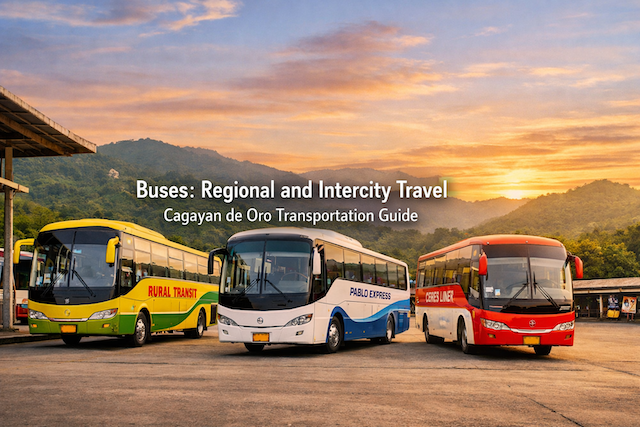
Buses: Regional and Intercity Travel
Cagayan de Oro Transportation Guide
Cagayan de Oro (often called CDO) is the main transportation hub of Northern Mindanao. While flights connect the city to Manila and Cebu, buses remain the most important and practical option for regional and intercity travel. They serve nearby provinces, major Mindanao cities, ports, and even remote towns that are not easily accessible by air.
For travelers, students, workers, and long-term residents, understanding how bus travel works in Cagayan de Oro can save time, money, and stress. This guide explains bus terminals, major routes, bus companies, fares, schedules, safety tips, and practical advice for first-time and repeat travelers.
Why Use Buses in Cagayan de Oro?
Buses are the backbone of land transportation in Mindanao, and Cagayan de Oro plays a central role.
Key advantages include:
-
Affordable fares compared to flights
-
Extensive coverage across Northern Mindanao
-
Frequent departures throughout the day
-
Direct access to ports, towns, and inland cities
-
Reliable option during peak seasons and holidays
For travelers moving between Bukidnon, Iligan, Butuan, Davao, and Misamis Oriental, buses are often the fastest and most practical choice when considering total travel time.
Major Bus Terminals in Cagayan de Oro
Cagayan de Oro has two main bus terminals serving different directions.
Agora Integrated Bus Terminal
The Agora Bus Terminal is the largest and busiest terminal in the city.
Main features:
-
Serves most intercity and long-distance routes
-
Located in Barangay Lapasan, near Agora Market
-
Well-connected by jeepney, motorela, and taxi
Common destinations from Agora:
Facilities include:
Agora is usually crowded during early mornings, weekends, and holidays.
Bulua Bus Terminal
The Bulua Bus Terminal mainly serves routes heading west and southwest.
Main features:
Common destinations from Bulua:
While smaller than Agora, Bulua Terminal is more relaxed and easier to navigate.
Major Bus Companies Operating in Cagayan de Oro
Several well-established bus companies operate in and out of Cagayan de Oro.
Rural Transit of Mindanao (RTMI)
One of the most reliable operators in Northern Mindanao.
Known for:
Popular routes:
-
CDO to Iligan
-
CDO to Bukidnon
-
CDO to Ozamiz
RTMI buses are a common choice for daily commuters and long-distance travelers.
Super Five Transport
Super Five is known for comfortable buses and professional service.
Features:
Popular routes:
-
CDO to Davao
-
CDO to Iligan
-
CDO to Pagadian
This company is preferred by travelers who want a smoother and quieter ride.
Bachelor Express
Bachelor Express operates long-distance routes across Mindanao.
Features:
Popular routes:
Bachelor Express is often used for overnight travel.
Other Regional Operators
Smaller operators serve short-distance and provincial routes, especially to nearby towns in Misamis Oriental and Bukidnon. These buses are usually non-air-conditioned but very affordable.
Popular Intercity Bus Routes from Cagayan de Oro
Cagayan de Oro to Iligan City
One of the busiest bus routes in Northern Mindanao.
Travel details:
This route is popular with students, workers, and tourists visiting waterfalls and coastal areas.
Cagayan de Oro to Bukidnon (Malaybalay and Valencia)
Bukidnon is a major agricultural and educational center.
Travel details:
Buses run frequently from early morning until evening.
Cagayan de Oro to Davao City
A long but important intercity route.
Travel details:
Many travelers choose overnight trips to save on accommodation.
Cagayan de Oro to Ozamiz City
A key route connecting to ferry ports.
Travel details:
This route is popular during holidays.
Cagayan de Oro to Pagadian City
Serves western Mindanao travelers.
Travel details:
Ticketing and Fare System
Bus fares in Cagayan de Oro are generally distance-based.
Key points:
-
Tickets are usually purchased at the terminal
-
Some buses allow onboard payment
-
Reserved seating is common on long routes
-
Discounts may apply for students, seniors, and persons with disabilities
During peak seasons, buying tickets early is strongly recommended.
Bus Types and Comfort Levels
Non-Air-Conditioned Buses
Air-Conditioned Buses
Deluxe and Night Buses
Travel Time Considerations
Travel time can vary due to:
To avoid delays:
-
Travel early in the morning
-
Avoid late afternoon departures on weekdays
-
Allow buffer time when connecting to ferries or flights
Safety and Security Tips for Bus Travel
Bus travel in Mindanao is generally safe, but basic precautions are important.
Safety tips:
-
Keep valuables in a small bag close to you
-
Avoid displaying expensive items
-
Listen to conductor instructions
-
Be cautious during night trips
Most long-distance buses have assigned conductors who assist passengers throughout the journey.
Luggage and Baggage Rules
Typical luggage policies:
-
Small bags allowed inside the bus
-
Large luggage stored underneath
-
Extra fees may apply for oversized items
Label your luggage clearly and keep important items with you.
Bus Travel During Holidays and Peak Seasons
Peak periods include:
-
Christmas and New Year
-
Holy Week
-
Fiesta seasons
-
Long weekends
During these times:
Arriving at the terminal several hours early is recommended.
Accessibility for First-Time Visitors
For travelers new to Cagayan de Oro:
Asking terminal staff for assistance is normal and encouraged.
Bus Travel vs Other Transport Options
Compared to other options:
-
Bus vs Van: Buses are cheaper and more comfortable for long distances
-
Bus vs Flight: Buses are more flexible and affordable
-
Bus vs Private Car: Buses avoid parking and fuel costs
For most intercity trips in Northern Mindanao, buses remain the most balanced option.
Final Thoughts
Buses are an essential part of daily life and regional travel in Cagayan de Oro. With extensive routes, affordable fares, and frequent departures, they connect the city to nearly every major destination in Northern Mindanao and beyond.
Whether you are a tourist exploring Mindanao, a student commuting to Bukidnon, or a resident traveling for work, understanding the bus system will make your journey smoother and more predictable. With basic preparation and awareness, bus travel in Cagayan de Oro is a reliable and practical choice for regional and intercity transportation.
Frequently Asked Questions (FAQs)
Which bus terminals should I use in Cagayan de Oro for regional and intercity travel?
Cagayan de Oro has two main terminals used by most travelers: Agora Integrated Bus Terminal and Bulua Bus Terminal. Agora is the larger, busier terminal and typically handles many long-distance and intercity routes, including trips to major cities and key provincial areas. Bulua is also important, especially for certain western and southwest-bound routes and for travelers who prefer a terminal that can feel less crowded. If you are unsure, ask at your accommodation or show your destination name to a terminal staff member, and they can direct you to the correct terminal and loading bay.
Do I need to buy a bus ticket in advance, or can I pay on the bus?
For many short and medium routes, you can often buy a ticket at the terminal right before departure, and on some services you may pay onboard. However, for long-distance routes, overnight buses, and travel dates during weekends or holidays, it is safer to purchase your ticket at the terminal earlier in the day or as early as possible. Advance tickets reduce the risk of fully booked trips and help you get a better seat, especially if the bus uses assigned seating. If you arrive during peak hours, expect longer lines and less seat availability.
How early should I arrive at the terminal before departure?
For short regional routes, arriving 30 to 60 minutes early is usually enough to find the correct bay, buy a ticket, and board calmly. For intercity trips such as Davao, Ozamiz, or Pagadian, arriving 60 to 120 minutes early is a smart choice, particularly if you are traveling with luggage or if you are unfamiliar with the terminal layout. During peak seasons like Christmas, New Year, Holy Week, or major local festivals, consider arriving even earlier because passenger volume increases dramatically and buses can fill up quickly.
Are there air-conditioned and non-air-conditioned buses, and which one should I choose?
Yes, both types are common. Non-air-conditioned buses are usually the cheapest option and may work well for shorter trips, but they can feel hot, noisy, and crowded, especially midday. Air-conditioned buses cost more but offer a more comfortable ride, particularly for long distances. For trips lasting more than two to three hours, many travelers prefer air-conditioned buses for better ventilation, reduced dust, and a more stable seating experience. If you are sensitive to cold air, bring a light jacket because some air-conditioned units can be chilly.
Are night buses available from Cagayan de Oro, and are they safe?
Night buses are available on some long routes, and many travelers use them to save time and avoid paying for a hotel night. Safety is generally reasonable when you take common-sense precautions: keep valuables close, avoid flashing expensive items, and stay alert when the bus stops at terminals or rest areas. Choose reputable operators when possible, and if you are traveling alone, select a seat closer to other passengers rather than an isolated spot at the back. If you feel uncomfortable at any point, ask the conductor for assistance.
How much luggage can I bring, and where is it stored?
Most buses allow small bags inside the cabin, such as backpacks or day bags, which should fit on your lap or under the seat. Larger suitcases and bulky items are typically placed in the luggage compartment underneath the bus. Some operators may charge an additional fee for oversized or heavy baggage, especially on longer routes. Label your luggage with your name and phone number, and keep essential items like passports, wallets, phones, and medications in a smaller bag that stays with you at all times.
What are the common rest stop rules during long trips?
On longer routes, buses usually stop at designated roadside restaurants or transport stops for meals and restroom breaks. These breaks may be short, so pay attention to the time the conductor announces and return promptly. Keep small change ready for restroom fees or snacks. If you plan to buy food, choose items that are easy to carry and not messy. It is also wise to use rest stops to stretch, hydrate, and check that your belongings are still secure before the bus continues.
How do I choose the best departure time to avoid delays?
Morning departures often reduce the risk of traffic congestion, especially when leaving central Cagayan de Oro. Late afternoon trips can face heavier traffic and longer loading times. Weather can also affect road conditions, so during rainy periods, build in extra buffer time. If you have a strict schedule, such as catching a ferry or a flight later in the day, choose an earlier bus and avoid the last departure option. For important connections, it is safer to arrive hours ahead rather than minutes ahead.
Can buses from Cagayan de Oro connect me to ferry ports and onward travel?
Yes. Many travelers use buses to reach port cities and coastal hubs where ferry travel is available. Routes to areas like Ozamiz can be useful for travelers connecting to sea transport options, and other regional routes can help you reach towns that serve as gateways to islands or remote coastal areas. If you are planning a bus-to-ferry connection, confirm the ferry schedule independently and factor in possible delays. Always aim to arrive at the port with enough time to buy tickets, pass security checks, and locate the correct boarding area.
What should first-time visitors know about navigating the terminals?
Terminals can feel overwhelming at first because of crowds, multiple loading bays, and frequent announcements. The easiest approach is to locate the information desk or a ticket counter and clearly state your destination. Keep your destination written on your phone in case pronunciation is difficult. Watch for signs indicating routes or bay numbers, and verify with staff before lining up. Avoid accepting help from unofficial individuals offering “special rides” or ticket shortcuts. Stick to official counters, posted queues, and uniformed personnel whenever possible.
Are bus fares fixed, and do discounts apply?
Fares are usually distance-based and generally consistent, though they may vary by bus type (air-conditioned versus non-air-conditioned, standard versus deluxe). Discounts often apply for eligible passengers such as students, senior citizens, and persons with disabilities, but you may need to present valid identification. If you are a student traveler, keep your student ID accessible. For long-distance routes with assigned seating, the fare may include a specific seat category. If anything is unclear, ask for the total fare before paying.