2026年4月3日
3D ACADEMY offers affordable English study programs in Cebu, Philippines – perfect for beginners, professionals, and exam takers.

3D UNIVERSAL ENGLISH INSTITUTE INC
info.3d-universal.com
8:00-17:00(Mon-Fri)
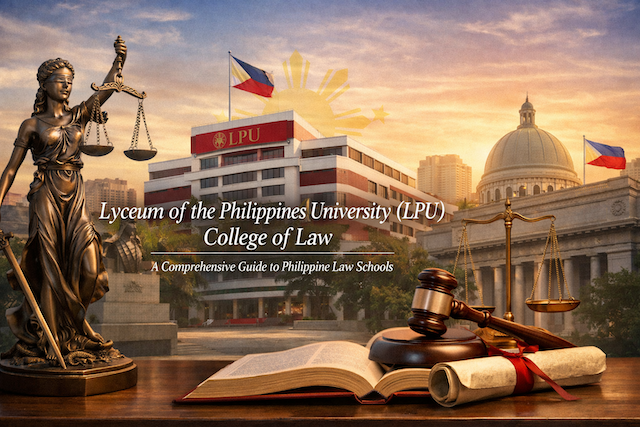
Lyceum of the Philippines University (LPU) College of Law:Philippine Law Schools
Contents
- Lyceum of the Philippines University (LPU) College of Law:Philippine Law Schools
- Overview of Lyceum of the Philippines University
- Philosophy and Mission of LPU College of Law
- Academic Program and Curriculum Structure
- Practical Training and Experiential Learning
- Faculty and Teaching Approach
- Admission Requirements and Selection Process
- Learning Environment and Student Life
- Bar Examination Preparation and Performance
- Comparison with Other Philippine Law Schools
- Ideal Students for LPU College of Law
- Conclusion: Overall Assessment of LPU College of Law
- Frequently Asked Questions (FAQs)
- What is Lyceum of the Philippines University (LPU) College of Law?
- Where is LPU College of Law located?
- What degree program does LPU College of Law offer?
- Is LPU College of Law recognized by the Legal Education Board (LEB)?
- What are the admission requirements for LPU College of Law?
- Does LPU College of Law accept working students?
- How is the teaching approach at LPU College of Law?
- Who are the faculty members at LPU College of Law?
- What is the bar exam performance of LPU College of Law?
- Are there bar review or support programs for graduating students?
- What facilities are available to law students at LPU?
- Does LPU College of Law offer scholarships?
- What student organizations exist at LPU College of Law?
- Is LPU College of Law a good choice for aspiring lawyers?
- How can I apply to LPU College of Law?
Lyceum of the Philippines University (LPU) College of Law:Philippine Law Schools
The Philippines is home to a wide range of law schools, from elite national institutions to private universities focused on practical legal education. Among these, Lyceum of the Philippines University (LPU) College of Law has steadily built a reputation as a solid, practice-oriented law school that caters to aspiring lawyers seeking a balanced and realistic approach to legal education.
Rather than relying solely on prestige or tradition, LPU College of Law emphasizes accessibility, professional training, and ethical lawyering, making it an attractive option for working professionals, career shifters, and students who value applied learning. This article provides an in-depth look at LPU College of Law, including its background, curriculum, faculty, admissions process, academic environment, bar examination preparation, and how it compares with other Philippine law schools.
Overview of Lyceum of the Philippines University
Lyceum of the Philippines University (LPU) was founded in 1952 by former Philippine President Jose P. Laurel, with the goal of producing graduates capable of contributing meaningfully to nation-building. From its inception, the university has focused on professional education, particularly in law, international relations, business, hospitality, and public service.
LPU operates multiple campuses across the country, including:
-
Intramuros, Manila
-
Makati
-
Batangas
-
Laguna
-
Cavite
The College of Law is primarily based at the Intramuros campus, a historic district in Manila that places students near courts, government offices, and legal institutions. This location provides both symbolic and practical value, situating law students close to the heart of the Philippine legal system.
Philosophy and Mission of LPU College of Law
The LPU College of Law is guided by a mission that goes beyond academic instruction. Its philosophy centers on producing competent, ethical, and socially responsible lawyers who are prepared for real-world legal practice.
Key principles of its educational philosophy include:
-
Emphasis on legal reasoning and analytical skills
-
Strong grounding in legal ethics and professional responsibility
-
Practical application of legal theory
-
Preparation specifically aligned with the Philippine Bar Examination
-
Service-oriented legal education responsive to Philippine social realities
Rather than focusing solely on elite academic competition, LPU College of Law aims to make legal education rigorous but accessible, especially for students who must balance studies with professional or family responsibilities.
Academic Program and Curriculum Structure
Like all Philippine law schools, LPU College of Law follows a four-year Juris Doctor (JD) program, in accordance with the Legal Education Board (LEB) standards.
Foundational Law Subjects
During the first two years, students focus on foundational subjects that form the backbone of Philippine legal education:
-
Political Law (Constitutional Law, Administrative Law)
-
Civil Law (Persons, Property, Obligations and Contracts)
-
Criminal Law
-
Statutory Construction
-
Legal Research and Writing
These courses are designed to develop disciplined legal thinking, case analysis skills, and familiarity with jurisprudence.
Advanced and Specialized Law Subjects
In the later years of the program, students move on to advanced and specialized subjects, including:
-
Commercial Law
-
Labor Law
-
Taxation Law
-
Remedial Law
-
International Law (Public and Private)
-
Electives such as Environmental Law, Intellectual Property Law, and Corporate Governance
At this stage, students are expected to synthesize multiple areas of law and apply them to complex legal scenarios, similar to those encountered in actual legal practice.
Practical Training and Experiential Learning
One of the defining strengths of LPU College of Law is its strong emphasis on experiential learning. The school recognizes that mastering the law requires more than memorization—it requires application.
Key practical components include:
-
Moot court exercises
-
Mock trials and oral arguments
-
Case briefing and jurisprudence analysis
-
Legal writing workshops
-
Legal aid and clinical programs
Through these activities, students gain exposure to litigation procedures, courtroom advocacy, and client-focused legal work. This practical orientation helps bridge the gap between classroom theory and real-world legal challenges.
Faculty and Teaching Approach
The faculty of LPU College of Law consists largely of experienced legal practitioners, including:
-
Practicing lawyers
-
Former or sitting judges
-
Government legal officers
-
Legal scholars with both academic and professional experience
This practitioner-driven faculty composition ensures that classroom instruction is grounded in reality. Professors frequently draw from actual cases, courtroom experiences, and professional challenges to enrich discussions.
Teaching methods typically include:
-
Socratic questioning
-
Case-based discussions
-
Written and oral recitations
-
Problem-solving exercises
Students are encouraged to think critically, articulate arguments clearly, and defend legal positions under pressure—skills essential for both the bar examination and legal practice.
Admission Requirements and Selection Process
Admission to LPU College of Law is open to applicants from any academic background, provided they hold a bachelor’s degree from a recognized institution.
The standard admission requirements include:
-
Completion of a bachelor’s degree
-
Submission of academic records
-
Passing the LPU College of Law entrance examination
-
Personal interview
English proficiency is essential, as all instruction, case materials, and examinations are conducted in English. Many students come from non-law backgrounds such as business, education, engineering, healthcare, and public administration, contributing to a diverse academic environment.
Learning Environment and Student Life
The Intramuros campus offers a conducive environment for legal studies, characterized by historical surroundings and academic focus. Facilities available to law students typically include:
-
A dedicated law library
-
Access to legal databases and jurisprudence resources
-
Study halls and discussion rooms
-
Flexible class schedules
A notable feature of LPU College of Law is its accommodation of working students. Evening and weekend classes are commonly available, allowing professionals to pursue a law degree without leaving their jobs.
This flexibility has made LPU particularly appealing to:
-
Government employees
-
Corporate professionals
-
Educators
-
Entrepreneurs
Bar Examination Preparation and Performance
Performance in the Philippine Bar Examination is a critical benchmark for any law school. While LPU College of Law may not consistently rank among the very top schools in terms of bar passing percentage, it maintains a respectable and stable record.
Bar preparation support includes:
-
Review classes aligned with bar subjects
-
Refresher courses for graduating students
-
Mock bar examinations
-
Faculty mentoring and academic advising
LPU’s approach focuses on building a strong foundation rather than relying solely on last-minute review strategies. Graduates who maintain discipline and consistent study habits are well-positioned to pass the bar.
Comparison with Other Philippine Law Schools
In the landscape of Philippine legal education, LPU College of Law occupies a middle-tier but reliable position.
Compared to elite institutions such as the University of the Philippines, Ateneo de Manila University, or San Beda University:
-
LPU is generally more accessible in terms of admissions
-
Academic pressure is rigorous but less cutthroat
-
Greater flexibility exists for working students
Compared to lesser-known or newer law schools, LPU offers:
-
A more established institutional history
-
Stronger faculty credentials
-
Better integration of practice-oriented training
This balance makes LPU an appealing option for students seeking quality education without the extreme competitiveness of top-tier schools.
Ideal Students for LPU College of Law
LPU College of Law is particularly well-suited for individuals who:
-
Prefer practical, application-focused legal education
-
Plan to work while studying law
-
Value ethical and service-oriented lawyering
-
Are career shifters entering the legal profession
-
Seek a supportive yet challenging academic environment
Students whose primary goal is elite academic prestige may consider other options, but those focused on competence, professionalism, and real-world readiness will find LPU a strong choice.
Conclusion: Overall Assessment of LPU College of Law
Lyceum of the Philippines University College of Law represents a pragmatic and student-centered approach to legal education in the Philippines. It may not dominate rankings or headlines, but it consistently fulfills its mission of training capable, ethical, and practice-ready lawyers.
For aspiring law students who value substance over status, flexibility over rigid tradition, and real-world preparation over purely theoretical instruction, LPU College of Law stands as a credible and worthwhile option within the Philippine law school system.
In the broader context of Philippine legal education, LPU College of Law demonstrates that effective lawyering begins not with prestige alone, but with discipline, integrity, and a commitment to serving justice.
Frequently Asked Questions (FAQs)
What is Lyceum of the Philippines University (LPU) College of Law?
Lyceum of the Philippines University (LPU) College of Law is the law school of LPU, a private university founded by former Philippine President Jose P. Laurel. The College of Law offers a Juris Doctor (JD) program designed to prepare students for the Philippine Bar Examination and for professional practice in various legal fields. It emphasizes practical legal training, ethical lawyering, and a strong foundation in Philippine jurisprudence.
Where is LPU College of Law located?
LPU College of Law is primarily based at the LPU Manila campus, located in Intramuros, Manila. The historic location places students near major courts, government institutions, and legal offices, providing convenient access for internships, court observations, and legal research activities.
What degree program does LPU College of Law offer?
The College of Law offers a Juris Doctor (JD) degree, which is the standard professional law degree in the Philippines. The JD program typically takes four years to complete and covers core subjects such as Constitutional Law, Civil Law, Criminal Law, Labor Law, Commercial Law, Political Law, Remedial Law, and Legal Ethics.
Is LPU College of Law recognized by the Legal Education Board (LEB)?
Yes, LPU College of Law operates in compliance with the regulations and standards set by the Legal Education Board (LEB) of the Philippines. This ensures that its curriculum, faculty qualifications, and academic policies meet national requirements for legal education.
What are the admission requirements for LPU College of Law?
Applicants to LPU College of Law must hold a bachelor’s degree from a recognized college or university. They are also required to pass the Philippine Law School Admission Test (PhiLSAT), unless exempted under current LEB guidelines. Additional requirements may include transcript of records, certificates of good moral character, an application form, and an admission interview.
Does LPU College of Law accept working students?
Yes, LPU College of Law is considered working-student friendly. Many classes are scheduled in the late afternoon or evening to accommodate students who are employed during the day. This flexible schedule makes the program accessible to professionals pursuing law as a second career.
How is the teaching approach at LPU College of Law?
The College of Law employs a mix of traditional lecture-based teaching and the Socratic method. Faculty members often emphasize case analysis, class recitations, legal writing, and practical exercises. Moot courts, mock trials, and legal research activities are also integrated into the curriculum to strengthen practical skills.
Who are the faculty members at LPU College of Law?
The faculty of LPU College of Law is composed of experienced lawyers, judges, prosecutors, and legal practitioners. Many professors actively practice law or have served in the judiciary or government, allowing students to gain insights grounded in real-world legal experience.
What is the bar exam performance of LPU College of Law?
LPU College of Law has produced successful bar examinees over the years, including first-time passers. While bar passing rates vary annually, the school continues to strengthen its academic programs, review initiatives, and faculty development to improve bar examination outcomes.
Are there bar review or support programs for graduating students?
Yes, LPU College of Law typically provides academic support for graduating students, which may include review classes, mock bar examinations, and access to review materials. These programs are designed to help students assess their readiness and reinforce key legal concepts before taking the bar exam.
What facilities are available to law students at LPU?
LPU provides law students with access to libraries, legal research materials, study areas, and classrooms equipped for legal instruction. Students may also use online legal databases and digital resources that support case research and academic writing.
Does LPU College of Law offer scholarships?
LPU offers various scholarship and financial assistance programs, which may be available to law students based on academic merit, financial need, or special qualifications. Availability and eligibility criteria may change, so applicants are encouraged to inquire directly with the university for updated information.
What student organizations exist at LPU College of Law?
Law students at LPU can participate in student organizations such as the Law Student Government and other academic or advocacy-based groups. These organizations provide opportunities for leadership development, networking, and involvement in legal education activities.
Is LPU College of Law a good choice for aspiring lawyers?
LPU College of Law is a solid option for students seeking a law school in Manila that balances academic rigor with accessibility for working students. Its location, experienced faculty, and practical orientation make it suitable for those aiming to build a legal career in private practice, government service, or corporate law.
How can I apply to LPU College of Law?
Prospective students can apply by submitting the required documents to the LPU admissions office or through official university channels. It is recommended to check the latest application procedures, deadlines, and admission guidelines directly from LPU to ensure compliance with current requirements.
Law Schools in Manila: Top Universities for Aspiring Lawyers in the Philippines
Philippines University Guide: Top Universities, Admissions, Scholarships, and Student Life
Top Law Schools in the Philippines (Bar Exam Performance 2025)

How to Register for eTravel Philippines (2025 Guide)
Step-by-step guide to completing your eTravel registration before arriving in the Philippines, with images and tips.

Night Market in Cebu – Things You Don’t Know About Cebu Life
Discover the hidden charm of Cebu’s night markets, from street food stalls to local life tips you won’t find in tourist guides.

How to Use ChatGPT for IELTS Preparation: A Complete Guide
Learn how to prepare for IELTS using ChatGPT — including strategies for Writing, Reading, Listening, Speaking, and grammar support.

How to Build a Website Without Coding Using ChatGPT
Discover how to build your own website using AI—no coding skills needed. From structure planning to SEO and design, let ChatGPT guide you.