2026年4月3日
3D ACADEMY offers affordable English study programs in Cebu, Philippines – perfect for beginners, professionals, and exam takers.

3D UNIVERSAL ENGLISH INSTITUTE INC
info.3d-universal.com
8:00-17:00(Mon-Fri)
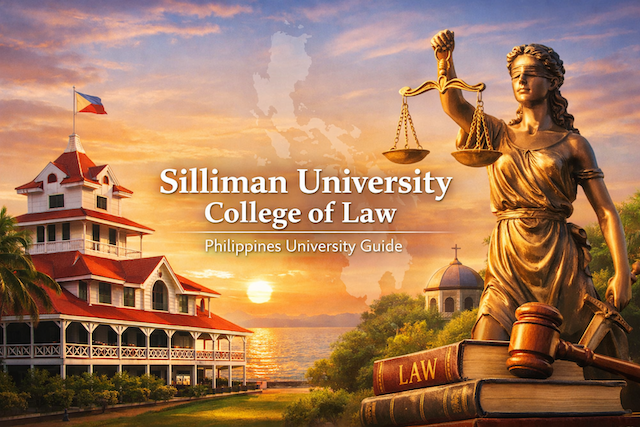
Silliman University College of Law: Philippines University Guide
Contents
- Silliman University College of Law: Philippines University Guide
- Overview of Silliman University College of Law
- Location and Study Environment in Dumaguete City
- Juris Doctor (JD) Program
- Academic Philosophy and Values Formation
- Teaching Methods and Classroom Experience
- Admission Requirements and Application Process
- Tuition, Fees, and Cost of Legal Education
- Student Life and Daily Routine
- Bar Preparation and Academic Outcomes
- Reputation and Career Pathways
- Who Is Silliman University College of Law Best Suited For
- Practical Advice for Prospective Students
- Final Thoughts
- FAQs (Frequently Asked Questions)
- Is Silliman University College of Law a good choice for studying law outside Metro Manila?
- What degree does Silliman University College of Law offer?
- What is the typical teaching style at Silliman University College of Law?
- How competitive is the admissions process?
- How much does it cost to study law at Silliman University?
- Is Dumaguete City a good environment for law school?
- Can students build strong legal careers after graduating from Silliman University College of Law?
- How should a new JD student succeed at Silliman University College of Law?
- Does Silliman University College of Law have a values-oriented approach?
Silliman University College of Law: Philippines University Guide
Overview of Silliman University College of Law
Silliman University College of Law is one of the established provincial law schools in the Philippines, located in Dumaguete City, Negros Oriental. As part of Silliman University—one of the country’s oldest private universities—the College of Law carries a reputation rooted in academic discipline, ethical formation, and community-oriented legal education.
For students who prefer studying law outside Metro Manila, Silliman University offers an alternative environment that balances academic rigor with a more manageable pace of life. The College of Law positions itself not only as a training ground for future lawyers but also as an institution that emphasizes responsibility, integrity, and service.
Location and Study Environment in Dumaguete City
Dumaguete City is widely known as a “university town,” hosting several higher education institutions within a compact urban area. For law students, this setting offers several practical advantages.
Daily commuting times are generally shorter compared to major cities, allowing students to allocate more time to reading and preparation. Housing options are accessible around the campus, and essential services such as libraries, cafés, printing shops, and study spaces are within close reach.
The relatively calm atmosphere of Dumaguete can be particularly beneficial for law students who need consistency and focus. While it lacks the scale and intensity of metropolitan legal hubs, it compensates with an environment that supports sustained academic discipline.
Juris Doctor (JD) Program
The College of Law at Silliman University offers the Juris Doctor (JD) degree, which is the standard professional law degree in the Philippines. Completion of the JD program qualifies graduates to take the Philippine Bar Examination, provided all other requirements set by the Supreme Court are met.
The JD program follows the national legal education framework, covering core Bar subjects such as Constitutional Law, Civil Law, Criminal Law, Remedial Law, Commercial Law, Taxation, Legal Ethics, and Political Law. Students progress through foundational subjects in the early years and more advanced and integrative courses as they approach graduation.
Academic Philosophy and Values Formation
One defining feature of Silliman University College of Law is its emphasis on values-based legal education. As a university with a strong Christian heritage, Silliman integrates ethical reflection, professionalism, and social responsibility into its academic culture.
This philosophy does not replace doctrinal rigor; rather, it complements it. Students are trained to analyze legal problems critically while remaining conscious of the broader social impact of legal practice. Discussions on ethics, public service, and leadership are treated as integral components of legal training rather than peripheral topics.
Teaching Methods and Classroom Experience
Like most Philippine law schools, Silliman University College of Law relies heavily on case-based learning. Students are expected to read Supreme Court decisions, statutory provisions, and legal commentaries before attending class.
Recitations form a central part of assessment. Professors often call on students to explain cases, articulate legal principles, and apply doctrine to hypothetical situations. This system develops not only legal understanding but also confidence, clarity of expression, and analytical discipline.
Written examinations typically mirror the structure of the Bar Examination, emphasizing issue-spotting, logical organization, and concise legal reasoning. Students who consistently practice structured writing tend to perform better as they advance through the program.
Admission Requirements and Application Process
Admission to Silliman University College of Law generally requires an undergraduate degree from a recognized institution. Applicants must comply with both university-level admission procedures and college-specific requirements.
The application process usually includes submission of academic records, proof of degree completion, and other documentary requirements. Applicants may also be required to take an entrance examination and participate in an interview to assess readiness for legal studies.
Prospective students are advised to prepare well in advance, especially those applying from outside Negros Oriental. Early preparation of documents and a realistic self-assessment of academic readiness can make the transition smoother.
Tuition, Fees, and Cost of Legal Education
Tuition and fees at Silliman University College of Law are generally considered more affordable than those of many Manila-based private law schools. However, law students should plan beyond tuition alone.
In addition to standard academic fees, students should budget for books, codals, printing costs, and potential law library-related expenses. Over the course of the JD program, these supplementary costs can be significant.
Living expenses in Dumaguete City are typically lower than in major urban centers. Rent, transportation, and daily necessities are relatively manageable, which can reduce financial pressure and allow students to focus more fully on their studies.
Student Life and Daily Routine
Law school life at Silliman University is demanding but structured. A typical day often revolves around reading assignments, attending classes, preparing for recitations, and reviewing notes.
Many students benefit from establishing disciplined routines early on. Consistent study schedules, regular outlining of subjects, and early review of codal provisions help prevent last-minute cramming.
While social activities exist within the broader university community, law students must carefully manage their time. Successful students tend to prioritize academic responsibilities while maintaining basic habits that support physical and mental health.
Bar Preparation and Academic Outcomes
The ultimate benchmark for any law school is how effectively it prepares students for the Bar Examination. While individual outcomes depend heavily on personal discipline, the training environment plays a significant role.
Silliman University College of Law emphasizes foundational mastery and gradual skill-building. Students who develop strong habits in legal writing, issue analysis, and time management during their JD years are better positioned for intensive Bar review later on.
Rather than relying solely on last-year review courses, the program encourages continuous preparation across all years of study.
Reputation and Career Pathways
Graduates of Silliman University College of Law can be found in various sectors, including private practice, government service, judiciary support roles, and corporate legal departments. The school’s regional network is particularly strong in Negros Oriental and nearby provinces.
While it may not offer the same level of immediate exposure to large Manila-based law firms, motivated students can still pursue national-level opportunities through internships, clerkships, and strategic networking.
For students planning to practice law in the Visayas or return to their home provinces, the regional credibility of Silliman University can be a practical advantage.
Who Is Silliman University College of Law Best Suited For
Silliman University College of Law is a strong option for students who value structure, discipline, and a values-oriented approach to legal education. It is especially suitable for those who prefer a quieter academic environment and a close-knit university community.
Students who are self-motivated and capable of building their own professional networks will find ample room to grow. On the other hand, those who require constant exposure to large-scale legal markets may need to be more proactive in seeking external opportunities.
Practical Advice for Prospective Students
Before enrolling, applicants should honestly assess their readiness for intensive reading, recitation pressure, and long-term commitment. Law school success is less about raw intelligence and more about consistency, discipline, and resilience.
Once enrolled, students should focus on developing effective note-taking systems, regular outlining habits, and clear writing structures. Early mastery of these skills reduces stress in later years and during Bar preparation.
Final Thoughts
Silliman University College of Law represents a solid and respectable path to legal education in the Philippines. Its combination of academic rigor, ethical orientation, and supportive study environment makes it an attractive choice for many aspiring lawyers.
For students seeking a law school experience grounded in discipline, integrity, and community engagement—away from the pressures of major metropolitan centers—Silliman University College of Law remains a compelling option.
FAQs (Frequently Asked Questions)
Is Silliman University College of Law a good choice for studying law outside Metro Manila?
Yes, Silliman University College of Law is often considered a strong option for students who want a Juris Doctor program in a more focused, lower-distraction environment. Dumaguete City is known for being a university-centered town with relatively short commute times and a calmer pace of life compared with large cities. This setting can be helpful for law students because success depends heavily on consistency—daily reading, preparing for recitations, and writing practice. If you prefer a campus community atmosphere and want to build your legal career in the Visayas or nearby regions, Silliman can be a practical and credible choice.
What degree does Silliman University College of Law offer?
The primary law degree is the Juris Doctor (JD). The JD is the standard professional law degree in the Philippines and is designed to prepare students for the Philippine Bar Examination after graduation, provided all required academic and eligibility conditions are met. The program typically covers the core Bar subjects over multiple years, including Constitutional Law, Civil Law, Criminal Law, Remedial Law, Commercial Law, Taxation, and Legal Ethics. Students usually progress from foundational courses to more integrative and practice-oriented subjects as they advance.
What is the typical teaching style at Silliman University College of Law?
Like most Philippine law schools, Silliman University College of Law commonly uses case-based learning and recitation-heavy classes. Students are expected to read cases, codal provisions, and assigned materials before class. Professors may call on students to explain doctrines, summarize rulings, and apply rules to hypothetical situations. Written exams often test issue-spotting and structured legal reasoning, which are essential skills for the Bar. Because this approach rewards preparation and clarity, students who build weekly outlines and practice timed writing tend to perform better over time.
How competitive is the admissions process?
Admissions standards can vary by year and applicant pool, but you should expect a formal screening process. Most law schools require an undergraduate degree and submission of academic records and other documents. Applicants may also be asked to take an entrance exam and/or attend an interview. The best way to prepare is to complete documents early, refresh reading comprehension and logical reasoning skills, and practice writing short analytical responses under time limits. If you are applying from outside Dumaguete, plan logistics ahead so deadlines and document processing do not become a last-minute problem.
How much does it cost to study law at Silliman University?
Total cost depends on tuition, fees, and lifestyle choices, but many students find provincial law school living expenses more manageable than those in major urban centers. Beyond tuition, you should budget for codals, textbooks, printed materials, and daily study needs such as internet access and transportation. Law school costs also increase during heavier academic periods when students purchase more reference materials or print reviewers. A realistic plan includes both semester-based school costs and monthly living expenses, especially if you will rent housing near campus.
Is Dumaguete City a good environment for law school?
For many students, yes. Dumaguete’s calmer pace can support a stable routine, which is crucial in law school. The city is generally compact, and daily tasks—getting to class, finding food, printing readings, meeting study groups—can be done without long travel times. This reduces friction and helps students maintain consistent study habits. However, a quieter city does not automatically guarantee success. You still need discipline, strong time management, and a clear strategy for reading, outlining, and exam preparation.
Can students build strong legal careers after graduating from Silliman University College of Law?
Yes. Graduates can pursue careers in private practice, government service, corporate legal departments, or further academic and professional development. Outcomes depend heavily on Bar performance, practical skills, and networking efforts. Silliman’s regional connections can be especially valuable for students planning to practice in Negros Oriental and nearby areas. Students who aim for national-level opportunities can still pursue them, but they may need to be more proactive about internships, summer work, and professional networking beyond the local area.
How should a new JD student succeed at Silliman University College of Law?
Focus on systems, not motivation. Start by setting a daily reading schedule and creating weekly outlines for each subject. Practice recitation preparation by summarizing cases in 60–90 seconds and identifying the doctrine and its application. Develop a writing template for exam answers so your responses stay organized under time pressure. Join a small study group if it improves accountability, but avoid groups that become social distractions. Finally, protect sleep and health. Many students struggle not because they lack ability, but because they burn out or lose consistency.
Does Silliman University College of Law have a values-oriented approach?
Yes, Silliman University is known for a values-based institutional culture, and this can influence the law school environment as well. In practice, this often means an emphasis on professional responsibility, ethical conduct, and service-oriented leadership. Even for students from different backgrounds, learning within a community that stresses integrity and responsibility can be beneficial, because legal practice demands trust and credibility. The key is to treat ethics and professionalism as part of your daily training, not only as a subject you study for exams.
Top Law Schools in the Philippines (Bar Exam Performance 2025)

How to Register for eTravel Philippines (2025 Guide)
Step-by-step guide to completing your eTravel registration before arriving in the Philippines, with images and tips.

Night Market in Cebu – Things You Don’t Know About Cebu Life
Discover the hidden charm of Cebu’s night markets, from street food stalls to local life tips you won’t find in tourist guides.

How to Use ChatGPT for IELTS Preparation: A Complete Guide
Learn how to prepare for IELTS using ChatGPT — including strategies for Writing, Reading, Listening, Speaking, and grammar support.

How to Build a Website Without Coding Using ChatGPT
Discover how to build your own website using AI—no coding skills needed. From structure planning to SEO and design, let ChatGPT guide you.