2026年1月16日
3D ACADEMY offers affordable English study programs in Cebu, Philippines – perfect for beginners, professionals, and exam takers.

3D UNIVERSAL ENGLISH INSTITUTE INC
info.3d-universal.com
8:00-17:00(Mon-Fri)
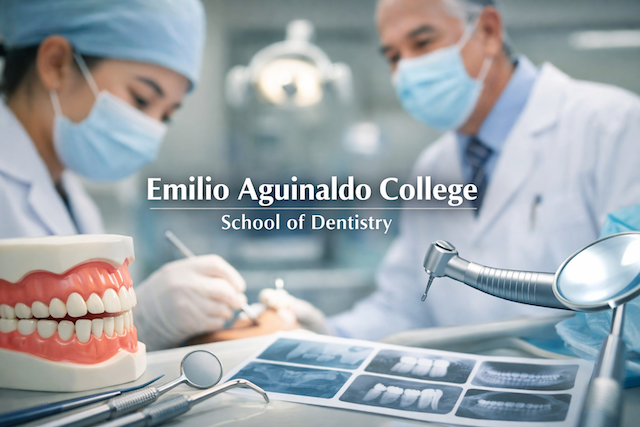
Emilio Aguinaldo College – School of Dentistry
Contents
- Emilio Aguinaldo College – School of Dentistry
- Overview of Emilio Aguinaldo College
- Why Students Consider EAC for Dentistry
- Program Structure and Learning Stages
- Curriculum Focus: What You Learn as a Dentistry Student
- Clinical Training and Patient Exposure
- Facilities and Skills Laboratories
- Admissions and Eligibility Considerations
- Student Life and the Reality of Dentistry Workload
- Career Pathways After Graduation
- How to Evaluate if EAC Dentistry Is the Right Fit
- Summary
- FAQs (Frequently Asked Questions)
- Is Emilio Aguinaldo College (EAC) a good option for studying Dentistry in the Philippines?
- What degree or qualification do students earn after completing the Dentistry program?
- How long does it usually take to finish Dentistry at EAC?
- What are the most important skills students need to succeed in Dentistry?
- When do students start clinical training with real patients?
- What kinds of dental procedures do students learn during clinical years?
- Does EAC provide sufficient laboratory facilities and practice time for preclinical skills?
- What are the typical expenses besides tuition for Dentistry students?
- Is EAC Dentistry suitable for international students?
- Can transferees or students with prior college credits enter the Dentistry program?
- How competitive is admission to the Dentistry program?
- What should prospective students ask during a campus visit or inquiry?
Emilio Aguinaldo College – School of Dentistry
Overview of Emilio Aguinaldo College
Emilio Aguinaldo College (EAC) is a private higher education institution in the Philippines known for programs in health sciences and allied medical fields. Within that broader health-focused environment, the School of Dentistry is positioned as a professional program designed to train future dentists through a balance of foundational sciences, clinical training, and patient-centered practice. For students who want to pursue Dentistry in Metro Manila, EAC is often considered as an option because it offers a structured pathway from preclinical learning to supervised clinical exposure.
Dentistry is a demanding field that blends science, precision, communication, and long-term professional responsibility. At EAC’s School of Dentistry, the program is generally built around the expectation that students will progress steadily from basic medical and dental sciences to laboratory-based competencies and eventually to direct clinical practice. Over time, learners are expected to develop both technical ability and the professional discipline required in real-world dental settings.
Why Students Consider EAC for Dentistry
Students choose a dental school for different reasons: learning environment, location, costs, training approach, facilities, and overall fit. While individual experiences vary, there are several practical reasons students commonly evaluate EAC when comparing Dentistry programs:
- Health-sciences environment: Being part of a college with multiple health-related programs can create a setting where clinical professionalism and patient care culture are emphasized early.
- Step-by-step training pathway: Dentistry programs typically move from theory to simulation and then to real patient encounters. A structured sequence matters for skill development and confidence.
- Metro Manila access: For many students, studying in or near Manila is convenient for commuting, living arrangements, and future networking opportunities.
- Professional preparation: Dentistry students often value a curriculum that keeps licensure readiness and clinical competence in focus, not only academic grades.
If you are choosing among dental schools, it helps to compare not only tuition estimates but also the type of clinical exposure available, the availability of simulation labs, the student-to-instructor ratio in clinical subjects, and how the program supports students during high-pressure clinical years.
Program Structure and Learning Stages
Most Dentistry programs in the Philippines follow a staged progression. While specific course naming and sequencing can differ by institution, students typically experience three broad phases:
- Pre-dentistry and foundational sciences: Subjects often include basic medical sciences, general education, and introductory dental concepts. This phase builds the scientific base needed to understand oral health, disease processes, and treatment rationale.
- Preclinical dentistry (laboratory and simulation): Students develop hands-on skills through simulated procedures and laboratory practice. This is where manual dexterity, accuracy, and consistency are trained intensively.
- Clinical dentistry (patient-based training): Under supervision, students begin treating patients. Clinical requirements usually include procedures across key fields such as restorative dentistry, prosthodontics, periodontics, endodontics, oral surgery, pediatric dentistry, and orthodontics basics.
At EAC’s School of Dentistry, prospective students should expect a similar progression, with increasing responsibility each year. The transition from preclinical to clinical training is often the point where students notice the largest jump in workload and accountability. Good dental schools help students manage this transition by reinforcing infection control protocols, patient communication, documentation skills, and clinical discipline.
Curriculum Focus: What You Learn as a Dentistry Student
Dentistry education is not just about learning procedures—it is about learning how to diagnose, plan, and deliver treatment responsibly. A well-rounded dental education typically develops competence in the following areas:
- Oral anatomy and head-and-neck sciences: Understanding structures and function is essential for safe procedures and accurate diagnosis.
- Dental materials and laboratory techniques: Students learn how different restorative materials behave, and how to select and handle them correctly.
- Diagnosis and treatment planning: Dentistry requires decision-making under uncertainty, balancing patient needs, risk factors, and long-term outcomes.
- Infection control and patient safety: Strict protocols protect both patients and providers, especially in clinical training.
- Ethics and professionalism: Patient trust is central in healthcare; dentistry includes informed consent, confidentiality, and appropriate clinical conduct.
For international students or transfer students, it is also useful to ask how the program supports academic bridging, clinic orientation, and skill remediation if you come from a different curriculum structure.
Clinical Training and Patient Exposure
Clinical training is the heart of dental education. While classroom learning explains “why” dentistry works, clinical training builds the “how” and the professional judgment required to treat real people. In a typical dental school clinical environment, students learn to:
- Conduct patient interviews and dental history-taking
- Perform oral examinations and basic diagnostic procedures
- Create treatment plans and explain them clearly to patients
- Carry out procedures under faculty supervision
- Document cases properly and follow clinical protocols
For anyone considering EAC’s School of Dentistry, the most useful questions often relate to how clinical training is implemented: How early students are introduced to clinic settings, how supervision is structured, what patient flow is like, and how the school ensures students reach required competencies before graduation.
Because clinical experiences can vary depending on patient availability and scheduling, many prospective students benefit from visiting the campus, asking about clinic operations, and understanding the day-to-day rhythm of clinical years.
Facilities and Skills Laboratories
Dental education depends heavily on practice. Before students touch real cases, they train repeatedly in controlled environments. Many dental schools use simulation labs or preclinical laboratories where students can practice techniques using models and dental instruments. Facilities and lab quality can directly affect a student’s early skill development.
While you evaluate EAC’s School of Dentistry, consider factors such as the availability of practice workstations, the condition and accessibility of instruments, scheduling systems for lab time, and whether students have enough supervised practice to improve safely. A supportive learning environment is one that allows repetition and feedback—two ingredients that build competent clinicians.
Admissions and Eligibility Considerations
Admissions policies can change, but Dentistry programs commonly require a mix of academic eligibility, documentation, and sometimes interviews or screenings. Applicants typically prepare:
- Academic records (high school or college transcript)
- Identification documents and standard admission forms
- Medical clearance or health documentation (often required for clinical programs)
- Additional documents for transferees or international students
If you are applying as a transferee, it is crucial to ask about credit evaluation and how it affects your timeline. If you are an international student, ask early about document authentication, visa-related steps, and whether there are additional English proficiency or equivalency requirements.
Because Dentistry is a professional program with clinical components, schools may also have policies related to immunizations, infection control training, and clinical readiness. Clarify these details early to avoid delays after enrollment.
Student Life and the Reality of Dentistry Workload
Dental students often describe the program as intense—academically, physically, and mentally. Beyond exams and lectures, there is significant time spent practicing manual techniques, completing lab requirements, and preparing for clinical cases. The workload can feel heavier than many other programs because dentistry involves both studying and producing practical outputs.
Students who thrive in Dentistry usually develop habits such as time blocking, strict organization, and early preparation. They also learn to handle constructive criticism, because clinical training involves constant feedback. The good news is that the program also builds confidence steadily. What feels impossible early on becomes routine once students develop consistent practice and focus.
For those considering EAC, it’s wise to ask about student support systems: tutoring options, academic advising, guidance services, and how students are mentored during clinical years. A healthy support structure can make a major difference during demanding semesters.
Career Pathways After Graduation
Graduates of Dentistry typically pursue one or more of the following pathways:
- General dental practice: Many graduates begin as associates in clinics or join family practices before starting their own.
- Specialization: Some dentists continue into advanced training in areas such as orthodontics, oral surgery, pediatric dentistry, periodontics, or prosthodontics.
- Hospital or institutional dentistry: Opportunities may exist in hospitals, academic settings, or public health programs, depending on career goals and licensure requirements.
- Academia and research: Teaching and research roles are possible for dentists who pursue graduate studies or academic careers.
In the Philippines, professional practice typically requires meeting licensure requirements and maintaining professional standards. Students should plan early: clinical competence, documentation discipline, and consistent study habits all contribute to strong licensure readiness.
How to Evaluate if EAC Dentistry Is the Right Fit
Choosing a dental school is a decision that affects your next several years and your early career direction. If you are considering EAC’s School of Dentistry, the most practical approach is to evaluate it across multiple dimensions:
- Training quality: Ask about clinical exposure, supervision, and skill-building structure.
- Learning environment: Observe whether the school culture supports learning, professionalism, and student growth.
- Resources: Consider labs, instruments, library resources, and availability of learning materials.
- Costs and planning: Dentistry can involve additional expenses beyond tuition (instruments, materials, uniforms, clinical supplies). Budget realistically.
- Location and lifestyle: Commuting, housing, and daily routine matter because Dentistry demands consistent time and energy.
Whenever possible, visit the campus, speak with admissions, and ask for a clear explanation of the program timeline and expectations. A school that answers questions transparently and provides a clear student pathway is often a safer choice for long-term success.
Summary
Emilio Aguinaldo College – School of Dentistry offers a professional pathway for students aiming to become licensed dental practitioners in the Philippines. Like other Dentistry programs, it is expected to combine foundational sciences, intensive preclinical training, and supervised clinical patient care. When evaluating EAC, focus on practical factors such as clinical training structure, facilities, student support, and total cost planning. Dentistry is a challenging but rewarding field—students who prepare carefully, stay disciplined, and commit to continuous practice can build a strong foundation for a stable healthcare career.
FAQs (Frequently Asked Questions)
Is Emilio Aguinaldo College (EAC) a good option for studying Dentistry in the Philippines?
EAC is one of the private institutions in the Philippines that offers Dentistry within a health-sciences-focused environment. Whether it is “good” depends on your priorities: clinical training style, faculty supervision, facilities, location, and overall learning culture. A practical way to evaluate EAC is to look beyond marketing materials and confirm how the program supports students in preclinical skills development and clinical patient care. If possible, visit the campus, ask to see the dental clinics and laboratories, and request a clear explanation of the training sequence from early years to clinical years.
What degree or qualification do students earn after completing the Dentistry program?
Dentistry programs in the Philippines typically lead to a professional dental degree that prepares graduates for licensure. The exact credential name can vary by institution and current regulations, so it is best to confirm the official degree title directly with EAC’s admissions or registrar. Regardless of the formal degree name, the main purpose of the program is to provide academic and clinical preparation for the national licensure process and for entry into professional dental practice.
How long does it usually take to finish Dentistry at EAC?
The length of Dentistry programs can vary depending on curriculum structure, student pacing, and whether a student is a transferee. Many programs require multiple years of preclinical and clinical training, and the clinical phase often takes significant time because students must complete supervised cases and competency requirements. For the most accurate estimate, ask EAC for the current program flowchart or curriculum outline, including the number of years/terms and the usual progression from preclinical to clinical subjects.
What are the most important skills students need to succeed in Dentistry?
Successful dental students usually combine strong study habits with patience and manual discipline. Dentistry is not only memorization; it also requires fine motor skills, attention to detail, and the ability to perform procedures repeatedly until they meet clinical standards. Time management is essential because students juggle lectures, laboratory work, and clinical requirements. Communication skills also matter because students must explain procedures clearly, build patient trust, and document cases accurately.
When do students start clinical training with real patients?
In most dental schools, students begin with preclinical laboratory training before entering patient-based clinical work. The timing of the transition depends on the curriculum. Some programs introduce limited clinical exposure earlier, while others wait until students have passed specific preclinical competencies. To understand EAC’s approach, ask when clinical rotations begin, how students are supervised, and what a typical clinical week looks like during clinical years.
What kinds of dental procedures do students learn during clinical years?
Clinical training typically covers core areas of general dentistry and may include preventive care, basic diagnostics, restorative procedures, simple prosthodontic work, periodontal care, endodontic basics, oral surgery fundamentals, pediatric dentistry principles, and introductory orthodontic concepts. The level of complexity students handle depends on the year level and the school’s competency system. It is also important to ask how the school ensures students meet minimum requirements and whether there are systems to help students who fall behind in clinical cases.
Does EAC provide sufficient laboratory facilities and practice time for preclinical skills?
Preclinical practice time is one of the most important factors in early dental training. While EAC has a Dentistry program structure that includes laboratory-based learning, you should confirm details such as the availability of workstations, lab scheduling, and how faculty feedback is delivered. Ask whether lab hours are fixed or flexible, how students access equipment, and what expectations exist for completing preclinical requirements. Facilities matter, but consistent coaching and feedback often matter just as much.
What are the typical expenses besides tuition for Dentistry students?
Dentistry students usually pay more than tuition alone. Additional costs can include instruments, handpieces, laboratory materials, uniforms, PPE, clinical supplies, books, and sometimes fees related to laboratory or clinical usage. These expenses may be spread over several years, often increasing during laboratory and clinical phases. A smart approach is to request an estimated cost breakdown per year from EAC, then budget with a safety buffer for unexpected requirements or price changes.
Is EAC Dentistry suitable for international students?
International students may be able to study Dentistry in the Philippines, but requirements can differ depending on citizenship, academic background, and documentation. If you are an international applicant, ask EAC about document authentication, equivalency evaluation, visa-related processes, and any language or academic prerequisites. Also confirm whether there are additional orientation steps before clinical training, such as infection control standards, health clearances, and clinical documentation practices.
Can transferees or students with prior college credits enter the Dentistry program?
Many institutions accept transferees, but Dentistry credit transfer can be strict because professional programs require specific sequences and competency-based progression. EAC may evaluate your transcript and decide which courses can be credited and which must be repeated due to curriculum differences. If you plan to transfer, request an official credit evaluation process and ask how transferring affects your expected timeline, clinical eligibility, and subject prerequisites.
How competitive is admission to the Dentistry program?
Admission competitiveness depends on the number of applicants, available slots, academic screening rules, and internal policies. Some schools prioritize strong academic records, while others consider a broader profile. Dentistry is generally demanding, so institutions often prefer applicants who show readiness for a heavy workload and clinical responsibility. For accurate guidance, ask EAC admissions about current intake capacity, screening steps, and any recommended academic preparation.
What should prospective students ask during a campus visit or inquiry?
Focus on questions that directly affect your daily student experience and long-term success. Ask about the year-by-year curriculum flow, when clinical training begins, how clinical supervision works, the condition and availability of laboratories, and the estimated total cost beyond tuition. Also ask about student support: tutoring, remediation, clinic orientation, and guidance services. Finally, ask about policies that commonly impact students, such as attendance requirements, lab completion rules, and how clinical case backlogs are handled.
Dentistry in the Philippines: Education System, Universities, and Career Path

How to Register for eTravel Philippines (2025 Guide)
Step-by-step guide to completing your eTravel registration before arriving in the Philippines, with images and tips.

Night Market in Cebu – Things You Don’t Know About Cebu Life
Discover the hidden charm of Cebu’s night markets, from street food stalls to local life tips you won’t find in tourist guides.

How to Use ChatGPT for IELTS Preparation: A Complete Guide
Learn how to prepare for IELTS using ChatGPT — including strategies for Writing, Reading, Listening, Speaking, and grammar support.

How to Build a Website Without Coding Using ChatGPT
Discover how to build your own website using AI—no coding skills needed. From structure planning to SEO and design, let ChatGPT guide you.