2026年1月16日
3D ACADEMY offers affordable English study programs in Cebu, Philippines – perfect for beginners, professionals, and exam takers.

3D UNIVERSAL ENGLISH INSTITUTE INC
info.3d-universal.com
8:00-17:00(Mon-Fri)
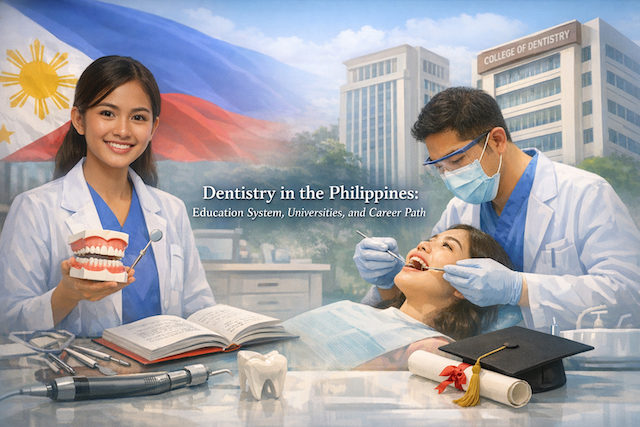
Dentistry in the Philippines: Education System, Universities, and Career Path
Contents
- Dentistry in the Philippines: Education System, Universities, and Career Path
- Overview of Dentistry in the Philippines
- Dental Education System in the Philippines
- Program Structure and Curriculum
- Language of Instruction
- Admission Requirements
- Top Dental Schools in the Philippines
- Licensing and Board Examination
- Career Path After Graduation
- Cost of Studying Dentistry in the Philippines
- Why Study Dentistry in the Philippines
- Frequently Asked Questions (FAQs)
- Is dentistry in the Philippines taught in English?
- How long does it take to become a dentist in the Philippines?
- What degree do dental students earn in the Philippines?
- Can international students study dentistry in the Philippines?
- What are the typical admission requirements for local applicants?
- How much does it cost to study dentistry in the Philippines?
- When do students start treating real patients?
- What is the Dentist Licensure Examination (DLE) in the Philippines?
- Is a Philippine dental degree recognized internationally?
- What career paths are available after graduating from dentistry in the Philippines?
- Which universities are known for dentistry in the Philippines?
- What should applicants consider when choosing a dental school in the Philippines?
- Post Page Ideas for Dentistry in the Philippines
- Education System & Admissions
- Cost, Student Life & Practical Topics
- Licensing & Career Path
- Universities with Dentistry Programs in the Philippines
- Metro Manila and Luzon
- Visayas
- Mindanao
- Important Notes for Content Accuracy
Dentistry in the Philippines: Education System, Universities, and Career Path
Dentistry in the Philippines has developed into a well-structured and internationally recognized field of medical education. With English as the primary language of instruction, a strong foundation in medical sciences, and a growing number of reputable universities, the Philippines has become an attractive destination for both local and international students who wish to pursue a career in dentistry. This pillar guide provides a comprehensive overview of the dental education system, major universities, admission requirements, curriculum structure, licensing process, and career paths after graduation.
Overview of Dentistry in the Philippines
Dentistry in the Philippines follows a standardized national framework regulated by the Commission on Higher Education (CHED) and the Professional Regulation Commission (PRC). Dental education is designed to produce clinically competent, ethically responsible, and globally competitive dental professionals. Graduates are trained not only in clinical skills but also in patient communication, community dentistry, and public health.
The country’s long history of medical education, combined with relatively affordable tuition compared to Western countries, has made Philippine dental schools increasingly visible on the global stage. Many Filipino dentists work successfully abroad after completing local education and meeting foreign licensure requirements.
Dental Education System in the Philippines
The dental education system in the Philippines is structured as a professional degree program rather than a simple undergraduate major. Students enroll directly into dentistry after completing secondary education or a pre-dentistry pathway, depending on the university.
The standard degree awarded is the Doctor of Dental Medicine (DMD). This is a professional doctorate and typically requires 6 years of study, including pre-clinical and clinical training.
Dental schools operate under CHED guidelines, which define minimum curriculum standards, faculty qualifications, laboratory facilities, and clinical requirements. This ensures consistency and quality across accredited institutions.
Program Structure and Curriculum
Dental programs in the Philippines are divided into distinct phases that gradually transition students from foundational sciences to full clinical practice.
Pre-Dentistry and Basic Sciences
The early years focus on general education and basic medical sciences. Subjects commonly include:
- General Biology and Chemistry
- Anatomy and Physiology
- Biochemistry
- Microbiology and Parasitology
- Oral Anatomy and Histology
These subjects provide essential knowledge that supports later clinical decision-making.
Pre-Clinical Dentistry
During the middle years, students begin dental-specific laboratory training. This phase emphasizes skill development using dental simulators and models. Core subjects include:
- Operative Dentistry
- Prosthodontics
- Orthodontics
- Periodontology
- Dental Materials
Students spend extensive hours in laboratories mastering procedures before treating real patients.
Clinical Training
The final years are heavily focused on clinical practice. Students treat patients under the supervision of licensed dentists and faculty members. Clinical requirements must be completed across various dental disciplines, such as:
- Oral Surgery
- Endodontics
- Pediatric Dentistry
- Community Dentistry
This hands-on experience is a defining strength of dental education in the Philippines.
Language of Instruction
All dental programs in the Philippines are taught in English. Lectures, textbooks, examinations, and clinical documentation are conducted in English, making the system particularly accessible for international students. Patient interaction may involve local languages, but English is widely understood in urban and academic settings.
This English-based education is a key advantage for graduates planning to pursue international careers or further studies abroad.
Admission Requirements
Admission requirements vary slightly by university but generally include the following:
- High school diploma or equivalent
- Strong academic background in science subjects
- Entrance examination administered by the university
- Interview and aptitude assessment
For international students, additional requirements usually apply:
- Proof of English proficiency
- Student visa and immigration documents
- Credential evaluation and authentication
Some universities may require a pre-dentistry year or bridging courses depending on the applicant’s educational background.
Top Dental Schools in the Philippines
The Philippines is home to several well-established dental schools known for academic excellence and clinical training.
University of the Philippines Manila – College of Dentistry
As the country’s premier state university, UP Manila offers one of the most competitive and research-oriented dental programs. Admission is highly selective, and graduates are widely respected both locally and internationally.
Centro Escolar University – School of Dentistry
Centro Escolar University is one of the oldest and largest dental schools in the Philippines. It is known for strong clinical exposure, modern facilities, and a large patient base that supports extensive hands-on training.
University of the East – College of Dentistry
The University of the East has produced a significant number of licensed dentists in the country. Its dentistry program emphasizes clinical competency and board examination performance.
National University – College of Dentistry
National University offers a structured and student-focused dental program with updated laboratories and clinical facilities, appealing to both local and international students.
Licensing and Board Examination
To practice dentistry in the Philippines, graduates must pass the Dentist Licensure Examination (DLE) administered by the Professional Regulation Commission.
The examination consists of written and practical components that assess theoretical knowledge, clinical judgment, and technical skills. Successful candidates are granted the title Registered Dentist (R.D.) and are legally authorized to practice in the country.
Passing the board exam is also an important credential for dentists seeking opportunities abroad, as it demonstrates completion of a regulated professional program.
Career Path After Graduation
Graduates of dentistry in the Philippines have diverse career options depending on their interests and long-term goals.
Clinical Practice
Many dentists work in private clinics, group practices, or hospitals. Some establish their own dental clinics after gaining sufficient experience.
Specialization
Dentists may pursue postgraduate training in specialized fields such as:
- Orthodontics
- Oral and Maxillofacial Surgery
- Periodontology
- Pediatric Dentistry
Specialization often requires additional years of study and clinical residency.
Academic and Research Careers
Graduates with strong academic interests may pursue teaching and research positions at universities or dental schools.
International Careers
A significant number of Filipino dentists work overseas after meeting local licensing requirements in countries such as the United States, Canada, Australia, and the Middle East. Philippine dental education is widely regarded as a solid foundation for international equivalency pathways.
Cost of Studying Dentistry in the Philippines
Tuition fees for dentistry in the Philippines are generally lower than in Western countries, though they are higher than many other degree programs due to laboratory and clinical costs.
Students should also budget for:
- Dental instruments and materials
- Clinical uniforms and equipment
- Board examination fees
Despite these costs, dentistry remains a cost-effective option for students seeking high-quality education in English.
Why Study Dentistry in the Philippines
Dentistry in the Philippines offers a combination of structured education, extensive clinical exposure, English instruction, and global career mobility. The country’s dental schools continue to produce competent professionals who contribute to healthcare systems both locally and internationally.
For students seeking a comprehensive and practical dental education pathway in Asia, the Philippines stands out as a strong and reliable choice.
Frequently Asked Questions (FAQs)
Is dentistry in the Philippines taught in English?
Yes. Most dental schools in the Philippines use English as the primary language for lectures, textbooks, exams, and clinical documentation. This is one reason the country is attractive to international students. That said, patient communication in clinics may involve Filipino languages (such as Filipino/Tagalog or Cebuano) depending on the location. In major cities and university clinics, many patients and staff can communicate in basic English, but learning common local phrases can make clinical work smoother.
How long does it take to become a dentist in the Philippines?
The typical pathway takes around six years in a Doctor of Dental Medicine (DMD) program, though the exact structure can vary by university. Early years usually focus on general education and basic sciences, followed by pre-clinical laboratory training and then intensive clinical practice. After graduation, you must pass the Dentist Licensure Examination (DLE) to legally practice in the Philippines. Some graduates also pursue internships, residency-style training, or postgraduate specialization, which adds additional years.
What degree do dental students earn in the Philippines?
The standard professional degree is the Doctor of Dental Medicine (DMD). It is a clinical professional program that includes both academic coursework and supervised clinical training. While it is called a “doctor” degree, it is not the same as a research doctorate. The emphasis is on competency-based dental education, including diagnosis, treatment planning, clinical procedures, ethics, and patient management.
Can international students study dentistry in the Philippines?
Yes, many universities accept international students, especially in Metro Manila and other major urban centers. Requirements depend on the school but often include authenticated academic records, proof of eligibility to study, and immigration documents. Some institutions may ask for proof of English proficiency or conduct an interview. International students should also plan for visa processing, medical requirements, and document authentication timelines. It’s best to confirm the latest admissions rules directly with each university’s admissions office.
What are the typical admission requirements for local applicants?
Local applicants usually need a high school diploma (or equivalent senior high completion), good grades in science-related subjects, and passing results on the university’s entrance examination. Many dental schools also conduct interviews and may require additional screening such as aptitude tests. Because dentistry is a laboratory- and clinic-heavy program, schools often look for students who can handle both academic load and manual skill development.
How much does it cost to study dentistry in the Philippines?
Costs vary significantly depending on whether the school is public or private and where it is located. Dentistry is generally more expensive than many other undergraduate programs because students must purchase instruments, materials, and clinical supplies. In addition to tuition, students should budget for laboratory fees, uniforms, protective equipment, and ongoing consumables used during clinical training. Some schools have installment plans or scholarships, but these differ by institution.
When do students start treating real patients?
In most programs, students begin with pre-clinical training using dental models and simulation labs before moving into supervised patient care. The transition to clinical work typically happens in the later years of the program. Once in the clinic, students complete required cases across different disciplines—such as restorative dentistry, prosthodontics, oral surgery, pediatric dentistry, and periodontology—under faculty supervision. Clinical training is intensive and often requires strong time management.
What is the Dentist Licensure Examination (DLE) in the Philippines?
The Dentist Licensure Examination is the national board exam administered by the Professional Regulation Commission (PRC). Passing it is required to become a Registered Dentist (R.D.) and practice legally in the Philippines. The exam generally includes theoretical components and practical assessments designed to evaluate knowledge, judgment, and technical competence. Many graduates prepare through review programs, school-led refresher courses, and structured practice sessions.
Is a Philippine dental degree recognized internationally?
A Philippine DMD can be a strong educational foundation, but recognition for direct practice depends on the destination country. Many countries require additional licensing exams, bridging programs, or advanced standing pathways before a foreign-trained dentist can practice. For example, some systems require credential evaluation, language tests, written exams, and clinical exams. If your goal is to work abroad, research the specific requirements of your target country early and plan your timeline accordingly.
What career paths are available after graduating from dentistry in the Philippines?
Common paths include private clinical practice, employment in established dental clinics, hospital-based dental services, and community dentistry programs. Some dentists pursue postgraduate specialization in areas like orthodontics, pediatric dentistry, periodontology, endodontics, or oral and maxillofacial surgery. Others enter academia, research, public health, sales and training roles for dental companies, or healthcare administration. Career direction often depends on clinical interests, financial goals, and whether you plan to stay local or pursue international options.
Which universities are known for dentistry in the Philippines?
Several institutions are commonly associated with dentistry programs, including the University of the Philippines Manila, Centro Escolar University, University of the East, and National University, among others. However, “best” depends on your priorities—such as location, tuition, facilities, patient volume for clinical exposure, teaching style, and support services. Prospective students should review each school’s curriculum, clinic setup, licensing exam performance culture, and admissions policies before deciding.
What should applicants consider when choosing a dental school in the Philippines?
Key factors include accreditation status, curriculum structure, clinical patient volume, laboratory facilities, faculty supervision, total cost (including instruments and materials), and commuting or housing considerations. You should also ask about how clinical requirements are managed, what support exists for struggling students, and how the school prepares students for the licensure exam. If you are an international applicant, confirm visa support, document requirements, and whether the program has experience handling foreign student enrollment.
Post Page Ideas for Dentistry in the Philippines
Education System & Admissions
- Study Dentistry in the Philippines: Complete Guide for International Students
- Dental Education System in the Philippines Explained
- Doctor of Dental Medicine (DMD) in the Philippines: Program Structure and Curriculum
- How Long Does It Take to Study Dentistry in the Philippines
- Admission Requirements for Dentistry in the Philippines
- Entrance Exams for Dental Schools in the Philippines
Cost, Student Life & Practical Topics
- Tuition Fees for Dentistry in the Philippines
- Cost of Studying Dentistry in the Philippines for International Students
- Dental Instruments and Materials Cost in the Philippines
- Student Life in Dental School in the Philippines
Licensing & Career Path
- Dentist Licensure Examination in the Philippines: Complete Guide
- How to Become a Licensed Dentist in the Philippines
- Career Path After Dentistry in the Philippines
- Dentist Salary in the Philippines
- Working as a Dentist Abroad After Studying in the Philippines
Universities with Dentistry Programs in the Philippines
The Philippines has a limited but clearly defined number of universities and colleges that offer professional dentistry programs, usually awarding the Doctor of Dental Medicine (DMD) degree. Compared to other health-related fields, dentistry programs are relatively few due to strict facility, faculty, and clinical requirements.
Below is a comprehensive list of known institutions offering dentistry programs in the Philippines.
Metro Manila and Luzon
-
Unciano Colleges and General Hospital – College of Dentistry
-
Adventist University of the Philippines – College of Dentistry
-
Virgen Milagrosa University Foundation – College of Dentistry
Visayas
Mindanao
Important Notes for Content Accuracy
-
The total number of dentistry schools in the Philippines is small (around 20–25 institutions) nationwide.
-
Most programs offer Doctor of Dental Medicine (DMD) as the primary professional degree.
-
Dentistry programs are highly regulated due to clinical, laboratory, and patient-care requirements.
-
New dentistry programs open very rarely compared to medicine, nursing, or allied health fields.
Dentist Licensure Examination Guide: Requirements and Exam Coverage
Philippines University Guide: Top Universities, Admissions, Scholarships, and Student Life

How to Register for eTravel Philippines (2025 Guide)
Step-by-step guide to completing your eTravel registration before arriving in the Philippines, with images and tips.

Night Market in Cebu – Things You Don’t Know About Cebu Life
Discover the hidden charm of Cebu’s night markets, from street food stalls to local life tips you won’t find in tourist guides.

How to Use ChatGPT for IELTS Preparation: A Complete Guide
Learn how to prepare for IELTS using ChatGPT — including strategies for Writing, Reading, Listening, Speaking, and grammar support.

How to Build a Website Without Coding Using ChatGPT
Discover how to build your own website using AI—no coding skills needed. From structure planning to SEO and design, let ChatGPT guide you.