2026年1月16日
3D ACADEMY offers affordable English study programs in Cebu, Philippines – perfect for beginners, professionals, and exam takers.

3D UNIVERSAL ENGLISH INSTITUTE INC
info.3d-universal.com
8:00-17:00(Mon-Fri)
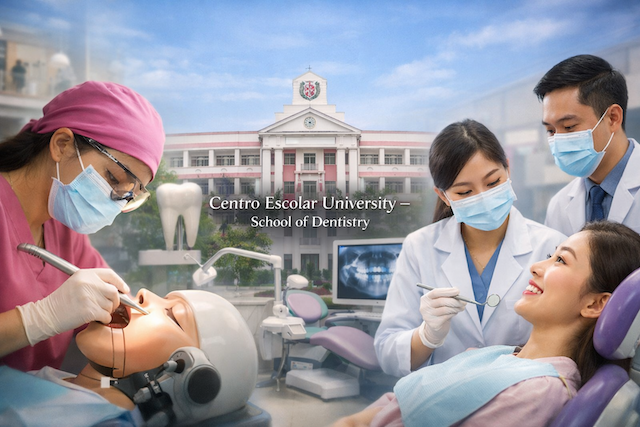
Centro Escolar University – School of Dentistry
Contents
- Centro Escolar University – School of Dentistry
- Overview of Centro Escolar University School of Dentistry
- Location and Campus Environment
- Program Offered: Doctor of Dental Medicine (DMD)
- Curriculum Structure and Academic Phases
- Clinical Training and Patient Exposure
- Facilities and Dental Laboratories
- Faculty and Academic Expertise
- Licensure Examination Performance
- Admission Requirements and Selection Process
- Tuition Fees and Cost Considerations
- Student Life and Academic Culture
- Career Opportunities After Graduation
- International Recognition and Global Pathways
- Why Choose Centro Escolar University School of Dentistry
- FAQs (Frequently Asked Questions)
- Is Centro Escolar University (CEU) School of Dentistry a good choice in the Philippines?
- What degree does CEU School of Dentistry offer?
- How long is the DMD program at CEU?
- What is the difference between pre-clinical and clinical years?
- Does CEU provide enough patients for clinical requirements?
- What expenses should students expect beyond tuition?
- Is CEU dentistry suitable for international students?
- Does graduating from CEU allow practice abroad automatically?
- How demanding is the CEU dentistry program?
- What study habits help students succeed in dentistry?
- What careers can CEU dentistry graduates pursue?
Centro Escolar University – School of Dentistry
Overview of Centro Escolar University School of Dentistry
Centro Escolar University (CEU) is one of the most respected private universities in the Philippines, with a long-standing reputation in health sciences education. Among its flagship programs, the School of Dentistry stands out as one of the country’s oldest and most established dental schools. CEU School of Dentistry has consistently produced licensed dentists who practice not only in the Philippines but also abroad, particularly in the United States, Canada, the Middle East, and other parts of Asia.
Founded in 1925, Centro Escolar University has played a pioneering role in professional education, especially in dentistry, pharmacy, and optometry. The School of Dentistry benefits from this legacy, combining academic rigor, extensive clinical exposure, and strong licensure performance. It is officially recognized by the Commission on Higher Education (CHED) and is accredited by the Philippine Association of Colleges and Universities Commission on Accreditation (PACUCOA).
Location and Campus Environment
The CEU School of Dentistry is located at the main CEU campus in Manila, specifically in the Mendiola area. This central location places students close to major hospitals, government institutions, and transportation hubs. Manila’s dense urban environment provides dental students with access to a diverse patient population, which is essential for clinical training and case exposure.
The campus is well-equipped with dedicated buildings for health sciences, including dental clinics, laboratories, and simulation rooms. Despite being in a busy city district, CEU maintains a structured academic environment that prioritizes discipline, professionalism, and patient-centered learning.
Program Offered: Doctor of Dental Medicine (DMD)
The primary program offered by the School of Dentistry is the Doctor of Dental Medicine (DMD). This is a six-year professional degree program that includes pre-dentistry courses, foundational medical sciences, and intensive dental clinical training. The curriculum is designed to meet national licensure requirements and align with international dental education standards.
The program emphasizes both theoretical knowledge and hands-on clinical practice. Students progress from basic sciences and laboratory exercises to patient-based treatment under close faculty supervision. Upon completion of the program, graduates are eligible to take the Philippine Dentist Licensure Examination.
Curriculum Structure and Academic Phases
The DMD curriculum at CEU is structured into several progressive phases. The initial years focus on general education and foundational sciences such as biology, chemistry, anatomy, physiology, and microbiology. These subjects establish the scientific base necessary for understanding oral health and disease.
The middle years introduce core dental subjects, including oral anatomy, dental materials, operative dentistry, prosthodontics, periodontics, orthodontics, oral pathology, and pharmacology. Students also begin laboratory simulations using dental mannequins to develop manual dexterity and procedural accuracy.
The final years are heavily centered on clinical dentistry. Students treat real patients in CEU’s dental clinics, performing procedures such as restorations, extractions, root canal treatments, and prosthetic work. Clinical performance, professionalism, and patient management are closely monitored throughout this phase.
Clinical Training and Patient Exposure
Clinical training is one of the strongest aspects of CEU School of Dentistry. The university operates extensive in-house dental clinics that serve the public at affordable rates. This setup ensures a steady flow of patients, allowing students to complete required cases and gain confidence in real-world dental practice.
Students are trained under the supervision of licensed dentists and dental specialists who provide continuous feedback. The emphasis is not only on technical skills but also on patient communication, ethics, infection control, and treatment planning. Exposure to a wide range of cases prepares graduates for general practice and further specialization.
Facilities and Dental Laboratories
CEU School of Dentistry is equipped with modern dental facilities designed to support both learning and clinical service. These include pre-clinical laboratories, simulation rooms, radiography units, sterilization areas, and fully functional dental operatories.
The school continuously updates its equipment to reflect current dental technologies, such as digital radiography and modern dental materials. Students are trained to use standard tools commonly found in professional dental clinics, ensuring a smoother transition from school to practice.
Faculty and Academic Expertise
The faculty members at CEU School of Dentistry are composed of experienced dentists, specialists, and academicians. Many hold advanced degrees and are active practitioners in their respective fields. Their dual role as educators and clinicians allows them to integrate practical insights into classroom instruction.
Faculty mentorship plays a significant role in student development. Instructors closely guide students through academic challenges, clinical requirements, and professional ethics. This mentorship culture contributes to CEU’s strong performance in licensure examinations.
Licensure Examination Performance
Centro Escolar University has a long history of strong performance in the Philippine Dentist Licensure Examination. CEU graduates frequently achieve passing rates that meet or exceed the national average, and the university has produced topnotchers in previous years.
The school integrates board exam preparation into the curriculum through review subjects, mock examinations, and competency assessments. This structured preparation helps students develop confidence and familiarity with licensure exam formats and expectations.
Admission Requirements and Selection Process
Admission to the CEU School of Dentistry is competitive and subject to academic evaluation. Applicants are generally required to have completed senior high school with a strong background in science subjects. College transferees may also apply, subject to credit evaluation.
The selection process typically includes submission of academic records, entrance examinations, and interviews. The school assesses applicants’ academic readiness, motivation, and commitment to the dental profession. Due to the demanding nature of the program, students are expected to demonstrate discipline and resilience.
Tuition Fees and Cost Considerations
As a private university, CEU charges higher tuition fees compared to state universities. Dental education also involves additional costs for instruments, laboratory materials, uniforms, and clinical requirements. These expenses increase as students progress to higher clinical levels.
Despite the cost, many students consider CEU a worthwhile investment due to its strong reputation, comprehensive training, and career outcomes. The university may offer limited scholarships and financial assistance programs for qualified students.
Student Life and Academic Culture
Student life at CEU School of Dentistry is academically intensive. Dental students typically follow structured schedules that balance lectures, laboratory work, and clinical duties. Time management is essential, as clinical requirements can be demanding.
Beyond academics, students can participate in dental organizations, outreach programs, and professional seminars. These activities promote leadership development, community service, and professional networking. CEU encourages students to uphold professionalism and ethical conduct both inside and outside the campus.
Career Opportunities After Graduation
Graduates of CEU School of Dentistry have diverse career pathways. Many pursue general dental practice by working in private clinics, hospitals, or community health centers. Others establish their own dental clinics after gaining sufficient experience.
Some graduates choose to specialize by enrolling in postgraduate programs in orthodontics, oral surgery, prosthodontics, periodontics, or pediatric dentistry. International opportunities are also available, although additional examinations and credential evaluations may be required depending on the destination country.
International Recognition and Global Pathways
CEU’s reputation extends beyond the Philippines, particularly among Filipino dentists practicing overseas. While the DMD degree itself does not automatically grant international licensure, the strong clinical foundation provided by CEU helps graduates prepare for foreign equivalency exams.
Graduates planning to work abroad often pursue further education, bridging programs, or licensure examinations in countries such as the United States, Australia, or Canada. CEU’s comprehensive training is often cited as a solid base for these pathways.
Why Choose Centro Escolar University School of Dentistry
Centro Escolar University School of Dentistry offers a balance of tradition, academic rigor, and clinical excellence. Its long history, experienced faculty, and extensive patient exposure make it a preferred choice for students aiming to become competent and ethical dental professionals.
For students seeking a well-established dental program in the Philippines with strong licensure outcomes and practical training, CEU School of Dentistry remains a top-tier option. The program demands commitment and hard work, but it rewards graduates with professional readiness and long-term career potential.
FAQs (Frequently Asked Questions)
Is Centro Escolar University (CEU) School of Dentistry a good choice in the Philippines?
Centro Escolar University School of Dentistry is widely considered one of the most established dental schools in the Philippines. It is known for a long history in health sciences education, structured training, and a strong clinical emphasis. Many students choose CEU because they want a program with extensive patient exposure in an urban setting, which helps build confidence in diagnosis, treatment planning, and hands-on procedures. Like any dental school, outcomes depend on the student’s effort, consistency, and ability to meet clinical requirements, but CEU’s program structure is designed to guide learners from foundational sciences to real-patient clinical work.
What degree does CEU School of Dentistry offer?
CEU School of Dentistry primarily offers the Doctor of Dental Medicine (DMD) program. In the Philippines, the DMD is the standard professional dental degree that prepares students to become licensed dentists. The program generally includes general education and basic sciences in the early years, followed by dental laboratory training and advanced clinical practice. Graduates who complete all academic and clinical requirements can apply to take the Philippine Dentist Licensure Examination.
How long is the DMD program at CEU?
The Doctor of Dental Medicine program in the Philippines is commonly structured as a multi-year professional course, and students should expect several years of progressive training from pre-clinical subjects to clinical dentistry. The exact length can vary depending on curriculum updates, academic policies, and whether a student has transferred credits from another institution. In practice, students should plan for a long-term commitment because dentistry is skills-based and requires time for laboratory mastery, clinical case completion, and professional development.
What is the difference between pre-clinical and clinical years?
Pre-clinical years focus on building foundations: anatomy, physiology, microbiology, dental materials, oral anatomy, and simulation-based training. Students usually work in laboratories and practice on models or mannequins to develop hand skills, precision, and procedural sequencing. Clinical years shift toward treating actual patients under faculty supervision. This stage emphasizes real-world dentistry: patient interviewing, charting, infection control, radiography, restorative procedures, extractions, prosthodontic work, and comprehensive case management. The transition can be challenging, but it is also where students gain the practical experience needed for licensure and employment.
Does CEU provide enough patients for clinical requirements?
Patient flow is a key concern in dental education because clinical requirements often include completing a specific number of procedures and case types. CEU’s location in Manila and its public-facing dental clinics generally support regular patient access. However, patient availability can still vary by season, clinic scheduling, and demand for certain procedures. Successful students typically learn to be proactive: maintaining good communication, organizing appointments early, and following up responsibly. In dentistry, clinical experience is not only about finding patients but also about delivering ethical, high-quality care while meeting academic standards.
What expenses should students expect beyond tuition?
In addition to tuition and standard school fees, dentistry students should budget for instruments, consumable materials, laboratory supplies, uniforms, and clinical requirements. Costs often increase as students progress because clinical work requires more specialized tools and materials, and there may be requirements tied to certain procedures. Students should also plan for indirect costs such as transportation, meals, printing, and occasional professional activities. It helps to create a semester-by-semester budget and to ask upper-year students for practical advice on which supplies are essential and when major purchases usually happen.
Is CEU dentistry suitable for international students?
CEU can be an option for international students who want to study dentistry in the Philippines, especially those looking for English-taught professional education in a major city. International applicants usually need to meet academic eligibility requirements, submit authenticated documents, and comply with immigration rules for student visas. Because dentistry involves clinical interactions, strong communication skills are important for patient interviews and informed consent. International students should also consider long-term goals: if they plan to work outside the Philippines after graduation, they may need to take additional licensure exams or bridging programs in their target country.
Does graduating from CEU allow practice abroad automatically?
No. A DMD degree from the Philippines does not automatically grant the right to practice dentistry in another country. Each country has its own licensure process, and many require local board examinations, credential evaluation, clinical assessments, or completion of an accredited bridging or advanced standing program. That said, a strong foundation in clinical dentistry can be helpful preparation. Graduates aiming for overseas practice should research requirements early, keep detailed academic records, and plan for the time and cost involved in international pathways.
How demanding is the CEU dentistry program?
Dentistry is widely viewed as one of the most demanding health-related programs because it combines heavy academic content with precision-based manual skills and patient care responsibilities. Students manage lectures, laboratory work, clinical sessions, and case requirements, often under strict deadlines and quality standards. The program rewards consistent practice, careful planning, and strong professionalism. Students who do well usually build routines early, track clinical requirements carefully, and develop the habit of learning from feedback. Stress management is also important, as clinical work can be emotionally and physically taxing.
What study habits help students succeed in dentistry?
Successful dental students usually combine three habits: regular review, deliberate skills practice, and organized documentation. Regular review prevents last-minute cramming in science-heavy subjects. Deliberate practice means repeating procedures in the lab until hand movements become stable and accurate. Organized documentation includes keeping checklists for requirements, tracking patient schedules, and storing notes on procedures and materials. Good communication with instructors and patients also matters. Dentistry is not only technical; it requires decision-making, ethics, and the ability to explain treatment clearly.
What careers can CEU dentistry graduates pursue?
Most graduates begin as general dentists in private clinics, group practices, or community health settings. Some pursue hospital-related roles or work in corporate dental clinics. Others build experience and later open their own practice. Graduates may also continue into specialization through postgraduate training, depending on career interests and opportunities. Beyond clinical practice, dentistry can lead to careers in dental education, research, public health, dental product companies, and healthcare management. The best path depends on a graduate’s goals, financial plans, and willingness to pursue further training.
Dentistry in the Philippines: Education System, Universities, and Career Path

How to Register for eTravel Philippines (2025 Guide)
Step-by-step guide to completing your eTravel registration before arriving in the Philippines, with images and tips.

Night Market in Cebu – Things You Don’t Know About Cebu Life
Discover the hidden charm of Cebu’s night markets, from street food stalls to local life tips you won’t find in tourist guides.

How to Use ChatGPT for IELTS Preparation: A Complete Guide
Learn how to prepare for IELTS using ChatGPT — including strategies for Writing, Reading, Listening, Speaking, and grammar support.

How to Build a Website Without Coding Using ChatGPT
Discover how to build your own website using AI—no coding skills needed. From structure planning to SEO and design, let ChatGPT guide you.