2026年1月16日
3D ACADEMY offers affordable English study programs in Cebu, Philippines – perfect for beginners, professionals, and exam takers.

3D UNIVERSAL ENGLISH INSTITUTE INC
info.3d-universal.com
8:00-17:00(Mon-Fri)
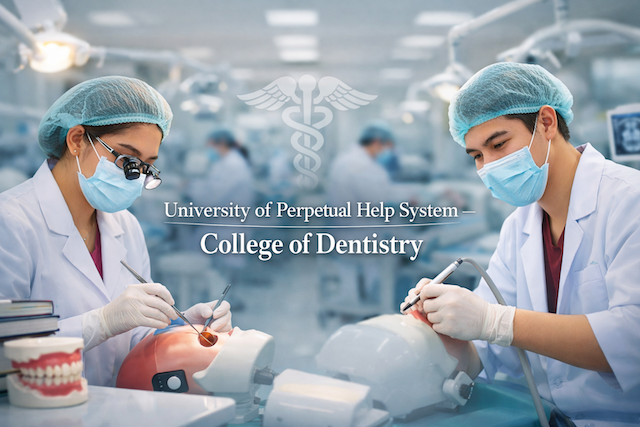
University of Perpetual Help System – College of Dentistry
Contents
- University of Perpetual Help System – College of Dentistry
- Overview of the College of Dentistry
- Why Students Choose Dentistry at Perpetual
- Program Structure and Learning Journey
- Core Areas of Dental Training
- Facilities, Laboratories, and Clinical Environment
- Clinical Training and Patient Experience
- Admissions and Student Preparation
- Student Life and Workload
- Career Path After Graduation
- What to Consider Before Enrolling
- Conclusion
- FAQs (Frequently Asked Questions)
- Is the University of Perpetual Help System – College of Dentistry a good choice for international students?
- What kind of learning approach should I expect in a dentistry program like this?
- When do students usually start clinical training with real patients?
- What subjects are most important in the early years?
- How difficult is dental school in the Philippines?
- Do I need strong artistic talent or “good hands” to succeed?
- What should I ask about facilities and clinical resources?
- How important is patient flow for a dental student?
- What are common expenses beyond tuition in dentistry?
- Can graduates work abroad immediately after finishing the program?
- What kind of student tends to thrive in a program like this?
- How can I prepare before applying or enrolling?
University of Perpetual Help System – College of Dentistry
Overview of the College of Dentistry
The University of Perpetual Help System (often referred to as Perpetual) is a long-running private education network in the Philippines, known for health-related and professional programs. Within that broader system, the College of Dentistry is designed for students who want a structured path into dental education with strong clinical exposure, hands-on skill building, and a community that supports professional identity from the early years.
Dentistry in the Philippines is a demanding program that combines medical science, technical laboratory work, patient communication, and clinical practice. A good dental school is not only defined by classrooms and lecture quality, but also by the consistency of its clinical training, the culture of supervision and mentorship, the availability of learning resources, and the student’s ability to practice procedures repeatedly and safely. The College of Dentistry at University of Perpetual Help System aims to develop competent, ethical, and patient-centered future dentists by balancing academic foundations with practical training that grows in complexity as students progress.
For prospective students, the biggest questions usually include: What will I learn each year? How early will I handle real dental work? What kind of facilities and patient exposure can I expect? And what is student life like in a program that is known to be rigorous? This guide explains what dentistry students typically experience, how a program like this is structured, and what to consider if you’re planning to enroll.
Why Students Choose Dentistry at Perpetual
Students choose a dental program for different reasons, but the most common priorities are practical: consistent training, a clear pathway from theory to clinical practice, and an environment that helps students build confidence in both technical skills and patient management. A school under a larger university system can also offer advantages such as established academic policies, administrative support, access to general university services, and a wider student community.
Another factor is location and accessibility. Many students want a campus that is reachable from major residential areas, with nearby housing options and transportation routes. Dentistry students also value a campus environment where they can spend long hours productively, because dental programs often involve extended lab work, clinical duty, and preparation time beyond standard lecture hours.
Finally, dentistry is a profession built on precision and repetition. Students often prefer programs where the training is organized and the expectations are clear. When students understand what competencies they must demonstrate at each stage—pre-clinical, initial clinical exposure, and advanced patient care—they can focus on development rather than uncertainty.
Program Structure and Learning Journey
Although details can vary by school and by year, dentistry education in the Philippines generally moves through phases. The first phase builds science foundations and introduces dental concepts. The second phase focuses on pre-clinical skills and laboratory work. The third phase emphasizes clinical training and patient care, where students apply knowledge under supervision.
In the early years, students typically study fundamental subjects that support clinical decision-making later. These may include anatomy, physiology, biochemistry, microbiology, pathology, pharmacology, and basic medical concepts. The goal is not to turn dentistry students into physicians, but to ensure they can understand systemic health, risk factors, infections, contraindications, and patient safety. A dentist must be able to recognize conditions that affect oral health and respond appropriately.
As students advance, they begin pre-clinical training. This stage is often where students realize how technical dentistry is. It is one thing to understand dental anatomy in a textbook; it is another to shape a restoration with proper contours, margins, and occlusion. Pre-clinical work usually includes practicing on models and simulation environments, learning proper handpiece control, and building muscle memory for procedures.
Later, students transition into clinical practice. Under faculty supervision, they learn to assess patients, create treatment plans, perform procedures safely, and communicate clearly. Clinical training is where students develop professional confidence and learn the “real-world” parts of dentistry: managing anxiety, explaining options, handling time constraints, and keeping detailed records.
Core Areas of Dental Training
A well-rounded dentistry program develops competence across multiple disciplines. While the order and exact course titles can differ, most dental schools emphasize the following areas throughout the program.
Oral Diagnosis and Treatment Planning: Students learn how to take patient histories, evaluate oral conditions, interpret findings, and organize treatment in a logical sequence. This includes understanding when to treat, when to refer, and how to prioritize patient needs.
Restorative Dentistry: This area covers the diagnosis and restoration of teeth affected by caries, fractures, or wear. Students develop skills in cavity preparation, restorations, finishing, polishing, and achieving functional occlusion.
Endodontics: Commonly associated with root canal treatment, endodontics requires careful technique and strong understanding of tooth anatomy. Students learn how to manage pulp disease and perform procedures that preserve teeth.
Periodontics: Gum health is central to oral health. Students learn scaling, root planing concepts, periodontal assessment, and the relationship between systemic health and periodontal disease.
Prosthodontics: This area focuses on restoring missing teeth and improving function and aesthetics. Students may train in removable appliances, fixed prostheses, and related laboratory procedures that demand precision.
Oral Surgery: Students learn the basics of surgical procedures such as extractions and management of common oral surgical conditions, always emphasizing patient safety, infection control, and proper case selection.
Pediatric Dentistry: Working with children requires different clinical strategies and communication approaches. Students learn how to provide age-appropriate care and preventive education.
Orthodontic Concepts: While not all graduates specialize in orthodontics, basic orthodontic knowledge helps dentists recognize malocclusion, understand referral timing, and provide supportive care.
Preventive Dentistry and Public Health: Students learn education strategies, community-based care concepts, and prevention models that reduce disease burden.
Facilities, Laboratories, and Clinical Environment
Dentistry education depends heavily on the learning environment. A strong program typically provides dedicated laboratories for pre-clinical practice, spaces for simulations, and clinical areas where students can see patients under supervision. Students often spend significant time in these areas, so accessibility, organization, and equipment maintenance are important for daily learning.
Pre-clinical labs are where students develop foundational skills before treating patients. This may include working with dental materials, practicing tooth preparations, learning impression techniques, and building restorations and appliances. The goal is to transition from theoretical understanding to reliable execution.
Clinical settings are where students begin patient care. In a training clinic, students learn step-by-step workflow: patient intake, diagnostics, infection control, procedure execution, documentation, and follow-up. The presence of clinical instructors is critical for safe learning. Students benefit most when feedback is specific and consistent, allowing them to improve technique and decision-making across cases.
Beyond procedural areas, students also rely on supportive resources such as libraries, digital learning tools, and spaces for quiet study. Dentistry students often work in teams and share information, so collaborative spaces can also be valuable when reviewing cases or preparing for practical exams.
Clinical Training and Patient Experience
Clinical exposure is the defining part of any dental program. Students generally begin with supervised interactions that may include basic patient communication, simple procedures, and observation of more advanced cases. Over time, the complexity increases, and students take on greater responsibility while still operating within strict supervision and academic standards.
Clinical training teaches more than technical dentistry. Students learn to manage time, build rapport, and maintain professionalism even when cases are challenging. They also learn the importance of communication: explaining diagnoses, presenting options, discussing costs and timelines (when appropriate within school policy), and ensuring patients understand post-treatment care.
Another key outcome of clinical training is developing judgment. Dentistry involves many small decisions—material choice, preparation design, sequencing, occlusion adjustments, and management of patient comfort. Students refine judgment through repetition, mentorship, and reflective learning after each case.
Admissions and Student Preparation
Admission requirements differ by institution and may change over time, but dentistry applicants should generally expect an evaluation of academic readiness and an assessment process that confirms motivation and discipline. A dentistry program is intensive, so the school needs students who can handle long study hours and maintain performance over multiple years.
For applicants, preparation should focus on both academics and personal discipline. Strong study habits matter more than natural talent. If you can plan your week, consistently review lessons, and stay organized during busy periods, you will be more resilient during practical-heavy semesters.
It also helps to arrive with realistic expectations. Dentistry requires patience because progress is gradual. A student may practice the same technique many times before it looks and feels right. Students who accept repetition as part of mastery tend to stay calmer and improve faster.
Student Life and Workload
Dentistry programs are known for heavy workloads. Compared to many other courses, dentistry combines lecture-based exams, laboratory outputs, and clinical requirements. Students often manage multiple deadlines at once: written quizzes, practical projects, case preparation, and clinical duties.
However, student life is not only about workload. Many dentistry students build strong friendships because they share long training hours and support each other through challenging periods. Group study, peer feedback in lab work, and shared clinical experiences often create close bonds.
Time management becomes a survival skill. Students who succeed usually develop a routine: consistent review blocks, early preparation for practicals, and careful planning for clinical days. While the workload is intense, a structured routine can make it manageable and reduce stress.
Career Path After Graduation
Graduates of a dentistry program commonly pursue several paths. Many become general dentists and build clinical experience in private practice or clinics. Others pursue specialization through further training, depending on their interests and opportunities. Some focus on community dentistry, public health initiatives, or academic roles, especially if they enjoy teaching and research.
In the Philippines, dentists may work in metropolitan areas with high demand and competitive markets or in provincial areas where access to dental care can be limited. This choice can affect the type of cases seen, lifestyle, and long-term growth opportunities. Graduates who develop strong patient communication and consistent clinical skills tend to do well regardless of location.
Another important factor is professional development. Dentistry evolves continuously with new materials, techniques, and patient expectations. Graduates who continue learning through seminars, workshops, and mentorships remain competitive and confident in practice.
What to Consider Before Enrolling
If you are considering the University of Perpetual Help System – College of Dentistry, it helps to evaluate your readiness and your goals. Dentistry is a long-term commitment, and motivation matters when deadlines pile up and clinical requirements become intense.
Consider your learning style. If you enjoy hands-on work, detail-oriented tasks, and problem-solving with clear outcomes, dentistry can be a good match. If you prefer only theoretical study without practical repetition, dentistry may feel frustrating. This does not mean you must be “naturally artistic,” but you should be willing to develop fine motor skills through practice.
Also consider your support system. Dental school can be stressful, and students do better when they have supportive family, friends, or peers. Financial planning is also practical to consider, because dentistry often involves materials, instruments, and other student expenses beyond standard tuition. A clear plan reduces anxiety and helps you focus on training.
Finally, think about your purpose. Many dentists are motivated by service—helping patients overcome pain, regain confidence, and improve health. Others are motivated by craftsmanship and building a strong clinical practice. Both motivations can lead to success, as long as the student is prepared for the demands of the program and committed to professional standards.
Conclusion
The University of Perpetual Help System – College of Dentistry offers a pathway for students who want to develop into capable dental professionals through a mix of academic foundations, pre-clinical practice, and supervised clinical training. Dentistry education is challenging by nature, but it is also highly rewarding for students who enjoy hands-on learning, patient care, and continuous improvement.
If you are planning to pursue dentistry, focus on the habits that will carry you through: consistent study routines, patience with skill development, openness to feedback, and respect for patient-centered care. With the right mindset, a structured program environment can help you grow from a student learning basic anatomy to a future dentist ready for real-world clinical practice and lifelong learning.
FAQs (Frequently Asked Questions)
Is the University of Perpetual Help System – College of Dentistry a good choice for international students?
It can be, especially for students who want to study in the Philippines and experience a clinical-focused learning environment. However, “good” depends on your personal goals, budget, and long-term licensing plan. International students should confirm entry requirements, document authentication needs, language expectations, and whether the program aligns with the licensing pathway in their home country. It is also wise to ask how international students are supported academically and administratively, including guidance for immigration compliance, school policies, and practical onboarding for clinical training.
What kind of learning approach should I expect in a dentistry program like this?
You should expect a mix of lecture-based science courses, intensive pre-clinical laboratory training, and supervised clinical practice as you progress. Dentistry is skill-heavy, so the program typically requires repeated practice, performance checks, and practical outputs in addition to written exams. Many students find that success depends on consistency: regular review of lecture material, early preparation for practical work, and a willingness to accept feedback and adjust technique over time.
When do students usually start clinical training with real patients?
The timing varies by curriculum and academic policies, but most dentistry programs begin with pre-clinical simulation and laboratory work before moving into supervised patient care. You may observe clinical procedures and practice patient communication before performing more complex work. The transition into real patient treatment is usually gradual, with faculty supervision and a competency-based approach. If you are comparing schools, ask specifically about the typical timeline for clinical exposure and the types of procedures students commonly handle at each stage.
What subjects are most important in the early years?
Early-year subjects usually focus on biomedical sciences and foundational dental knowledge. These often include anatomy, physiology, biochemistry, microbiology, pathology, pharmacology basics, and introductory dental anatomy and materials. These subjects matter because they support clinical decision-making later. A dentist must understand infections, contraindications, pain control principles, and systemic conditions that affect oral health. Even if the early years feel “medical,” they build the framework for safe clinical practice.
How difficult is dental school in the Philippines?
Dental school is widely considered demanding, regardless of country, because it combines academic pressure with performance-based skills and clinical requirements. The intensity often increases as you begin laboratory outputs and clinical duties. Many students struggle not because the content is impossible, but because time management is challenging. You may juggle lectures, practical projects, instrument preparation, and clinic time. Students who plan their week carefully, study consistently, and practice skills early tend to manage the workload better.
Do I need strong artistic talent or “good hands” to succeed?
Natural dexterity can help, but it is not a requirement. Dentistry skills are built through practice, repetition, and correction. Many students improve significantly over time as they develop hand control, spatial awareness, and confidence with instruments. What matters most is patience and willingness to practice carefully. If you can follow detailed instructions, focus for long periods, and learn from mistakes without getting discouraged, you can build the fine motor skills needed for dentistry.
What should I ask about facilities and clinical resources?
Ask about the availability and condition of pre-clinical laboratories, simulation areas, and training clinics. You can also ask about instrument requirements, dental materials used for training, and how students access learning resources such as libraries or digital platforms. In clinical training, supervision quality matters. It is reasonable to ask how instructor feedback is provided, how competency is assessed, and how students are scheduled for clinic duties. A supportive clinical environment helps students improve faster and practice safely.
How important is patient flow for a dental student?
Patient flow is very important because clinical skill development requires real cases and consistent practice. Students learn best when they can manage a variety of procedures and patient needs under supervision. If patient flow is limited, students may have fewer opportunities to meet clinical requirements and may experience delays or added pressure. When evaluating a program, ask how students find patients, how the school supports patient access, and how case requirements are tracked and completed.
What are common expenses beyond tuition in dentistry?
Many dentistry students spend additional money on instruments, consumable materials, laboratory requirements, uniforms, and sometimes protective equipment. You may also need to budget for printing, project materials, transportation, and occasional extra costs during clinical training. The exact amount varies widely by school and by year level. It is practical to ask the school for a typical estimate of annual non-tuition expenses so you can plan realistically and avoid financial stress that could affect your studies.
Can graduates work abroad immediately after finishing the program?
Usually not immediately, because most countries require local licensure, equivalency exams, supervised practice, or additional accredited training. If your goal is to work outside the Philippines, you should research the licensing pathway in your target country early. Some countries recognize foreign dental degrees under strict conditions, while others require requalification. The best approach is to treat dental school as the foundation and then plan the post-graduation steps—exams, documentation, and any bridging programs—based on your destination.
What kind of student tends to thrive in a program like this?
Students who thrive are typically disciplined, detail-oriented, and comfortable with structured routines. They study consistently rather than cramming, and they practice pre-clinical skills early instead of waiting until deadlines. They also respond well to feedback and view corrections as part of mastery. Strong communication is another advantage, because clinical training is not only about procedures; it is also about explaining treatment, building trust, and maintaining professionalism. If you are willing to work steadily and keep improving, you can succeed.
How can I prepare before applying or enrolling?
Start by strengthening your study habits and your ability to manage time. Basic science review can help, especially anatomy and biology concepts, but mindset matters more than memorization. Learn to plan weekly goals, break large tasks into daily steps, and keep a consistent sleep routine. If possible, talk to current students or recent graduates to understand the day-to-day workload. You can also practice simple fine-motor activities that require precision and patience. Most importantly, be clear on your motivation and long-term plan so you stay focused during challenging semesters.
Dentistry in the Philippines: Education System, Universities, and Career Path

How to Register for eTravel Philippines (2025 Guide)
Step-by-step guide to completing your eTravel registration before arriving in the Philippines, with images and tips.

Night Market in Cebu – Things You Don’t Know About Cebu Life
Discover the hidden charm of Cebu’s night markets, from street food stalls to local life tips you won’t find in tourist guides.

How to Use ChatGPT for IELTS Preparation: A Complete Guide
Learn how to prepare for IELTS using ChatGPT — including strategies for Writing, Reading, Listening, Speaking, and grammar support.

How to Build a Website Without Coding Using ChatGPT
Discover how to build your own website using AI—no coding skills needed. From structure planning to SEO and design, let ChatGPT guide you.