2026年1月16日
3D ACADEMY offers affordable English study programs in Cebu, Philippines – perfect for beginners, professionals, and exam takers.

3D UNIVERSAL ENGLISH INSTITUTE INC
info.3d-universal.com
8:00-17:00(Mon-Fri)
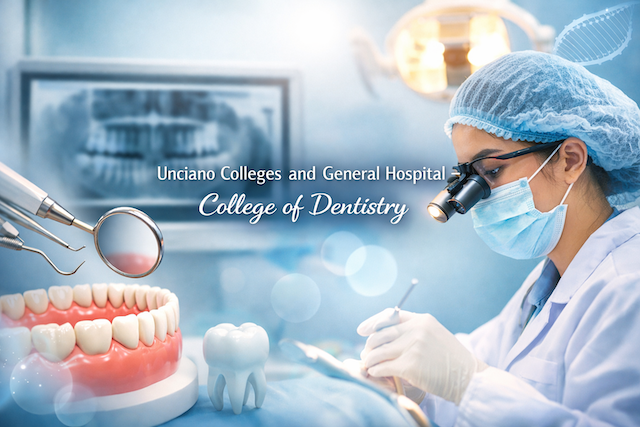
Unciano Colleges and General Hospital – College of Dentistry
Contents
- Unciano Colleges and General Hospital – College of Dentistry
- Quick Overview of Unciano’s Dentistry Program
- Location and Learning Environment in Manila
- What You Study in a DMD Program
- Pre-Clinical Training: Where Skills Are Built
- Clinical Training: Patient Care and Competency Development
- Facilities and Resources to Look For
- Admissions: What Applicants Typically Prepare
- Tuition, Tools, and Hidden Costs in Dentistry
- Student Life: Organizations, Training Culture, and Support
- Licensure Path and Career Outcomes
- How to Decide If Unciano Is the Right Fit
- Tips for Succeeding in Dental School
- Final Thoughts
- FAQs (Frequently Asked Questions)
- Is Unciano Colleges and General Hospital’s College of Dentistry recognized in the Philippines?
- What degree does the College of Dentistry offer?
- How long is the DMD program at Unciano?
- What are the typical admission requirements for dentistry?
- Do international students apply to Unciano’s dentistry program?
- When do students start clinical training?
- How does the hospital-linked environment help dental students?
- What major subjects are included in the dentistry curriculum?
- How much should students budget beyond tuition?
- Do students need to find their own patients for clinical requirements?
- How are students evaluated in the clinical phase?
- What happens after graduating from the DMD program?
- How can I confirm the latest information before applying?
Unciano Colleges and General Hospital – College of Dentistry
Unciano Colleges and General Hospital (often shortened as Unciano or UCGH) is a Manila-based institution known for health-science education and a hospital-linked learning environment. Located in the Sta. Mesa area of Manila (V. Mapa corner Guadalcanal Street), the school is associated with Unciano Colleges and General Hospital, which supports the institution’s hands-on, patient-centered approach to training in medical and allied health fields. Within this setting, the College of Dentistry offers the Doctor of Dental Medicine (DMD) program—an intensive professional track designed to prepare students for general dental practice and for the Philippine dentist licensure pathway.
This guide explains what prospective students and families typically want to know: what the dentistry program is, what you can expect from the curriculum and clinical training, how admissions often work, what student life looks like, and how to evaluate if Unciano is a good fit for your goals. Because policies and requirements can change, treat this as a practical overview and confirm the latest details directly with the school.
Quick Overview of Unciano’s Dentistry Program
The College of Dentistry at Unciano Colleges and General Hospital is centered on the Doctor of Dental Medicine (DMD) program. In the Philippines, the DMD is the standard professional degree for dentists, combining foundational science, pre-clinical laboratory training, and supervised clinical practice. Students progress from theory and simulation work (such as dental anatomy, biomaterials, and operative dentistry practice on models) into real patient care under faculty supervision.
What makes the Unciano setting distinct is its close relationship to a general hospital and a campus culture that strongly leans toward healthcare. Even if dentistry has its own dedicated clinics and laboratories, being in a medical environment can shape how students learn professionalism, patient safety, infection control, documentation, and interprofessional communication—skills that matter in real-world practice.
Location and Learning Environment in Manila
Unciano’s Manila campus is situated in Sta. Mesa, a centrally located area with access to major roads and public transportation options. For many students, Manila-based dental education comes with the realities of city life: commuting, heavy traffic, and a fast pace. On the plus side, Manila offers a large and diverse patient population, which can support clinical exposure in dentistry—especially as students move into patient-based requirements and case experiences.
If you are relocating from outside Metro Manila, consider housing, daily travel time, and your study schedule. Dentistry is time-intensive, and clinical days can begin early, run long, and demand additional time for laboratory work, charting, case planning, and follow-up appointments.
What You Study in a DMD Program
While each dental school arranges courses in its own sequence, most DMD programs in the Philippines share a similar structure. Students start with foundations that build the scientific and clinical reasoning needed for safe patient care. Over time, training becomes more hands-on, with a strong emphasis on clinical competence, ethical practice, and professional communication.
Common subject areas you can expect across a DMD journey include:
- Basic and biomedical sciences (anatomy, physiology, biochemistry, microbiology, pathology)
- Dental sciences (oral anatomy, tooth morphology, occlusion, dental materials, radiology)
- Pre-clinical laboratory training (operative dentistry exercises, prosthodontic lab work, simulation-based procedures)
- Clinical dentistry (restorative dentistry, periodontics, endodontics, prosthodontics, oral surgery, pediatric dentistry)
- Dental public health and community dentistry (prevention programs, community rotations, oral health promotion)
- Professional and practice-related topics (ethics, jurisprudence, practice management, patient communication, infection control)
As you advance, you’ll spend more time in clinics, handling real cases while meeting competency requirements. The focus shifts from “how to do a procedure” to “how to diagnose, plan, communicate, treat, and follow up responsibly.”
Pre-Clinical Training: Where Skills Are Built
Pre-clinical training is where dental students develop hand skills, accuracy, and safe habits. Before touching real patients, students practice on models and simulation stations, learning how to handle dental instruments, create restorations, take impressions, and work with dental materials. This stage can be stressful because dentistry is highly technical: millimeters matter, and your work must meet strict standards.
In a well-run pre-clinical phase, you should expect:
- Step-by-step demonstrations by instructors
- Skills checklists and rubrics for consistent evaluation
- Feedback cycles (redoing work until it meets standards)
- Strong emphasis on ergonomics, safety, and infection control
- Integration of theory (why) with technique (how)
Many students underestimate how much time pre-clinical lab work takes. You will likely spend long hours perfecting preparations, wax-ups, dentures or partials (depending on level), and restorative procedures—often beyond scheduled class time.
Clinical Training: Patient Care and Competency Development
Clinical training is the core of becoming a dentist. In the clinical phase, students move from simulation work into supervised patient care. You learn to perform examinations, take histories, interpret radiographs, develop diagnoses, and create treatment plans. Then you execute procedures under faculty oversight, improving speed, precision, and decision-making.
In a hospital-linked environment like Unciano’s, students may become especially familiar with patient screening, medical history evaluation, and coordinating care for patients who have medical conditions that influence dental treatment. This can be a major advantage, because real practice often involves patients with hypertension, diabetes, asthma, bleeding risks, allergies, or medication-related considerations.
Typical clinical experiences may include:
- Oral examinations, charting, and periodontal assessment
- Preventive care (cleaning, fluoride, patient education)
- Restorative dentistry (fillings and basic rehabilitations)
- Endodontic procedures (case-dependent and competency-based)
- Simple extractions and oral surgery basics (with supervision)
- Prosthodontics (crowns, bridges, dentures, impressions, adjustments)
- Pediatric dentistry encounters (behavior management and preventive focus)
Clinical competence is built through repetition, proper supervision, and reflective practice. A strong program also teaches professional communication—how to explain options, risks, costs, and aftercare in a way patients understand.
Facilities and Resources to Look For
When evaluating any dental school—including Unciano—focus on learning resources that affect daily training. Even if you don’t see every detail online, you can usually confirm these during an inquiry or campus visit.
Key facilities and resources that matter in dentistry education include:
- Pre-clinical laboratories (simulation stations, handpiece training, material handling areas)
- Clinical operatories (dental chairs, sterilization workflow, patient management systems)
- Radiology support (intraoral imaging, panoramic/other imaging depending on availability)
- Central sterilization and infection control systems
- Library and digital learning tools (texts, e-resources, anatomy aids)
- Clinical supplies process (how students access consumables and manage costs)
Because dentistry is equipment-heavy, you should also ask how the program handles maintenance, replacement, and scheduling. Good logistics reduce wasted time and improve clinical learning.
Admissions: What Applicants Typically Prepare
Dental schools in the Philippines commonly require high school completion (or equivalent) and standard application documents such as forms, transcripts, and identification. Some institutions conduct interviews or placement assessments, while others focus on document evaluation and seat availability.
If you plan to apply, prepare these in advance:
- School records (transcript or report cards, depending on entry route)
- Identification documents and photos
- Any required medical clearance documents (common in health programs)
- Application fees and deadlines (which vary by term and intake)
Because dentistry requires strong manual skills and long-term motivation, interviews (when included) may explore your commitment, stress management, and understanding of what dentistry involves. It helps to show realistic expectations: dentistry is not only “fixing teeth,” but managing patients, preventing disease, and maintaining professional standards for safety and ethics.
Tuition, Tools, and Hidden Costs in Dentistry
One of the most important realities of dental education is cost beyond tuition. Dentistry students typically invest in instruments, uniforms, lab materials, and clinical consumables. As you advance, costs can rise due to clinical requirements, case materials, radiographic needs, and laboratory work for prosthodontics.
When planning your budget, consider:
- Tuition and miscellaneous school fees
- Instrument sets and required kits
- Uniforms and clinical attire
- Lab materials and typodont supplies in pre-clinical years
- Clinical consumables and patient-related materials
- Transportation and meals (clinical schedules can be demanding)
A practical step is to ask the school for an estimated breakdown per year level. Even a rough guide helps families plan realistically and reduces surprise expenses mid-semester.
Student Life: Organizations, Training Culture, and Support
Dental students often form tight communities because they spend so many hours together in labs and clinics. Student organizations can support professional growth through seminars, volunteer activities, community dental missions, and peer mentoring. In many Philippine dental schools, student groups connect with broader dental associations and help students develop leadership and communication skills.
Support systems matter in dentistry because the workload can be heavy. A healthy training culture includes:
- Clear clinical policies and fair competency evaluation
- Accessible faculty supervision and feedback
- Guidance on stress management and time planning
- Professionalism training (patient handling and ethical standards)
If you are considering Unciano, ask how students are supported when they face clinical difficulties—such as incomplete cases, patient no-shows, or delays in meeting requirements. The best programs teach students how to recover and stay on track, not just how to perform procedures.
Licensure Path and Career Outcomes
For most students, the goal of a DMD is to become a licensed dentist and enter clinical practice. After completing the program and fulfilling graduation requirements, graduates typically proceed toward the Philippine dentist licensure process. Strong preparation usually combines solid theoretical understanding with consistent clinical exposure and disciplined study habits.
Career paths after graduating from dentistry can include:
- General dental practice (private clinics or group practice)
- Employment in established dental centers
- Hospital-affiliated dental services (depending on opportunities)
- Community dentistry and public health programs
- Further training and specialization (based on interest and eligibility)
- Academic or clinical instruction roles (later, with experience)
Many new dentists start by joining an existing practice to build experience before opening a clinic. Others pursue continuing education in specific areas such as endodontics, orthodontics, oral surgery, pediatric dentistry, or prosthodontics, depending on available programs and professional goals.
How to Decide If Unciano Is the Right Fit
Choosing a dental school is about more than a name. You want a program that matches your learning style, budget, and long-term goals. Unciano’s healthcare-oriented environment may appeal to students who want a strong clinical mindset and exposure to a medically grounded culture.
When comparing schools, consider asking:
- How many clinical hours and patient encounters students typically get at each level
- How the school supports patient acquisition and case completion
- What the faculty supervision model looks like in clinics
- How sterilization and infection control protocols are managed
- What the estimated yearly expenses are beyond tuition
- What typical weekly schedules look like (especially in clinical years)
Also consider practical lifestyle questions: Can you handle commuting in Manila daily? Do you prefer living near campus? Can you maintain consistent study time given long lab and clinical sessions? These factors often determine success as much as academic ability does.
Tips for Succeeding in Dental School
Dental school rewards consistency. Students who succeed usually have a system: they practice skills regularly, keep their notes organized, and treat clinical requirements as a long-term project rather than a last-minute scramble.
Useful habits include:
- Practice early, practice often: hand skills improve with repetition, not cramming.
- Protect your time: dentistry consumes hours; plan weekly schedules realistically.
- Build patient communication skills: good communication reduces missed appointments and improves care.
- Focus on infection control: safe habits are non-negotiable in clinical practice.
- Document everything: accurate charting and case notes are part of professional dentistry.
- Ask for feedback: small corrections early prevent repeated errors later.
Finally, remember that dentistry is a service profession. Technical skill matters, but so does empathy, professionalism, and ethical decision-making. A strong dental education should shape both your hands and your mindset—so you can deliver safe, confident care to the community you will serve.
Final Thoughts
Unciano Colleges and General Hospital’s College of Dentistry offers the Doctor of Dental Medicine pathway in a healthcare-centered environment in Manila. For students who want a clinical, patient-facing education and are prepared for the intensity of dental training, it can be a practical option to consider. The best next step is to verify current admissions timelines, fees, and program policies directly with the school, and—if possible—visit the campus to see the learning environment and ask detailed questions about clinical training.
FAQs (Frequently Asked Questions)
Is Unciano Colleges and General Hospital’s College of Dentistry recognized in the Philippines?
In the Philippines, legitimacy and recognition of dentistry programs typically relate to government authorization and compliance with national education standards, as well as the graduate pathway toward the national Dentist Licensure Examination. For the most accurate and current confirmation, applicants should verify Unciano’s dentistry program status directly through official school channels and, when needed, through relevant Philippine education and professional regulatory bodies. Recognition can also be reflected in whether graduates are eligible to proceed to licensure and complete required academic and clinical competencies.
What degree does the College of Dentistry offer?
Dental schools in the Philippines generally offer the Doctor of Dental Medicine (DMD), which is the standard professional degree leading to dental practice. The DMD program typically combines foundational health sciences, dentistry-focused theory, intensive laboratory work, and supervised clinical training with real patients. You should confirm the exact program title, curriculum structure, and year-level sequence with the admissions office because schools may organize subjects and clinical progression differently.
How long is the DMD program at Unciano?
Program length can vary depending on curriculum design, academic policies, and any bridging or remedial requirements. In many Philippine institutions, dentistry is a multi-year professional program with pre-clinical and clinical phases. The best way to understand the timeline is to request a curriculum map or program prospectus from Unciano, which should outline the number of years, the progression into clinics, and the key requirements for moving from one level to the next.
What are the typical admission requirements for dentistry?
Applicants are commonly asked to submit academic records, identification documents, application forms, and other supporting papers. Some schools also require interviews, entrance assessments, or medical clearances, especially for health-related programs. Requirements may differ for first-time college entrants, transferees, and international applicants. If you are transferring from another institution, you should ask about credit evaluation, residency requirements, and which dentistry subjects must be retaken due to sequencing or clinic prerequisites.
Do international students apply to Unciano’s dentistry program?
Some Philippine colleges accept international applicants, but the process may require additional documentation such as passport information, authenticated school records, and proof of eligibility to study in the Philippines. International students should also confirm language expectations, academic equivalency procedures, and any immigration-related steps. If your long-term plan is to practice dentistry outside the Philippines, you should research your home country’s licensure rules, as graduation from a Philippine DMD program may not automatically qualify you for licensure elsewhere.
When do students start clinical training?
Most DMD programs begin with pre-clinical training—simulation, laboratory exercises, and foundational dental sciences—before moving into clinical patient care. The timing of clinic entry differs by school. Students typically start seeing patients after they have passed prerequisite laboratory competencies and safety requirements, including infection control protocols. Ask Unciano for a year-level overview that explains when students enter clinics, how supervision works, and what competencies are expected at each stage.
How does the hospital-linked environment help dental students?
A campus culture connected to a general hospital can reinforce medical awareness and patient safety. Dentistry students often need to understand systemic health conditions that affect oral treatment, such as diabetes, hypertension, bleeding risks, allergies, and medication interactions. Learning near a healthcare setting may strengthen habits around documentation, sterilization, and coordination of care. However, the dentistry program’s quality still depends on dedicated dental clinics, faculty supervision, and sufficient patient flow, so those are important to evaluate directly.
What major subjects are included in the dentistry curriculum?
While subject names vary, dentistry students commonly study anatomy, physiology, microbiology, pathology, oral anatomy, dental materials, radiology, and major clinical areas such as restorative dentistry, prosthodontics, periodontics, endodontics, oral surgery, and pediatric dentistry. Community dentistry and dental public health are also common components. Beyond clinical skills, students usually complete courses in ethics, jurisprudence, and practice management to prepare for professional responsibilities after graduation.
How much should students budget beyond tuition?
Dental education often includes significant expenses beyond tuition and miscellaneous school fees. Students may need to purchase instruments, uniforms, protective equipment, and materials for laboratory and clinical requirements. Costs can increase as students move into higher levels, where patient-based procedures require consumables and laboratory work. A practical approach is to request an estimated cost guide per year level from the school and ask what items are included in school fees versus what students must purchase independently.
Do students need to find their own patients for clinical requirements?
In many dentistry programs, patient acquisition can be a shared responsibility between the institution and the student, but the balance differs by school. Some programs have strong patient inflow that supports student clinics, while others require students to actively recruit patients to complete case requirements. You should ask Unciano how the clinic system works, what support exists for patient scheduling, and what happens if a patient does not return for follow-up visits—since completion and continuity of care are essential in dentistry.
How are students evaluated in the clinical phase?
Clinical evaluation typically includes competency checklists, case presentations, procedural assessments, and professionalism standards such as punctuality, patient communication, and infection control compliance. Students may also be evaluated on diagnostic reasoning, treatment planning, documentation accuracy, and quality of outcomes. Because clinical performance is cumulative, consistent attendance and preparation usually matter as much as technical skill. Ask whether Unciano uses rubrics, practical exams, and minimum case requirements by department.
What happens after graduating from the DMD program?
Graduates generally proceed toward the Philippine Dentist Licensure Examination and then begin practice as licensed dentists, often starting in clinics or dental centers to gain experience. Others pursue continuing education, special training, or academic work. Career outcomes depend on clinical competence, licensure success, professional networking, and real-world experience. If you plan to open a clinic in the future, learning basic practice management and patient communication skills during school can be just as important as mastering procedures.
How can I confirm the latest information before applying?
Because admissions rules, fees, curriculum details, and clinical policies can change, the safest approach is to contact Unciano Colleges and General Hospital directly and request updated documents such as the program prospectus, tuition and fee schedule, and admissions checklist. If possible, visit the campus to see the dental facilities and ask about clinic supervision, patient flow, and the expected weekly schedule in clinical years. Getting clear answers early helps you plan your budget and timeline realistically.
Dentistry in the Philippines: Education System, Universities, and Career Path

How to Register for eTravel Philippines (2025 Guide)
Step-by-step guide to completing your eTravel registration before arriving in the Philippines, with images and tips.

Night Market in Cebu – Things You Don’t Know About Cebu Life
Discover the hidden charm of Cebu’s night markets, from street food stalls to local life tips you won’t find in tourist guides.

How to Use ChatGPT for IELTS Preparation: A Complete Guide
Learn how to prepare for IELTS using ChatGPT — including strategies for Writing, Reading, Listening, Speaking, and grammar support.

How to Build a Website Without Coding Using ChatGPT
Discover how to build your own website using AI—no coding skills needed. From structure planning to SEO and design, let ChatGPT guide you.