2026年1月16日
3D ACADEMY offers affordable English study programs in Cebu, Philippines – perfect for beginners, professionals, and exam takers.

3D UNIVERSAL ENGLISH INSTITUTE INC
info.3d-universal.com
8:00-17:00(Mon-Fri)
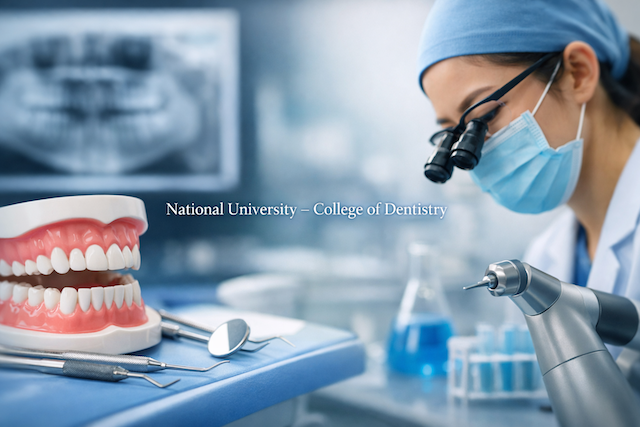
National University – College of Dentistry
Contents
- National University – College of Dentistry
- Why NU for Dentistry
- Program Overview: Doctor of Dental Medicine
- What You Actually Study: Typical Subject Areas
- Facilities and Hands-On Training Environment
- Admissions: What Applicants Commonly Need
- How to Prepare Before You Start Dentistry
- Costs and Budget Planning
- Clinical Years: Patient Care, Requirements, and Professional Growth
- Licensure and Career Path After Graduation
- Student Tips: How to Succeed in NU Dentistry
- Is NU College of Dentistry Right for You?
- Frequently Asked Questions (FAQs)
- What program does National University’s College of Dentistry typically offer?
- How long does it take to finish dentistry at NU?
- What are the typical admission requirements for the College of Dentistry?
- Is dentistry at NU mostly lectures, or is it hands-on?
- What kinds of subjects and skills should students expect to learn?
- How much should students budget beyond tuition?
- Do students need to find their own patients during clinical training?
- What is the workload like, and how can students succeed?
- Does NU dentistry prepare students for licensure and real practice?
- Can international students apply to NU’s College of Dentistry?
- What should applicants check before choosing NU for dentistry?
National University – College of Dentistry
National University (NU) is one of the long-established private universities in the Philippines, and its College of Dentistry is often recognized as part of the country’s traditional pipeline for training future dentists. For students who want to become licensed dental professionals, NU’s dentistry track is designed to move you from foundational sciences to laboratory work, and then into supervised patient care—preparing you for real-world practice and the Philippine dental licensure process.
This guide explains what to expect if you are considering NU’s College of Dentistry: the usual program structure, admissions flow, training style, facilities you’ll likely use, typical student expenses to plan for, and what your career path can look like after graduation. While details can change from year to year (especially policies, fees, and clinic requirements), the overview below gives you a practical, student-centered picture of how dentistry education at NU generally works.
Why NU for Dentistry
Choosing a dental school is rarely about one factor. Students usually compare: training quality, clinical exposure, costs, location, board exam readiness, and the overall “fit” of the learning environment. NU is often considered by applicants who want a school with a long-running dentistry program and an urban campus setting where access to patients, commuting routes, and professional networks is relatively convenient.
Many NU dentistry students also appreciate a structured learning track: early semesters focus on fundamentals and manual skills, then progressively move to clinical procedures with increasing responsibility. The result is a program that can feel demanding but clear—each year builds toward the next, with measurable competencies students must demonstrate before they are allowed to advance to more complex clinical work.
Program Overview: Doctor of Dental Medicine
In the Philippines, the standard professional program to become a dentist is the Doctor of Dental Medicine (DMD). NU’s College of Dentistry generally follows this national model: you begin with core sciences and introductory dental subjects, then move into laboratory-based technical training, and finally spend substantial time in clinical settings where you treat patients under faculty supervision.
While exact timelines and course names may vary, you can expect three broad phases:
- Pre-clinical foundation: General education and health sciences (anatomy, physiology, biochemistry, microbiology), plus early dental concepts and orientation.
- Laboratory and skills development: Intensive “hands-on” training—dental anatomy and morphology, wax-ups, restorations, removable prosthodontics exercises, infection control workflows, instrumentation, and simulation-based procedures.
- Clinical dentistry: Supervised patient care (diagnosis, treatment planning, restorative dentistry, prosthodontics, endodontics basics, periodontics fundamentals, oral surgery basics, pediatric dentistry principles, and clinical management).
Across these phases, dentistry education is competency-based: it’s not only about passing written exams, but also completing required clinical cases, procedures, and practical evaluations.
What You Actually Study: Typical Subject Areas
Dental school can feel like two programs combined: a medical-science foundation plus a technical/clinical craft. In a typical NU dentistry journey, you can expect coursework that covers the following areas:
- Basic medical sciences: Human anatomy, physiology, histology, pathology, microbiology, pharmacology, and general concepts of systemic health.
- Oral sciences: Oral anatomy, dental morphology, occlusion, oral pathology, and oral medicine concepts.
- Dental materials and lab techniques: Impression materials, casting, ceramics basics, acrylics, and how material choice affects function and longevity.
- Diagnosis and treatment planning: Patient assessment, radiographic interpretation fundamentals, charting, and integrated treatment sequencing.
- Restorative dentistry: Cavity preparation principles, direct restorations, esthetic considerations, and long-term maintenance planning.
- Prosthodontics: Removable and fixed prostheses concepts, clinical and lab stages, and patient adaptation.
- Periodontics: Gum health, scaling concepts, supportive therapy, and prevention-focused care.
- Endodontics fundamentals: Root canal principles, indications, and controlled clinical procedures under supervision.
- Oral surgery basics: Exodontia principles, surgical asepsis, patient preparation, and post-op management basics.
- Pediatric dentistry principles: Behavior management, preventive approaches, and age-appropriate care planning.
- Community dentistry and public health: Oral health education, prevention strategies, and population-based perspectives.
- Professional ethics and practice management: Patient communication, consent, documentation, and clinic workflow basics.
Even if you are a strong academic student, dentistry demands consistent manual practice. Students who schedule regular lab time and treat skill-building like training (not “homework”) typically adapt faster in clinical years.
Facilities and Hands-On Training Environment
Because dentistry is procedure-heavy, your learning environment matters. In most established dentistry programs, including NU’s, you can expect facilities that support both simulation and real patient care. Students typically spend time in:
- Pre-clinical laboratories: Benches and workstations for wax-ups, tooth carving, restorative exercises, and prosthodontic lab steps.
- Clinical operatories: Dental chairs and treatment bays where students provide supervised care to patients.
- Radiology learning support: Training in dental imaging fundamentals and safe handling protocols.
- Instrument sterilization areas: Infection control workflows are a daily reality; students learn the systems used in professional clinics.
- Skills assessment set-ups: Practical exams often require timed procedures in controlled conditions to confirm readiness.
Students should be prepared for strict clinical standards: punctuality, complete documentation, proper PPE use, and compliance with infection control protocols. These habits are not optional; they are part of professional formation and patient safety.
Admissions: What Applicants Commonly Need
Admissions requirements can differ by applicant type (freshman, transferee, second-degree holder, or international applicant). However, many Philippine universities follow a similar baseline set of documents. Applicants commonly prepare:
- Recent academic records (senior high school or college transcripts/records, depending on entry path)
- Proof of graduation or completion (as applicable)
- Identification documents (birth certificate or equivalent, valid ID)
- Certificate of good moral character (often required in Philippine higher education admissions)
- Photos and basic application forms
If you are transferring, you may need official transfer credentials and course descriptions/syllabi for possible credit evaluation. If you are an international student, you should expect additional authentication requirements for documents and visa-related processing.
Practical tip: Dentistry programs often have capacity limits due to clinic resources. Submitting early and completing documents quickly can help you avoid delays.
How to Prepare Before You Start Dentistry
Students who thrive in dentistry typically start with realistic expectations. You do not need to be “an artist,” but you do need patience, consistency, and comfort with repetitive skill practice. Here are ways to prepare:
- Strengthen your science base: Basic biology and chemistry help you survive the early years with less stress.
- Train your hands: Any activity that builds fine motor control can help (drawing, craft work, model-building). What matters most is consistency.
- Improve time management: Dentistry is schedule-heavy. Expect long days that combine lectures, labs, and case requirements.
- Practice communication: Patient interaction is part of clinical success. You must explain procedures clearly and manage anxiety professionally.
If your goal is to become a confident clinician, build a routine early: study blocks, lab practice, and health habits. Burnout is common when students only “push hard” right before exams or deadlines.
Costs and Budget Planning
Dental school is usually more expensive than many other degree programs because of lab and clinic requirements. Beyond tuition, students should plan for recurring professional expenses that can include:
- Instruments and kits: A large up-front cost; some items may be purchased in sets or by stage/semester.
- Consumables: Materials used for laboratory and clinical procedures (which can add up across the year).
- Uniforms and PPE: Clinical attire, masks, gloves, protective eyewear, and other required items.
- Books and learning resources: Some students use digital references; others prefer standard textbooks.
- Transportation and meals: Clinical schedules can extend your on-campus time significantly.
A realistic budget approach is to plan “tiers” of cost: a higher-spend phase in the first year you purchase major kits, and an ongoing spend pattern for consumables and clinic-related items during clinical years. If the school offers guidance on recommended suppliers or package options, compare quality and long-term durability, not only the initial price.
Clinical Years: Patient Care, Requirements, and Professional Growth
Clinical training is where dentistry becomes real. In most DMD programs, students are required to complete specific types of cases and procedures to demonstrate competence. This can include assessments, restorations, periodontal care, and prosthodontic work. The process is supervised and evaluated—faculty members check diagnosis, treatment planning, step-by-step execution, and final outcomes.
Many students find clinical years challenging for two reasons:
- Time pressure: Balancing patients, documentation, lab work, and academic exams requires strong organization.
- Human unpredictability: Patients cancel, arrive late, or have complex needs. You learn flexibility and communication.
Clinical success often comes from building a stable routine: confirm patient schedules early, prepare instruments and materials ahead of time, and keep your documentation clean and complete. Over time, students develop not just technical skills, but also professional confidence—learning to manage anxiety (yours and the patient’s), explain care clearly, and maintain ethical standards.
Licensure and Career Path After Graduation
After completing the Doctor of Dental Medicine program, graduates typically pursue the pathway to become a licensed dentist in the Philippines. Licensure generally involves meeting academic and clinical completion standards and passing the relevant professional examinations. Once licensed, career options can include:
- General dentistry practice: Working in private clinics, group practices, or building toward your own clinic.
- Hospital or institutional roles: Some dentists work in hospitals, schools, or government-related health programs.
- Public health and community dentistry: Oral health education programs and preventive-care initiatives.
- Academic and training roles: Teaching or assisting in dental education after gaining experience.
- Specialization pathways: With experience and additional training, dentists may pursue focused fields (requirements vary by route and institution).
Even if your long-term goal is specialization, strong general practice skills are a valuable foundation. Early career years often shape your clinical style, patient management approach, and your understanding of the business side of dentistry.
Student Tips: How to Succeed in NU Dentistry
Dental students often share the same lesson: success is built through systems, not last-minute effort. Here are practical habits that tend to matter:
- Practice consistently: Short daily lab practice often beats long, irregular sessions.
- Document everything: Keep organized records of procedures, case notes, and requirements. Clinical tracking reduces stress.
- Learn infection control deeply: Treat protocols seriously. It protects you, your classmates, and your patients.
- Ask early, not late: If you’re unsure about a step, ask faculty before you commit. Fixing mistakes is harder later.
- Protect your health: Sleep, posture, and stress management matter. Dentistry is physically demanding.
Finally, remember that dentistry is a people-facing profession. Technical excellence matters, but so do empathy and communication. Students who treat patients respectfully and explain care clearly often build stronger clinical confidence faster.
Is NU College of Dentistry Right for You?
NU’s College of Dentistry can be a strong option if you want a structured DMD pathway, are comfortable with a demanding schedule, and are ready to commit to both academic study and hands-on training. Dentistry is not a “memorize and pass” degree—it’s a professional formation process that requires discipline, patience, and continuous practice.
If you are the kind of student who can handle long-term goals, accept detailed feedback, and improve through repetition, dentistry can be a highly rewarding path. And if you want your university experience to connect directly to a clear, licensed profession, NU’s College of Dentistry is a campus worth considering as you compare dental schools in the Philippines.
Frequently Asked Questions (FAQs)
What program does National University’s College of Dentistry typically offer?
National University’s dentistry track is generally aligned with the Doctor of Dental Medicine (DMD) pathway, which is the standard professional program for becoming a dentist in the Philippines. The program usually progresses from foundational sciences and pre-clinical laboratory training to supervised clinical practice with real patients. While the exact curriculum, sequencing, and subject titles can change by academic year, you can expect a structured progression: early terms focus on core health sciences and dental fundamentals, mid-level terms strengthen technical and laboratory competencies, and later terms emphasize clinical requirements, patient management, and professional readiness.
How long does it take to finish dentistry at NU?
Program length depends on the university’s current curriculum design and the student’s academic progress. Dentistry education commonly takes multiple years because it includes both academic coursework and competency-based clinical training. Students must complete not only classroom requirements but also laboratory projects and a set of clinical cases or procedures under supervision. If a student needs to repeat a subject, pauses enrollment, or experiences delays in completing clinical requirements, the overall timeline can extend. For the most accurate duration, applicants should refer to NU’s official admissions or college announcements for the current academic year.
What are the typical admission requirements for the College of Dentistry?
Requirements vary depending on whether you are applying as a freshman, transferee, second-degree applicant, or international student. However, common requirements often include academic records (such as report cards or transcripts), proof of completion or graduation, identification documents, and other standard school forms. Some applicants may be asked for additional documents such as a certificate of good moral character, medical clearance, or interview scheduling. Transferees may need transfer credentials and may undergo evaluation for possible credit recognition. International applicants typically submit authenticated documents and comply with student visa-related processes.
Is dentistry at NU mostly lectures, or is it hands-on?
It is both. The early stage usually includes more lectures and science-based subjects, but dentistry is inherently hands-on and becomes increasingly practical as you progress. Students commonly spend significant hours in pre-clinical laboratories practicing manual skills and learning dental materials, instrumentation, and procedure sequencing. In clinical years, supervised patient care becomes a major focus. This includes diagnostic work, treatment planning, and delivering procedures within a faculty-monitored clinic environment. Expect your schedule to include lectures, lab time, clinical sessions, practical exams, and case completion requirements.
What kinds of subjects and skills should students expect to learn?
Students typically study foundational medical sciences (such as anatomy and physiology), oral sciences (like dental anatomy and oral pathology concepts), dental materials, and procedure-based subjects such as restorative dentistry and prosthodontics. They also learn essential clinical skills: patient communication, proper documentation, infection control routines, and step-by-step procedural discipline. Over time, training commonly expands into areas like periodontics concepts, endodontic fundamentals, oral surgery basics, pediatric dentistry principles, and community dentistry perspectives. The balance of theory and practice is designed to build safe, competent entry-level clinicians.
How much should students budget beyond tuition?
Dental school often involves significant additional costs beyond tuition because students need instruments, laboratory supplies, and clinical consumables. Expenses commonly include dental instrument kits, hand instruments, protective gear, uniforms, materials for restorations and prosthetic work, and other items required for lab and clinic sessions. Some costs can be higher in the early phases when you purchase major kits, while later phases may involve ongoing spending for consumables and clinical case materials. Because costs vary by year level and school policies, it is practical to prepare a flexible budget and confirm current estimates from NU’s official guidance.
Do students need to find their own patients during clinical training?
Clinical training in dentistry typically involves treating real patients under supervision, and many dental programs require students to complete certain types of cases or procedures to demonstrate competence. Whether students must recruit patients themselves, receive patients through school systems, or use a combination of both depends on the program’s clinic structure and current policies. In any case, students are usually responsible for professionalism: confirming appointments, preparing for procedures, maintaining records, and ensuring proper follow-up. Applicants should ask the college for the latest guidance on patient flow and clinical requirements.
What is the workload like, and how can students succeed?
Dentistry is known for a heavy workload because it combines academics, technical training, and clinical performance. Success often depends on consistent practice, time management, and careful tracking of requirements. Students who do well commonly build routines: review lectures daily, schedule regular lab practice to improve hand skills, prepare instruments and materials before sessions, and keep documentation organized. It also helps to seek feedback early, because skill-based mistakes are easier to correct before they become habits. Maintaining health is important too—sleep, posture, and stress management can significantly affect performance.
Does NU dentistry prepare students for licensure and real practice?
The overall purpose of a DMD program is professional readiness: building the knowledge, technical competence, and clinical judgment required for entry-level dental practice and for pursuing licensure. Clinical training is especially important because it develops hands-on ability, patient communication, and ethical decision-making. While every graduate’s readiness depends on effort and consistent performance, structured coursework, laboratory requirements, and supervised clinical care are designed to prepare students for professional examinations and workplace expectations. For best outcomes, students should treat clinical standards seriously and aim for quality, not just completion.
Can international students apply to NU’s College of Dentistry?
International students may be eligible to apply, but the process usually includes additional steps compared with local applicants. These steps can include document authentication, equivalency evaluation of academic records, and compliance with Philippine student visa requirements. Some schools also request proof of English proficiency or require interviews and orientation sessions. Because immigration and university requirements can change, international applicants should coordinate directly with NU’s admissions office to confirm current procedures, deadlines, and the complete document list.
What should applicants check before choosing NU for dentistry?
Before deciding, applicants should confirm the current curriculum structure, estimated costs, clinic policies, and admission timelines. It is also useful to ask about facilities, laboratory schedules, clinical training flow, and how the program tracks competency requirements. If possible, compare learning environment factors: commuting practicality, time demands, support services, and how the college communicates requirements to students. Dentistry is a long-term commitment, so the best choice is often the school whose training style and expectations match your learning habits and professional goals.
Dentistry in the Philippines: Education System, Universities, and Career Path

How to Register for eTravel Philippines (2025 Guide)
Step-by-step guide to completing your eTravel registration before arriving in the Philippines, with images and tips.

Night Market in Cebu – Things You Don’t Know About Cebu Life
Discover the hidden charm of Cebu’s night markets, from street food stalls to local life tips you won’t find in tourist guides.

How to Use ChatGPT for IELTS Preparation: A Complete Guide
Learn how to prepare for IELTS using ChatGPT — including strategies for Writing, Reading, Listening, Speaking, and grammar support.

How to Build a Website Without Coding Using ChatGPT
Discover how to build your own website using AI—no coding skills needed. From structure planning to SEO and design, let ChatGPT guide you.