2026年1月16日
3D ACADEMY offers affordable English study programs in Cebu, Philippines – perfect for beginners, professionals, and exam takers.

3D UNIVERSAL ENGLISH INSTITUTE INC
info.3d-universal.com
8:00-17:00(Mon-Fri)
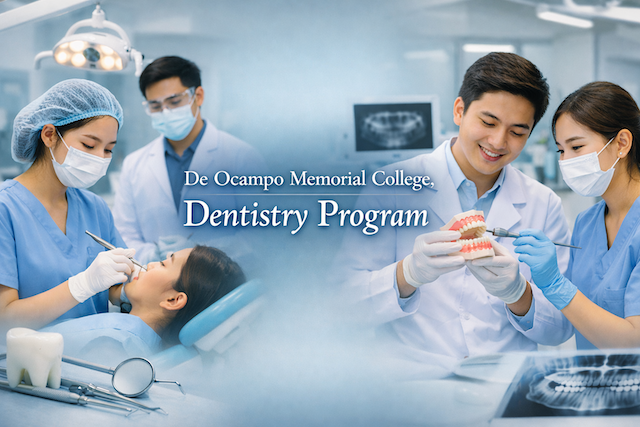
De Ocampo Memorial College – Dentistry Program
Contents
- De Ocampo Memorial College – Dentistry Program
- Overview of De Ocampo Memorial College and Its Dentistry Track
- What You Study in a Typical Dentistry Program
- Pre-Clinical Training: Where Skills Begin
- Clinical Training: Patient Care Under Supervision
- Facilities and Learning Environment
- Admissions, Qualifications, and Student Readiness
- Costs, Tools, and Daily Practicalities for Dentistry Students
- Board Exam Preparation and Licensure Path
- Career Outcomes After Graduation
- How to Choose If De Ocampo Memorial College Is Right for You
- FAQs (Frequently Asked Questions)
- Is De Ocampo Memorial College (DOMC) a good option for studying Dentistry in the Philippines?
- What subjects are included in a typical Dentistry program, and what should I expect in the early years?
- When do students typically start hands-on training and clinical practice?
- How important are facilities and equipment when choosing a Dentistry program?
- What costs should I plan for besides tuition?
- Do Dentistry students need to find their own patients for clinical requirements?
- What qualities help a student succeed in Dentistry?
- How can students prepare for licensure while still in school?
- What career paths are available after graduating from a Dentistry program?
De Ocampo Memorial College – Dentistry Program
Overview of De Ocampo Memorial College and Its Dentistry Track
De Ocampo Memorial College (often called DOMC) is one of the private schools in the Philippines that offers healthcare-focused education, with programs designed to prepare students for professional practice. For students considering a Dentistry program, what matters most is not only the school name, but also the learning environment: the quality of faculty supervision, the volume of hands-on training, the clinic workflow, and how consistently students are trained to meet the competencies required for board preparation and real-world patient care.
Dentistry is a demanding professional path. It blends medical science, fine motor skills, patient communication, ethics, infection control, and business awareness. A strong Dentistry program should support students step by step—from foundational sciences to pre-clinical simulation work, and then to supervised clinical cases. In the Philippine context, students also commonly consider practical factors such as campus accessibility, learning facilities, the availability of clinical exposure, and the overall culture of discipline and professionalism.
This guide explains what a Dentistry program typically includes, what students should look for when evaluating DOMC or any dental school, and how to plan your student journey from first year to licensure and early career development.
What You Study in a Typical Dentistry Program
While each institution structures courses differently, Dentistry programs in the Philippines generally follow a progressive pathway. The early years are heavy on theory and foundational sciences; the middle years focus on pre-clinical skills; and the later years emphasize direct patient care. If you are exploring De Ocampo Memorial College’s Dentistry program, you will want to understand how the curriculum transitions from lecture-based learning to skill-based performance.
Common academic areas include:
- Basic sciences: anatomy, physiology, biochemistry, microbiology, pathology, and pharmacology as they relate to oral health and systemic conditions.
- Dental sciences: oral anatomy, tooth morphology, dental materials, occlusion, radiology fundamentals, and preventive dentistry.
- Clinical disciplines: operative dentistry, endodontics, periodontics, prosthodontics, orthodontics, pediatric dentistry, oral surgery, and oral medicine.
- Public health and ethics: community dentistry, patient rights, professional ethics, and legal responsibilities in healthcare practice.
Even if the course titles sound similar across schools, the difference is often in execution. A program becomes “strong” when students get enough repetition to build confidence: consistent pre-clinical lab hours, clear rubrics for competence, strict infection control habits, and faculty feedback that is both detailed and timely.
Pre-Clinical Training: Where Skills Begin
Before students work on real patients, they typically spend significant time in pre-clinical laboratories and simulation environments. This stage is crucial because dentistry depends heavily on precision, posture, ergonomics, and hand control. In a well-run program, students learn not only what to do, but how to do it safely and consistently.
Pre-clinical work commonly includes:
- Dental anatomy and carving exercises to understand tooth forms and functional surfaces.
- Dental materials handling such as mixing, setting, curing, and finishing restorative materials.
- Operative procedures on models where students practice cavity preparation, restoration shaping, and polishing.
- Prosthodontic simulation including impressions, bite registration, and denture or crown-related processes using mannequins or models.
- Radiographic basics where students learn positioning, safety, and interpretation fundamentals before clinical use.
If you are considering DOMC, ask how pre-clinical competency is assessed. Ideally, the program uses checklists and performance standards that students must meet before moving into patient-based requirements. A structured progression reduces anxiety and produces more confident clinicians later on.
Clinical Training: Patient Care Under Supervision
Clinical dentistry is where knowledge becomes real practice. Students learn chairside manners, time management, case documentation, and how to handle patient concerns respectfully. In this stage, supervision and patient flow matter more than anything. A good clinic experience balances learning opportunities with strict safety standards.
Clinical training generally includes:
- Patient assessment: medical history, oral examination, diagnosis, and treatment planning.
- Preventive care: scaling basics, oral hygiene instruction, and risk assessment for caries and periodontal disease.
- Restorative work: fillings, tooth preparation, and management of common issues under faculty guidance.
- Basic endodontic and periodontal procedures depending on program level and case availability.
- Prosthodontic cases: removable prostheses and, in some programs, fixed prosthodontics depending on clinical setup.
- Simple surgical procedures and emergency management fundamentals, always within defined student scope.
Clinical requirements vary by school and can be influenced by patient availability. Many dentistry students in the Philippines learn early that consistent patient sourcing and scheduling discipline are key. If DOMC provides strong clinic support systems—clear protocols, case distribution, and faculty availability—that can make student life significantly smoother.
Facilities and Learning Environment
A Dentistry program depends on facilities more than many other degrees. Students typically need access to labs, dental chairs, sterilization areas, radiography resources, and materials storage systems. Even when equipment is not brand new, what matters is whether it is maintained, safe, and integrated into structured training.
When evaluating a Dentistry program, look for signs of a learning culture that prioritizes:
- Infection control discipline: proper sterilization workflow, PPE standards, and consistent monitoring.
- Faculty-to-student supervision: enough instructors available during clinical sessions for safe practice.
- Skills repetition: sufficient time in labs and clinics for students to become competent, not just “exposed.”
- Patient-centered professionalism: communication training, consent practices, and respectful patient handling.
A supportive environment is not only about equipment; it is also about teaching. Dentistry students thrive when instructors correct technique early, explain clinical reasoning clearly, and set high expectations with fairness.
Admissions, Qualifications, and Student Readiness
Admissions processes differ by institution, but most dental schools assess a combination of academic background, documentation, and readiness for a demanding course load. Prospective students should prepare both academically and mentally. Dentistry requires steady endurance, not only during exams but also during long laboratory and clinical sessions.
To prepare for success, incoming students should focus on:
- Science foundations: building confidence in biology and basic chemistry concepts.
- Study discipline: dentistry has a heavy volume of memorization and applied reasoning.
- Manual skills mindset: you do not need “talent,” but you need patience and consistent practice.
- Professional attitude: punctuality, cleanliness, and responsibility matter early in dental training.
If you are choosing between schools, ask about orientation support, mentoring, and how the program helps first-year students adjust to the realities of dental education.
Costs, Tools, and Daily Practicalities for Dentistry Students
Dentistry is known for being a high-investment education. Beyond tuition and standard school fees, students typically spend on instruments, consumable materials, uniforms, protective equipment, and sometimes patient-related costs depending on clinical policies. The total cost can be manageable with careful planning, but students must be realistic early on.
Common dentistry-related expenses include:
- Instrument sets: basic diagnostic kits and additional tools for operative and prosthodontic work as you progress.
- Consumables: gloves, masks, burs, impression materials, and restorative materials used in labs and clinics.
- Uniform and PPE: coats, scrubs, protective eyewear, and other required items.
- Transportation and scheduling costs: especially during clinical years when time management becomes intense.
For applicants considering De Ocampo Memorial College, it is helpful to ask for a year-by-year cost overview. A transparent breakdown helps students and families budget properly and reduces stress later.
Board Exam Preparation and Licensure Path
Graduating from a Dentistry program is not the end goal for most students; licensure is. A strong school environment supports board preparation not only through review sessions, but also through consistent training in clinical reasoning and documentation. Students who build good habits early—accurate charting, ethical patient handling, and careful procedural steps—often find the transition to review and licensure more manageable.
Even without focusing on specific review strategies, students can prepare by:
- Keeping clear notes and organizing subjects from early years for later review.
- Practicing clinical decision-making rather than memorizing isolated facts.
- Strengthening weak areas through consistent practice and consultation with instructors.
- Maintaining professional discipline in clinic routines and infection control.
When evaluating any dental school, including DOMC, ask how the program supports graduates: review coordination, alumni guidance, and how clinical competency standards align with licensure expectations.
Career Outcomes After Graduation
A Dentistry degree opens multiple paths. Many graduates start in associate roles at private clinics to gain experience and confidence. Others pursue further training, specialized pathways, or community-based work. Over time, many dentists aim to build a stable patient base and potentially open their own practice.
Common early career routes include:
- Associate dentist positions in private clinics for mentorship and exposure to diverse cases.
- Community or public health dentistry depending on opportunities and personal mission.
- Hospital or institutional roles where applicable, often connected to broader health services.
- Postgraduate training for those who want deeper focus in areas like orthodontics, oral surgery, or prosthodontics.
Students should also learn basic practice management concepts: patient communication, scheduling discipline, ethical pricing, and record-keeping. These are not just “business topics”—they directly affect patient trust and long-term professional stability.
How to Choose If De Ocampo Memorial College Is Right for You
Choosing a dental school is a long-term decision. The “best” school is not always the most famous; it is the one where you can consistently train, learn safely, and grow professionally. De Ocampo Memorial College’s Dentistry program may be a good fit if you value a structured environment, accessible faculty support, and a learning culture that emphasizes discipline and competence.
When making your decision, consider asking practical questions such as:
- How is the Dentistry curriculum structured year by year, and when do clinical requirements begin?
- What are the clinical supervision ratios, and how is student competency evaluated?
- How does the school support patient flow and case completion during clinical years?
- What are the estimated total costs per year including instruments and consumables?
- What board preparation support is provided for graduating students?
Finally, reflect on your own learning style. Dentistry rewards students who are persistent, detail-oriented, and calm under pressure. If you can commit to steady practice and professional discipline, a Dentistry program can become one of the most rewarding educational journeys—leading to a career that blends science, art, and meaningful patient impact.
FAQs (Frequently Asked Questions)
Is De Ocampo Memorial College (DOMC) a good option for studying Dentistry in the Philippines?
DOMC can be a practical option for students who want to pursue Dentistry in the Philippines, especially if you are looking for a private institution that focuses on health-related education and a structured academic environment. The best way to judge “fit” is to look beyond the school name and evaluate factors that directly affect your learning: faculty supervision during laboratory and clinical sessions, how skills are assessed before you move into patient care, and how consistently students receive feedback. You should also consider daily realities such as schedule intensity, commute, and the availability of patient exposure once clinical training starts. If you can, request a campus visit, ask to see the simulation or pre-clinical areas, and confirm how the school supports students during clinical requirements.
What subjects are included in a typical Dentistry program, and what should I expect in the early years?
In most Dentistry programs in the Philippines, the early years emphasize foundational sciences and introductory dental subjects. You can expect anatomy, physiology, biochemistry, microbiology, pathology, pharmacology, and basic dental sciences such as tooth morphology, oral anatomy, dental materials, occlusion basics, and preventive dentistry. The early phase is usually lecture-heavy and exam-focused, but it is also when you build the knowledge you will use later in clinics. Many students underestimate how important strong study habits are in the first years. If you develop disciplined note-taking, active recall study routines, and consistent review schedules early on, you will be in a much better position when the program becomes more clinical and time-sensitive.
When do students typically start hands-on training and clinical practice?
Most dentistry students begin hands-on training in pre-clinical labs before working on real patients. Pre-clinical training commonly includes simulation work on models or mannequins, where you practice handling instruments, preparing cavities, shaping restorations, taking impressions, and learning dental materials. Clinical practice usually begins after students meet certain competency standards, although timing can vary depending on the school’s structure. A good program does not rush students into patient care. Instead, it ensures you pass skill assessments with clear rubrics, because real clinical work requires confidence, precision, and strict infection control habits. When researching DOMC, ask when clinical exposure starts and what pre-clinical competencies are required first.
How important are facilities and equipment when choosing a Dentistry program?
Facilities matter a lot in Dentistry because the program is skill-based and clinic-dependent. You will likely need access to pre-clinical labs, dental chairs for clinical training, sterilization and infection control areas, and radiography resources. However, “best” does not always mean “newest.” What matters most is whether the facilities are safe, well-maintained, and used within an organized training system. A school with consistent sterilization protocols, clear clinic workflows, and strong supervision can offer better training than a place with newer equipment but weak systems. When evaluating DOMC, ask how infection control is taught and enforced, how materials are managed, and how students are supervised during procedures.
What costs should I plan for besides tuition?
Dentistry typically involves additional costs beyond tuition and standard fees. Students often purchase instruments, uniforms, protective equipment, and a wide range of consumable materials used in labs and clinics. Costs can increase as you progress because clinical requirements often involve more specialized tools and materials. You should also consider transportation, meals during long clinic days, and time-related costs because dentistry schedules can be demanding. For a realistic plan, request an estimated year-by-year breakdown that includes instrument sets and expected consumables. Planning early helps you avoid stress later and allows you to focus on skill development rather than financial surprises.
Do Dentistry students need to find their own patients for clinical requirements?
This depends on the school’s clinical system. Some dental schools have strong patient flow through community programs or teaching clinics, while others require students to source at least some of their own patients. In practice, many students take a proactive approach regardless of the system because having consistent patients helps you complete clinical requirements on time. If you are considering DOMC, ask how the school supports patient access, whether there are community outreach activities, and how clinical cases are assigned. Also ask what happens if a patient misses an appointment and how the clinic manages rescheduling, documentation, and continuity of care.
What qualities help a student succeed in Dentistry?
Successful dentistry students are usually disciplined, detail-oriented, and patient with themselves. Manual skill improves through repetition, not talent alone. You will need steady practice, the ability to accept feedback, and the humility to correct mistakes early. Time management is also critical because you may balance lectures, lab requirements, clinical sessions, paperwork, and patient appointments. Emotional maturity matters too, since you will work with real people who may be anxious, in pain, or worried about cost. If you build professional habits—punctuality, cleanliness, respectful communication, and careful documentation—you will stand out in clinics and feel more confident during exams and licensure preparation.
How can students prepare for licensure while still in school?
Board preparation becomes easier when you build strong academic and clinical habits from the start. Keep your notes organized by subject, review foundational concepts regularly, and connect theory to clinical reasoning rather than memorizing isolated facts. During pre-clinical and clinical training, focus on doing procedures the correct way every time: proper isolation, step-by-step technique, infection control, and accurate charting. These habits reduce errors and improve confidence. It also helps to identify weak subjects early and address them before your final year becomes too busy. Ask whether DOMC offers structured review support, mock exams, or mentorship from graduates, because these systems can help you prepare in a more guided and less stressful way.
What career paths are available after graduating from a Dentistry program?
After graduation and licensure, many dentists begin as associates in private clinics to gain experience, speed, and confidence. Others may work in community settings, public health-related roles, or continue with postgraduate training depending on their goals. Over time, some dentists build a patient base and open their own practice, while others focus on a particular field through further education and mentorship. Regardless of your direction, communication skills and professional ethics remain essential. A strong Dentistry program should help you develop clinical competence, patient management skills, and a professional mindset that supports long-term career growth.
Dentistry in the Philippines: Education System, Universities, and Career Path

How to Register for eTravel Philippines (2025 Guide)
Step-by-step guide to completing your eTravel registration before arriving in the Philippines, with images and tips.

Night Market in Cebu – Things You Don’t Know About Cebu Life
Discover the hidden charm of Cebu’s night markets, from street food stalls to local life tips you won’t find in tourist guides.

How to Use ChatGPT for IELTS Preparation: A Complete Guide
Learn how to prepare for IELTS using ChatGPT — including strategies for Writing, Reading, Listening, Speaking, and grammar support.

How to Build a Website Without Coding Using ChatGPT
Discover how to build your own website using AI—no coding skills needed. From structure planning to SEO and design, let ChatGPT guide you.