2026年1月16日
3D ACADEMY offers affordable English study programs in Cebu, Philippines – perfect for beginners, professionals, and exam takers.

3D UNIVERSAL ENGLISH INSTITUTE INC
info.3d-universal.com
8:00-17:00(Mon-Fri)
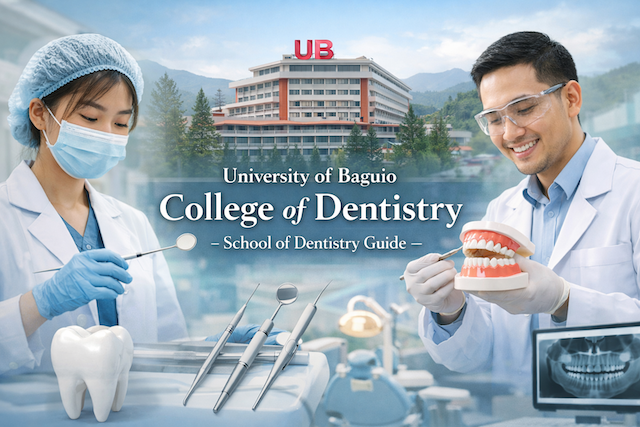
University of Baguio – College of Dentistry (School of Dentistry) Guide
Contents
- University of Baguio – College of Dentistry Guide
- Overview of the Dentistry Program
- Why Study Dentistry in Baguio City?
- Program Structure: From Foundations to Clinical Training
- Core Academic Areas You Can Expect
- Pre-Clinical Training: Building Skills Before Patients
- Clinical Training: Patient Care Under Supervision
- Equipment, Supplies, and Daily Practical Needs
- Licensure: Dentistry Licensure Exam and Career Readiness
- Admissions Preparation: What Applicants Should Do Early
- Student Life and Professional Mindset
- Career Paths After Graduation
- Practical Tips for Students Considering UB Dentistry
- Final Thoughts
- FAQs (Frequently Asked Questions)
- Is the University of Baguio dentistry program a Doctor of Dental Medicine (DMD) degree?
- How long does it usually take to complete dentistry at the University of Baguio?
- What is the difference between pre-clinical and clinical years in dentistry?
- What subjects should I expect in the early part of the program?
- When do students usually start seeing patients?
- Does the program include training in restorative dentistry and oral surgery?
- What is the Dentistry Licensure Exam (DLE), and when do I take it?
- How should I prepare academically before entering dentistry?
- What costs should I plan for besides tuition?
- Can transferees or students with prior college units apply to the program?
- What skills are most important for success in dental school?
- Does the University of Baguio dentistry program fit international students?
- What should I do if I am not sure dentistry is the right path for me?
University of Baguio – College of Dentistry Guide
The University of Baguio (UB) is one of the established private universities in Baguio City, and its College of Dentistry offers a pathway for students who want to become professional dentists in the Philippines. If you are considering dentistry in Northern Luzon, UB is often included in shortlists because it provides a full dentistry curriculum with pre-clinical laboratory training and clinical exposure that helps students develop practical competence, patient communication skills, and professional discipline.
This guide explains what you can expect from the University of Baguio College of Dentistry: the overall program structure, major learning areas, clinical training flow, how licensure fits into your career plan, and practical tips for applicants and students—especially those relocating to Baguio for long-term professional study.
Overview of the Dentistry Program
In the Philippines, the standard professional degree for dentistry is the Doctor of Dental Medicine (DMD). At UB, the dentistry pathway is designed to move students through three broad phases: (1) academic foundations and dental sciences, (2) intensive pre-clinical laboratory training, and (3) supervised clinical training with patient care responsibilities. The goal is to graduate students who can pass the Dentistry Licensure Exam and work safely and competently in real clinical settings.
Because dentistry is both science-driven and skill-based, the program typically combines lecture and discussion with hands-on practical work. Students are expected to learn biomedical concepts (such as anatomy, physiology, and pathology) and apply them in dental contexts—diagnosing problems, planning treatments, performing procedures, and maintaining strict standards for hygiene and patient safety.
Why Study Dentistry in Baguio City?
Baguio is known as an education center in the Philippines, with a strong student culture and a city environment that supports long-term study. Many students choose Baguio for its cooler climate, walkable areas compared to larger metropolitan cities, and a lifestyle that can feel more focused on academics. For dentistry students, the environment matters because dental education is demanding and usually requires years of consistent routines, stable living arrangements, and reliable access to supplies and services.
Studying in Baguio also means you can experience patient care in a diverse community setting. As a university city, Baguio receives residents, workers, and visitors from various regions, and this diversity can translate into varied patient profiles and case types over time.
Program Structure: From Foundations to Clinical Training
Most dentistry programs are structured to build competence gradually. Even if the exact course list changes over time, the learning journey generally looks like this:
- Early stage: foundational sciences, general education requirements, and introductory dental sciences.
- Pre-clinical stage: lab-based training, dental materials, instrumentation, and simulated procedure practice.
- Clinical stage: supervised patient care, competency requirements, case documentation, and comprehensive evaluation.
In the early stage, students focus on building the scientific and conceptual base needed for clinical reasoning. In the pre-clinical stage, the emphasis shifts to hand skills—precision, consistency, and correct technique. In the clinical stage, students begin to manage real patient cases under supervision, learning not only how to perform procedures but also how to communicate, plan care ethically, and document everything properly.
Core Academic Areas You Can Expect
Dental education is broad by design. A dentist must be able to diagnose, plan, and deliver treatment while protecting patient safety and managing risks. Students commonly study the following areas as they progress through the curriculum:
- Anatomy and physiology (with dental focus): understanding the head and neck region, oral structures, and how body systems affect dental care.
- Oral anatomy and occlusion: tooth morphology, bite relationships, and functional concepts that influence restorations and prosthetics.
- Microbiology and infection control: how pathogens spread, sterilization standards, clinical safety protocols, and prevention strategies.
- Oral pathology and diagnosis: recognizing disease patterns, identifying oral lesions, and forming diagnostic decisions.
- Dental radiology: interpreting dental imaging and understanding when and how to use radiographs safely.
- Dental materials: properties and handling of restorative materials, impression materials, and other clinical essentials.
- Restorative dentistry: principles and practice of restoring teeth, including technique, isolation, and long-term maintenance concepts.
- Periodontology: gum health, periodontal disease, preventive strategies, and basic periodontal care.
- Prosthodontics: replacing missing teeth, learning impression and fabrication concepts, and planning functional prostheses.
- Endodontics: pulp and root canal-related concepts, diagnosis, and foundational treatment approaches.
- Oral surgery: basic surgical principles, patient assessment, and supervised exposure to surgical cases.
- Pediatric dentistry: child-focused communication, prevention, and treatment planning across growth stages.
- Orthodontics fundamentals: occlusion development, basic orthodontic concepts, and case screening principles.
- Pharmacology and pain control: safe drug use, anesthesia concepts, contraindications, and medical risk awareness.
- Ethics and jurisprudence: professional responsibility, legal standards, informed consent, and documentation discipline.
As the curriculum becomes more clinical, the knowledge becomes more integrated. For example, a restorative procedure is not only about technique—it also requires diagnosis, radiographic interpretation, periodontal assessment, and patient-centered communication.
Pre-Clinical Training: Building Skills Before Patients
Pre-clinical training is the stage where students turn theory into controlled practice. This period can feel intense because you are expected to develop accurate hand skills, follow strict measurement standards, and build consistency. Common pre-clinical activities include cavity preparations on simulation models, restorative practice, impression-taking simulations, dental materials handling, and learning instrument setups.
Success in pre-clinical training often comes down to repetition and feedback. Students who improve fastest are typically those who practice in short, consistent sessions rather than trying to “cram” practical work. It also helps to keep organized documentation of instructor feedback, so you can track what you need to improve (for example: margin smoothness, depth control, isolation technique, or ergonomic posture).
Clinical Training: Patient Care Under Supervision
Clinical training is where dentistry becomes real. Students begin to manage patient cases under faculty supervision, with requirements that often include completing specific procedures, meeting competency checklists, and maintaining clear records. Clinical training typically strengthens skills in:
- Patient interviewing and medical history: identifying risks, allergies, medications, and systemic conditions relevant to dental treatment.
- Diagnosis and treatment planning: combining clinical examination with imaging and patient goals to plan safe care.
- Procedure execution: performing treatments under supervision, meeting quality standards, and managing time efficiently.
- Infection control: applying sterilization and safety protocols consistently in a real patient environment.
- Patient communication: explaining procedures, obtaining informed consent, and providing aftercare instructions.
- Documentation: writing accurate patient records, charting, and completing case requirements properly.
Clinical years can be demanding because progress is measured by outcomes and competencies, not just exams. Your ability to plan, schedule, and manage patient care becomes part of your evaluation. Students also learn professionalism—how to handle anxious patients, how to respond to complications, and how to maintain ethical standards when managing real cases.
Equipment, Supplies, and Daily Practical Needs
Dentistry is a program where students typically invest in tools and consumables. As you move through the years, your needs may expand from basic instruments and protective equipment to more specialized items depending on clinical requirements. Students often need to plan for:
- basic instrument sets and kits required for lab and clinic activities
- personal protective equipment (masks, gloves, eyewear, and related items)
- materials used for practice and clinical requirements
- uniforms or clinical attire required by the program
- printing, documentation, and case presentation needs
A practical approach is to budget per semester and keep an inventory list. Avoid unnecessary duplicate purchases by coordinating with classmates, and focus on buying reliable essentials first. Organization matters: dentistry students who keep their tools clean, labeled, and ready save time and reduce stress during practical assessments.
Licensure: Dentistry Licensure Exam and Career Readiness
To practice as a dentist in the Philippines, graduates generally need to pass the Dentistry Licensure Exam (DLE). Because licensure is the final gate to professional practice, students should think of board preparation as a long-term process. Strong foundations in anatomy, pathology, and pharmacology support clinical decision-making. Later, disciplined clinical training strengthens the applied knowledge that board exams test.
If you aim for licensure success, treat your clinical years seriously: focus on quality, not only quantity. Learn to document accurately, understand why each step is required, and practice explaining your decisions clearly. Many board questions are easier when you have real clinical experience to connect concepts to actual cases.
Admissions Preparation: What Applicants Should Do Early
Because dentistry is a high-commitment program, preparation matters. Even before you submit documents, it helps to clarify your motivation and readiness. Ask yourself: Do you enjoy precision work? Can you study consistently for years? Are you willing to practice skills repeatedly and accept feedback? Dentistry rewards students who can stay disciplined over the long term.
In terms of practical preparation, applicants should typically gather:
- official academic records and transcripts
- identification documents required by the university
- any transfer documentation if you are a transferee (and course descriptions if available)
- health-related requirements if the program requires medical clearance for clinical training
If you are relocating to Baguio, also plan housing and transportation early. Dentistry programs have busy schedules, and a stable daily routine helps you stay focused.
Student Life and Professional Mindset
Dental school is not only about passing exams. Your daily habits shape your professional identity. A good dentistry student learns to be accountable, detail-oriented, and patient-centered. You will likely work in teams, depend on instructor feedback, and experience moments that test your resilience—such as practical failures, patient no-shows, or time pressure during clinical requirements.
Students who succeed tend to build systems:
- weekly study plans: review frequently rather than relying on last-minute memorization
- lab practice routines: short, consistent practice sessions to build stable hand skills
- case tracking habits: organized logs, checklists, and documentation standards
- self-care discipline: sleep, posture, ergonomics, and stress management
These systems reduce burnout and improve performance, especially when clinical responsibilities increase.
Career Paths After Graduation
After completing a dentistry degree and passing licensure, graduates can pursue several career directions. Many begin as general dental practitioners, working in private clinics or group practices. Others move into institutional settings, public health programs, or teaching and training roles. Some dentists later pursue advanced training or specialization, depending on their interests and opportunities.
Regardless of the path, the foundation of success is competence and trust. Patients choose dentists who are skilled, gentle, and transparent. Building these traits during school—through careful technique and strong communication—will help you long after graduation.
Practical Tips for Students Considering UB Dentistry
- Start building study discipline now: dentistry is heavy in both memorization and application.
- Train your hands consistently: clinical confidence comes from repetition and feedback.
- Take documentation seriously: accurate records are part of professional dentistry.
- Learn patient communication early: you will need to explain risks, options, and aftercare clearly.
- Budget beyond tuition: plan for instruments, consumables, and clinical needs over time.
- Protect your health: posture and ergonomics matter in a profession that requires long hours of precision work.
Final Thoughts
The University of Baguio College of Dentistry can be a strong option for students who want a structured dental education in Baguio City. Dentistry is a long journey that requires scientific understanding, technical excellence, and a patient-centered mindset. If you choose this path, focus on consistency: consistent study, consistent practice, consistent professionalism. Those habits are what turn a student into a competent clinician.
Before enrolling, make sure you understand the program expectations, your personal budget plan, and your willingness to commit to a demanding but rewarding healthcare profession. If you are ready to put in the years of focused work, dentistry can offer a stable and meaningful career where you improve lives through both health and confidence.
FAQs (Frequently Asked Questions)
Is the University of Baguio dentistry program a Doctor of Dental Medicine (DMD) degree?
Yes. The University of Baguio offers a dentistry pathway leading to the Doctor of Dental Medicine (DMD), which is the professional degree commonly required to become a licensed dentist in the Philippines. The DMD curriculum is designed to move students from foundational health sciences and dental concepts into intensive laboratory training and supervised clinical practice. If your goal is to practice dentistry locally, the DMD is the standard academic route that supports preparation for professional licensure.
How long does it usually take to complete dentistry at the University of Baguio?
The total length can vary depending on your academic background, curriculum sequencing, and whether you are entering as a freshman or as a transferee. Dentistry is typically a multi-year professional program with progressive training phases: early foundational coursework, pre-clinical laboratory skill development, and later clinical requirements with patient care. The best way to confirm the expected timeline for your situation is to check the current program structure and year-level plan provided by the university, especially if you have prior college units or are considering credit transfers.
What is the difference between pre-clinical and clinical years in dentistry?
Pre-clinical years focus on building knowledge and technical skills before you handle real patients. You will study core dental sciences and practice procedures in lab settings using simulation models and controlled exercises. Clinical years are more patient-centered. Students typically complete supervised clinical work, where competency is measured through practical evaluations, case documentation, and the ability to perform procedures safely and consistently. The shift into clinical training also increases the importance of communication, professionalism, and time management.
What subjects should I expect in the early part of the program?
In the early portion of dental training, students commonly encounter subjects that build a medical-dental foundation. These can include anatomy (especially head and neck), physiology, biochemistry concepts, microbiology, and introductory dental sciences such as oral anatomy and basic diagnostics. You may also start learning about dental materials, infection control principles, and introductory radiographic concepts. The goal is to develop both scientific understanding and the professional mindset needed before procedures and case-based work intensify.
When do students usually start seeing patients?
Patient exposure usually happens after students have completed essential pre-clinical training and demonstrated baseline technical readiness. Before treating patients, students are expected to follow safety protocols, understand infection control, and show competence in fundamental procedures in a controlled environment. Once clinical training begins, patient encounters typically start with simpler tasks and gradually increase in complexity as your skills and confidence grow. Your clinical supervisors guide case selection, technique, and evaluation to ensure patient safety and learning quality.
Does the program include training in restorative dentistry and oral surgery?
Dentistry programs leading to a DMD commonly cover a broad scope of clinical areas. This typically includes restorative dentistry (such as fillings and foundational restorative principles), oral diagnosis, radiography, and exposure to surgical concepts and procedures appropriate for supervised training. Students build competencies step-by-step, and the exact clinical requirements can depend on year level and the standards set by the school. As you advance, you can expect deeper case-based learning and increasing emphasis on decision-making and treatment planning.
What is the Dentistry Licensure Exam (DLE), and when do I take it?
The Dentistry Licensure Exam (DLE) is the professional examination administered by the Philippine Professional Regulation Commission (PRC) for graduates who intend to practice as licensed dentists. Students typically take the DLE after completing the academic and clinical requirements of the DMD program and graduating (or meeting eligibility requirements set by the PRC). Because licensure is the gateway to legal professional practice, many students treat board preparation as a long-term process—strengthening foundational subjects early and maintaining disciplined clinical standards in later years.
How should I prepare academically before entering dentistry?
Strong preparation starts with study habits rather than memorizing dental facts in advance. Focus on building consistency in reading comprehension, note-taking, and time management. If you want subject preparation, basic biology, general chemistry concepts, and anatomy vocabulary can be helpful. However, the biggest advantage comes from learning how to study effectively and how to handle heavy course loads. Dentistry is skill-based, so patience, attention to detail, and steady practice will matter as much as raw academic ability.
What costs should I plan for besides tuition?
Most dentistry students spend beyond tuition, especially as they move into laboratory and clinical phases. Common additional expenses include instruments, consumable materials, personal protective equipment, uniforms, printing and documentation needs, and project or laboratory supplies. In later years, clinical requirements can increase your ongoing material costs, and near graduation you may also need to budget for board review resources and licensure-related expenses. A practical approach is to plan a per-semester budget and track both recurring and one-time purchases.
Can transferees or students with prior college units apply to the program?
In many universities, transferees may apply, but credit recognition depends on the school’s evaluation of your previous coursework and how it matches the current dentistry curriculum. Dentistry programs have tightly sequenced subjects and prerequisites, so not all units will transfer as direct equivalents. If you plan to transfer, prepare your official transcripts and, if possible, detailed course descriptions or syllabi. This helps the academic office assess which subjects can be credited and what additional requirements you may need to complete.
What skills are most important for success in dental school?
Successful students typically develop a mix of technical discipline and professional behavior. Key skills include manual dexterity, careful attention to detail, and the ability to follow step-by-step protocols. Equally important are communication skills (explaining procedures and aftercare), organization (case tracking and documentation), and emotional resilience (handling patient anxiety, feedback, and practical evaluations). Dental school is demanding, but students who build stable routines—weekly review schedules, lab practice blocks, and clean documentation habits—tend to progress more smoothly.
Does the University of Baguio dentistry program fit international students?
International students can be a good fit if they are ready for a structured, intensive professional program and can meet admissions and documentation requirements. In addition to standard academic records, international applicants often need to prepare identity documents, credential evaluations where applicable, and practical relocation planning (housing, transportation, and living expenses). It also helps to be comfortable studying in English in a clinical learning environment where clear communication and patient interaction are essential. For the most accurate process steps, international applicants should confirm requirements directly with the university.
What should I do if I am not sure dentistry is the right path for me?
If you are uncertain, try to gather information that reflects real daily dentistry work. Speak with dentists or dental students, observe clinic workflows if possible, and assess whether you enjoy detail-focused tasks and patient-facing communication. Dentistry can be rewarding, but it requires long-term commitment, comfort with continuous skill improvement, and the ability to manage a demanding schedule. If you remain unsure, consider starting with a careful academic plan and career exploration before fully committing, so your decision is based on experience and clarity rather than pressure.
Dentistry in the Philippines: Education System, Universities, and Career Path

How to Register for eTravel Philippines (2025 Guide)
Step-by-step guide to completing your eTravel registration before arriving in the Philippines, with images and tips.

Night Market in Cebu – Things You Don’t Know About Cebu Life
Discover the hidden charm of Cebu’s night markets, from street food stalls to local life tips you won’t find in tourist guides.

How to Use ChatGPT for IELTS Preparation: A Complete Guide
Learn how to prepare for IELTS using ChatGPT — including strategies for Writing, Reading, Listening, Speaking, and grammar support.

How to Build a Website Without Coding Using ChatGPT
Discover how to build your own website using AI—no coding skills needed. From structure planning to SEO and design, let ChatGPT guide you.