2026年1月16日
3D ACADEMY offers affordable English study programs in Cebu, Philippines – perfect for beginners, professionals, and exam takers.

3D UNIVERSAL ENGLISH INSTITUTE INC
info.3d-universal.com
8:00-17:00(Mon-Fri)
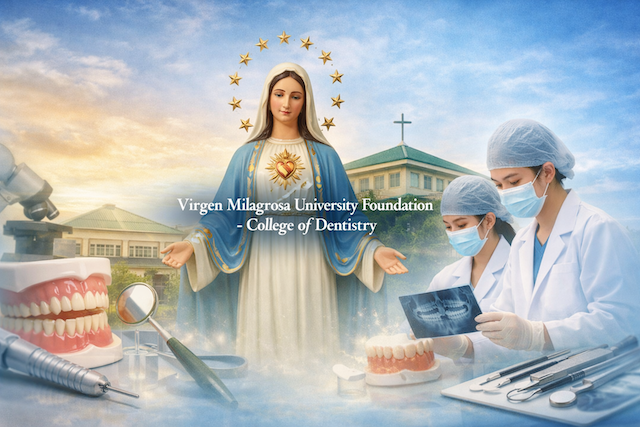
Virgen Milagrosa University Foundation – College of Dentistry
Contents
- Virgen Milagrosa University Foundation – College of Dentistry
- Why Consider VMUF for Dentistry
- Understanding Dentistry Education in the Philippines
- Admissions Overview and Common Requirements
- International and Returning Students: What to Prepare
- Program Structure and What You Will Study
- Preclinical Training: Building Skills Before Treating Patients
- Clinical Training and Patient Care Experience
- Facilities and Learning Resources to Look For
- Tuition, Fees, and Realistic Budget Planning
- Student Life, Culture, and Support Systems
- Tips for Succeeding in Dental School
- After Graduation: Licensure and Career Paths
- Questions to Ask VMUF Before You Enroll
- Final Thoughts
- FAQs (Frequently Asked Questions)
- Is Virgen Milagrosa University Foundation (VMUF) a good choice for studying dentistry in the Philippines?
- How long does it usually take to complete a dentistry program in the Philippines?
- What subjects should I expect in the early years of the program?
- When do dentistry students usually start clinical training with real patients?
- What kind of clinical procedures do students commonly learn during dental school?
- What documents are commonly required for admission to a dentistry program like VMUF?
- Can I transfer into VMUF’s College of Dentistry from another university?
- How expensive is dental school, and what costs should I budget beyond tuition?
- Do I need strong English skills to study dentistry in the Philippines?
- What should I look for when evaluating the quality of a dental program?
- How can I succeed academically and clinically once I enroll?
- What happens after graduation—can I work immediately as a dentist?
Virgen Milagrosa University Foundation – College of Dentistry
Virgen Milagrosa University Foundation (VMUF) – College of Dentistry is a dentistry program in the Philippines designed to prepare future dentists for modern clinical practice, community oral health work, and lifelong professional learning. Like other Philippine dental schools, the program typically blends strong foundations in biomedical sciences with progressive clinical training, patient care, and practical exposure to common dental procedures. For students who want a career that combines science, hands-on skills, and service, dentistry can be a rewarding path—especially for those who enjoy detailed work, problem-solving, and meaningful patient interaction.
This guide explains what to expect from VMUF’s College of Dentistry: the usual structure of dental education in the Philippines, admissions and documents, curriculum flow, clinical training, facilities you should look for, student life, costs to plan for, and what happens after graduation. Because academic policies and requirements can change, use this as a practical overview and confirm the latest details directly with the university.
Why Consider VMUF for Dentistry
Choosing a dental school is about “fit” as much as rankings. VMUF may appeal to students who want a structured professional program, a campus environment with established student support, and a learning experience that gradually builds confidence—from classroom fundamentals to real patient care. For many Filipino dental schools, students begin with heavy science coursework and preclinical laboratory training, then transition into supervised clinical requirements in later years. This step-by-step progression can be ideal for students who want clear milestones and steady skills development.
When evaluating VMUF (or any dental school), focus on practical questions:
- How early do students start preclinical training and simulation exercises?
- How is clinical exposure structured, and how is supervision handled?
- What kind of patient flow and case variety is typical for student clinicians?
- What student support exists for challenging subjects and board preparation?
- What is the culture like—collaborative, competitive, or balanced?
Understanding Dentistry Education in the Philippines
Dental education in the Philippines is commonly a professional program that includes both academic coursework and extensive clinical training. Students typically complete general education and basic sciences early, then move into specialized dental subjects and clinical requirements. A key feature is the emphasis on competency: students don’t just “take exams,” they must demonstrate that they can safely and effectively perform procedures under supervision.
In most programs, you can expect these stages:
- Foundation phase: anatomy, physiology, biochemistry, microbiology, and introductory dental concepts.
- Preclinical phase: simulation-based training in operative dentistry, prosthodontics basics, dental anatomy carving, and laboratory skills.
- Clinical phase: supervised patient care in restorative work, extractions, periodontal care, prosthetics, endodontics, pediatric cases, and comprehensive treatment planning.
- Community dentistry: outreach activities, preventive programs, and public-health oriented projects.
Graduates typically proceed toward the national licensure process to practice dentistry legally in the Philippines. The school’s role is to make sure students are academically prepared, clinically trained, ethically grounded, and confident in patient communication.
Admissions Overview and Common Requirements
Admissions processes vary by institution, but many Philippine dental schools require similar documents and screening steps. If you are applying to VMUF’s College of Dentistry, expect an admissions pathway that may include evaluation of academic records, entrance examinations (if applicable), interviews, and submission of standard documents.
Common requirements may include:
- Completed application form (online or on-campus submission)
- High school records or transcript of records (for transferees and second-degree applicants)
- Certificates of good moral character
- Birth certificate or valid identification
- Medical clearance and immunization records (depending on clinical policies)
- Entrance exam results or university placement assessment (if required)
For transferees, additional steps often apply. Dental subjects do not always match one-to-one across schools, so crediting may require syllabus review and a decision by the college. If you are transferring into dentistry, prepare course outlines and detailed grade documentation.
International and Returning Students: What to Prepare
If you are an international student or a Filipino returning from overseas, plan early for documentation and timelines. In many cases, you may need authenticated academic records and proof of prior schooling that meets Philippine requirements. You may also need to demonstrate English communication readiness, especially for patient interviewing and clinical documentation.
Practical tips:
- Request academic documents early and keep both physical and digital copies.
- Confirm if translations or authentication are needed for foreign-issued documents.
- Ask about health requirements for clinical rotations (vaccinations, TB screening, etc.).
- Budget for extra processing time during peak enrollment periods.
Even if your long-term goal is to practice in another country, solid clinical foundations are essential. Make sure you understand how your planned destination country handles credential evaluation, bridging programs, or additional examinations.
Program Structure and What You Will Study
While exact course sequences vary, a College of Dentistry curriculum generally covers biomedical sciences, dental sciences, clinical dentistry, diagnostics, radiology, dental materials, and practice management. You will also develop skills in communication, ethics, and patient-centered care.
Typical subject areas include:
- Basic sciences: anatomy, physiology, biochemistry, microbiology, pathology
- Oral sciences: oral anatomy, histology, dental morphology, occlusion
- Diagnostics: oral diagnosis, treatment planning, radiology fundamentals
- Dental materials: properties and handling of restorative and prosthetic materials
- Restorative dentistry: operative techniques, caries management, esthetic restorations
- Periodontology: gum health, scaling, periodontal therapy, maintenance
- Oral surgery: extractions, minor surgical principles, pain and infection control
- Endodontics: pulp therapy, root canal basics, instrumentation concepts
- Prosthodontics: crowns, bridges, complete and partial dentures, occlusal principles
- Pediatric dentistry: child patient management, prevention, age-appropriate care
- Orthodontics (introductory): fundamentals of occlusion and alignment assessment
- Community dentistry: public health, prevention programs, outreach
Expect both written exams and practical competency checks. Dentistry is skill-based: hand control, attention to detail, and consistent practice matter as much as academic knowledge.
Preclinical Training: Building Skills Before Treating Patients
Preclinical training is where dental students build confidence through simulation and laboratory exercises. Before you work on real patients, you will likely spend significant time practicing in a controlled environment. This includes learning proper ergonomics, infection control protocols, and step-by-step techniques for restorative and prosthetic procedures.
Examples of preclinical activities include:
- Dental anatomy waxing and carving
- Simulation of cavity preparation and restorations
- Impression-taking practice and model work
- Basic prosthodontic setups and bite registration exercises
- Instrument handling drills and procedural sequencing
The main goal is safe readiness. Students who treat preclinical training seriously often transition into clinical work with less stress and better performance.
Clinical Training and Patient Care Experience
Clinical training is the heart of dental education. Under the supervision of licensed dentists and clinical instructors, students provide patient care while meeting competency requirements. This stage teaches not only technical skills but also patient communication, case documentation, and ethical decision-making.
In a typical dental school clinic experience, you will learn how to:
- Conduct patient interviews and medical/dental history taking
- Perform oral examinations and assess treatment priorities
- Interpret radiographs and diagnostic information
- Deliver preventive care and patient education
- Complete restorative procedures with proper isolation and technique
- Manage basic extractions and post-operative instructions
- Plan comprehensive cases with phased treatment strategies
Clinical success often depends on discipline and time management. Students usually juggle patient scheduling, lab work, clinical requirements, and major exams. A supportive environment—peer collaboration, accessible instructors, and clear evaluation rubrics—can significantly improve the clinical learning experience.
Facilities and Learning Resources to Look For
Facilities matter because dentistry is highly hands-on. While specific facilities vary by institution, dental students generally benefit from:
- Dental clinics with student operatories: functional units for patient care
- Preclinical laboratories: simulation stations or typodont setups
- Radiology area: training and access to diagnostic imaging workflows
- Sterilization and infection control systems: clear protocols and equipment
- Dental materials and prosthodontic lab support: essential for prosthetics training
- Library and digital resources: updated references, journals, and online learning tools
If you visit campus or attend an orientation, observe how the clinic runs: student-to-instructor supervision, patient flow, and how materials are managed. These details shape your daily experience more than marketing brochures do.
Tuition, Fees, and Realistic Budget Planning
Dentistry is one of the more expensive university programs because it involves consumables, instruments, and laboratory requirements. Beyond tuition, students often budget for:
- Dental instrument kits and hand instruments
- Laboratory materials (impression materials, stones, wax, acrylics, etc.)
- Uniforms, PPE, and infection control supplies
- Clinical consumables and patient care materials (varies by clinic policy)
- Books, review materials, and printing costs
- Transportation and meals during long clinic days
Some schools offer guidance on what to purchase and when, helping students spread costs across semesters. If VMUF provides approved supplier lists or phased purchasing plans, follow them to avoid unnecessary expenses and incompatible materials.
Student Life, Culture, and Support Systems
Dental school can be intense. Many students describe it as rewarding but demanding: long laboratory hours, clinic requirements, and continuous evaluations. The healthiest student experience often comes from a balanced routine—consistent practice, structured study blocks, and supportive peers.
Look for support systems such as:
- Academic advising for course planning and remediation
- Peer tutoring or mentoring from higher-year students
- Student organizations focused on dentistry and community service
- Wellness resources and mental health support (where available)
Joining student organizations can also strengthen communication skills and professional networks. Community outreach programs are especially valuable because they develop confidence in patient education and preventive dentistry.
Tips for Succeeding in Dental School
Success in dentistry comes from consistent skill-building. If you are considering VMUF’s College of Dentistry (or already enrolled), these habits typically help:
- Practice early and often: hand skills improve through repetition, not last-minute cramming.
- Master fundamentals: dental anatomy, occlusion, and infection control are core to everything else.
- Document well: good clinical notes protect patients and sharpen your clinical reasoning.
- Communicate clearly: patient trust depends on empathy and understandable explanations.
- Plan your week: schedule lab work, patient appointments, and study blocks realistically.
- Ask for feedback: clinical instructors can correct technique before bad habits become permanent.
Remember that dentistry is a professional identity as much as an academic program. Reliability, integrity, and patient-first decision-making are part of your training from day one.
After Graduation: Licensure and Career Paths
After completing the dentistry program, graduates typically pursue licensure to practice professionally. Many also continue improving their skills through continuing professional development, mentorship, and—depending on their interests—specialized training routes.
Common career paths include:
- General dental practice: working in a private clinic or starting your own practice later
- Associate dentist roles: joining established clinics to build experience
- Community and public health dentistry: serving in outreach and preventive programs
- Hospital-based or multidisciplinary settings: depending on opportunities and credentials
- Academic and research support roles: for those interested in teaching or scholarly work
Early career success often comes from strong fundamentals, good chairside manners, and reliable clinical judgment. If VMUF provides internship-like exposure, clinical case conferences, or board-focused review support, take full advantage—these experiences can sharpen readiness for both licensure and professional practice.
Questions to Ask VMUF Before You Enroll
If you are actively considering VMUF – College of Dentistry, it helps to contact the admissions office and ask clear, practical questions. Examples include:
- What is the current admissions process and timeline for the College of Dentistry?
- What are the typical first-year subjects and weekly schedules?
- When do students begin preclinical simulation and clinical patient care?
- How are clinical competencies evaluated and recorded?
- What are the estimated additional costs per year beyond tuition?
- What student support exists for challenging subjects and board preparation?
- Are there specific device or software requirements for students?
Clear answers to these questions will help you compare schools fairly and plan your budget and timeline realistically.
Final Thoughts
Virgen Milagrosa University Foundation – College of Dentistry offers a pathway into one of the most skill-intensive and service-oriented health professions. A dentistry program is not just about lectures—it is about building steady hands, clinical discipline, ethical judgment, and patient communication skills over several years of structured training. If you value practical learning, supervised clinical experience, and the chance to make a measurable difference in people’s daily lives, dentistry can be a strong choice.
Before you decide, verify the latest admissions requirements, tuition and fee breakdown, curriculum sequence, and clinical policies directly with VMUF. When you match your learning style and goals with the right school environment, you give yourself the best chance to thrive—academically, clinically, and professionally.
FAQs (Frequently Asked Questions)
Is Virgen Milagrosa University Foundation (VMUF) a good choice for studying dentistry in the Philippines?
VMUF can be a solid option if you want a structured dentistry program that combines classroom learning, preclinical laboratory training, and supervised patient care. “Good” depends on your priorities: training quality, clinical exposure, learning support, budget, location, and your personal study style. Before deciding, compare VMUF with other schools by asking about when clinical work begins, how competencies are evaluated, typical student-to-instructor supervision, and what kinds of cases students commonly handle in the clinic. Visiting the campus (if possible) and speaking with current students can also help you understand the daily workload and culture.
How long does it usually take to complete a dentistry program in the Philippines?
In the Philippines, dentistry is commonly a multi-year professional program that includes both academic coursework and extensive clinical training. The exact length can vary depending on institutional curriculum design and whether a student is a transferee, but most students should plan for several years of full-time study with increasing clinical responsibilities in the later portion of the program. Because policies can change, confirm the current program length and year-level structure directly with VMUF’s College of Dentistry.
What subjects should I expect in the early years of the program?
Early years typically emphasize foundational sciences and introductory dental concepts. Many dental students study anatomy, physiology, biochemistry, microbiology, and pathology alongside oral anatomy, dental morphology, and basic dental materials. You may also encounter courses related to communication, ethics, and study of the oral cavity in health and disease. These subjects can feel intense because they build the medical and biological understanding needed for safe clinical decision-making later.
When do dentistry students usually start clinical training with real patients?
Most programs start with preclinical simulation and laboratory training before allowing students to treat patients. Students often practice procedures on models, typodonts, or simulation units to build hand skills and procedural confidence. Clinical patient care typically begins after a student has demonstrated readiness in infection control, basic technique, and safety protocols. To get an accurate timeline, ask VMUF specifically when preclinical training begins and what year level students transition into supervised clinical requirements.
What kind of clinical procedures do students commonly learn during dental school?
Clinical training usually covers a range of core procedures under supervision. These may include oral examinations and diagnostics, preventive care and patient education, basic restorative treatments, periodontal care, simple extractions, and prosthodontic work such as dentures or crowns (depending on clinical scope and curriculum). Students also learn treatment planning, case documentation, and how to communicate options and costs clearly. The sequence and complexity of procedures increase as you complete competencies and gain experience.
What documents are commonly required for admission to a dentistry program like VMUF?
While exact requirements vary, applicants typically submit an application form, academic records (such as high school report cards or transcripts for transferees), proof of identity, and certificates such as good moral character. Some schools require entrance exams, interviews, or medical clearances. International students may need additional document authentication or equivalent credential evaluation. The most reliable approach is to request VMUF’s current admissions checklist and confirm deadlines, processing time, and any program-specific requirements for the College of Dentistry.
Can I transfer into VMUF’s College of Dentistry from another university?
Transferring is sometimes possible, but the process can be strict because dentistry courses often do not match perfectly across institutions. Schools usually review your transcript and may request course syllabi to determine which subjects can be credited. Even if some courses are credited, you may still need to take bridging subjects or repeat certain preclinical requirements to meet the school’s competency standards. If you are a transferee, prepare complete documentation and ask how VMUF evaluates transferred units and clinical prerequisites.
How expensive is dental school, and what costs should I budget beyond tuition?
Dentistry often has higher total costs than many other degree programs because of instruments, consumables, and laboratory requirements. Beyond tuition and standard school fees, students frequently spend on instrument kits, clinical materials, personal protective equipment, uniforms, printing, and occasional lab work expenses. Transportation and meals can also add up during long clinic days. A practical strategy is to ask VMUF for an estimated cost list per year level and whether purchases can be phased by semester to reduce upfront expenses.
Do I need strong English skills to study dentistry in the Philippines?
English is commonly used in textbooks, lectures, and medical terminology in many Philippine health programs, though daily communication may vary by region and campus culture. In clinical settings, you also need the ability to explain procedures clearly, obtain informed consent, and write accurate clinical notes. You do not need to sound “perfect,” but you should be comfortable reading academic material and communicating respectfully with patients and instructors. If English is a concern, plan to strengthen medical vocabulary and patient communication early.
What should I look for when evaluating the quality of a dental program?
Focus on training outcomes rather than promotional claims. Ask about the structure of preclinical training, clinic supervision, infection control systems, and how competencies are assessed. Inquire about the typical patient flow, the variety of cases available for students, and how students complete clinical requirements. It also helps to ask about academic support, remediation processes, and preparation resources for licensure. A campus visit—if feasible—lets you observe clinics, laboratories, and how organized the training environment feels.
How can I succeed academically and clinically once I enroll?
Consistency matters more than intensity. Build habits: review lecture material weekly, practice hand skills regularly in the lab, and seek feedback early. Master fundamentals like dental anatomy, occlusion concepts, and infection control protocols. For clinical work, develop strong documentation habits, communicate clearly with patients, and stay organized with scheduling and requirements. Working collaboratively with classmates can also help, since dentistry often involves shared learning, peer tips, and mutual support during demanding semesters.
What happens after graduation—can I work immediately as a dentist?
After graduating, you typically need to complete the licensure process required to practice dentistry legally in the Philippines. Once licensed, graduates may work as associate dentists, join clinics, pursue community dentistry roles, or eventually establish their own practices depending on experience, resources, and professional goals. If you plan to practice in another country, research that country’s credential recognition rules early, as additional exams or bridging programs may be required even after earning a dentistry degree.
Dentistry in the Philippines: Education System, Universities, and Career Path

How to Register for eTravel Philippines (2025 Guide)
Step-by-step guide to completing your eTravel registration before arriving in the Philippines, with images and tips.

Night Market in Cebu – Things You Don’t Know About Cebu Life
Discover the hidden charm of Cebu’s night markets, from street food stalls to local life tips you won’t find in tourist guides.

How to Use ChatGPT for IELTS Preparation: A Complete Guide
Learn how to prepare for IELTS using ChatGPT — including strategies for Writing, Reading, Listening, Speaking, and grammar support.

How to Build a Website Without Coding Using ChatGPT
Discover how to build your own website using AI—no coding skills needed. From structure planning to SEO and design, let ChatGPT guide you.