2026年1月16日
3D ACADEMY offers affordable English study programs in Cebu, Philippines – perfect for beginners, professionals, and exam takers.

3D UNIVERSAL ENGLISH INSTITUTE INC
info.3d-universal.com
8:00-17:00(Mon-Fri)
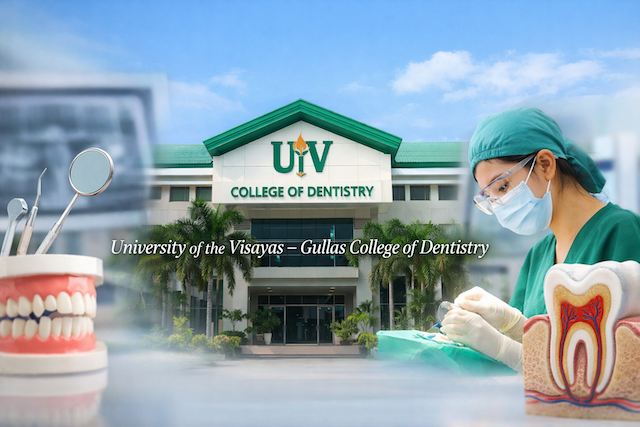
University of the Visayas – Gullas College of Dentistry: Program Guide for Future Dentists
Contents
- University of the Visayas – Gullas College of Dentistry: Program Guide for Future Dentists
- Quick Overview: What a Dentistry Student Should Expect
- Why Students Consider University of the Visayas – Gullas College of Dentistry
- Program Structure and Key Learning Areas
- Pre-Clinical Training: Building Your Hands and Your Habits
- Clinical Training and Patient Care Experience
- Facilities, Tools, and Learning Support
- Admissions: How to Prepare and What to Ask
- Costs, Supplies, and Budget Reality
- Student Life, Culture, and Professional Development
- Career Outcomes: Where Dentistry Can Take You
- How to Succeed If You Enroll
- Final Thoughts: Making a Smart Decision
- FAQs (Frequently Asked Questions)
- Is University of the Visayas – Gullas College of Dentistry a good choice for students who want to become licensed dentists in the Philippines?
- What is the typical structure of a dentistry program in the Philippines?
- When do students usually start hands-on training?
- What should I ask about the school’s clinical training and patient exposure?
- Does the program focus only on technical skills, or does it also train communication and professionalism?
- What are common challenges dentistry students face, and how can I prepare?
- What kinds of expenses should I expect besides tuition?
- How can I evaluate whether this college is a good “fit” for me personally?
- What are the career paths after graduating from dentistry school?
- How can I increase my chances of succeeding once I enroll?
University of the Visayas – Gullas College of Dentistry: Program Guide for Future Dentists
If you are looking for a dentistry program in Cebu that balances strong fundamentals with early exposure to hands-on training, the University of the Visayas – Gullas College of Dentistry is one option worth researching closely. Dentistry is a long, demanding journey—academically, clinically, and personally—so choosing a school is not only about the name on the diploma. It is also about daily learning environments: the quality of mentoring, the consistency of clinical opportunities, the culture of professionalism, and whether you can realistically thrive through years of laboratory work, patient care, and board preparation.
This guide is designed to help you understand what to look for when considering UV Gullas College of Dentistry, how to evaluate program fit, and how to prepare for the expectations of dental school in the Philippines. While specific policies, fees, and schedules can change from year to year, the framework below will help you ask the right questions and make a decision based on outcomes, not assumptions.
Quick Overview: What a Dentistry Student Should Expect
Dentistry education typically moves through phases: foundation sciences, pre-clinical dentistry, and clinical dentistry. In the early period, you build the language of health sciences—anatomy, physiology, biochemistry, microbiology, pathology, and pharmacology—so you understand the human body and disease processes. As you progress, your focus shifts to dental-specific knowledge and technical skills. You spend extensive hours in simulation laboratories (often called pre-clinic or operative labs), where you develop hand skills and clinical discipline before treating real patients.
Later, clinical dentistry becomes the center of your training. This is where you learn to perform comprehensive patient assessment, diagnosis, treatment planning, and procedures under supervision. Your days may be built around patient appointments, case requirements, documentation, and faculty evaluations. Throughout all years, you will also learn communication skills, ethics, infection control, and professional conduct—because dentistry is both a healthcare profession and a patient-facing service that demands trust.
Why Students Consider University of the Visayas – Gullas College of Dentistry
Many students consider UV Gullas College of Dentistry for practical reasons: accessibility, campus environment, and the opportunity to train in a setting connected to a large student community. For future dentists, what matters most is how the program supports skill development from day one. When you explore UV Gullas, focus on whether the program provides a clear pathway from theory to technique to patient care.
Here are the common value points students usually look for when evaluating a dentistry college:
- Structured skills training: A pre-clinical sequence that systematically builds competence in operative dentistry, prosthodontics, endodontics, and basic surgical skills.
- Clinical exposure and patient flow: Adequate opportunities to treat diverse cases, not only simple procedures.
- Faculty supervision and feedback: Mentors who correct technique early and help you develop safe habits.
- Professional culture: Strong standards for punctuality, case documentation, infection control, and patient communication.
- Board exam preparation support: Review strategies, mock exams, and guidance aligned with licensure expectations.
As you research UV Gullas College of Dentistry, use these points as your checklist. A school can be “popular” but still not fit your learning style. Conversely, a school may be less talked about online but provide the structure you personally need to succeed.
Program Structure and Key Learning Areas
Although course titles can vary across institutions, dentistry programs generally cover a set of core domains. When you review UV Gullas Dentistry’s curriculum outline, you will likely see a mix of general education (depending on year level), health sciences, dental sciences, and clinical requirements. Below are the major learning areas you should expect in any complete dentistry education.
- Basic Medical Sciences: Human anatomy, physiology, biochemistry, microbiology, and general pathology build your medical foundation.
- Oral Sciences: Oral anatomy, histology, embryology, occlusion, and oral pathology connect systemic health to the oral cavity.
- Dental Materials: You learn what materials can (and cannot) do—strength, bonding, aesthetics, durability, and handling properties.
- Operative Dentistry: Cavity preparation principles, restorative techniques, and clinical decision-making for caries management.
- Endodontics: Diagnosis and management of pulpal disease, root canal fundamentals, instrumentation, and infection control.
- Prosthodontics: Removable and fixed prosthodontics, impressions, jaw relations, crowns, bridges, and patient adaptation.
- Periodontology: Gum health, periodontal disease diagnosis, non-surgical therapy, maintenance, and patient education.
- Oral Surgery: Exodontia fundamentals, minor surgery concepts, pain control, medical risk assessment, and emergency readiness.
- Pediatric Dentistry: Child behavior management, preventive care, and age-specific oral health strategies.
- Orthodontics: Growth and development, malocclusion basics, and orthodontic principles for general practice awareness.
- Public Health Dentistry: Community-based dentistry, prevention programs, epidemiology, and health promotion.
Ask whether UV Gullas Dentistry provides early practical integration—meaning you are not only memorizing concepts, but repeatedly applying them in lab exercises and clinical reasoning tasks.
Pre-Clinical Training: Building Your Hands and Your Habits
Pre-clinical training is where many students discover what dentistry really demands. It is not simply “studying more.” It is learning with your hands under time constraints, repeating tasks until precision becomes consistent. In the pre-clinical stage, you are trained on simulation models to develop fine motor control and correct technique. You learn how to sit, how to hold instruments, how to control the handpiece, and how to work within millimeters without damaging surrounding structures.
In evaluating UV Gullas College of Dentistry, look at how pre-clinical training is organized:
- Lab hours per week: Dentistry skill growth is time-dependent. More guided practice usually means more progress.
- Feedback frequency: Do instructors check work routinely? Are corrections specific and actionable?
- Rubrics and competency checkpoints: Clear standards help you understand what “clinically acceptable” means.
- Safety culture: Consistent infection control habits begin before you see your first patient.
Strong pre-clinical preparation reduces anxiety later in clinic because you enter patient care with stable fundamentals, not shaky technique.
Clinical Training and Patient Care Experience
Clinical training is the heart of dentistry education. You will learn to connect diagnosis to treatment planning and execution, and you will manage real people—not just teeth. Clinical training tests your clinical judgment, time management, and professionalism. It also teaches you humility: a treatment that looks simple in theory can become complex once patient comfort, anatomy variation, and medical history are involved.
When researching UV Gullas Dentistry, ask about the typical clinical flow:
- Case intake process: How are patients assigned or accepted? What screening steps exist?
- Supervision and approvals: Which procedures require instructor approval before proceeding?
- Requirement system: Are there minimum case requirements per discipline? How are they tracked?
- Access to diagnostics: What is the process for radiographs and other diagnostic tools?
- Referral pathways: If a case is beyond student capability, is there a structured referral process?
A well-run clinic environment helps students focus on learning. A chaotic system, on the other hand, can waste time and increase stress—especially near graduation when requirements and competencies become critical.
Facilities, Tools, and Learning Support
Facilities do not automatically create good dentists, but they shape how efficiently students can practice and deliver care. In dentistry, your learning is tied to physical infrastructure: simulation stations, handpieces, sterilization areas, patient chairs, and instrument availability. When you visit or inquire about UV Gullas College of Dentistry, consider the following:
- Simulation laboratory setup: Enough stations for students, adequate lighting, and a learning layout that supports supervision.
- Infection control infrastructure: Proper sterilization workflow, instrument handling procedures, and compliance culture.
- Dental clinic capacity: Patient chairs, scheduling systems, and how crowded clinical hours feel.
- Library and digital resources: Access to textbooks, journals, and online learning platforms that support board preparation.
- Skill labs and demonstrations: Opportunities to observe procedures, practice techniques, and receive guided correction.
Even if you cannot physically tour the facilities, you can still ask targeted questions. The way staff and faculty answer can reveal how organized and student-centered the system is.
Admissions: How to Prepare and What to Ask
Admissions requirements can differ depending on your background (fresh high school graduate, transferee, second degree holder, or international applicant). Instead of relying on assumptions, gather the current requirements directly from official channels. When you contact UV Gullas College of Dentistry, ask about:
- Entrance or qualifying exams: Whether an exam is required, and what topics it covers.
- Interview process: If there is an interview, ask what qualities they look for (motivation, discipline, communication).
- Document checklist: Transcript, good moral character, medical clearance, and other requirements.
- Start dates and deadlines: Confirm the intake schedule and application timeline.
- Transferee policies: Credit evaluation rules and how clinical/lab courses are handled for shifters.
If you are serious about dentistry, prepare a short personal statement even when not required. Being able to clearly explain why you want dentistry (beyond income or prestige) is useful in interviews and also helps you stay grounded when the program becomes difficult.
Costs, Supplies, and Budget Reality
Dentistry is one of the most supply-intensive programs. Beyond tuition, you should plan for instruments, consumables, uniforms, clinical requirements, and possible additional fees for laboratory and clinic usage. Your budget planning should include both “one-time purchases” and “ongoing consumables.”
Here is a realistic way to plan:
- Year-by-year budgeting: Costs often increase as you move from general education to pre-clinic to clinic.
- Instrument sets: Some items can last for years if maintained well; others must be replaced or upgraded.
- Consumables: Impression materials, burs, restorative materials, and protective equipment are recurring expenses.
- Transportation and time costs: Clinical schedules can be demanding; commuting time matters.
Ask UV Gullas Dentistry for an estimated list of required supplies per year level if available. Even a rough guide can prevent financial surprises mid-semester.
Student Life, Culture, and Professional Development
Dental school is intense, and your environment matters. A supportive culture can help you endure long lab hours and clinical demands, while a toxic culture can make even manageable workloads feel overwhelming. When evaluating UV Gullas College of Dentistry, try to learn about the student community and support systems:
- Peer mentoring: Are there study groups, tutoring, or student-led review sessions?
- Organizations: Are there dentistry student organizations focused on outreach or skills development?
- Community dentistry activities: Outreach programs can build confidence and improve patient communication.
- Professionalism training: Seminars on ethics, patient management, and practice readiness add long-term value.
Also consider your personal learning style. Some students thrive with strict structure and frequent evaluation. Others perform best with flexible learning but strong mentoring. The right culture is the one that keeps you improving consistently.
Career Outcomes: Where Dentistry Can Take You
Graduating from dental school is not the finish line—it is the start of professional development. Most new dentists begin with general practice work, associate positions, or community-based service, gradually building speed and confidence. Over time, dentists may pursue specialization, teaching, research, or entrepreneurship through private clinic ownership.
Common paths include:
- General dentistry practice: Comprehensive patient care, prevention-focused practice, and gradual skill expansion.
- Specialization: Orthodontics, oral surgery, periodontics, endodontics, prosthodontics, pediatric dentistry, and more.
- Public health dentistry: Community clinics, prevention programs, and health promotion roles.
- Academe and training: Teaching in dental schools, mentoring students, or contributing to curriculum development.
- Clinic ownership: Building a practice with business systems, staff management, patient retention, and ethical marketing.
When choosing a school, think long-term: Does the program build not only technical competence, but also the professionalism and patient-centered mindset you will carry into your career?
How to Succeed If You Enroll
If you decide to pursue dentistry at UV Gullas College of Dentistry, your success will come from consistent habits. Dentistry is less about “cramming” and more about repetition, refinement, and steady improvement. Here are practical strategies that work for many students:
- Protect your fundamentals: Anatomy, pathology, pharmacology, and dental materials are not “early subjects.” They return in clinic.
- Practice with intention: In lab, do not only finish requirements—aim for precision and learn from mistakes.
- Document your learning: Keep a notebook of common errors, instructor feedback, and technique reminders.
- Build patient communication skills: Explain procedures simply, manage expectations, and learn to calm anxious patients.
- Respect infection control: Treat safety protocols as non-negotiable professional identity, not a school rule.
- Study consistently: Short daily reviews beat last-minute marathons, especially in concept-heavy subjects.
Most importantly, be patient with your development. Dentistry rewards persistence. The students who improve the most are not always the ones with the fastest hands at the start, but the ones who accept feedback, practice consistently, and maintain professional standards even when tired.
Final Thoughts: Making a Smart Decision
The best way to decide on a dentistry school is to match your goals with the program’s real daily experience. UV Gullas College of Dentistry may be a good fit if you are looking for a structured path into clinical competence and you are ready for the discipline dentistry demands. Before enrolling, gather clear information about curriculum flow, clinical requirements, supervision structure, and student support. Talk to current students if possible, and ask specific questions about training quality—not just general impressions.
Dentistry is a profession built on trust, skill, and responsibility. If you choose this path, commit fully. With consistent work, strong mentorship, and the right environment, you can develop into a dentist who is confident, ethical, and capable—ready to serve patients and build a meaningful career.
FAQs (Frequently Asked Questions)
Is University of the Visayas – Gullas College of Dentistry a good choice for students who want to become licensed dentists in the Philippines?
It can be a good option if you are looking for a dentistry program in Cebu and you are prepared for the workload and long training path that dentistry requires. A “good choice” depends on your learning style, budget, commute, and your ability to commit to years of laboratory work and clinical requirements. When evaluating the school, focus on practical indicators such as how pre-clinical skills are taught, how clinical cases are supervised, and how students are supported in preparing for licensure. It is also wise to confirm the most updated program details directly with the college because policies, schedules, and fees can change over time.
What is the typical structure of a dentistry program in the Philippines?
Dentistry programs generally move from foundation sciences to dental sciences, then into intensive pre-clinical laboratory training and supervised clinical practice. Early coursework commonly includes subjects like anatomy, physiology, biochemistry, microbiology, pathology, and pharmacology. After that, students usually take dental materials, oral anatomy, operative dentistry, prosthodontics, endodontics, periodontology, oral surgery, pediatric dentistry, orthodontics basics, and public health dentistry. In later years, clinical requirements become central, and students treat patients under faculty supervision while completing case documentation and competency evaluations.
When do students usually start hands-on training?
In most dentistry programs, hands-on training begins in pre-clinical laboratories before students are allowed to treat real patients. This stage focuses on developing fine motor skills and learning correct procedures in a controlled environment. Students practice using hand instruments and rotary tools on simulation models, and they learn fundamentals like isolation, cavity preparation, restoration principles, impressions, and basic prosthodontic steps. Starting earlier with structured, supervised lab work often helps students transition more smoothly into clinical dentistry.
What should I ask about the school’s clinical training and patient exposure?
Clinical training quality depends heavily on systems and supervision, so ask questions that reveal how the clinic actually functions. For example: How are patients assigned or accepted? What is the process for screening and record-taking? Which procedures require faculty approval before you begin? Are there minimum case requirements in different areas (restorations, extractions, endodontics, prosthodontics, periodontal care)? How is progress tracked and evaluated? Also ask about access to diagnostics like radiographs, and whether there are clear referral pathways when a case is too complex for a student level.
Does the program focus only on technical skills, or does it also train communication and professionalism?
A strong dentistry education should train both. Technical competence is essential, but dentistry is also patient-centered healthcare. Students must learn how to communicate clearly, manage anxiety, explain options ethically, and document care properly. Professionalism includes punctuality, infection control discipline, respect for patient privacy, and responsible clinical decision-making. When you explore the program, ask how students are guided in patient interviewing, treatment planning, informed consent, and ethical practice standards, not only how they are graded on lab outputs.
What are common challenges dentistry students face, and how can I prepare?
The most common challenges include heavy academic load, long lab hours, strict performance standards, and the pressure of clinical requirements. Many students also struggle with time management and budgeting because dentistry involves recurring supply costs. To prepare, strengthen study habits early, especially in science subjects that will support clinical reasoning later. Build routines for consistent practice rather than last-minute cramming. If possible, start improving manual dexterity through simple daily exercises, and learn basic note-taking systems so you can track instructor feedback and correct mistakes efficiently.
What kinds of expenses should I expect besides tuition?
Dentistry is a supply-intensive program. In addition to tuition and school fees, students often need to budget for uniforms, protective equipment, instruments, hand tools, consumables (such as burs and materials), laboratory items, printing, and sometimes additional requirements related to clinical procedures. Costs often rise as students move from pre-clinical to clinical training due to higher usage of materials and patient-care related needs. A practical approach is to ask the college for a year-level breakdown of typical required supplies and plan a buffer for unexpected replacements or additional clinical expenses.
How can I evaluate whether this college is a good “fit” for me personally?
Fit is about how well the program’s reality matches your goals and learning style. Consider your commute and whether you can reliably attend early classes and clinical schedules. Ask about how feedback is given in labs, how strict competency checks are, and whether the learning environment is supportive. Try to learn how students find patients, how requirements are handled, and how the school supports those who fall behind. If possible, speak with current students about daily workload, exam pacing, lab expectations, and the level of mentoring they receive from faculty.
What are the career paths after graduating from dentistry school?
After completing the program and meeting licensure requirements, many new dentists begin as general practitioners or associates in established clinics to build speed and confidence. Others pursue community dentistry or public health work. Over time, some dentists choose to specialize in fields such as orthodontics, periodontics, endodontics, oral surgery, prosthodontics, or pediatric dentistry, depending on available training pathways. Clinic ownership is another long-term path, but it requires business skills, ethical marketing, staff management, and a consistent commitment to patient care quality.
How can I increase my chances of succeeding once I enroll?
Success usually comes from consistency and professionalism. Prioritize fundamentals like anatomy, pathology, pharmacology, and dental materials because these subjects support clinical decisions later. In labs, focus on accuracy and technique rather than only completing requirements. Keep a log of instructor feedback, common mistakes, and step-by-step procedure reminders. In clinic, practice clear patient communication, maintain strict infection control habits, and improve documentation skills. Most importantly, build sustainable routines—dentistry is a long journey, and steady progress matters more than occasional bursts of effort.
Dentistry in the Philippines: Education System, Universities, and Career Path

How to Register for eTravel Philippines (2025 Guide)
Step-by-step guide to completing your eTravel registration before arriving in the Philippines, with images and tips.

Night Market in Cebu – Things You Don’t Know About Cebu Life
Discover the hidden charm of Cebu’s night markets, from street food stalls to local life tips you won’t find in tourist guides.

How to Use ChatGPT for IELTS Preparation: A Complete Guide
Learn how to prepare for IELTS using ChatGPT — including strategies for Writing, Reading, Listening, Speaking, and grammar support.

How to Build a Website Without Coding Using ChatGPT
Discover how to build your own website using AI—no coding skills needed. From structure planning to SEO and design, let ChatGPT guide you.